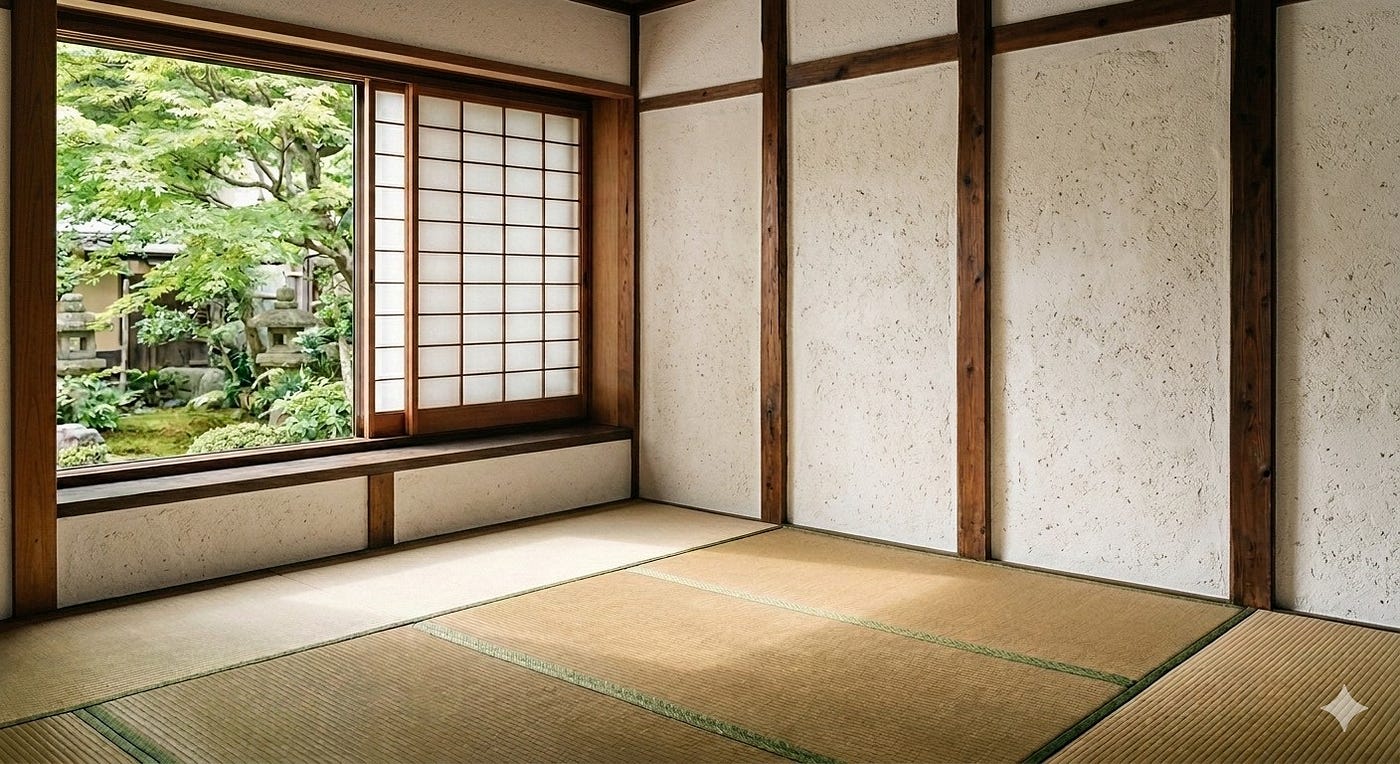
To Keep or Remove Shoji?- Redefining Light in Japanese Renovation
There is one traditional feature in Japanese houses that often sparks debate during renovations: Shoji (paper sliding screens).
To Keep or Remove Shoji?- Redefining Light in Japanese Renovation
There is one traditional feature in Japanese houses that often sparks debate during renovations: Shoji (paper sliding screens).
Many Japanese people choose to remove them.
The reasons are always the same:
they rip easily if you have kids or pets, replacing the paper is a hassle, and once they tear, the whole room instantly looks worn out.
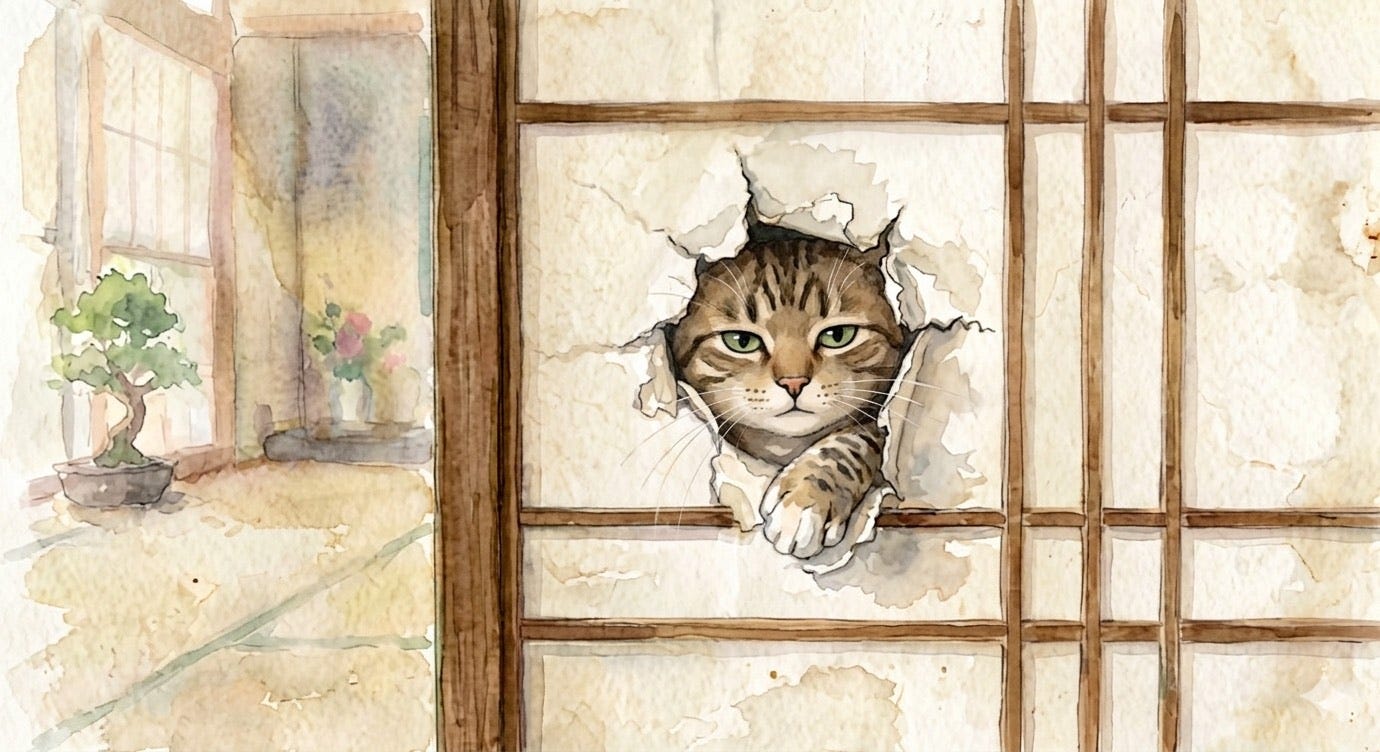
I, Japanese, completely understand that practical concern.
However, when I renovated my own home, I chose to keep the shoji screens in one of the rooms.

before renovation
To be honest, my initial reason was partly to save money.
Removing shoji completely requires tearing out the frames, re-doing the walls, and buying new curtains and rods.
Renovation costs can spiral out of control if you aren’t careful.
So, I thought, “Why not embrace the shoji instead?”
After experimenting with a few ideas, I found the perfect solution:
I pasted my favorite fabric onto the wooden frame instead of traditional shoji paper.
It’s been four years since I made the switch.
The fabric has faded just a tiny bit, but it has never ripped.
It’s incredibly durable and uniquely stylish.

I installed herringbone wooden flooring, aiming for a classic “Taisho Modern” aesthetic-a beautiful blend of Western and Japanese styles.
More than anything, the light that filters through shoji is magical.
It creates a soft, quiet glow that neither curtains nor blinds can replicate.
Living with it every day made me realize something: Shoji wasn’t invented just to hide the windowーit was designed to sculpt the light.
I don’t think every house needs to keep its shoji.
But when clients come to us looking to renovate their newly purchased homes in Japan, this personal experience of mine serves as our guiding philosophy.
You don’t have to throw away traditional charms just for the sake of modernization.
And you don’t always need to spend a fortune to make a space beautiful.
With a little twist of perspective and a touch of DIY spirit, old Japanese materials can reveal an unexpected, breathtaking charm.
If you’ve bought a property in Japan and are wondering how to bring out its best potential without losing its soul, let’s think about how to breathe new life into it together.

메타데이터
- post_id
- 8592c10563d5
- slug
- to-keep-or-remove-shoji-redefining-light-in-japanese-renovation-8592c10563d5
- url
- https://medium.com/@oeuf.inc/to-keep-or-remove-shoji-redefining-light-in-japanese-renovation-8592c10563d5
- canonical_url
- https://medium.com/@oeuf.inc/to-keep-or-remove-shoji-redefining-light-in-japanese-renovation-8592c10563d5
- author_url
- https://medium.com/@oeuf.inc
- status
- ok
- fetched_at
- 2026-06-21 07:44:09