Why Defibrillators Fail When You Need Them Most and How to Prevent It
A defibrillator is the one device you never get a second chance with.
Why Defibrillators Fail When You Need Them Most and How to Prevent It
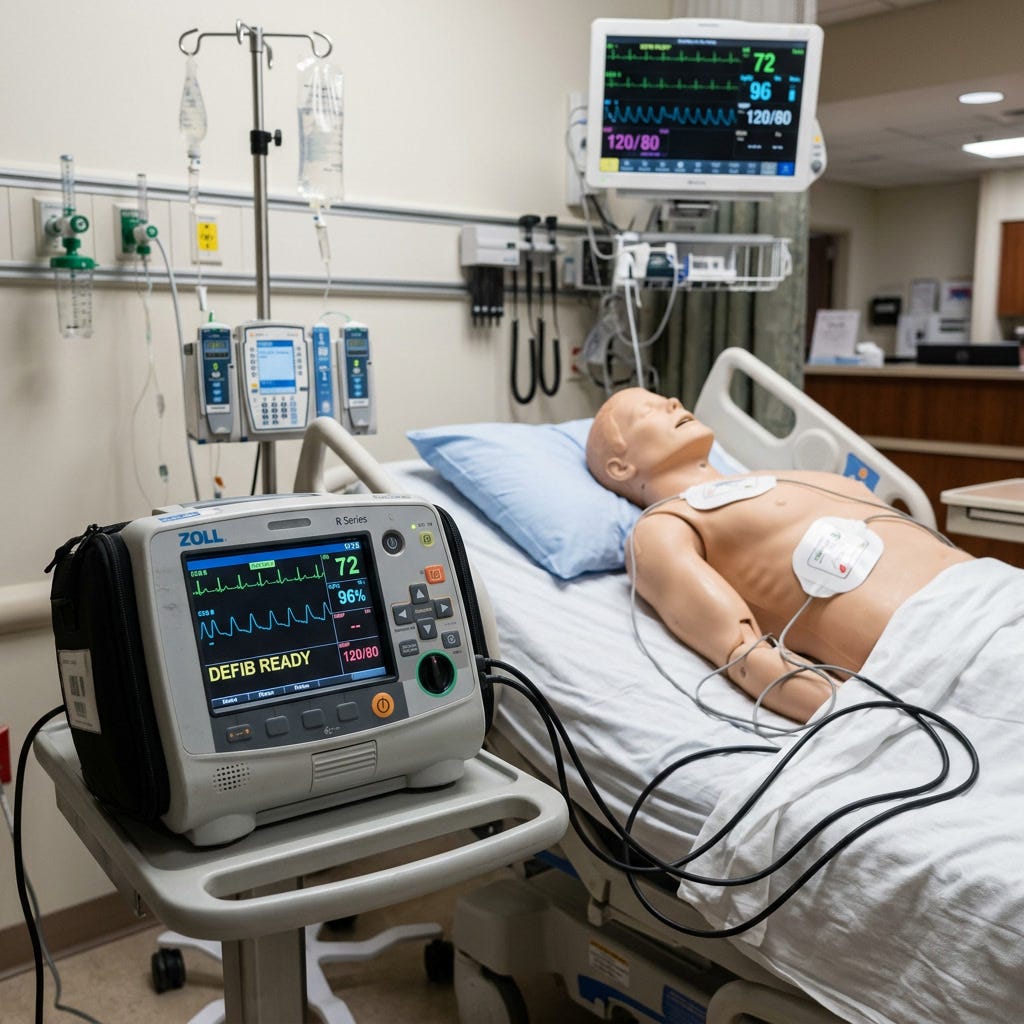
A defibrillator is the one device you never get a second chance with.
When it is needed, seconds matter. Failure is not an option.
Yet in real hospital environments, defibrillators do not usually fail suddenly. They fail quietly, in predictable and preventable ways. As a biomedical engineer working closely with critical care equipment, I have seen the same issues repeat across different hospitals. The pattern is consistent, and most of these risks can be controlled long before they reach a patient.
The Hidden Reality of Defibrillator Failure
In emergency medicine and critical care, there is a dangerous assumption that if a device powers on, it is ready to save a life. This is not always true.
Defibrillators are complex medical devices. Their performance depends on multiple components working together under extreme conditions. When even one of these components degrades, the outcome can be compromised.
Battery Failure and the Illusion of Readiness
One of the most common issues is battery degradation.
A defibrillator may pass a routine check simply by powering on. However, during a real cardiac arrest scenario, it must deliver multiple high-energy shocks in quick succession. Batteries that have lost capacity may fail under this load.
This is why battery load testing is essential. Preventive maintenance should include lifecycle-based replacement strategies and ensuring that fully charged backup batteries are always available in critical care areas.
Keywords: defibrillator battery failure, medical device maintenance, preventive maintenance in healthcare
Energy Delivery Accuracy
Another critical issue lies in energy delivery.
Over time, internal capacitors degrade. This affects the actual energy delivered to the patient. A defibrillator set to deliver 200 joules may not deliver the intended energy, reducing the effectiveness of defibrillation.
Routine testing with a defibrillator analyser and consistent calibration are necessary to ensure accurate performance. Tracking performance trends over time is far more effective than relying on simple pass or fail checks.
Keywords: defibrillator calibration, energy delivery accuracy, biomedical engineering testing
Electrode Pads and Impedance Issues
Even when the device itself is functioning perfectly, electrode pads can become the weak link.
Expired, dried, or poorly stored pads increase electrical impedance, reducing current flow to the patient. In a life-threatening situation, this can significantly reduce the effectiveness of the shock.
Maintaining strict control over pad expiry dates, proper storage conditions, and routine checks is a simple but critical step in ensuring patient safety.
Keywords: defibrillator pads, electrode impedance, emergency equipment readiness
Daily Checks and False Assurance
In many hospitals, daily checks confirm that a defibrillator is present and powers on. However, this does not guarantee operational readiness.
This creates a false sense of security.
Standardised inspection protocols should go beyond visual checks and include self-test verification, functional checks, and regular compliance audits. True readiness must be verified, not assumed.
Keywords: medical equipment checks, ICU equipment safety, hospital maintenance protocols
Wear and Tear in Critical Components
Cables and connectors are subject to constant handling. Over time, this leads to internal fatigue, loose connections, and intermittent faults that may only appear during use.
Routine inspection and early replacement of worn components are essential. Proper storage practices also play a key role in extending equipment life and reliability.
Keywords: medical device reliability, equipment wear and tear, clinical engineering
The Human Factor in Emergency Response
Technology alone does not guarantee safety.
In high-pressure situations, unfamiliarity with different defibrillator models can lead to hesitation or delays. Interfaces vary, workflows differ, and small uncertainties can cost valuable seconds.
Regular hands-on training, equipment standardisation, and clear, accessible guidance at the point of use are critical for improving response times and reducing human error.
Keywords: human factors in healthcare, emergency response training, clinical staff training
Preventing Failure Before It Happens
Modern defibrillators are highly reliable. The failures we see are rarely random.
They are the result of gradual component degradation, inconsistent maintenance practices, and assumptions about readiness.
Preventive maintenance is not just a technical requirement. It is a patient safety strategy.
Because in a cardiac arrest scenario, there is no time to troubleshoot. No opportunity to adjust. No margin for error.
The device must perform exactly as expected in that moment.
Final Thought
If you work in healthcare, biomedical engineering, or clinical engineering, ask yourself:
How confident are you in the true readiness of your defibrillators?
CriticalCare #Defibrillator #PatientSafety #BiomedicalEngineering #ClinicalEngineering #MedicalDevices #HealthcareTechnology #MedTech #EmergencyCare #PreventiveMaintenance
메타데이터
- post_id
- 8607d176b60c
- slug
- why-defibrillators-fail-when-you-need-them-most-and-how-to-prevent-it-8607d176b60c
- url
- https://medium.com/@salinda.hero/why-defibrillators-fail-when-you-need-them-most-and-how-to-prevent-it-8607d176b60c
- canonical_url
- https://medium.com/@salinda.hero/why-defibrillators-fail-when-you-need-them-most-and-how-to-prevent-it-8607d176b60c
- author_url
- https://medium.com/@salinda.hero
- status
- ok
- fetched_at
- 2026-06-09 15:37:30