Network Testing: Core Networking (Foundation) part 1
Hi, I am starting a Network testing blog writeups series from basic. So, Let’s get started
Network Testing: Core Networking (Foundation) part 1
Hi, I am starting a Network testing blog writeups series from basic. So, Let’s get started

credit: centraleyes.com
Topics:
- OSI model
- TCP/IP model
- Gateway and IP
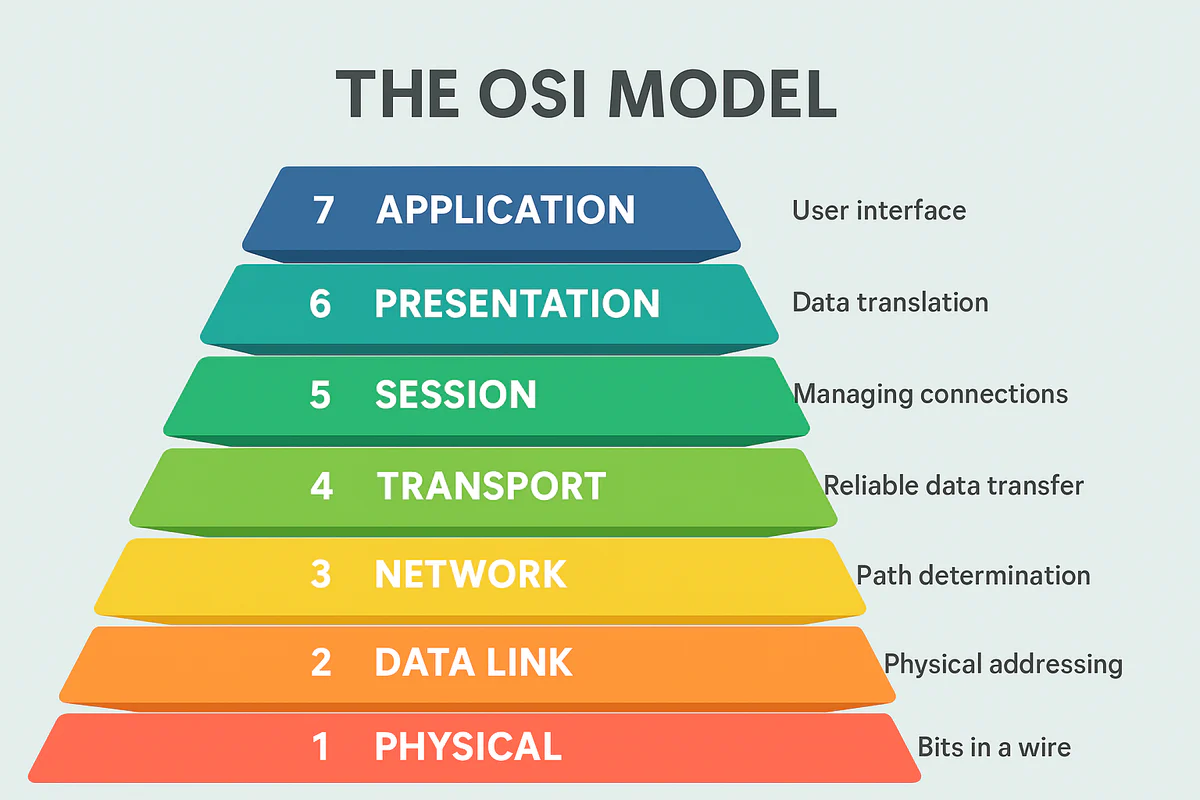
OSI model: The Open Systems Interconnection (OSI) model is a 1984 conceptual framework standardized by the ISO that breaks network communication into seven distinct layers. Well, this doesn’t work in real life
Layers are:
- Application layer: This layer directly interacts with websites such as HTTP/HTTPS, SMTP.
- Presentation Layer: This layer help in encryption of data such as SSL/TLS.
- Session Layer: This layer responsible for sessions between 2 devices such as session cookies.
- Transport Layer: This layer is responsible for flow of data for example (TCP/UDP).
- Network Layer: This layer is responsible for data routing across multiple networks.
- Data link Layer: This layer is to make sure the data transfer to physical layer must be error-free and properly framed.
- Physical Layer: This is lowest layer of the OSI model it operates and make data available from data link layer to hardware in a binary format. This includes data transfer from cables and switches
TCP/IP model:
The TCP/IP model is a four-layered, standardized framework. That defines how data is packetized, addressed, transmitted, routed, and received over networks. This one use in real life
In this as you know there are only 4 layers which are:
- Application layer: This layer directly interacts with websites such as HTTP/HTTPS, SMTP.
- Transport layer: This layer is responsible for flow of data for example (TCP/UDP).
- Internet layer: This layer is responsible for routing data from devices to other devices in a subnet.
- Network access layer: This layer is responsible for data routing across multiple networks. such as MAC, Ethernet.

credit: tecadmin.com
- IP: IP(internet protocol) it is unique 32 bits address assign to a particular device this is made of 32 bits such (4 Octet) for example
00000000.00000000.00000000.00000000 --> 0.0.0.0
11111111.11111111.11111111.11111111 --> 255.255.255.255- This address is made to interact with internet and other devices.
- Gateway: Gateway is device use to connect a particular organization with whole world internet so the organization can use the internet too.
Connect with me Linkedin: https://www.linkedin.com/in/jeet-pal-22601a290/ Instagram: https://www.instagram.com/jeetpal.2007/ X/Twitter: https://x.com/Mr_mars_hacker
And here’s something special for you! 🚨
Join a community of 3,600+ security researchers on our Discord server, where we discuss Web3 vulnerabilities, audits, and much more! 🚀 👉 Join the server here!: https://discord.gg/Y467qAFM4X
메타데이터
- post_id
- 862cc9b7b78f
- slug
- network-testing-core-networking-foundation-part-1-862cc9b7b78f
- url
- https://osintteam.blog/network-testing-core-networking-foundation-part-1-862cc9b7b78f
- canonical_url
- https://osintteam.blog/network-testing-core-networking-foundation-part-1-862cc9b7b78f
- author_url
- https://medium.com/@jeetpal2007
- status
- ok
- fetched_at
- 2026-06-28 04:42:08