TLC Licensee Leaders: Manny Peralta
For-hire vehicle (FHV) driver from the Lower East Side conducts 29,000 trips in under seven years, champions seatbelt use among passengers
TLC Licensee Leaders: Manny Peralta
For-hire vehicle (FHV) driver from the Lower East Side conducts 29,000 trips in under seven years, champions seatbelt use among passengers

Born and raised on the NYC’s Lower East Side neighborhood, for-hire vehicle (FHV) driver Manny Peralta meets up with TLC in Coney Island near his Brooklyn home to talk about leading by example, setting goals, and delivering all-star customer service.
TLC: In your opinion, why is it important to recognize safe driving and great work from drivers?
Manny Peralta: I believe recognizing safe driving and great work from drivers is essential for several reasons. Firstly, it promotes a positive and supportive work environment. When we as drivers feel appreciated for our efforts, we are more likely to feel motivated and satisfied in our roles. This can lead to higher job morale and increased productivity.
Secondly, recognizing safe driving and great work helps to reinforce good habits. By acknowledging and praising drivers for practicing safe driving techniques, it encourages us to continue prioritizing safety on the road. This, in turn, contributes to reducing accidents and ensuring the wellbeing of both the drivers and passengers, and the community.
Additionally, recognizing exceptional work from drivers can serve as a valuable learning opportunity. By highlighting specific instances of great work, other drivers can learn from these examples and strive to improve their own performance. This helps to cultivate a culture of continuous improvement and professionalism within the driving industry.
Recognition acts as a form of encouragement. When drivers receive recognition for their safe driving or outstanding work, it truly boosts our confidence and self-esteem. This positive reinforcement can inspire us and others to keep up the good work, resulting in even better performance and dedication.

Brooklyn-based Peralta encourages safe driving practice across the industry
“Let’s make sure to remain attentive, adhere to speed limits, avoid rushing, and show respect to both fellow drivers and pedestrians.”
TLC: As a safe driver, why do you think setting an example is important to encourage safe practice across the industry?
MP: Setting an example is crucial in encouraging safe driving practices across the driving industry for several reasons. Firstly, when leaders and experienced drivers within the industry consistently demonstrate safe driving behaviors, it establishes a standard that others can aspire to.
By observing and emulating these examples, newer or less experienced drivers are more likely to adopt similar safe driving practices. This creates a ripple effect that promotes a culture of safety throughout the industry. Secondly, setting an example helps to build trust and credibility. When other drivers witness their peers consistently practicing safe driving, they are more likely to trust and respect their advice and guidance. This trust fosters a sense of accountability and responsibility among drivers, as they understand the importance of upholding safe driving practices.
Furthermore, setting an example through safe driving behaviors helps to mitigate risks and enhance overall road safety. When drivers prioritize following traffic rules, maintaining appropriate speed limits, avoiding distractions, and practicing defensive driving techniques, we all contribute to reducing accidents and potential harm to ourselves and others on the road. This not only protects lives but also reduces property damage — our cars.
In addition, setting an example demonstrates professionalism and reliability. Clients and the general public often assess the reputation and credibility of an individual driver based on our adherence to safe driving practices. By consistently setting an example of safe driving, as drivers we can establish ourselves as trustworthy and reputable professionals, which can lead to increased business opportunities and customer satisfaction — AKA a five-star rating.
“Let’s make sure to remain attentive, adhere to speed limits, avoid rushing, and show respect to both fellow drivers and pedestrians.”
TLC: Where did you grow up?
MP: I’m a born and raised New Yorker — Lower East Side.

Inspired by actor Dwayne “The Rock” Johnson, a bobblehead of him sits on Peralta’s dashboard
“We are all just trying to get somewhere, and we all have our own stories and experiences.”
TLC: Tell us about your impression of the taxi and FHV industries growing up.
MP: I never really paid attention to the industry. I would take yellow cabs and base cars, but really did not think about the industry.
TLC: How many years have you been licensed by TLC?
MP: Seven years, with over 29,000 trips on Uber.
TLC: What first influenced you to start driving professionally?
MP: I loved the idea of being able to be my own boss. I was intrigued by the fact that I could make my own hours. And I’m a people person, so I found the idea of having conversations with strangers was cool.
TLC: What was it like for you at the beginning? Was there a learning curve overall?
MP: In the beginning, it was both scary and exciting because of the fact that I had no experience. I had to really learn how to use Waze, how to greet my passengers, and where I could pick up and where I couldn’t. There was definitely a learning curve.
TLC: Do you remember your first trip as a professional driver?
MP: Oh, yes! I remember picking up my first passenger. I will never forget. It was my first Uber trip. It was a mom and daughter. I picked them up in Midtown and took them to Red Hook in Brooklyn. The mom was dropping her off at school. I started driving, without starting the ride on the app. I drove to Brooklyn and when we got to the drop-off location there, I realized that I hadn’t started the trip. I did not get paid for it. It was a lesson learned.

Peralta met up with TLC in Coney Island near his Brooklyn residence
TLC: What have you learned from your passengers over the years?
MP: There is so much that I have learned, but one thing is that we are all just trying to get somewhere, and we all have our own stories and experiences. I have learned about building rapport and a true connection with others.
TLC: As a professional driver who meets so many of them, what is the typical New Yorker like?
MP: For the most part, if you are friendly, they become friendly — with some exceptions.
TLC: Why is providing great customer service important as a NYC taxi or FHV driver?
MP: We don’t know what our passengers are going through. Why not make their day a little better? Plus, you get nice tips and a 5-star rating. I believe it’s all about the experience we provide.
TLC: What passenger feedback are you always most excited to receive?
MP: I love when my passengers express that it was the best Uber or Lyft ride that they ever had. I love hearing that it was impactful.
TLC: Are there any near-future or long-term goals you have for the vehicle you use for work?
MP: My long-term goals are just to keep inspiring and empowering my passengers. Nothing really changes.
TLC: Why is inspiring your passengers important to you?
MP: Inspiring my passengers is of utmost importance to me as it allows me to curate a positive and unforgettable experience for them. By inspiring my passengers, I have the ability to uplift their spirits, boost their motivation, and even ignite their creative spark.
This opportunity to inspire others is truly special, as it enables me to leave a lasting impact on their lives by encouraging them to chase their dreams, think outside the box, and find joy in the simplest moments. In essence, by being an inspiring presence to my passengers, I am actively contributing to the betterment and happiness of not only New Yorkers but also the world as a whole.
“I have learned to have more patience, to listen, and learn from others. I have had the opportunity to learn from so many amazing people from all walks of life. We are all intertwined in this thing called life.”
TLC: Are there any other goals for the future you might like to share? How do you see your career continuing to unfold?
MP: I am currently working on obtaining my life coaching certificate.
TLC: Could you tell us what that entails and when you first got started?
MP: To obtain my life coaching certificate, I have enrolled in a structured training program that equips me with the essential knowledge and skills required to become a certified life coach. Given the abundance of available classes, I conducted thorough research to select the most suitable ones for me. Commencing my training program in early September, I appreciate the flexibility of being able to complete the coursework at my own pace. The classes are conducted online, allowing me to conveniently access the material. In order to obtain my certification, I am required to successfully complete four courses as per the program’s curriculum.
TLC: Why, in your opinion, are mentors, community, and support systems important in achieving goals?
MP: In my opinion, having mentors, a supportive community, and reliable support systems is essential for accomplishing goals as they offer guidance, expertise, and accountability. Mentors possess valuable knowledge and experience, while a supportive community ensures that we are responsible and inspired. Networking opportunities, emotional support, and exposure to fresh ideas contribute to personal growth and learning. Ultimately, mentors and support systems significantly increase the likelihood of successfully achieving and even surpassing our goals. It is only logical to follow someone who has already achieved or possesses what we desire, right?

Conducting over 29,000 trips in seven year, Peralta shares tips on passenger interaction and traffic safety
“When we prioritize traffic rules, we all contribute to reducing accidents and potential harm to ourselves and others on the road. This not only protects lives but also reduces property damage — our cars.”
TLC: Have you ever had a memorable mentor? If so, what was that like?
MP: I can give a few examples. I believe mentors don’t have to be physically present. When I started driving as a TLC-licensed driver, I wanted to be one of the best drivers. My thinking was how can I be a kind and courteous driver. So, I followed someone who I have respect for — Dwayne “The Rock” Johnson. I actually had a bobble head of The Rock on my dashboard.
It was a great conversation starter as passengers used to think it was a bobble head of me. I don’t know if my passengers thought I was a little weird, but it really helped me remain calm and in a Zen mode while driving. Then, about 4 years ago, I met a passenger who has been a mentor to me ever since. The day I met her was memorable. [She was] someone who saw something in me and believed in me and pushed and still pushes me to be the best. A top influencer who leads with her heart. She has taught me that going is harder than staying.
TLC: That’s fantastic. How has being an entrepreneur helped you achieve your other goals in life?
MP: It’s allowed me to work on other projects. Because having the time to pursue my professional development, self-education, is extremely important.
TLC: How many days a week and during what hours do you typically work?
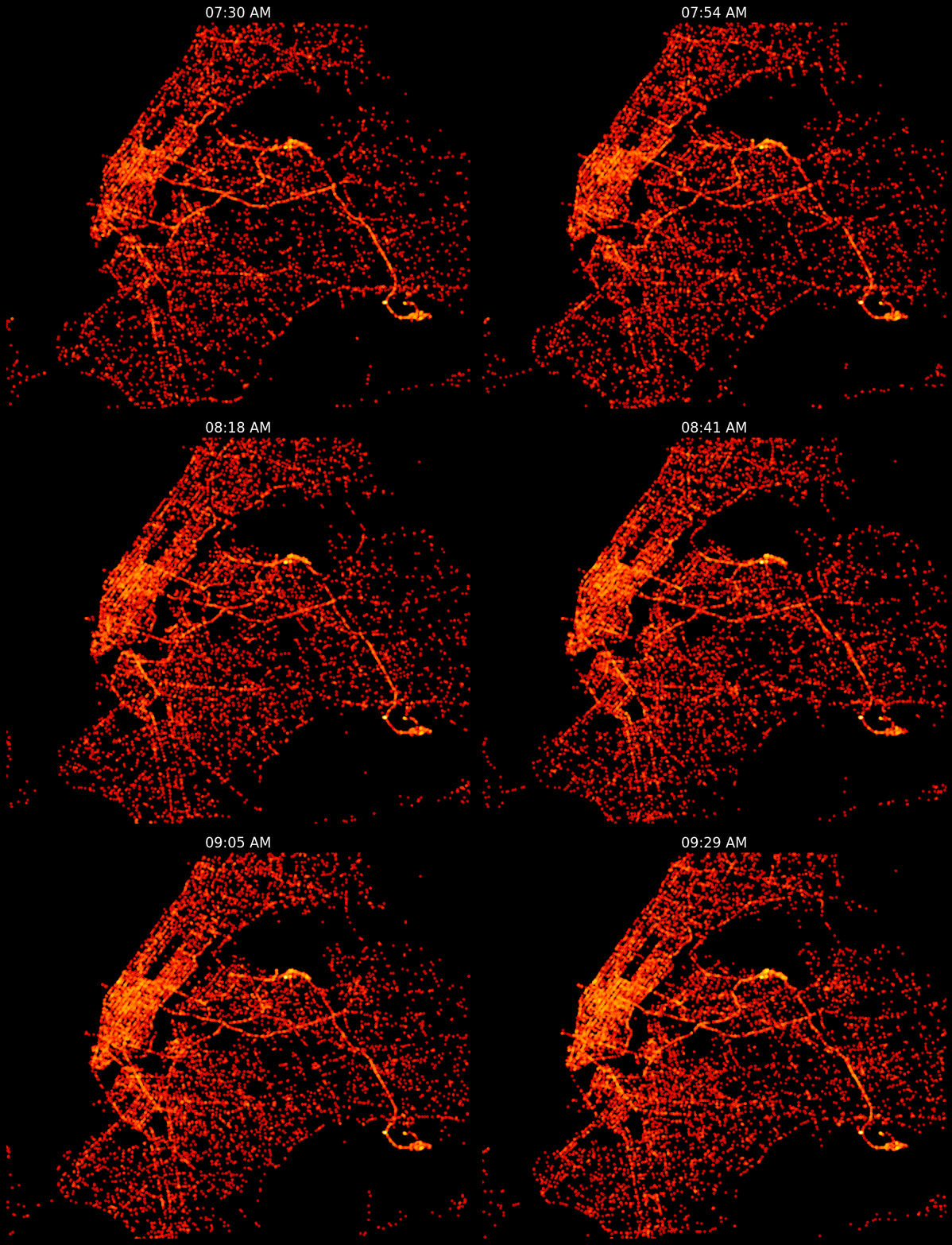
MP: Six days. I love working during the busy hours of 7:00–9:00 a.m. and/or 3:00–10:00 p.m.
TLC: Why is making sure you have adequate rest important as a professional driver?
MP: I know that if I have not had enough rest, I feel foggy, not alert. Ensuring adequate rest is essential for us as professional drivers to maintain alertness, prevent drowsy driving, safeguard our health, and achieve a healthy work-life balance. By prioritizing rest, we can enhance our own safety, the safety of others on the road, and our overall well-being.
TLC: What do you tend to do on your break?
MP: I read books and write my thoughts on those books. Also, taking a 15 min nap is always nice.
TLC: Do you have a favorite lunch or dinner spot in New York?
MP: I have a few: AM Thai on Church and Coney Island, Cafe at Klom Klorm on Himrod Street, and Rossy’s Bakery on East 3rd Street and Ave C.

Peralta cites inspiring passengers as a top motivation
TLC: What is something you feel not many people know about you or would be surprised to learn?
MP: I am really shy.
TLC: As someone who has demonstrated leadership in safety, how would you define safe driving?
MP: Pausing and looking before turning; maintaining legal speed; making sure to use signals when turning; not following to close.
TLC: Comparatively, what is unsafe driving?
MP: Speeding and swerving and being on your phone. By prioritizing rest, we can enhance our own safety, the safety of others on the road, and our overall well-being.
TLC: How is driving in New York different from driving in other cities?
MP: Driving in New York City has a unique rhythm, like an orchestra. Most drivers follow the beat, but sometimes there’s one who loses it. When driving in other cities, I don’t see the same flow.
TLC: What are challenging situations you typically encounter while driving?
MP: One situation is other drivers cutting me off. I have learned to just ignore them. I just imagine that they have to go, really bad, to the bathroom. I just imagine that they have to go, really bad, to the bathroom.
TLC: As a safe driver, what do you suggest to all New York drivers, professional and otherwise?
MP: Let’s take our time when driving, ensuring that we are aware of our surroundings and not be distracted.

A seatbelt advocate, Peralta makes it a point to educate passengers on state law
TLC: What can professional drivers be mindful of when navigating a city like New York whose infrastructure is always evolving?
MP: Paying attention to the signs and the construction workers.
TLC: Since your work might involve using your cell phone at times, such as to accept a trip through an app, does putting your phone on “Do Not Disturb” help prevent other phone use?
MP: If I put my phone on do not disturb the trips do not come in. Therefore, I do not use that option. However, making sure the phone is mounted on my vent makes it easier to not be distracted while accepting a trip.
TLC: Before starting a trip, do you make it a point to remind passengers to wear their seatbelts?
MP: I do remind them. Some passengers are not aware of the law, so I do my best to educate them. I also do thank them and apologize in advance.
TLC: That’s great. In helping educate your passengers about New York State’s seat belt law, what is their response usually?
MP: I believe that a small percentage of people are unaware of the new law. Occasionally, I come across passengers who do not comprehend it. I make an effort to educate them to the best of my abilities. Additionally, I have posted reminders in the back seat to reinforce the importance of following the law. I often point to these reminders, and most passengers understand. However, there have been instances where passengers attempt to bypass the law by not properly securing their seatbelt.
If I don’t hear the click indicating that they have fastened their seatbelt, I playfully turn around and jokingly comment, “You’re cheating!” This usually prompts them to properly fasten their seatbelt.
TLC: Are they surprised to learn that they, as passengers, could receive a ticket if the vehicle is pulled over?
MP: When I remind passengers to buckle up, I often mention that it’s to avoid receiving a ticket. Some passengers are unaware that not wearing a seatbelt can result in a fine for them.

A full-time FHV driver, Peralta suggest paying attention to road signs and construction workers when navigating the City
TLC: In your opinion, do you think drivers need to be more aware of bike lanes and cyclists on the road?
MP: Yes. There is actually a group on Reddit that takes pictures of cars blocking the bike lane, so I always do my best not to stay in a bike lane.
TLC: That’s interesting. Do you think social media has helped create an easier flow of industry-related information for drivers?
MP: Even though social media may not be the best place to find information about the industry, there are websites, forums, and online communities made just for us ride-sharing drivers. These platforms give drivers a place to talk about our experiences, ask questions, and find information about the industry.
TLC: In what way do you feel social media has connected drivers and passengers, if at all?
MP: On social media sites like Facebook and Twitter, there is no direct way for drivers and riders to talk to each other. From my understanding, the main reason for these sites is social networking, not to bring together drivers and passengers. But there are also other sites and technologies that are made to bring drivers and passengers together. Ride-sharing services like Uber and Lyft have their own apps that let riders order rides and get in touch with drivers who are nearby.
These apps make it easy for drivers and passengers to meet and talk to each other while on the road, which I love. Also, some ride-sharing services have features in their apps that let both drivers and passengers rate their rides and give comments on them. We as drivers can use this information to improve our service, and passengers can use it to share their ideas and concerns.
TLC: Do you remind your passengers to look before exiting the vehicles to avoid any issues with cyclists?
MP: Yes. Always. I do not want my door taken off and I do not want to have my passenger hurt by a biker, and vice versa.

Peralta enjoys being able to shape his own schedule as a professional driver
TLC: Even if NYC’s taxi and FHV industries change and evolve over time, what is something you hope always remains a part of them?
MP: Driving on our terms, when we want.
TLC: Are there any life lessons you have learned from being a part of this industry?
MP: Of course, yes. I have learned to have more patience, to really get to listen to others, and to learn from others. I have had the opportunity to learn from so many amazing people from all walks of life. We are all intertwined in this thing called life.
TLC: What advice do you have for new and seasoned drivers alike?
MP: Let’s make sure to remain attentive, adhere to speed limits, avoid rushing, and show respect to both fellow drivers and pedestrians. Kindness should be our guiding principle, as negative experiences can easily become ingrained habits, leading to prolonged stress and tension. By maintaining a positive mindset and practicing considerate behavior on the road, we can ensure safer and more pleasant driving experiences for ourselves and others.
This interview has been edited and condensed for length and clarity.
메타데이터
- post_id
- 863e1af0ceb4
- slug
- tlc-licensee-leaders-manny-peralta-863e1af0ceb4
- url
- https://medium.com/@NYCTLC/tlc-licensee-leaders-manny-peralta-863e1af0ceb4
- canonical_url
- https://medium.com/@NYCTLC/tlc-licensee-leaders-manny-peralta-863e1af0ceb4
- author_url
- https://medium.com/@NYCTLC
- status
- ok
- fetched_at
- 2026-07-24 10:24:05