A Court of Feminism and Double Standards
From Brides to BookTok Heroines, There’s Always a Right Way to Be a Woman
A Court of Feminism and Double Standards
From brides to BookTok heroines, there’s always a right way to be a woman
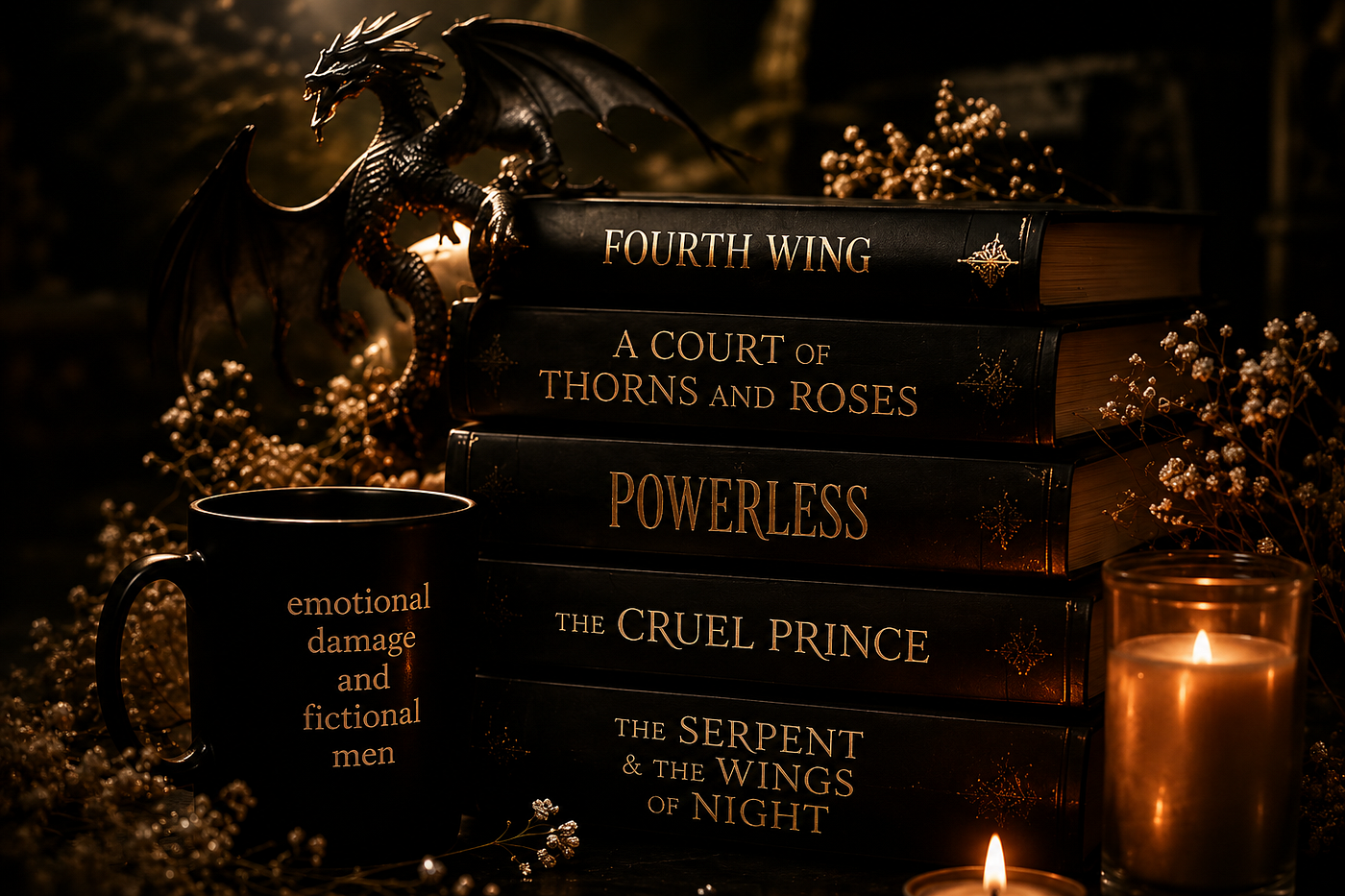
Image created by ChatGPT — The author has the provenance and copyright.
This summer, I learned my aunt is a murderer.
I know because I helped her do it.
217 times.
She got married in July. From the moment the wedding was officially confirmed in December, our evenings became casualties of conversation — consumed by debates over lipstick shades, dance performances, song selections, and excited speculation about what the celebrations would eventually look like. Every discussion — comical or concentrated — was eventually punctured by my aunt’s zealous indignation at a specific Hindu ritual.
Kanyadaan is one of the most sacred rituals of a South Asian wedding. Literally translating to the “giving away of a daughter,” the ceremony traditionally symbolizes the transfer of the bride’s care and responsibility to the groom. For 217 nights, my family would be subjected to my aunt’s and my monologues — cursing, dissecting, and damning the specters of patriarchy that still linger in the corners and crevices of our culture and heritage. After our Shakespearean soliloquies, I am confident that one or two ghosts must have extracted a few strands from the latent yet potent webs of patriarchy that entangle nearly every ritual, tradition, and expectation — leaving them, if not dead, at least wounded.
Despite our battle strategies and war cries, I found that these apparitions weren’t only blatantly engulfed in the Kanyadaan rituals, which was expected of course, but actually present in the wedding venue in nuanced ways.
Seeing as the vast majority of our wedding guests are young women, no conversation is ever complete without some reference to Xaden Riorson. My family friend group as well as many others I am sure are deeply enrapt but if not adjacent to BookTok, a massive subcommunity on TikTok where creators share book reviews and recommendations. In other words, it is the modern age’s equivalent of tea and biscuits, Bible camps, and neighborhood gossip: a sacred grapevine where allegiances are formed and hearts are broken in the span of a few seconds. While it does feature a few different ones, one of the cornerstone genres on BookTok is romantasy, a fusion between a romantic story, which more often than not is a slow enemies-to-lovers burn, in a fantastical, whimsical universe.
An avid reader myself, any conversation regarding Kaz Brekker, the Sorrengail family or wingspan length has me absolutely rapt.
But BookTok is not all that. The social media wave has more riptides than we care to admit.
Here me out.
Throughout the four day wedding, I heard a boatful of my friends exclaim how absolutely enchanting they find BookTok characters. That comment was almost always punctuated by sadness and frustration that they do not appear the same way.
Feyre Archeron, Violet Sorrengail, and Juliette Ferrars may exist in entirely different universes, but apparently their beauty standards do not: high cheekbones, God-crafted jawlines, impossibly striking eyes, and hair that somehow manages to be both rich and effortlessly gorgeous. They are all beautiful, of course, but I can’t help wondering whether BookTok, in its endless celebration of these heroines, is also quietly reinforcing a very particular version of what a female protagonist is supposed to look like. Would the delicate equilibrium of the romantasy universe really be thrown off-kilter if the female main character did not have a jawline that can cut glass and curves that belong in the integration section of a calculus textbook? I am not the most petite person in the room, but I am pretty confident that, alongside physical and mental training, I could absolutely kick wyvern ass.
The same thing can be said for the men. Here, the homogeneity applies to personality as much as appearance. Don’t get me wrong. Obsessing over fictional men may as well be a religion, but must every male lead be the same black-clad, perpetually brooding man, tattoos blanketing a sculpted torso, suffering under the weight of mommy and/or daddy issues, seemingly accompanied by his own personal storm cloud, with every sentence delivered through a thick veneer of arrogance?
In real life, I am pretty sure some of these men would be walking, talking red flags. The touch-her-and-die thing is hot, but touch-her-and-communicate-when-you’re-upset? Revolutionary.
Touch-her-and-respect-her-independence? Even better.
Touch-her-and-go-to-therapy? Now we’re talking. Honestly, I’m beginning to think “emotionally available” is a rarer magical ability than shadow manipulation.
Of course, it is important to acknowledge that BookTok does have some really cool things going for it. Across much of the canon, we see a surprisingly diverse range of identities and communities represented. Darker-skinned characters, LGBTQ+ characters, and characters with disabilities have all found meaningful places in these fictional worlds. I understand that no author can represent every community under the sun and that their fictional worlds are not obligated to mirror the cultural landscape or demographics of our own.
Just humor me for a second.
One of the main rivulets of the BookTok sea is the stream of AI-generated reels that depict the courts, kingdoms, and character scenes that have made it to the BookTok Hall of Fame. What I have noticed, however, is that the few characters who do not conform to traditional BookTok beauty standards — all of whom exist on the periphery of the storyline — still tend to follow familiar phenotype trends associated with East Asian and African communities. Something tells me both Velaris and Terrasen would still be standing if we let a little South Asian culture into the mix? I am not asking Lauren Roberts to interrupt the plot of Powerless for a full-blown kanyadaan between Paedyn and Kai. But surely it would not bring the kingdom of Ilya to its knees to give us a brown-skinned character with big brown eyes.
Any conversation about BookTok is not complete without some reference to its most controversial feature. The majority of the books that blanket my shelves contain one — or several — spicy scenes. While those scenes may occupy ten or fifteen pages at most in a 500-page book, people often make it seem as though they constitute the entirety of the eleven-book series itself.
“You are reading porn,” is the comment I hear the most.
If ACOTAR counts as reader porn, does watching Game of Thrones count for the same? What about Bridgerton? Or Euphoria? All three are widely lauded for their storytelling, character construction, and whatever other metric we have collectively decided makes something “good television.”
A woman takes her clothes off in a book. Hearsay. All the political intrigue, magical systems, warfare, personal development, grief, betrayal, and world-building be damned.
There are many examples I could point to, but till date, my favorite is Nesta Archeron. Girl has problems, but I will personally wake myself up out of coma to confront anyone that calls her a bitch. Confronting both her inner demons and literal monsters, the eldest Archeron sister becomes the embodiment of grit, perseverance, and resilience — undoubtedly one of the most badass female protagonists to ever grace the page. But I think what makes her even cooler is her comfort with her body and her willingness to exist unapologetically in her own skin.
Unabashed sex, yes, but all of a sudden, her steamy scenes feel like more than just bait to keep readers turning pages — the kind of gratuitous nudity we so often see on TV. Instead, they serve more as a proud declaration of feminine strength. Yes, this is what I am. Curves, edges and all.
My aunt’s wedding eventually drew to a close, but the spirits of BookTok never ceased appearing here and there. She still expresses her frustrations regarding kanyadann, as is the way of life.
All I know is there will always be some force dictating the definition of a woman. Whether it be the specters of the past, a modern day politician, or the nuances of a reading community, femininity is still subject to the cries of proper rituals and appearance.
Let their cries fall on deaf ears. Some of us have dragons to ride.
메타데이터
- post_id
- 86409db61bc8
- slug
- a-court-of-feminism-and-double-standards-86409db61bc8
- url
- https://medium.com/bitchy/a-court-of-feminism-and-double-standards-86409db61bc8
- canonical_url
- https://medium.com/bitchy/a-court-of-feminism-and-double-standards-86409db61bc8
- author_url
- https://medium.com/@aashithakur2016
- status
- ok
- fetched_at
- 2026-08-20 08:51:15