The HALO Trade: Reassessing Asset Light Models in an AI-Driven Economy
Over the past 18 months, the largest technology companies in the world have quietly rewritten their capital allocation playbooks. Amazon…

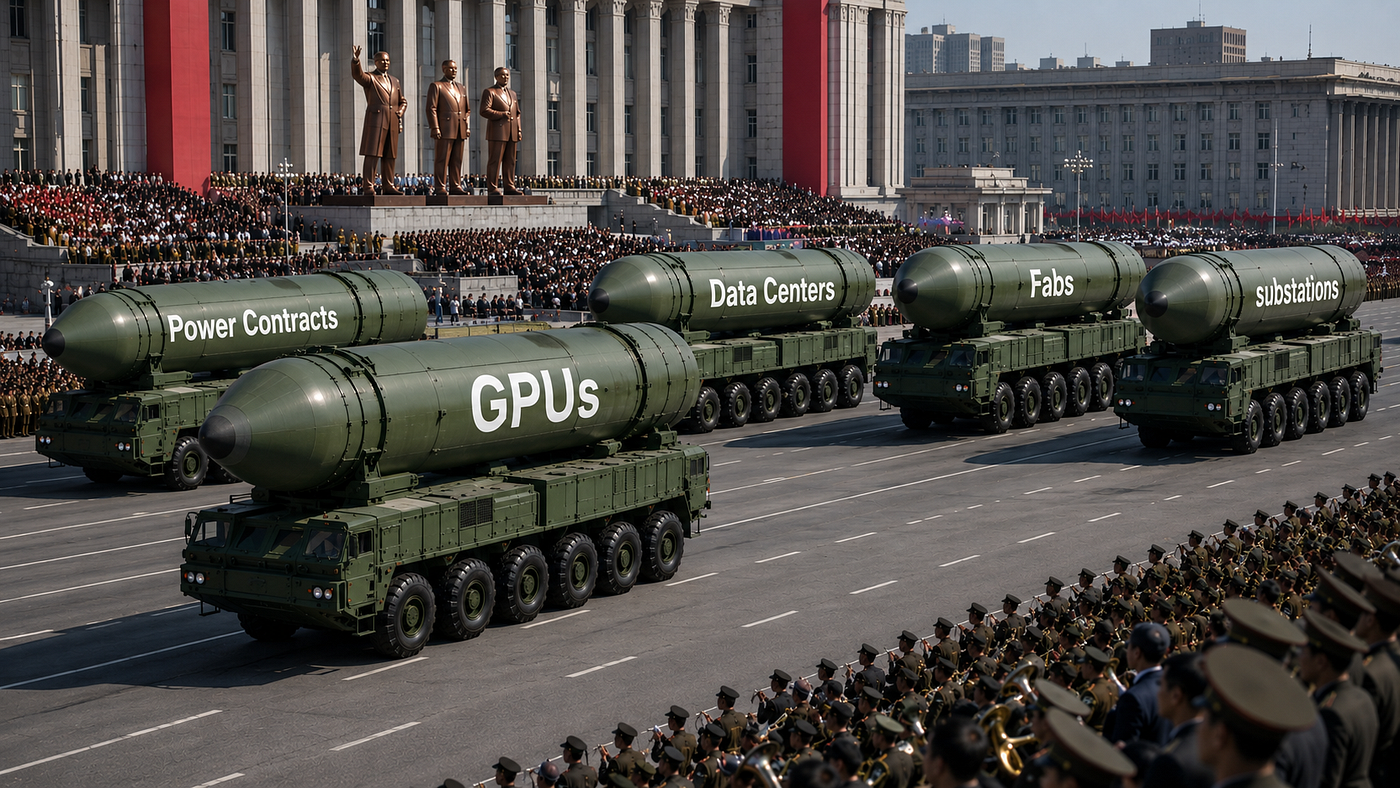
For decades, asset-light companies captured outsized returns. In the age of AI, advantage is migrating toward high-asset, low-obsolescence (HALO) businesses that control the physical constraints AI cannot abstract away.
The HALO Trade: Reassessing Asset Light Models in an AI-Driven Economy
Over the past 18 months, the largest technology companies in the world have quietly rewritten their capital allocation playbooks. Amazon, Microsoft, and Meta are no longer behaving like software companies optimizing for marginal cost efficiency. They are behaving like infrastructure providers, committing tens of billions annually to data centers, energy, and physical capacity. That shift is structural.
The consensus view is that AI strengthens software. But the emerging data suggests it compresses it.
This dynamic sits at the center of what investor Josh Brown has described as the “HALO Trade,” a rotation toward companies that are high asset and low obsolescence risk.
The question is not whether the asset-light model disappears. It is whether the sources of advantage within it have fundamentally changed.
The Asset-Light Era: A Brief Retrospective
The dominance of asset-light models was not accidental. Companies such as Salesforce, Shopify, and Airbnb demonstrated that software could decouple growth from capital intensity. High margins, low marginal costs, and global distribution created powerful operating leverage.
This drove a multi-decade expansion in valuation multiples, underpinned by a simple assumption: human cognition was scarce. But AI breaks that assumption.
AI and the Compression of Knowledge Work
As I argued in my recent post, *Why AI Will Reprice Labor Before It Replaces It*, AI is reshaping the economics of knowledge work far more than it is eliminating it.
Goldman Sachs estimates that up to 300 million jobs globally could be exposed to automation. Anthropic, McKinsey, and Microsoft all converge on the same conclusion: tasks that are structured, repeatable, and screen-based are increasingly addressable by AI.
The implication is economic compression. Tasks that once justified premium pricing become interchangeable when AI can perform them at near-zero marginal cost. As the economics of cognition compress, the locus of value shifts to what AI cannot easily replicate.
The Reemergence of Asset-Heavy Advantage
Capital is already adjusting. Quanta Services is seeing demand surge from grid expansion and data center development, effectively becoming a leveraged proxy for AI infrastructure. Coatue is allocating capital toward land acquisition for data center development, a marked shift from its historical focus on software. Hyperscalers are moving upstream into energy procurement and generation capacity.
Less obvious beneficiaries are emerging as well. Industrial distributors, HVAC networks, and electrical component suppliers are seeing structurally higher demand as compute scales into physical systems. These are not traditional venture categories, but they sit directly on the constraint layer.
These are not isolated decisions. Capital is moving upstream because the bottleneck has shifted there. The constraint is no longer model capability. It is infrastructure.
The International Energy Agency estimates that data centers consumed approximately 415 TWh of electricity in 2024, roughly 1.5% of global demand. Goldman Sachs projects that demand could grow by more than 150% by 2030.
Electricity, land, and transmission are now gating factors. These are industrial constraints, not software problems.
Labor Market Paradox: Blue-Collar Resilience
AI is also reshaping labor dynamics in a way most investors underestimate.
Somewhat surprisingly, automation risk is increasingly inverted relative to income. The longstanding advice from parents and guidance counselors to pursue ‘safe’ careers in law or software now looks woefully outdated. Research from the Brookings Institution shows that roles built on structured cognitive output (i.e., lawyers, financial analysts, software programmers) are becoming more compressible. Roles requiring physical presence (i.e., plumbers, hair stylists, mechanics), tacit judgment, and real-world variability are more resilient.
At the same time, skilled trades across developed markets face persistent shortages. This is not cyclical. It reflects a structural shift in where value accrues.
What Founders Are Getting Wrong
Most AI startups today are not building durable businesses, however. They are building thin orchestration layers on top of commoditizing models. In many cases, these businesses lose pricing power as model costs decline or capabilities converge.
Durability in this environment comes from four sources:
- Control over infrastructure or distribution
- Proprietary data generated through real-world operations
- Integration into high-frequency, mission-critical workflows
- Unit economics where AI expands margin rather than compresses it
AI lowers barriers to entry but it does not create defensibility.
Implications for VCs and LPs
The HALO framework is not an argument for blindly backing capital-intensive businesses. It is a warning about concentration risk.
The question is not asset-heavy versus asset-light. It is whether the asset base compounds advantage.
This requires more disciplined underwriting:
- Separate productive assets from commoditized capex
- Treat regulatory and operational complexity as potential moats
- Evaluate how software and physical systems reinforce each other
For LPs, portfolio construction will need to evolve. Portfolios concentrated in asset-light software are increasingly exposed to margin compression and accelerated competition.
Selective exposure to infrastructure, industrial systems, and AI-enabled physical operations provides more balanced positioning.
Final Word
The asset-light model is not obsolete, but its edge has narrowed. AI reduces the cost of intelligence. It does not reduce the cost of the physical world.
Competitive advantage is shifting toward businesses that control the constraints AI cannot abstract away. Power, infrastructure, labor, execution.
The last cycle rewarded companies that scaled without assets, but the next cycle will reward those that deploy assets in ways that compound advantage. That shift is already underway. Most investors are still underwriting the previous cycle.
***Jonathan Tower has been a global venture investor for over 20 years, having managed more than $5 Billion in AUM, invested in more than 85 companies, and seeded 9 companies that went on to become unicorns across three core investment themes: consumer (marketplaces, ecommerce enablement, digitally native brands), enterprise (software, services, infrastructure, storage, data orchestration) and frontier technologies* (AI/ML, IoT, robotics, Fintech, etc).
Jonathan’s direct investments have resulted in more than $10 Billion in exits, including early bets in Jet.com (acquired by Walmart for $3.5 Billion), Dollar Shave Club (acquired by Unilever for $1 Billion), Freshly (acquired by Nestle for $1.5 Billion), IfOnly (acquired by Mastercard), InsideView (acquired by Demandbase), and MapR Technologies (acquired by HP). Other notable investments, which Jonathan led or helped champion, include Groq (acquired by Nvidia for $20 Billion), Hammerspace, Cohere, TogetherAI, Snorkel AI, Jeeves, SingleStore, Artera, Cart.com, Madison Reed, Qumulo, and many other companies that have gone on to become market leaders.
Jonathan writes frequently on venture capital and technology topics on his blog, Adventure Capitalist, and he’s been a frequent contributor to The New York Times, Fortune, The Wall Street Journal, FastCompany, Forbes, The Washington Post, The LA Times, and other leading publications.
X: @jonathan_tower; instagram: jonathan_tower
메타데이터
- post_id
- 865388fcaeb3
- slug
- the-halo-trade-reassessing-asset-light-models-in-an-ai-driven-economy-865388fcaeb3
- url
- https://medium.com/@jtower09/the-halo-trade-reassessing-asset-light-models-in-an-ai-driven-economy-865388fcaeb3
- canonical_url
- https://medium.com/@jtower09/the-halo-trade-reassessing-asset-light-models-in-an-ai-driven-economy-865388fcaeb3
- author_url
- https://medium.com/@jtower09
- status
- ok
- fetched_at
- 2026-06-22 00:24:50