PPC for Ecommerce in 2025: How the Best PPC Agencies Drive Profitable Paid Growth for Online…
Ecommerce paid advertising has become one of the most technically demanding disciplines in digital marketing — and one where the…
PPC for Ecommerce in 2025: How the Best PPC Agencies Drive Profitable Paid Growth for Online Retailers
Ecommerce paid advertising has become one of the most technically demanding disciplines in digital marketing — and one where the performance gap between specialist and generalist management is most visible in bottom-line results. Online stores running self-managed Google Ads campaigns or working with agencies without specific ecommerce paid search expertise routinely waste 40 to 60 percent of their advertising budget on impressions and clicks that were never likely to produce profitable orders. The stores building sustainable paid acquisition programs that scale efficiently with revenue growth are the ones working with a best ppc agency that understands the specific mechanics of ecommerce paid search — Shopping campaign architecture, product feed optimization, Performance Max management, dynamic remarketing, and margin-calibrated ROAS targeting — and applies this expertise systematically across every campaign decision.
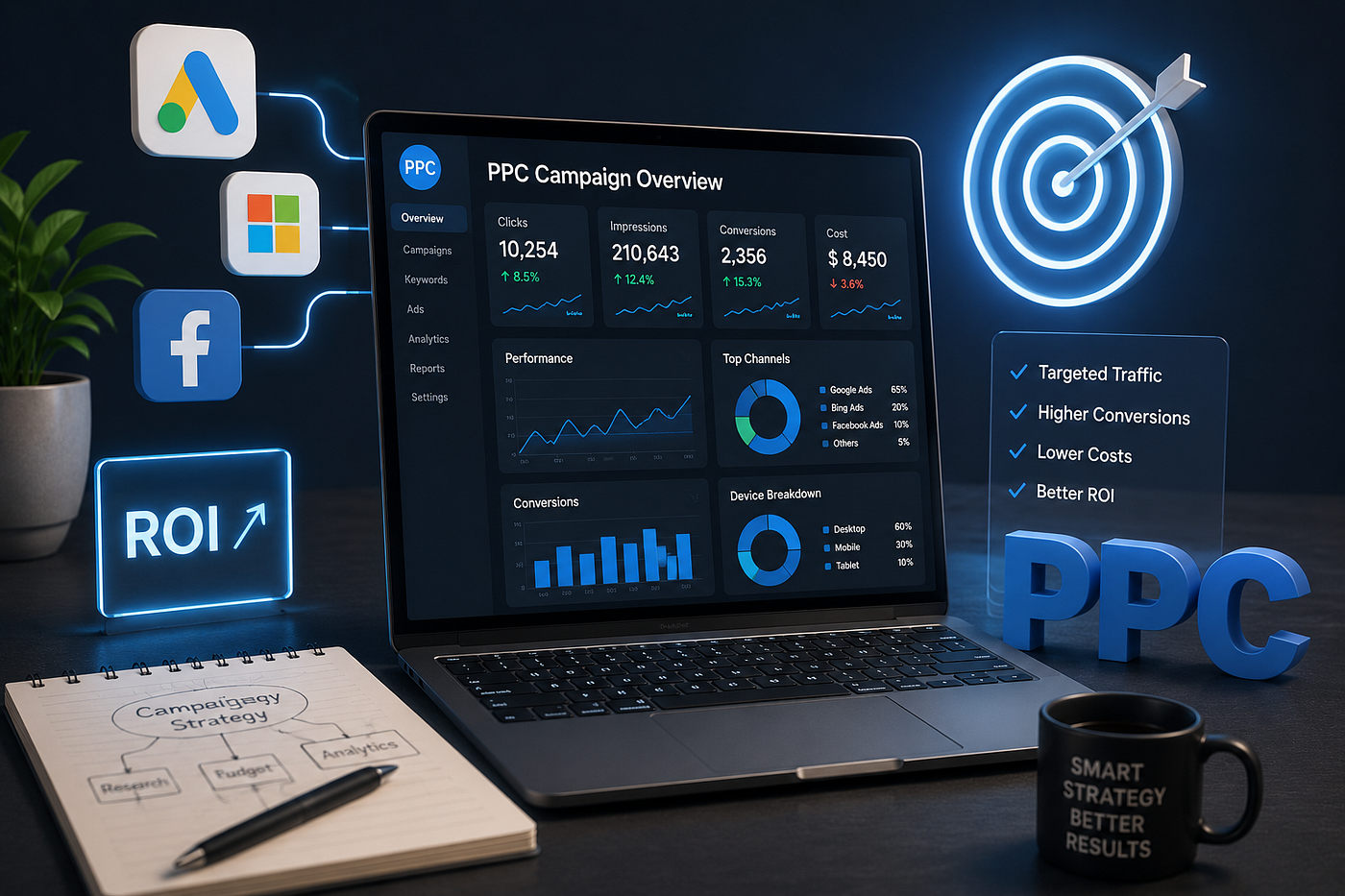
This article covers what expert ecommerce PPC management actually involves, where most programs systematically leave profitability on the table, and how specialist agency partnership builds the paid acquisition engine that scales efficiently alongside revenue growth.
Product Feed Quality: The Foundation of Shopping Campaign Performance
The most important insight for any brand managing Google Shopping campaigns is that Shopping campaign performance is determined primarily by product feed quality rather than bid strategy — and that feed optimization is therefore the highest-priority investment for improving Shopping campaign outcomes.
Google Shopping’s matching algorithm uses product feed content as the primary signal for determining which search queries trigger ad display. Unlike text ads where keyword targeting explicitly specifies which searches trigger ads, Shopping ads are matched to relevant searches based on how well the product titles, descriptions, categories, and attributes in the Merchant Center feed align with the searcher’s query. A product feed with keyword-optimized titles matches more relevant queries and produces better-targeted traffic than a feed with manufacturer-default titles that don’t reflect how shoppers actually search.
Product title optimization is the single highest-impact feed improvement available to most ecommerce stores. Leading product titles with the most important search-relevant information — brand, product type, key differentiating attribute, and critical specifications in the format that shoppers use — consistently improves Shopping campaign click-through rates and conversion rates simultaneously by matching ads to more relevant queries and communicating value more clearly at the moment of search.
Ecommerce ppc agency specialists begin every Shopping campaign engagement with a comprehensive feed audit — evaluating title format and keyword optimization, description completeness, category accuracy, attribute coverage, and image quality across the full product catalog before any bidding strategy decisions are made.
Performance Max Management: Maximizing Automated Campaign Efficiency
Performance Max has become Google’s recommended campaign type for ecommerce advertising — combining Shopping, Search, Display, YouTube, and Gmail inventory into a single automated campaign that Google’s machine learning optimizes across all surfaces simultaneously. Its potential to expand reach and improve conversion efficiency is genuine — when configured correctly and managed actively rather than treated as a self-managing automation.
The Performance Max inputs that most directly determine campaign performance are: asset group creative quality (compelling headlines, descriptions, and visual assets that communicate product value clearly), audience signals that identify high-value customer profiles for Google’s learning algorithms, product feed quality that determines Shopping placement matching and relevance, and conversion tracking accuracy that provides the signals Google’s automated bidding uses to optimize toward revenue rather than arbitrary proxy metrics.
Performance Max campaign segmentation — creating separate campaigns for different product categories, margin tiers, or seasonal priorities — allows budget allocation and performance optimization to be calibrated to the specific commercial characteristics of each product segment. A single Performance Max campaign across an entire product catalog optimizes toward aggregate conversion value without the ability to differentiate between high-margin and low-margin product performance, consistently producing suboptimal allocation compared to segmented campaigns with margin-appropriate ROAS targets.
Best ppc agency management of Performance Max campaigns goes well beyond initial setup — actively managing asset performance through Search Insights reports, adjusting audience signals based on conversion quality data, segmenting product groups by commercial priority, and monitoring search term coverage to identify query types that standard Shopping campaigns handle better than Performance Max.
Dynamic Remarketing: Recovering High-Intent Abandoned Shoppers
Dynamic remarketing — serving product-specific ads featuring the exact products a user viewed or added to cart without completing purchase — is consistently the highest-ROAS campaign type in ecommerce ad accounts and among the most underinvested relative to its commercial contribution.
The purchase intent signal carried by a user who visited a product page, examined images, read reviews, and added the item to cart before navigating away is substantially higher than any cold audience signal available through interest or demographic targeting. This intent signal translates directly to conversion rate premium — cart abandonment remarketing campaigns consistently achieve conversion rates 5 to 10 times higher than prospecting campaigns reaching comparable audiences cold.
Audience segmentation within remarketing dramatically improves performance beyond treating all past visitors identically. Cart abandoners — users who placed items in cart without completing purchase — represent the highest purchase intent and warrant the most aggressive bidding, most urgent messaging, and potentially cart-specific incentive creative. Product page viewers who didn’t add to cart represent earlier intent stages requiring different messaging. Past purchasers represent cross-sell and upsell opportunities rather than initial purchase opportunities and should receive product recommendations rather than reminders of previously purchased items.
Ecommerce seo agencies coordinating with paid search programs ensure that the product pages generating the highest remarketing audiences are also the pages most comprehensively optimized for conversion — recognizing that organic and paid channels share the same conversion architecture and that improvements benefiting one channel typically benefit both.
5 FAQs
Q1: What ROAS target is appropriate for ecommerce Google Shopping campaigns?
ROAS targets should be calibrated to gross product margins rather than set to industry benchmarks. A product with 50 percent gross margin can profitably sustain lower ROAS than a product with 20 percent gross margin. As a starting framework: ROAS target should exceed (1 / gross margin percentage) to ensure advertising costs don’t exceed gross margin contribution. For a 40 percent margin product, the break-even ROAS is 2.5x; a target of 3.5x to 4x provides profitability margin. Segment campaigns by margin tier rather than applying uniform ROAS targets across products with different margin profiles.
Q2: Should ecommerce stores use Performance Max or standard Shopping campaigns?
Both, in a coordinated structure. Performance Max provides broader inventory reach and strong automated optimization with quality inputs. Standard Shopping campaigns provide more granular control over specific product segments and query types where Performance Max’s automated targeting produces less efficient outcomes. Running both types simultaneously — with clear product segmentation and budget allocation logic — typically produces better total results than relying exclusively on either campaign type.
Q3: How important is landing page speed for ecommerce PPC performance?
Very important — directly affecting both conversion rates and Quality Scores that determine CPC. A product page that loads in 5 seconds on mobile loses a significant portion of paid traffic before the page fully renders, and those lost visitors still incur per-click costs. Google’s landing page experience assessment in Quality Score considers page load speed as a factor, meaning slow landing pages both reduce conversion rates and increase CPCs simultaneously. Page speed optimization for high-traffic product pages consistently improves paid search efficiency across both metrics.
Q4: What’s the best approach to competitor product bidding in ecommerce PPC?
Bidding on competitor brand terms and specific competitor product names can capture searchers in active comparison mode — the highest purchase intent audience available in paid search. These campaigns require carefully crafted comparative messaging that addresses the specific comparison the searcher is making rather than generic promotional content. Competitor bidding campaigns typically have higher CPCs than branded campaigns but lower CPCs than competitive category terms, with conversion rates that vary based on how directly the advertised product addresses the needs that drove the competitor search.
Q5: How should ecommerce stores handle seasonal products in PPC campaigns?
Seasonal product campaigns should launch 2 to 4 weeks before peak demand — allowing Google’s automated bidding systems to accumulate conversion data before the highest-volume selling period begins. Campaigns launched at peak season start with learning phase inefficiency during the most commercially valuable selling window. Post-season wind-down should reduce but not eliminate seasonal product campaigns — maintaining minimum impressions during off-season preserves campaign learning history that makes the following season’s campaign launch more efficient than rebuilding from scratch annually.
메타데이터
- post_id
- 867c9ea0ff8a
- slug
- ppc-for-ecommerce-in-2025-how-the-best-ppc-agencies-drive-profitable-paid-growth-for-online-867c9ea0ff8a
- url
- https://medium.com/@rankfastusa/ppc-for-ecommerce-in-2025-how-the-best-ppc-agencies-drive-profitable-paid-growth-for-online-867c9ea0ff8a
- canonical_url
- https://medium.com/@rankfastusa/ppc-for-ecommerce-in-2025-how-the-best-ppc-agencies-drive-profitable-paid-growth-for-online-867c9ea0ff8a
- author_url
- https://medium.com/@rankfastusa
- status
- ok
- fetched_at
- 2026-06-13 07:35:29