Strange Buildings: A Dive into Uketsu’s Third Interactive Mystery Masterpiece
*Warning: This book contains mention of murder, cults, suicide, rape. It’s not necessarily graphic in its description, but it’s also not…
Strange Buildings: A Dive into Uketsu’s Third Interactive Mystery Masterpiece
*Warning: This book contains mention of murder, cults, suicide, rape. It’s not necessarily graphic in its description, but it’s also not necessarily a light, soft read. Read at your own discretion.
www.jordyngobble.com
Strange Buildings is a Japanese horror-mystery book by author and YouTube enigma Uketsu. This is his third book, and second in a series, regarding the strange ways that buildings’ floor plans can reveal sinister, criminal motives. While it builds off of Strange Houses conceptually, you don’t need to have read it before Strange Buildings as the books do not build off each other story-wise. Compared to his other two books, Strange Buildings is practically triple the size, demonstrating how Uketsu has really settled into his unique format with this book and is now able to expand his floor plan concept to tell a far more intricate story.
If you haven’t read one of his books before, it’s important to note that the style diverges quite a bit from the typical mystery novel. The dialogue, for one, is formatted like a script, going back and forth using names during interviews rather than quotation marks, forgoing the overuse of “said” or “explained.” For instance:
AUTHOR: Are you all right?
NEGISHI: Yes, sorry. I just feel so anxious all of a sudden.
You may notice from this example that the story is told from the perspective of “the author.” While the story is fictitious, Uketsu formats the book as if it is a retelling of his firsthand investigations into strange buildings. This has a somewhat similar effect as the Blair Witch Project, a mockumentary posed as found footage about a group’s search for the mysterious Blair Witch. This ups the dread as fiction is framed as reality.
The more conversational and simple writing style aids in this realism. Uketsu’s writing isn’t super complex, and it’s not going to get literary awards for its superfluous verbiage or metaphors. It does, however, rank supreme in creativity. This is why it’s so easy to fly through his books (I read his first two books in just a day each, and Strange Buildings in two.). The story and investigation methodology itself are interesting enough, and they’re not hidden behind complex sentences or unnecessarily long explanations. The language is straightforward, clear, and concise, making it easy for readers to focus solely on solving the mysteries.
As hinted in the opening, the most intriguing aspect of Uketsu’s books are their use of diagrams to tell a story. In Strange Buildings and Strange Houses, we examine floor plans for evidence that the architecture was designed with sinister intent. Strange Buildings in divided into 11 preliminary chapters or “cases” with a floor plan introduced at the top of each one. As the author interviews previous owners or people circumstantially related to the buildings, we learn more about the purpose of strange architectural choices and how the seemingly isolated cases interconnect.
As analyzing the floor plans is a key aspect to solving the mystery, diagrams are presented regularly and adapt using markers or shading to emphasize the points being made by the characters verbally. Take this for example:
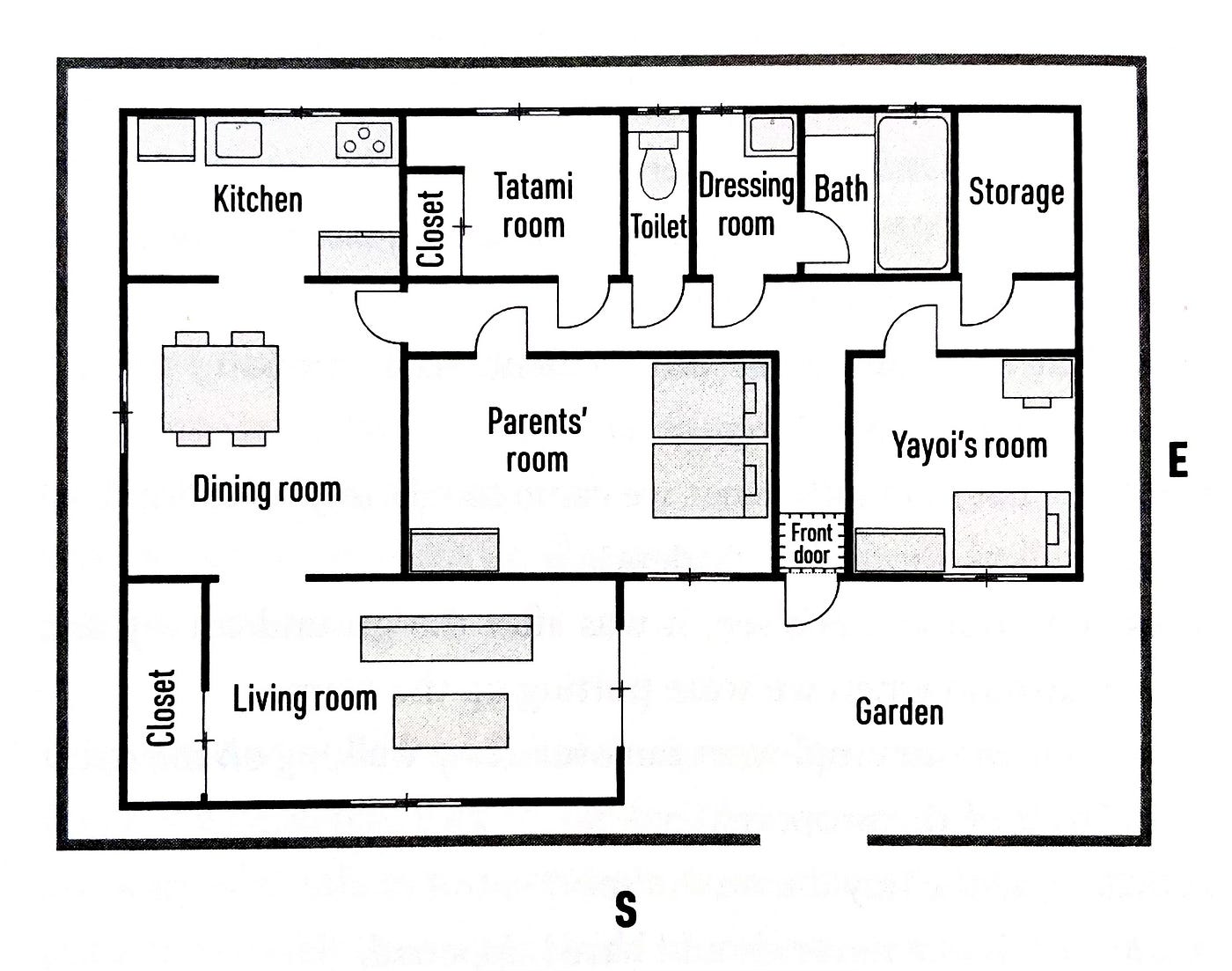
This is the floor plan for Case 1. It shows the layout of the entire house.
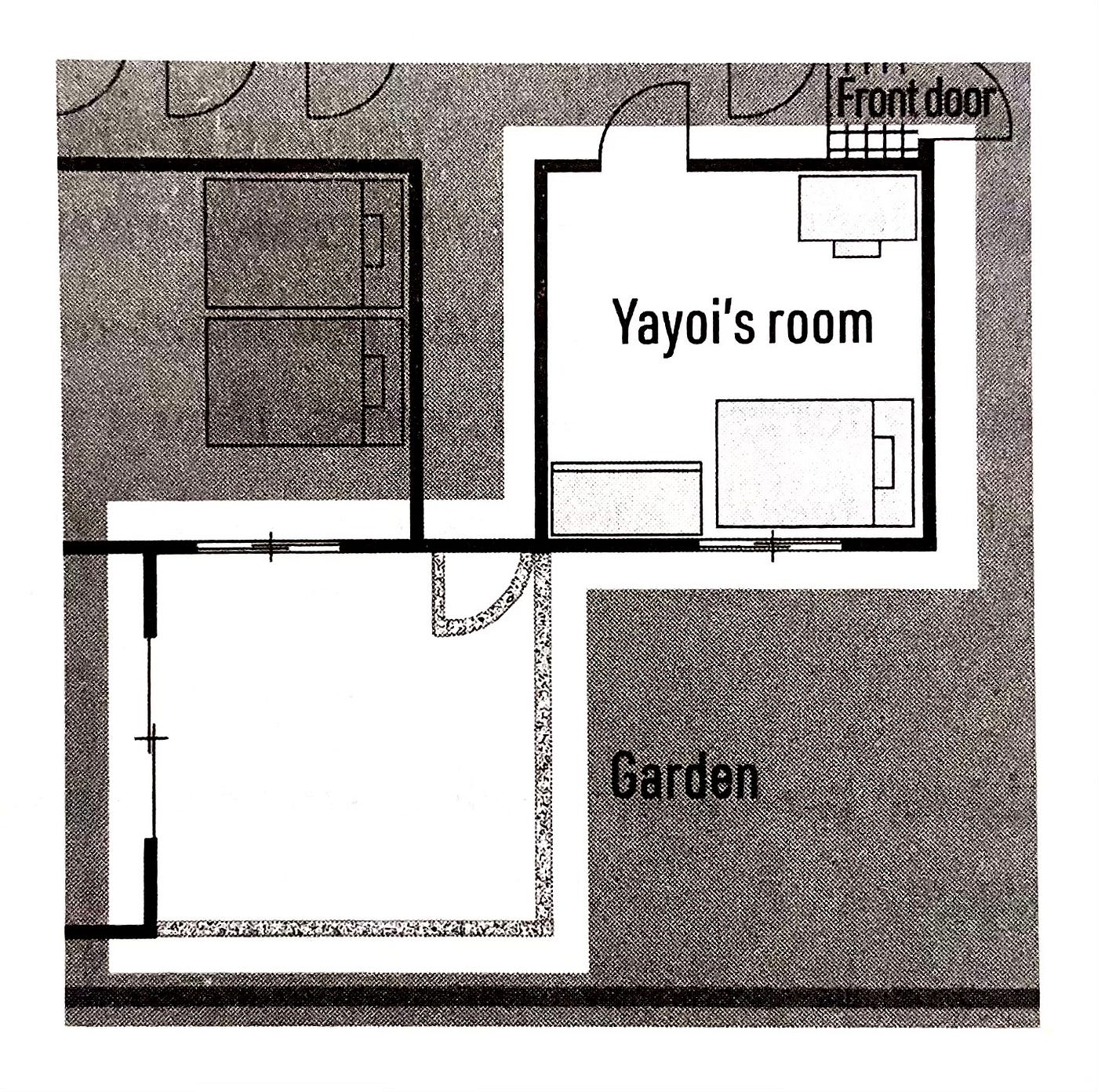
This is a diagram provided later in the chapter as the author and Yayoi discuss the location of the front door and a possible added room. Notice how the cropping and shading add to the clarity of what is being discussed.
This is great if you are a visual learner; you will not be confused at the conclusions being drawn, and you don’t have to repeatedly flip back to previous diagrams to confirm details.
While these diagrams hold your hand and guide you through the mystery, as you move throughout the 11 chapters, you quickly fall into the pattern of really analyzing the initial floor plans for anomalies at the top of the chapters. You get in the habit of theorizing and trying to naturally draw connections between what you know from past stories and what evidence you have (or don’t have).
Generally speaking, in analyzing these floor plans, you uncover a large overarching plot with a corrupt construction company and cult that link the buildings together. While this plot is a lot more involved than Strange Houses due to the sheer size of the book and amount of cases, it is a bit more on the nose with some of it’s reveals. After 11 floor plane, I could generally figure out what was going on. I don’t necessarily think that the book needed to be shorter because all the cases, while easy to connect, still provided context for the mystery. Part of this feeling could come from this being the Uketsu’s third book in this style; at this point in my reading journey, I am able to see the patterns a lot easier than I could when reading Strange Houses. While the plot was interesting, this resulted in fewer dramatic reveals throughout my read.
Part of why I think some of the reveals were a bit less impactful has to do with the actual format of the book when it comes to analysis. As mentioned, there are 11 cases, equalling 11 chapters. What I didn’t mention is the second half of the book dedicated to Kurihara’s (a reoccurring character from Strange Houses) deductions. In this section, the author and Kurihara go through the cases and connect the dots between the floor plans, evidence, and characters. This separation between case and analysis is where I feel the deductions were a bit redundant.
Some of the cases had clear connections, whether that be a doll, a character, or a similar strange architectural feature. The author, however, would not acknowledge the connections when initially investigating the case, and thus, would not ask follow up questions using the knowledge that he gathered from previous cases. In not acknowledging these connections, I felt like I knew the obvious before it was revealed. The cases were truly presented as pure, standalone cases and interviews rather than a continuous narrative, as we’ve seen in previous books. Whenever a piece of information was revealed in prior books, the author would make a mental note or change their way of questioning. This sort of vocalized readers internally flagging clues.
While the author wasn’t necessarily surprised about some of these connections in the deduction section, the omission of these connections throughout the presentations of the cases made it feel like you were well ahead of him. Conversely, while there were many things that I was able to solve myself in the first half, there was still plenty I did not pick up until the second half; the connections I put together weren’t as much big plot twists as they were context for the big plot twists.
Now, while this has been my biggest “critique,” being able to predict some of the connections isn’t necessarily a bad thing. When the author is discussing the clues toward the end, I am in agreement because I’ve come up with the same conclusion myself; I can follow along far easier when I’ve convinced myself of the same solution. This, I believe, is an improvement from Strange Houses. In Strange Houses, there were a couple Eureka! moments that didn’t quite convince me. In this latest book, however, there weren’t really any stretch-y moments, at least none that made it to the final conclusion. Many theories are thrown around throughout the book that seem a bit circumstantial at first glance, but as we continued pursuing the different cases, the gaps fill themselves, and we have to reassess out previous theories.
All this being said, there are still plenty of interesting pieces of evidence and plot lines in this book. For instance, (and I will not spoil anything important) there is a story about a girl who would talk to her dad across the house at night with a can and string.
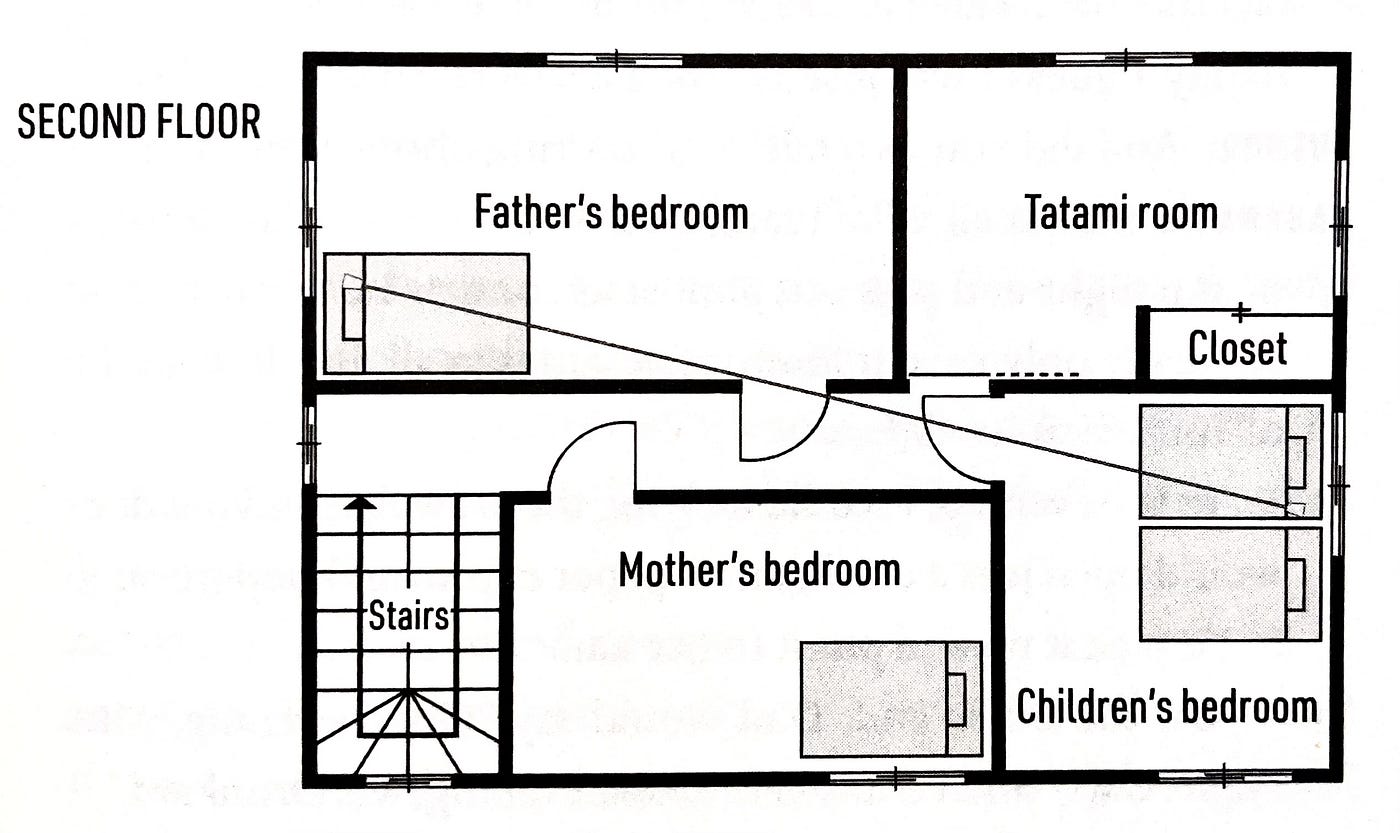
However, evidence regarding the length of the string and the fact that it would need to be taught and unobstructed throws into question where the dad is located in the house. This is a fun tidbit as we have to reevaluate what we thought we already knew and use the floor plan to determine the father’s true location. This dynamic of the clues being impacted by the floor plan and vice versa is what makes the the architectural mystery concept so compelling.
I will say, though, compared to some his previous works, this book isn’t super scary or unsettling as there aren’t really any run-ins with danger throughout the investigation. This book is more so a revelation of what happened in the past; most of the people involved are either no longer alive or no longer involved. Because of this, there is no threat that looms over the author or other characters.
In his first two books, however, there was the fear of being watched throughout the investigation or that putting your nose in certain things would result in harm. The threat of unresolved cases and dangerous people still out there made the present stressful while digging up the past as the same thing could happen to our dear author if he pushed too far. I don’t know if I wished Strange Buildings had this same tension, though, or if I actually find it reassuring that I can learn about the mystery from a distant vantage point.
All in all, this was another thought-provoking book by Uketsu. I enjoy the interactive format and change of pace that his books bring; they really make you stop and theorize. I tend to want to try and solve the mystery before it is revealed to me, so I oftentimes had to set my book down to sift through the information and connect the dots between characters and cases. It was such a fun and stimulating mental challenge. I very much love reading Uketsu’s books and look forward to reading more in the future (Fun fact: Uketsu’s the only author I follow on Goodreads because I need to stay up to date with his new releases).
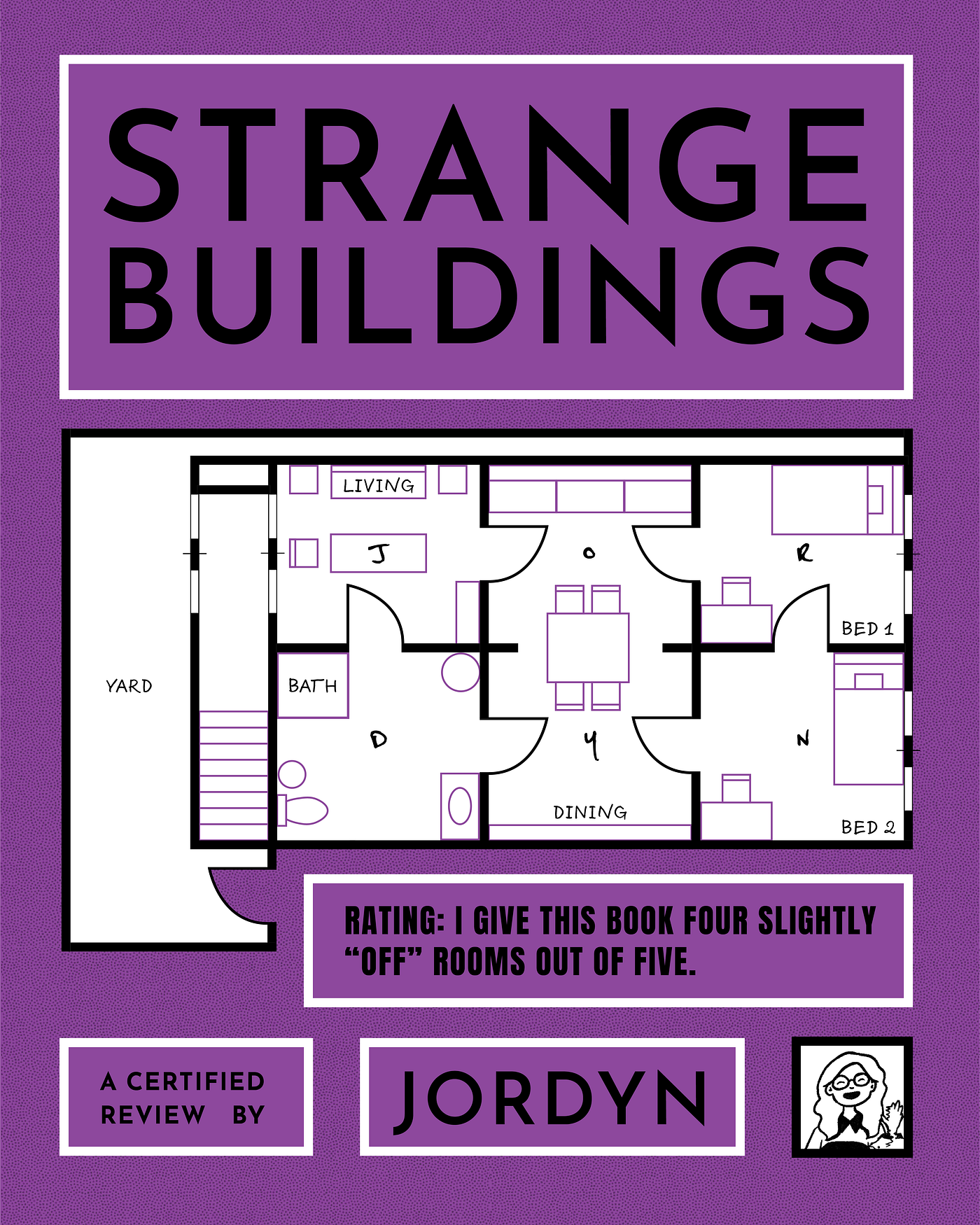
I give Strange Buildings by Uketsu four slightly “off” rooms out of five.
메타데이터
- post_id
- 86cd7cc478ef
- slug
- strange-buildings-a-dive-into-uketsus-third-interactive-mystery-masterpiece-86cd7cc478ef
- url
- https://medium.com/@jordyndg/strange-buildings-a-dive-into-uketsus-third-interactive-mystery-masterpiece-86cd7cc478ef
- canonical_url
- https://medium.com/@jordyndg/strange-buildings-a-dive-into-uketsus-third-interactive-mystery-masterpiece-86cd7cc478ef
- author_url
- https://medium.com/@jordyndg
- status
- ok
- fetched_at
- 2026-07-15 05:28:05