The End of Stock Footage? How AI Video Generators Are Reshaping the Industry in 2026
I still remember the “old days” of 2023 like it was yesterday. You know exactly the struggle I am talking about. You needed a simple clip…
The End of Stock Footage? How AI Video Generators Are Reshaping the Industry in 2026
I still remember the “old days” of 2023 like it was yesterday. You know exactly the struggle I am talking about. You needed a simple clip of a business person shaking hands for a client presentation.
So you sat there for three hours. You scrolled through page after page of generic, overpriced clips on those massive stock websites. It was absolutely exhausting!
Today, in 2026, the game has completely changed. You don’t have to suffer through that boring search process anymore.
A recent industry report suggests that traditional stock video downloads have plummeted by over 45% in the last two years alone. That is a massive shift in the market. It makes sense when you think about the alternatives.
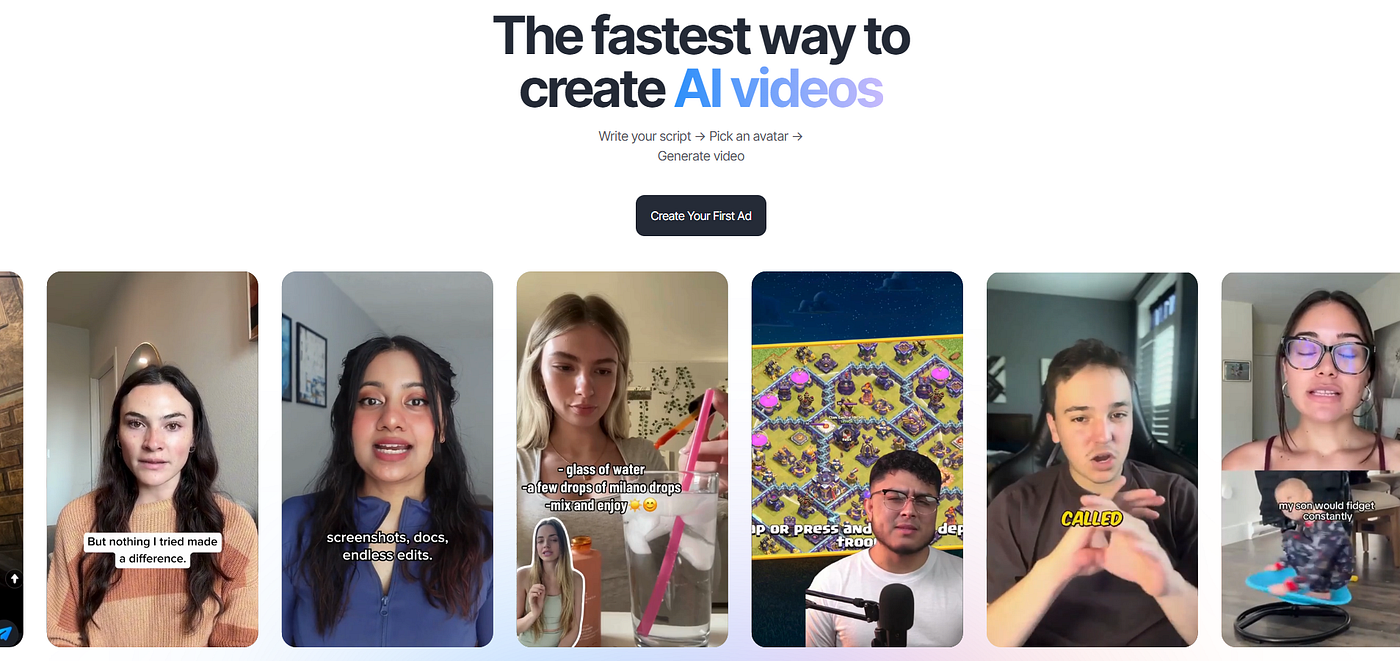
Why would you buy a generic clip that five other companies are already using? You can simply type a prompt into an AI video generator and create something entirely unique.
These tools aren’t just fun toys to play with on the weekend anymore. They have become the absolute backbone of modern content creation.
In this article, we’re going to look at the math, the magic, and the messy reality. We will explore how generative AI is effectively killing the stock footage industry as we knew it. Let’s dive in.
The Evolution of Text-to-Video Technology (2024–2026)
I still have nightmares about that AI video of Will Smith eating spaghetti. You know the one I’m talking about. It was all over Twitter back in 2023. His face was melting, the pasta was merging with his fingers, and it looked like a fever dream from the 90s.

That was only three years ago. It feels like a lifetime. Back then, I tried to use a text-to-video generator to make a simple B-roll clip for a client’s coffee shop. I typed in “woman drinking coffee in a cafe,” and the AI gave me a woman with seven fingers holding a cup that was floating inside her ear. It was unusable.
From Glitchy Nightmares to Cinema Quality
Things really started to change around early 2024. That is when we saw the release of models like OpenAI’s Sora and Runway’s Gen-3 alpha. I remember sitting at my desk at 2 AM, waiting for a clip to render.
When it finally popped up, my jaw hit the floor. The prompt was just “drone shot of a cliffside in Ireland,” and it looked real. The lighting was perfect. The water crashed against the rocks correctly. The days of the “uncanny valley” were starting to fade away.
But it wasn’t perfect yet. We still had major issues with what nerds call “temporal consistency.” That is just a fancy way of saying that things didn’t stay the same shape from one second to the next. You would generate a video of a dog running, and halfway through, the dog would turn into a cat or a mailbox. It was frustrating as heck.
The Speed Factor Changes Everything
The biggest change by 2026 hasn’t just been the quality, but the speed. In 2024, I would queue up a generation and go make a sandwich. Sometimes I’d come back and it would still be processing.
Now, rendering happens almost in real time. This is huge for my workflow. If I don’t like how the light hits the subject’s face, I just tweak the prompt and hit enter again. Ten seconds later, I have a new version.
This speed allows for actual iteration. It is the difference between shooting on film and shooting on digital. You can afford to make mistakes now because they don’t cost you an hour of waiting time.
Understanding Physics and Light
The latest AI models finally understand how the world works. This was the biggest hurdle for the longest time. Old AI didn’t know that if you drop a glass, it falls down.
I tried to generate a clip last week of a car driving through a puddle. In the old days, the car would just glide over the water like a ghost. The new 2026 models actually show the water splashing up, reacting to the tires, and reflecting the light correctly.
It understands gravity. It understands reflection. This is why stock footage is in trouble. When the AI knows physics better than a junior animator, why would you pay $50 for a generic clip? You can just make your own that looks exactly how you want it.
Why Customization Wins Over Generic Libraries
I used to have this one client, a local credit union, who was obsessed with their brand color. It was this very specific shade of teal. Every time I tried to make a video for them using stock sites, I hit a wall.
I would search for “family checking bank account,” and I’d get hundreds of clips. But the families were always wearing bright red or navy blue. To make it work, I had to open After Effects and rotoscope the shirts to change the color. It took hours. It was a total nightmare.

Brand Specificity is King
With modern AI video generators, that headache is gone. Now, I just type the hex code or describe the specific teal directly in the prompt. “Family looking at tablet, wearing teal sweaters, warm lighting.”
Boom. The AI spits out exactly what the brand needs. I don’t have to compromise anymore. If a client sells organic dog food and wants a Golden Retriever eating out of a wooden bowl in a messy kitchen, I can make that. I don’t have to settle for a clean studio shot that looks fake.
Breaking the “Stocky” Look
We have all seen “Stock Photo Guy.” You know, the handsome man with the perfect teeth who appears in ads for insurance, yogurt, and erectile dysfunction pills?
Audiences aren’t stupid. They have developed what we call “stock blindness.” When a video looks too polished and generic, their brains just shut off. They scroll right past it.
AI allows us to create visuals that feel a bit more raw or “bursty.” You can ask the AI for cinematic lighting that is moody or shadows that look harsh. You can make people look like actual neighbors, not models. This visual variety stops the scroll. It grabs attention because it doesn’t look like everything else on the internet.
Infinite Variations until It’s Perfect
Here is the thing that really changed the game for me. In the old days, if I found a stock clip that was almost right, I had to use it. Maybe the camera moved too fast, or the angle was slightly off. I just had to deal with it.
Now, I play the numbers game. I can generate the same prompt 50 times. It’s like asking a cameraman to do 50 takes until he gets it right. I don’t pay extra for those takes.
I recently needed a shot of a cyberpunk city street for a tech blog. The first ten generations were okay, but the neon signs were illegible. I kept tweaking the prompt and hitting “generate.” On the 15th try, the camera panned perfectly, and the lighting was stunning. That level of control is addictive.
Consistency Across Campaigns
For a long time, the biggest argument against AI was consistency. People said, “Sure, you can make a cool character, but you can’t put that same character in a different video.”
That isn’t true anymore in 2026. We use things called “seed numbers” and character reference sheets. Think of a seed number like a digital DNA code.
If I generate a character I like — let’s call her Sarah — I save her seed number. Next time I need a video, I plug that number in. Now I can show Sarah walking in the park, then Sarah driving a car, then Sarah at work. She looks like the same person. It lets us build actual stories instead of just random collages of clips.
The Economics: Subscription vs. Pay-Per-Clip
I am a cheapskate. I admit it. There is nothing that hurts my soul more than paying $199 for a single 15-second video clip. But for years, that was the reality. If you wanted high-quality 4K footage for a client project, you had to cough up the cash.

I remember doing a project for a travel blog back in 2022. We needed five clips of a beach in Bali. That bill came out to nearly a thousand dollars just for the B-roll! My client almost had a heart attack.
The Math Just Makes Sense
Fast forward to 2026 and the math has completely flipped. It is honestly kind of ridiculous.
Right now, I pay about $30 a month for a premium subscription to my favorite AI video generator. That allows me to generate hundreds of clips. Do the math. I can get infinite 4K clips for the price of a few lattes.
Compare that to the old model. To get the same amount of footage from a site like Shutterstock or Getty, I would need a budget in the tens of thousands. It is not a fair fight. For freelancers and small businesses, the subscription model is a lifesaver. It means we don’t have to choose between eating dinner and buying assets for our videos.
Where Does the Money Go Now?
I have a friend who runs a small marketing agency downtown. We were grabbing coffee last week and he told me something interesting. He said his line item for “stock footage licensing” is basically zero.
So where is that money going? It is going into strategy. It is going into distribution.
Agencies are taking that saved cash and using it to boost posts on social media or hire better scriptwriters. The ROI (Return on Investment) is massive. When you stop bleeding money on generic clips, you have more resources to actually make the content good.
Everyone Can Be a Filmmaker
This is the part that gets me excited as a teacher. It used to be that if you wanted to make a sci-fi movie, you needed a million dollars. You needed sets, costumes, and green screens.
Now? I have students making documentaries about ancient Rome from their bedrooms. They don’t have travel budgets. They don’t have actors. But with AI, they can create cinematic shots of the Colosseum or a gladiator fight that look like a Hollywood production.
It is the democratization of filmmaking. The barrier to entry has crashed down. You don’t need a rich uncle to produce high-end content anymore.
The Panic in the Stock Market
Of course, the big stock platforms aren’t just sitting there. They are panicking a little bit. I have noticed a shift in how they do business.
Sites that used to sell individual clips are now pivoting to “AI licensing.” Basically, they are trying to sell you the guarantee that their AI models were trained on “safe” legal footage. They are trying to charge a premium for peace of mind. It is an interesting pivot, but I am not sure if it will save them in the long run. The genie is already out of the bottle.
The Impact on Videographers and Contributors
I have to be honest with you — this part of the conversation is tough. I have friends who made their living shooting stock footage. They would travel to cool places, shoot a bunch of clips of people hiking or drinking wine, upload them, and then wait for the checks to roll in.
It was the ultimate “passive income” dream. But dreams have a way of ending when you wake up.

The Collapse of the Passive Income Stream
For a lot of these contributors, the checks have stopped coming. Or at least, they have shrunk to the size of a postage stamp. I was talking to a buddy of mine, a drone operator, and he told me his monthly residuals dropped by 70% in just one year.
Why? Because nobody needs a generic drone shot of a forest anymore. I can generate that in 15 seconds. The market for “generic pretty stuff” has been swallowed whole by AI. It sucks for the people who built their lives around that model, but it is the harsh reality of technology moving forward.
Pivoting to What AI Can’t Do (Yet)
But it isn’t all doom and gloom. There is still one thing AI is terrible at: being there.
AI can’t fake a specific news event. It can’t capture the actual vibe of a protest happening downtown right now. It can’t film a specific celebrity walking out of a courthouse.
The videographers who are surviving are the ones pivoting to realism. They are becoming journalists again. Authentic human moments — the kind that feel messy and real and unscripted — are becoming premium assets. If you can capture something that screams “this actually happened,” you can still make bank.
The Rise of the “Promptographer”
This is a word I hear thrown around a lot lately: Promptographer. It sounds silly, but it is a real job now.
A lot of the traditional videographers I know have stopped fighting the machine and started driving it. They have an advantage that I don’t. They understand lighting. They understand composition. They know what focal lengths do to a face.
So instead of selling raw video files, they are selling their ability to talk to the AI. They are becoming high-end AI video specialists. They know exactly which words to type to get that cinematic look. They are trading their cameras for keyboards, and honestly, some of them are making more money now than they did before.
The Hybrid Workflow
The smartest creators are doing a mix of both. We call it a “hybrid workflow.”
Let’s say you film yourself walking down your boring hallway. It looks cheap. But then you run that clip through an AI using a process called “Video-to-Video.”
suddenly, your hallway becomes a spaceship corridor. Or a jungle path. The movement is real — it’s your movement — but the environment is synthetic.
This is where the magic happens. You use real footage as the skeleton, and you use AI to put the meat on the bones. It is the best of both worlds, and it is saving creators thousands of dollars on set design.
Navigating Copyright and Ethics in an AI World
I am not a lawyer, and let’s be real, I don’t want to be one. But if you are working with AI video in 2026, you basically have to become a part-time legal scholar. It is the Wild West out there.
I remember when I first started using these tools. I felt like I was getting away with something. I was generating high-end footage for free, and I kept looking over my shoulder expecting the “Copyright Police” to kick down my door.

The Legal Reality of 2026
Here is the skinny on the current laws. In the US, the Copyright Office has drawn a pretty firm line in the sand. If a human didn’t create it, a human can’t copyright it.
This means that raw video clip you generated of the astronaut riding a horse? It is technically public domain. You can use it, sure. But so can your competitor.
I had a client last month get really mad when I told him he didn’t “own” the raw AI clips I generated for his social media. He wanted exclusive rights. I had to explain that unless I did significant editing or painting over it, the law says it belongs to everyone and no one. It is a weird concept to wrap your head around.
Deepfakes and Staying Safe
The tech has gotten too good. That is just a fact. We are at a point where I can generate a video of a person who looks exactly like your neighbor, or worse, a politician.
This brings up huge safety issues. In 2026, we are finally seeing standard “digital watermarking.” Most of the reputable platforms now bake an invisible code into the video file. It proves the video is synthetic.
I always tell my students: just because you can generate a celebrity likeness doesn’t mean you should. It is asking for a lawsuit. Stick to generating fictional people. It is safer, and honestly, it is more creative.
The Big Stock Sites Fight Back
For a while, Getty Images and Shutterstock were suing everyone. They were mad that AI companies scraped their images to train the models. And fair enough, that was pretty sketchy.
But lately, the tune has changed. Instead of fighting, they are partnering up. They realized they are sitting on a goldmine of clean, legal data. Now, they license their libraries to the AI companies.
This is actually good for us creators. It means when we use tools trained on these licensed libraries, we have a bit more legal protection. We know the AI didn’t steal the data; it rented it.
Watch Out for Brand Logos
Here is a mistake I made recently. I generated a video of a basketball player dunking in a city park. It looked epic. But I didn’t look closely enough at his shoes.
The AI had hallucinated a logo that looked suspiciously like the Nike swoosh. It wasn’t exact, but it was close enough to get me in trouble.
Brand safety is huge. The AI doesn’t know about trademarks. It just knows what shoes look like. You have to be the goalie. Always check the background of your shots for accidental logos or billboards. If you miss one, you might get a nasty letter from a corporate lawyer, and nobody wants that.
Is Stock Footage Actually Dead? The Counter-Argument
Okay, I know I have been bashing stock footage for the last few paragraphs. I’ve practically written its obituary. But before we shovel the dirt on the grave, we need to pause.
Is stock footage actually 100% dead? No. It isn’t.

Stock Footage
I learned this lesson the hard way last month. I was helping a friend edit a mini-documentary about the history of the local steel mill. I thought, “Hey, I’ll just use AI to generate some clips of 1950s steelworkers.”
I generated the clips. They looked cool. The lighting was moody, the sparks were flying. But when I showed it to an old guy who actually worked there in ’55, he laughed at me. “That furnace isn’t built right,” he said. “And nobody wore hats like that.”
I felt like an idiot.
The Unbeatable Value of Authenticity
Here is the truth: You cannot fake history. Well, you can, but you shouldn’t.
For documentary filmmakers and journalists, AI is useless for archival content. If you need a clip of the Berlin Wall coming down, or a specific protest from 2020, you need the real thing. Generative AI is great for vibes, but it is terrible for facts.
There is a weight to real footage. When you see a grainy clip of a real event, your brain knows it’s true. When you see a polished AI generation, a part of your brain stays skeptical. That authenticity is the one thing the algorithm can’t code.
The “Uncanny Valley” Still Lurks
And let’s talk about the “creep factor.” Yes, the 2026 models are amazing. But have you noticed what happens if the shot holds for too long?
I tried to generate a 10-second close-up of a woman crying for a short film. The first three seconds were Oscar-worthy. But around second five, her left eye twitched weirdly. By second eight, her smile lines started to blur into her ears.
We call these “micro-expressions.” Humans are incredibly good at spotting when a face isn’t acting right. AI still struggles with long, continuous emotional shots. It eventually drifts into the uncanny valley. If you need raw, sustained human emotion, you still need a camera and an actor.
Editorial vs. Commercial
We have to draw a line between “Editorial” and “Commercial.”
If I am making a mood board or a commercial for a fictional soda brand, AI is perfect. I just need pretty colors and movement.
But if I am reporting on a hurricane? I can’t generate a storm. That is lying. News agencies, textbook publishers, and historical archives will always need human contributors. The demand for truth hasn’t gone away, even if the demand for “generic business handshake” has.
The Premium Pivot
I have noticed the smart stock sites are changing their vibe. They aren’t trying to be Walmart anymore; they are trying to be art galleries.
They are curating collections that are impossible to replicate. I’m talking about high-speed footage of rare animals, exclusive drone shots of protected landmarks, or underwater footage that requires expensive gear.
Stock footage isn’t dead, it is just becoming “boutique.” It is becoming a premium product for people who care about reality. And honestly? That might be a better place for it to be.
Conclusion
So, is the stock footage industry dead and buried? Not entirely, but it is certainly on life support.
I used to spend my entire Sunday afternoon scrolling through page after page of generic clips, looking for that one shot of a “happy family” that didn’t look totally fake. It was exhausting. I wasted so much time and money on assets that were just “okay.”
The era of searching through thousands of clips to find a generic handshake is over. And honestly? I don’t miss it one bit.
The Power is in Your Hands
What we have now in 2026 is something I dreamt about when I was a kid. The barrier to entry is gone. You don’t need a massive budget. You don’t need a film crew. You just need an idea and a $30 subscription.
AI video generators have democratized creativity in a way we haven’t seen since the invention of the digital camera. It has handed the director’s chair to anyone with a keyboard. It is terrifying for traditionalists, sure. I get the fear. But it is incredibly exciting for creators like us!
Don’t Get Left Behind
If you haven’t started integrating AI video into your creative workflow yet, you are already falling behind. The tools are here. The quality is unmatched.
Don’t be the person still clinging to the old way just because it is comfortable. Give it a try. Go make a movie trailer for a film that doesn’t exist. Create a music video for your friend’s band.
The only limit left is your imagination. Go create something impossible.
메타데이터
- post_id
- 86e67e9d7487
- slug
- the-end-of-stock-footage-how-ai-video-generators-are-reshaping-the-industry-in-2026-86e67e9d7487
- url
- https://medium.com/@eliashaider/the-end-of-stock-footage-how-ai-video-generators-are-reshaping-the-industry-in-2026-86e67e9d7487
- canonical_url
- https://medium.com/@eliashaider/the-end-of-stock-footage-how-ai-video-generators-are-reshaping-the-industry-in-2026-86e67e9d7487
- author_url
- https://medium.com/@eliashaider
- status
- ok
- fetched_at
- 2026-06-22 17:31:34