Milk from Herbs and Pearls from Starch: The Accidentally Vegan Cosmetics of the Victorian and…
Plant based beauty including substitutes for animal based products like “vegan” honey and plant milk being used in cosmetics seems…
Milk from Herbs and Pearls from Starch: The Accidentally Vegan Cosmetics of the Victorian and Edwardian Eras
Illustrated Catalogue : Barbers’ Supplies, Patent Barbers’ Chairs, Barbers’ Furniture (1903) Internet Archive Public Domain
Plant based beauty including substitutes for animal based products like “vegan” honey and plant milk being used in cosmetics seems futuristic, but the use of alternatives for animal-derived ingredients in cosmetics is not a recent phenomenon. Products with names alluding to animal ingredients that are accidentally free from animal byproducts can be found in formulary books, domestic encyclopedias and periodicals dating to the Victorian and Edwardian periods.
Whether for economic reasons, shelf stability or simply creative license in naming, these examples of accidentally vegan cosmetics made with substitutes for animal ingredients are a fascinating part of the history of cosmetics.
Highly desirable luxury products that would otherwise be out of reach of most consumers sparked innovative alternatives that were more affordable. Crushed pearls were an expensive basis for face powder, rarely used by the average person. The desire for a similar luxury persisted, and many alternative formulas were created to meet consumer demands. Some of these formulas were mineral based blends of chalk, bismuth, and zinc. “Vegetable” pearl powders were advertised to the public since at least the 1830s, with formulas based on plant starches.
New York Medical Gazette and Journal of Health (1852) Internet Archive Public Domain
Perfumery and Kindred Arts, an English cosmetic formulary book published in 1877 discussed pearl powder:
So much used in this country, is generally a mixture of Paris white and kaolin, and formed into cakes and put in fancy boxes. A finer article is made with a mixture of powdered talc and corn starch held together with mucilage. The name of pearl powder has heretofore been applied to the oxide of bismuth, but it is not much used at the present time. (p. 152–153)
Some formulas combined minerals and starches together, usually with floral fragrances for an added touch of luxury. This 1886 recipe for pearl powder is scented with roses.
White or Pearl Powder. One ounce oxide of zinc, 8 ¾ ounces of rice flour or starch, and 3 drops of rose oil. (p. 292)
Milk baths had a similar reputation for luxury and high expense, but they were considered a desirable and effective beauty treatment. A more affordable and commonly reprinted recipe that was considered to be a substitute for milk baths was a dry blend of bran flour and herbs, meant to be added to bath water. This version of the recipe is from *Perfumery and Kindred Arts*.
Milk Bath.
Marshmallow flowers . . ..½ pound.
Hyssop herb . . . . . . . . . . ¼ pound.
Bran flour . . . . . . . . . . 4 pounds.
This mixture added to an ordinary bath will be found a good substitute for a milk bath, which is very expensive. (p. 347)
Bran flour created a “milky” appearance in the bath water, and already had a centuries long reputation as a beautifying bath ingredient. Marshmallow flowers have skin-soothing benefits and hyssop is a long-cultivated medicinal herb with anti-inflammatory and cleansing properties.
Hyssopus officinalis Wikimedia Commons Image License
Another difficult to procure, but much in demand cosmetic ingredient was bear fat, usually sold as bear’s oil or bear’s grease. Shelf stability of bear’s oil was an issue for cosmetic manufacturers, *Perfumery and Kindred Arts* described how bear’s oil was difficult to find, and provided a formula for a plant derived alternative.
Bear’s Oil.
Bear’s Oil, so long and favorably known as beneficial in promoting the growth of the hair, and as improving its appearance, is not very seldom genuine, as all kinds of bland oils, vegetable and animal, have been used under that name, and generally with benefit to the user, as the genuine oil is scarce, and soon becomes rancid in spite of all efforts to prevent it, no doubt because of the large amount of albuminous matter it contains. I usually prepared it thus —
Oil of benne . . . . . .2 pounds.
Oil of bergamot . . . . ½ ounce.
Oil of lemon . . . . . . .¼ ounce.
Oil of thyme . . . . .1 drachm.
Oil of cloves . . . . .1 drachm.
Color a light yellow. (p. 181)
The benne oil mentioned in the formula is an older term for sesame oil. More solid forms of bear’s oil alternatives were formulated in pomade form by combining sesame oil and castor oil with paraffin wax. This formula is also from *Perfumery and Kindred Arts.*
Ursalina. (Crystalline bear’s grease.)
Oil of benne . . . . . . 1 ¼ pound.
Castor oil . . . . . . . . .¼ pound.
Paraffine wax . . . . . ½ pound.
Oil of bergamot . . .2 drachms.
Oil of pimento . . . 1 drachm.
Oil of santal . . . . .1 drachm.
Oil of cloves . . . . .1 drachm. (p. 172–173)
Sesamum Indicum (Sesame) Plant Illustration Wikimedia Commons Image License
Before the development of cosmetic preservatives, professional beauty formulators created more shelf-stable imitations of popular home remedies that would otherwise spoil easily. Washing your hair using a raw egg as shampoo was a common at home Victorian beauty treatment.
Eggless egg shampoos, sometimes called “egg juleps” were soap-based hair washes, dyed egg-yolk yellow with plant pigments. The 1914 edition of *Pharmaceutical Formulas *advised formulators in making egg julep shampoos.
These should contain a little free alkali and soap or quillaia, and are best when recently prepared. The addition of saffron or gamboge to liquids gives a nice colour, and transforms them into egg julep. (p.127)
Gamboge, a yellow pigment derived from the false mangosteen — ironically it is also known as the eggtree, likely for the round yellow fruits it produces.
Xanthochymus Dulcis (False Mangosteen) Wikimedia Commons Public Domain
This formula for egg julep was published in the 1891 edition of *Piesse’s Art of Perfumery *using saffron to create a bright yellow “egg” shampoo.
Saponaceous Wash or Egg Julep.
Rectified spirit . . . . . . . 1 pint
Rose-water . . . . . . . . . . 1 gallon
Extract of rondelita . . . . .½ pint
Transparent soap . . . . . . ½ oz.
Hay saffron¹ . . . . . . . . . . ½ drachm
Shave up the soap very fine ; boil it and the saffron in a quart of rose water, then the spirit, finally the rondelita, which is used by way of perfume. After standing for two or three days, it is fit for bottling. (p. 451–452)
Illustrated Catalogue : Barbers’ Supplies, Patent Barbers’ Chairs, Barbers’ Furniture (1903) Internet Archive Public Domain
Buttermilk was highly regarded as a facial cleanser, and was imitated with emulsions of plant fats, like coconut oil and cocoa butter in this formula from the 1913 edition of The Scientific American Cyclopedia of Formulas.
Cacao Buttermilk. — Powdered borax, 5 dr.: powdered Castile soap, 1 oz.: cacao butter, 3 oz.: cocoanut oil, 1 oz. : water, 4 oz. Rub together in a warm mortar for 10 minutes, then dilute very gradually with rose water at 40° C., 42 oz. Shake the mixture well, and perfume with oil of bergamot. 40 gtt.: oil of neroli, 10 gtt.: oil of orris, 2 gtt.: vanilla sugar, 5 dr.: previously rubbed together. (p. 841)
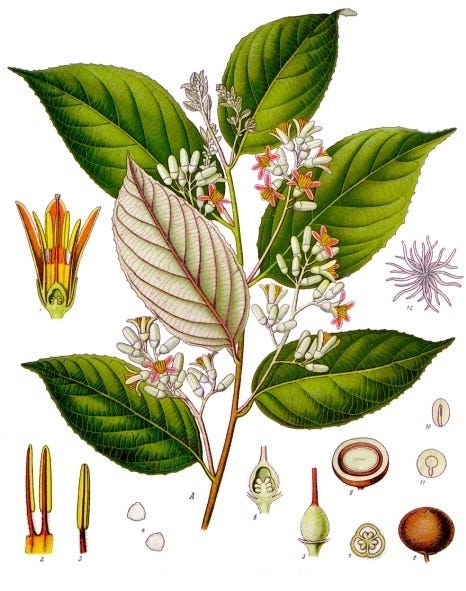
Cosmetic “milks” were shelf stable preparations and were an example of the creative license of cosmetic makers when naming preparations based on their appearance or scent. Resin-based ingredients, especially tincture of benzoin, an alcoholic tincture of the fragrant resin derived from the Styrax benzoin tree lends an opaque, white tint to these products. Milk of roses is one of the most popular cosmetics of the Victorian era. This recipe is an example of a milk roses formula from the domestic encyclopedia *Queen of the Household*, published in 1891.
MILK OF ROSES. Drop by drop, add 1 ounce simple tincture benzoin to 1 quart rose-water — shaking all the time to avoid lumping, Then, 1 drop at a time, add 20 or 30 drops tincture of myrrh ; mix well, bottle, cork and bathe the face and neck with it once or twice a day. (p. 607)
Glycerin created a hydrating element to this Edwardian formula for a cosmetic “milk”, the powdered starch likely added to the opacity of the finished product.
Glycerine Milk. —
Glycerine. . . . . . . . .1,150 parts
Starch, powdered. . . . 160 parts
Distilled water. . . . . . 400 parts
Tincture of benzoin . . .20 parts
Rub up 80 parts of the starch with the glycerine, then put the mixture on the steam bath and heat, under continuous stirring, until it forms a jellylike mass. Remove from the bath and stir in the remainder of the starch. Finally, add the water and tincture and stir till homogenous. (p. 239)
Styrax Benzoin by Franz Eugen Köhler, Köhler’s Medizinal-Pflanzen Wikimedia Commons Image License
Fragrances often lent themselves to fanciful names, and products with scents resembling honey were often labelled as “honey” products, in spite of not containing any honey. Honey water, a common scent and cosmetic in the Victorian era was originally made from honey distilled with fragrant herbs and flowers. Honey water recipes took on many different forms by the Victoria era, including formulas that did not require honey. This distilled version of honey water uses a variety of botanicals to create a sweet fragrance, from *Cyclopedia of Practical Receipts*, published in 1897.
Honey Water. — 1. 2 ½ oz. coriander seeds (ground small in a starch mill), a few slips of sweet marjoram in flower, dried and removed from the twigs, 1 dr. calamus aromaticus², 1 dr. yellow sanders³; 1 dr. of orange peel and lemon peel; let the three last named articles be separately beaten to a fine powder ; mix these ingredients, and put them into a still that holds 3 pts., and add to them 1 pt. of rain-water and 1 pt. of proof spirit ; lute them well at the joints of the apparatus, and leave the ingredients in this state, without fire for 48 hours; begin to distil by a very gentle heat, or the flowers and leaves will rise in the still-head, stop up the worm⁴ and spoil the process; increase the fire after the first ½ hour, and keep it at a regular heat till the termination of the process. (p. 49)
Other formulas for honey water blended together essential oils to create a honey-like fragrance. This recipe for honey water dates is from the *Pharmaceutical Journal Formulary*, published in 1904.
Honey Water.
Oil of Bergamot……………………. 5 minims
Oil of Cloves……………………….. 2 minims
Oil of Lavender……………………10 minims
Oil of Sandal Wood ……………….5 minims
Distilled Water …………………… 1 pint (p. 667)
“Honey” soaps were sometimes yellow soap bars, scented with essential oils. Citronella was a common option, and rosemary oil added to glycerin soap was compared to the scent of Narbonne honey⁵ by Victorian cosmetic formulators. A fancier suggested blend was a combination of rose geranium, ginger-grass, bergamot, or verbena oils. Newer perfuming ingredients first derived from essential oils and plant resins, like vanillin and eugenol were used to create imitation honey scents in soaps in the Edwardian era. This recipe for Honey soap from the *Manual of Toilet Soapmaking*, published in 1904 is a classic example of an imitation honey soap, an essential oil blend and warm-toned dye creating the visual and olfactory idea of honey.
HONEY SOAP. I.
50 kilos Cocoanut Oil.
25 kilos Caustic Soda Lye of 38°F.
1 kilo Water.
20 grams Uranine Orange.
240 grams Citronella Oil.
45 grams. Lemon Grass Oil.
15 grams. Peppermint Oil. (p. 77)
Rose Geranium Wikimedia Commons Public Domain
“Honey” creams were sometimes made without honey, also relying on fragrances, like in this 1904 formula, that uses heliotropin as the scent component. Heliotropin, derived from safrole, a component of sassafras oil, would have given a sweet, floral fragrance to this cream.
Honey Cream.
Salicylic Acid ………………………..10 grains
Heliotropin …………………………..15 grains
Tragacanth, in powder …………..120 grains
Alcohol (90 percent) ………………..2 fl. drachms
Glycerin ……………………………….2 ½ fl. Ounces
Liquid Paraffin ………………………1 fl. Ounce
Distilled Water, a sufficient quantity to
produce ……………………………..20 ounces (p. 667)
Regulations in the early 20th century made changes to how products could be labelled in the United States. The Pure Food and Drug Act in 1906, and the more thorough regulations outlined in the 1938 Food, Drug and Cosmetic Act demanded more clarity and accuracy about product ingredients. Professional literature for druggists and other cosmetic makers in the early 20th century included reminders attached to formulas to include ingredients in products if they are mentioned on a product label, signaling an end to the era of eggless egg shampoos and honeyless honey creams in the United States. These legally-required changes to labels echo today’s legal battles over plant based product labels. Even with the restrictions of labeling laws and resulting legal battles, modern products using plant based substitutes for animal derived ingredients are a flourishing trend. The accidentally vegan products created in the Victorian and Edwardian eras paved a path to create modern products free from animal ingredients for ethical and environmental reasons.
Notes:
- Hay saffron is saffron that has been collected with the whole crocus flower and separated after drying, the saffron is described as forming a loosely matted reddish brown pile of flower stigmas with a bitter flavor.
- Calamus aromaticus is the official name for sweet flag.
- Yellow sanders is an older term for santalum album or white sandalwood.
- A worm is a component of distilling equipment.
- Narbonne honey is honey from Narbonne, France.
Thank you for reading!
If you love history, plants or the history of plants, consider supporting Plant Based Past by buying me a coffee!
For more vegan, vegetarian, and botanical histories, follow *Plant Based Past* on Medium.
You can sign up for email alerts to receive the next story when it becomes available, just by clicking the envelope icon.
Next Week: 5 Vegan Friendly Recipes from History for a Garden Party
메타데이터
- post_id
- 86f6c045e7b0
- slug
- milk-from-herbs-and-pearls-from-starch-the-accidentally-vegan-cosmetics-of-the-victorian-and-86f6c045e7b0
- url
- https://medium.com/plant-based-past/milk-from-herbs-and-pearls-from-starch-the-accidentally-vegan-cosmetics-of-the-victorian-and-86f6c045e7b0
- canonical_url
- https://medium.com/plant-based-past/milk-from-herbs-and-pearls-from-starch-the-accidentally-vegan-cosmetics-of-the-victorian-and-86f6c045e7b0
- author_url
- https://medium.com/@plantbasedpast
- status
- ok
- fetched_at
- 2026-08-22 20:08:53