Why Your Nerf Gun Battle Needs Safety Goggles (Yes, Really)
You know that feeling when you’re in an intense foam dart standoff with your kids, siblings, or friends? Everyone’s laughing, diving behind…
Why Your Nerf Gun Battle Needs Safety Goggles (Yes, Really)
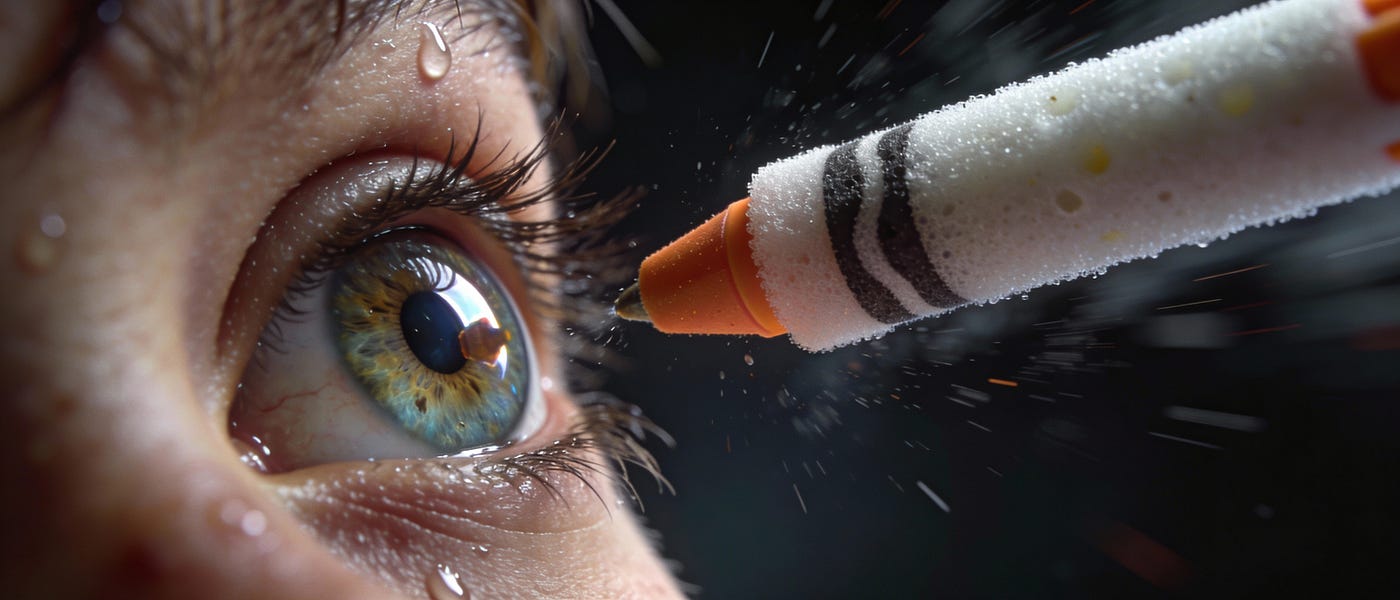
You know that feeling when you’re in an intense foam dart standoff with your kids, siblings, or friends? Everyone’s laughing, diving behind couches, and the adrenaline is pumping. It’s pure fun — until someone takes a direct hit to the eye and suddenly you’re heading to the emergency room instead of celebrating your victory.
Spoiler alert: this actually happens more often than you’d think. And it’s way more serious than the foam construction of these toys would have you believe.
The Blind Spot in Our Toy Safety Assumptions
Here’s the thing about Nerf guns — they look harmless. They’re soft. They’re colorful. They’ve been marketed to kids for decades as the safe alternative to actual firearms or even harder projectile toys like paintball guns. So nobody thinks twice about handing one to an 8-year-old and letting them go wild in the backyard.
Except doctors are now sounding alarms about something that should be obvious but somehow isn’t: foam darts can seriously damage your eyes.
Between 2010 and 2022, eye specialists at a major Parisian hospital documented 304 cases of eye injuries from recreational nonpowder guns. That’s foam blasters, airsoft, and BB guns combined. The breakdown? Foam projectile blasters like Nerf guns accounted for exactly half of those injuries — 151 cases.
Let that sink in. We’re not talking about fringe incidents. We’re talking about a significant and growing trend in eye trauma that’s landing people in emergency departments.
The Numbers Are Getting Worse
Here’s where it gets genuinely concerning: this isn’t a stable problem. The incidence of foam projectile blaster eye injuries is actually increasing. And the age of victims is getting younger.
In 2014, the average age of someone injured by a Nerf gun was 16 years old. By 2022, it had dropped to 10 years old. That’s six years younger. We’re talking about children still in elementary school taking projectiles to the face.
In the U.S., toy-related injuries in general send roughly 200,000–250,000 people to the emergency room every single year. That’s not all eye injuries — that’s everything from choking hazards to small parts to, yes, projectiles. But toy guns with projectiles are consistently the leading cause of toy-related eye trauma.
What Actually Happens When a Foam Dart Hits Your Eye
This is the part that makes ophthalmologists lose sleep. The injuries aren’t just “ouch, my eye hurts.” They’re serious.
In the study of 151 foam projectile blaster injuries:
- 51 cases involved intraocular hemorrhage (bleeding inside the eye)
- 45 cases caused corneal lesions (scratches on the eye’s surface)
- 22 cases damaged the iris (the colored part of your eye)
- 19 cases caused retinal injuries, including actual tears and detachment
- 12 cases resulted in elevated intraocular pressure, which can lead to glaucoma
And here’s the really scary part: one child under 10 years old suffered complete blindness in one eye from a globe rupture — that’s the eyeball literally bursting from the impact.
That’s not from an airsoft gun or a paintball gun. That’s from a Nerf gun.
In 2017, doctors at a UK hospital published a case series describing three separate patients — two adults and an 11-year-old — who all showed up with serious eye injuries from Nerf darts within a three-month period. The kid developed hyphema (blood pooling in the front of the eye), corneal swelling, inflammation, and damage to the eye’s internal structures.
These aren’t once-in-a-lifetime freak accidents. These are actual emergency room visits that could have been prevented.
Distance Matters (But Not Enough)
There’s a natural assumption that if you get hit by a foam dart from far away, it won’t be as bad. Common sense, right?
Common sense is wrong.
Yes, close-range shots (1–2 meters) tend to cause worse damage than distance shots. But “worse” is a spectrum. One documented case involved a woman hit from 6 meters away (about 20 feet) who suffered a retinal tear — a serious injury that can lead to permanent vision loss.
The projectiles coming out of modern Nerf blasters travel at speeds up to 69 kilometers per hour (about 43 mph). That’s faster than a baseball pitch. That’s fast enough to cause real damage, even if the dart itself is soft.
And here’s another wrinkle: not all foam darts are created equal. Third-party, off-brand darts are often harder and less cushioned than official Nerf products. There are even instructional videos online showing people how to modify Nerf guns to shoot faster. So the “safe toy” can be made significantly less safe depending on what ammunition you’re using.
The Most Obvious Solution Nobody’s Using
Ready for the punchline? In every single documented case of Nerf gun eye injury — every single one — the person wasn’t wearing protective eyewear.
Not one.
That means we have a clear, simple, almost embarrassingly straightforward way to prevent these injuries: safety goggles.
Basketball players wear protective eyewear. People playing paintball — which is explicitly understood to be dangerous — wear helmets and masks. Airsoft players take eye protection seriously. But somehow, with Nerf guns, we’ve collectively decided that soft foam means no protection needed.
The logic doesn’t track.
What Protective Eyewear Actually Looks Like
You don’t need to go full SEAL Team 6 tactical gear, though you can if you want. Standard options include:
- Sports goggles designed for basketball or racquetball (these are tested to withstand projectile impacts)
- ANSI Z87.1 rated safety glasses (this is the official standard for impact resistance)
- Foam dart-specific protective eyewear (yes, companies are now making these because doctors literally forced the issue)
- Even basic polycarbonate shooting glasses from hardware stores will block foam darts
The point is: protection exists. It’s not expensive. It’s not uncomfortable for most kids (especially compared to losing vision). And it works.
The Lesson in Distance
If I had to distill this into one actionable rule for anyone letting kids — or adults — play with foam blasters, it would be this:
Establish and enforce a minimum safe distance rule.
Most of the documented severe injuries come from close-range shots. While we’ve established that distance isn’t a complete safeguard, it does reduce severity. Setting a rule like “no shooting within 6 feet of someone’s face” or “aim for the body, never the head” creates behavioral friction that prevents accidents.
But — and this is crucial — this rule should be paired with eye protection, not used as a substitute for it.
Think of it like seatbelts and airbags. The seatbelt (distance/rules) is your first line of defense. The airbag (eye protection) is your backup when things go wrong. You need both.
The Uncomfortable Truth
Parents, guardians, and toy buyers have gotten complacent about Nerf guns because they seem harmless. They’re soft. They’re designed for kids. They’ve been around forever. And yeah, millions of kids play with them without incident.
But millions of people drive without ever crashing, too. That doesn’t mean seatbelts are unnecessary.
The uncomfortable truth is that we have clear medical evidence that these toys can cause serious eye injury, including permanent vision loss in rare cases. We know the mechanism of injury. We know the risk factors. And we know the prevention strategy works (because nobody wearing proper eye protection has reported a serious injury).
Yet we continue selling and gifting these toys with zero protective equipment, no safety messaging beyond “aim away from faces,” and a general cultural assumption that they’re completely safe.
They’re not.
What You Can Do Right Now
- If you own a Nerf gun, buy protective eyewear. Seriously. Do this before the next game.
- Set distance rules. Make it a house rule that foam blasters can’t be fired at anyone closer than 6 feet, and definitely not at the head.
- Enforce the rules. This is the part that sucks because it kills the spontaneity, but an eye injury kills a lot more than spontaneity.
- Tell other parents. Most people don’t know about this. Share the article. Share the statistics. Be the person who says something.
- Teach kids proper eye protection habits. Just like putting on a helmet for bike riding or a mouthguard for contact sports, wearing goggles for foam blaster games should be normal.
The Bigger Picture
This isn’t about ruining the fun of Nerf gun battles. It’s about making them actually safe.
Kids should play with toys. Teens should have foam dart wars. Adults should have fun competitive games with friends. There’s nothing wrong with any of that. But we can do it without sending people to the emergency room for preventable injuries.
The data is clear. The solution is simple. Protective eyewear works. Distance helps. Rules matter.
The only question left is: will we actually act on what we know?
Have you or someone you know been hit in the eye by a Nerf dart? Drop your story in the comments — not to scare people, but to help others understand why this matters.
메타데이터
- post_id
- 8713c679cc41
- slug
- why-your-nerf-gun-battle-needs-safety-goggles-yes-really-8713c679cc41
- url
- https://medium.com/@mr-collins-llb/why-your-nerf-gun-battle-needs-safety-goggles-yes-really-8713c679cc41
- canonical_url
- https://medium.com/@mr-collins-llb/why-your-nerf-gun-battle-needs-safety-goggles-yes-really-8713c679cc41
- author_url
- https://medium.com/@mr-collins-llb
- status
- ok
- fetched_at
- 2026-06-09 15:37:30