Decoupling Expansion from Tanking: Incentives, Ownership, and Competitive Behavior in the NBA
The NBA’s proposal to expand by two teams in 2028 has been widely received negatively by media and fans alike, who believe this will result…
Decoupling Expansion from Tanking: Incentives, Ownership, and Competitive Behavior in the NBA

The NBA’s proposal to expand by two teams in 2028 has been widely received negatively by media and fans alike, who believe this will result in a worse overall product on the court. However, this isn’t necessarily true. To arrive at this conclusion would entail believing that the NBA has a talent volume issue, and for a long time, this was true.
When the NBA last expanded to include the Charlotte Bobcats in 2005, the league featured 21 players averaging at least 20 points per game, on an average eFG% of 49.1%. Fast-forward to 2026 — the NBA now features 47 players averaging at least 20 points per game on an average eFG% of 55.1%. To add to this, today’s league features 99 more players with an eFG% of at least 49.1% than the league in 2005. This is but one way of exemplifying the expansion of talent across the league over the last two decades, as it is an undeniable fact that today’s NBA is far deeper in talent than it was at the time of its last expansion.
In addition to talent, the league has improved in a plethora of ways, ranging from coaching to player development to team management to quality of travel and hospitality, and beyond. Over the last twenty seasons, the NBA has improved in effectively all areas… except for what feels like a persistently worsening tanking issue.
This paper argues that concerns about NBA expansion worsening tanking are misplaced. Tanking is driven primarily by institutional incentives and ownership quality rather than talent scarcity, and because competitive success in the modern NBA depends increasingly on organizational factors rather than star concentration, expansion — if paired with strong ownership — does not exacerbate tanking and may reduce its prevalence.
Has Tanking Actually Worsened?
The existence of tanking behavior in the NBA has been documented for over two decades, with early work by Joseph Price and Justin Wolfers showing that teams facing elimination had incentives to lose to improve draft position. Subsequent research has refined this finding, showing that tanking is not uniform throughout the season but rather emerges primarily in late-season contexts, when playoff probabilities collapse. For example, Michael Lopez and colleagues found that eliminated teams are significantly more likely to rest productive players, indicating that tanking manifests through managerial decisions rather than reduced player effort or talent constructs.
Institutional responses such as the NBA’s 2019 lottery reform, which flattened odds among the worst-performing teams, and the 2023 Player Participation Policy suggest that the league views tanking as an incentive-driven phenomenon tied to draft structure rather than talent scarcity. Taken together, the literature concludes that tanking has persisted across eras but is best understood as a function of marginal incentives embedded in league rules, rather than a byproduct of competitive imbalance or an insufficient talent distribution.
With all of this said, the reason we can confirm that tanking not only persists, but is gradually worsening (outside of having eyes and watching the NBA) is that the league office still views it as a problem they’re yet to solve.
While the NBA transparently cares most about things like marketability, bottom-line profit margins, and keeping its team owners satisfied, they continue to tweak rules within the draft lottery system in ways that both acknowledge an understanding that, for much of the bottom of the league, bettering their draft position serves their interests more than winning in the interim, while avoiding potential solutions that don’t align with their aforementioned top priorities.
The NBA understands it has a worsening tanking issue, and that A. talent volume isn’t the primary or even secondary issue, and B. there are potentially superior ways to fix tanking, though these solutions may conflict with financial and ownership incentives, thereby highly limiting their chance of implementation.
Some of the obvious & popularly floated ideas include shortening the season (would cost the owners money), or abandoning the lottery system altogether for either some form of derivative-based auction draft system, or simply allowing incoming talent to enter via free agency.
The Status of Today’s NBA
Today’s league, in the midst of its most competitively balanced period, featuring eight consecutive years of no team winning back-to-back titles, feels like it’s at an impasse. It seems as if the cream is again rising to the top, as the best NBA GM’s have adjusted to a new age league where there is no (prime) LeBron, Steph, Duncan, Kobe, Shaq, Jordan, Bird, Magic, Kareem, Russell, or any singular player that guarantees their team a fast track to the NBA Finals. The margins and team building matter now more than ever before.
Sure, the best players still find their way into big playoff matchups, but time and time again, great teams have begun emerging victorious over teams that lack the proper mix of balance, experience, coachability, and versatility, even if they possess the best player in the series.
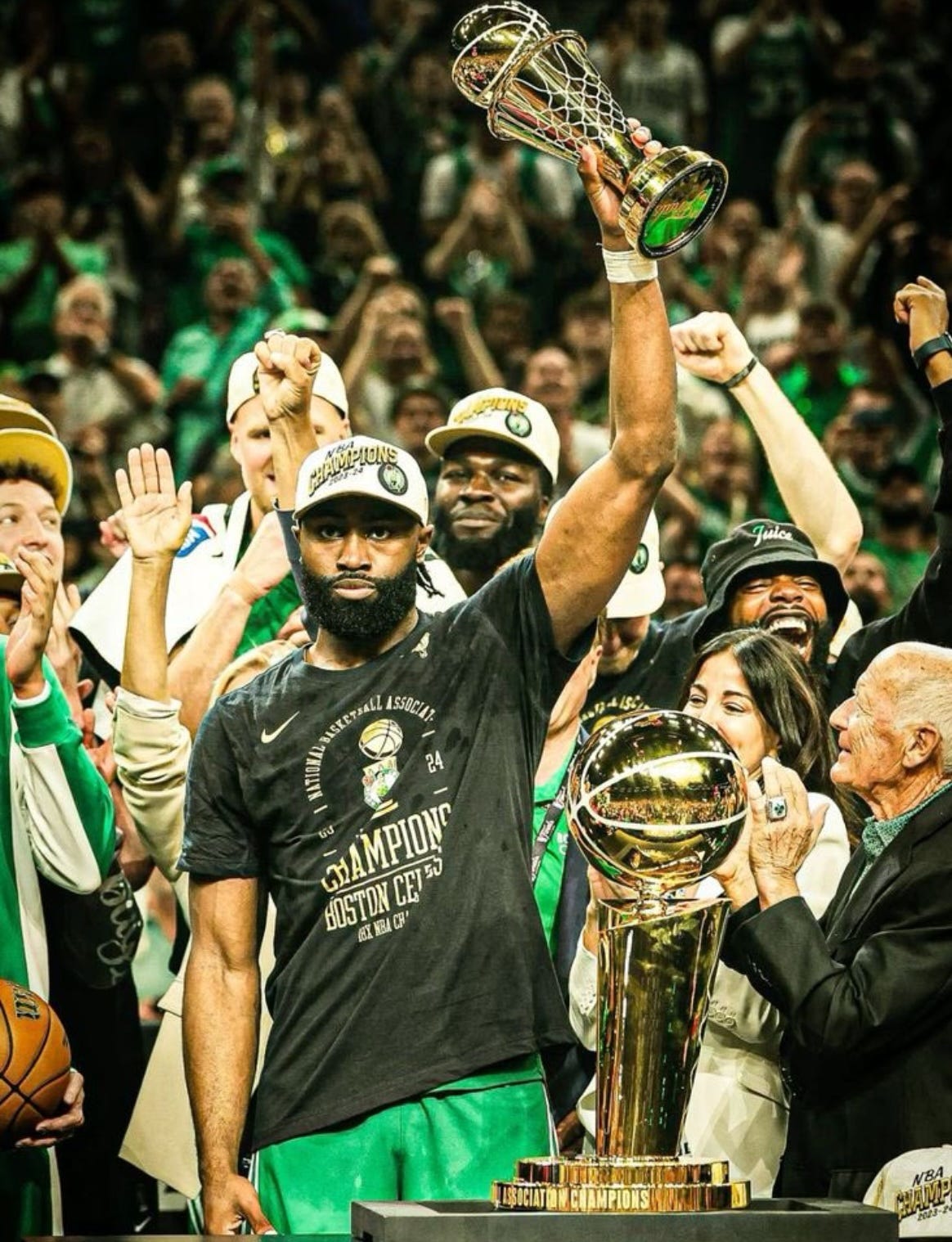
Three years ago, the eight-seed Miami Heat beat the one-seed Boston Celtics, who featured the two best players in the series — why? Because Miami’s team was more balanced and better coached. Boston could neither guard Miami’s DHO-based offense nor find a way to crack Miami’s zone defense. Two years ago, it was difficult to find an NBA analyst picking the one-seed Boston Celtics over the five-seed Dallas Mavericks (despite said media’s own analytics), even though Boston had a considerably more balanced, tenured, and stronger roster, because Dallas had what the media perceived to be the best player in the series, Luka Doncic… Boston won in a gentleman’s sweep.
Last season, Nikola Jokic, with almost no help, led Denver to a seven-game loss vs. the eventual champions, Oklahoma City — a team that regularly featured 11–12 players in their rotation on any given night. In the Eastern Conference, the four-seed Indiana Pacers (entered the playoffs with 39–1 odds to reach the finals) made it to game seven of the NBA Finals without rostering a player who received an All-NBA first or second team nod. This season, the San Antonio Spurs are the league's second-best team, and they’re only playing their best player, Victor Wembanyama, 29.4 minutes per game.
On the final game of the 2025/26 regular season, the Boston Celtics, locked into the two-seed, sat out eight of their nine top players vs. the Orlando Magic, who had home-court advantage in the NBA Play-In Tournament to play for. Orlando came into Boston as 13-point favorites. The result? Boston beat Orlando’s $194 Million worth of personnel with $11.5 Million worth of personnel on the floor…
The ever-emerging league parity can be attributed to a few major shifts that have occurred over the last two decades, and the data shows that while regular-season success remains relevant, it is becoming less deterministic toward postseason success.
In the “old” NBA, the equation was relatively simple — best player = best team = best record = champion.
The “new” NBA, with a flattened talent curve, features a plethora of variables that affect winning, both in the regular and postseason. This inevitably creates new ways for teams to both compete and tank. Both champions and losers are created from the top down, as there’s no single factor outside of an owner transparently sabotaging their own roster that can propel a team in either direction.
Because coaching, depth, and system matter more than ever now, competitive viability is no longer limited by access to elite talent.
Lessons From Elite Franchises
Yes, being the best still requires top-end talent; however, the volume and access of elite talent have grown to the point where this alone isn’t enough to guarantee anything. Don’t believe me? Ask Luka Doncic, who made five straight All-NBA first teams and won one finals game over that stretch, joining Chris Paul and Tracy McGrady as the only other players to fare worse during such a dominant individual stretch…
Coaching and Culture matter. The NBA season is grueling and, often-noted, far too long for its own good. Teams that can adjust their style of play nightly, follow game plans diligently, and take advantage of moneyball-adjacent trends (exploit opponents’ team-building weaknesses in areas like pace, defensive adjustments, three-point volume, and rebounding) on a whim can overcome teams rostering superior top-end talent. Were the Pacers a better roster than the Knicks in last year’s ECF? Were the Knicks a better roster than the Celtics in last year’s ECSF?!
Depth, Development, & Defensive Versatility: These three pillars have become unconditional requirements for consistent winning in the NBA. Most notably, development. The Celtics drafted and developed every major rotational player on their roster, sans Derrick White and Neemias Queta.
The Thunder drafted and developed an entire roster around their star, SGA — most notably, Chet Holmgren, J-Dub, J-Will, Cason Wallace, Aaron Wiggins, and Kenrich Williams. The Spurs drafted six of their eight primary rotation players, notably including Victor Wembanyama, Dylan Harper, and Stephon Castle.
Money REALLY helps. Owners who truly care about winning and have the propensity/willingness to spend can find some semblance of success, and even in their failures, often remain competitive and entertaining, or at least a semblance of either. Incompetence, to an extent, can be compensated for with a persistent willingness to spend. Three great examples of this are the Clippers, Knicks, and Suns.
- The Clippers accidentally traded away the current reigning MVP and Finals MVP, but Steve Ballmer continues to pour money into the team and prioritize winning. While they’ve yet to realize any success, they’ve neither added to the tanking issue nor taken away from the league’s entertainment value or overall quality. They try to compete and feature players who can warrant prime-time slots on TV.
- The Suns, likewise, feature an ultra-rich owner, Matt Ishbia, who, likewise, made a very poor trade at the beginning of his ownership in the vanity of competing. While the short-term results were disastrous, Ishbia’s willingness to spend and desire to compete have resulted in a fast-tracked reboot featuring an exciting team that has vastly overperformed its preseason expectations.
- The Knicks have been the laughing stock of the league for the better part of the last twenty years, but ultra-rich owner James Dolan remained willing to spend on a revolving door of regimes until landing upon Leon Rose, who was able to construct the franchise’s most competitive roster since Patrick Ewing’s prime.
Lessons From Struggling Franchises
Teams prioritize improving their chances of winning the NBA lottery over developing a winning culture, and lack the leadership & stability to build around elite talent.
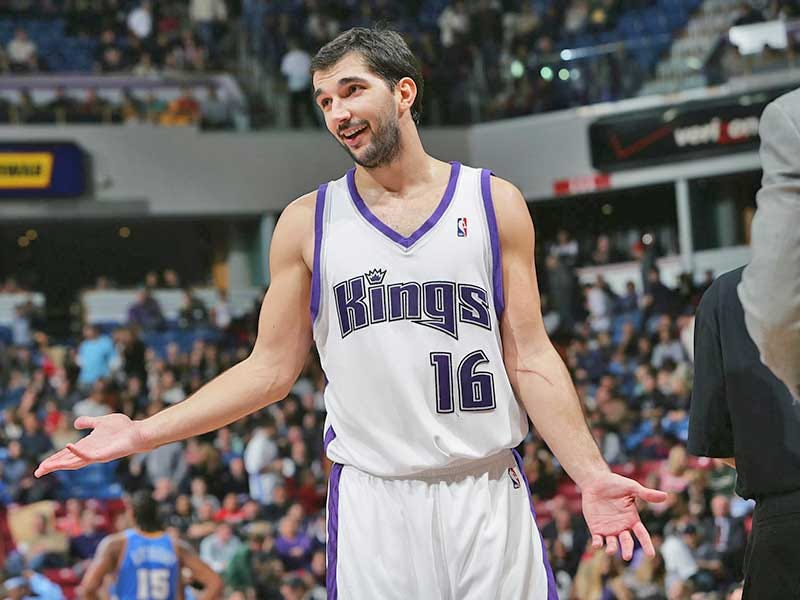
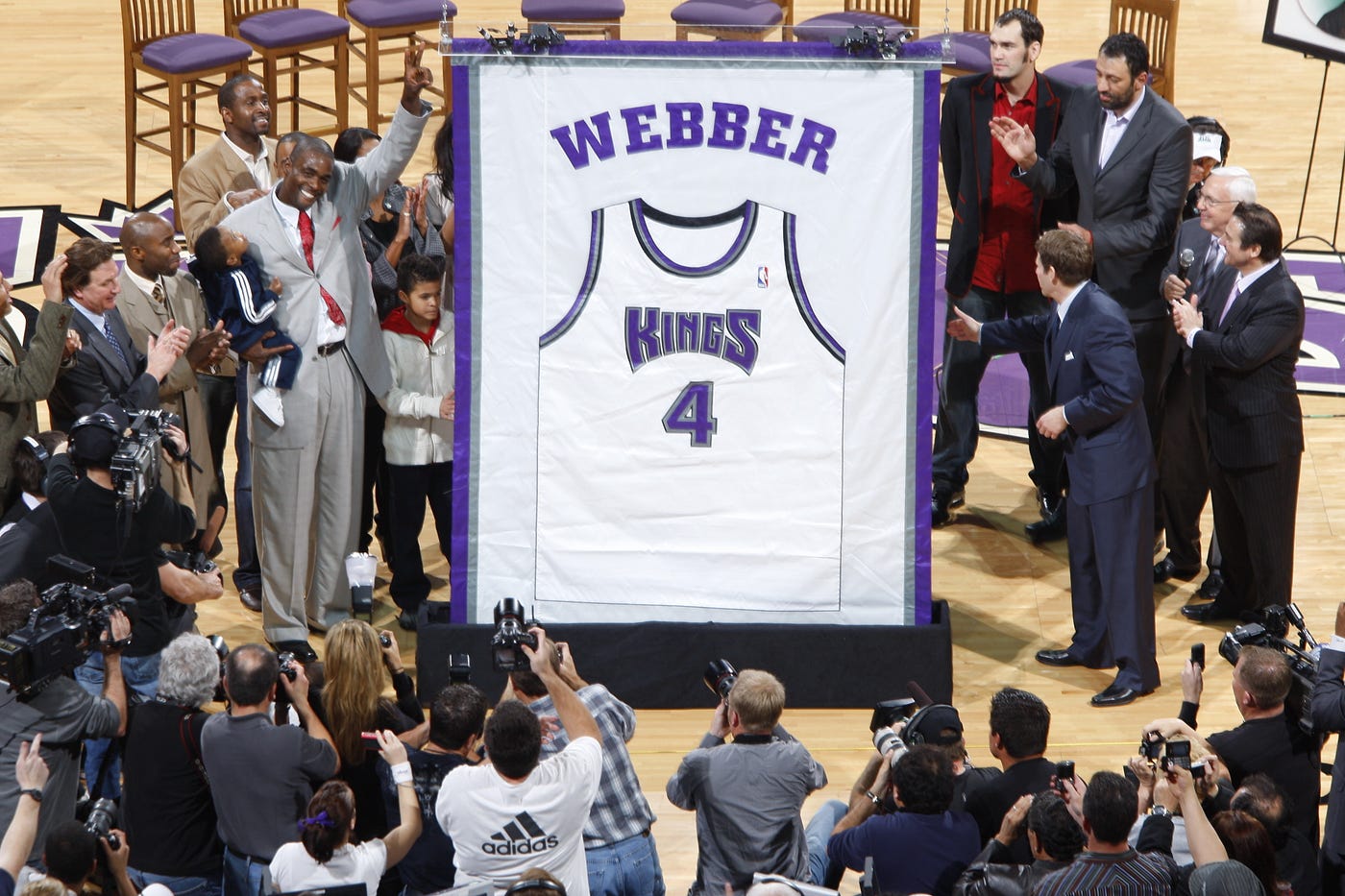
The Sacramento Kings were in the NBA lottery for sixteen consecutive seasons from 2006 to 2022 and subsequently earned a spot in the last two lotteries despite their one-year “Light The Beam” success. This isn’t due to bad luck or a system that’s failed them. Three of the five longest tenured lottery teams in today’s league, the Charlotte Hornets, Detroit Pistons, and Orlando Magic, will all be in the NBA postseason this year.
Teams can build through the lottery — in fact, most of the best teams in the league have done that. But the cultural fabric and integrity of a team from the top down matter now more than maybe ever before. There’s no coincidence that teams like Charlotte and Detroit find themselves ascending, as they’ve followed the blueprint of teams like Oklahoma City and Boston: hit on your top picks, find the right staff & support systems to keep them around and improving, and don’t be cheap or irresponsible with spending on filling out the roster.
The worst teams in the league continue to repeat step one, and often, even upon completing this step, either fail to build around their newly acquired talent, resulting in player X requesting a trade or leaving in free agency, or give up on them prematurely in their development process. The Washington Wizards gave up on Deni Avdija. The Kings had two potential All-Star point guards in Tyrese Haliburton and De’Aaron Fox, so naturally, they traded Haliburton in a move for Sabonis that didn’t translate into sustained competitive success, resulting in Fox demanding a trade, and ending up with no point guard…
The Bulls gave away Coby White for pennies on the dollar to avoid the tax (as always). The Pelicans had seven years to build around Anthony Davis and couldn’t do it. The list goes on. Incompetent teams make incompetent, often premature moves for reasons that either don’t include maximizing competitiveness, or miscalculations on what will maximize competitiveness.
Expansion & Its Implications
Talent is no longer a binding constraint, as the league is now deeper than it’s ever been, and star concentration is less decisive in being competitive. Given this, we can conclude that the most determining factor in winning is organizational stability and quality of multiple variables, including coaching, depth, development, and culture. Therefore, expansion outcomes depend on ownership and organizational quality, not talent supply.
Furthermore, expansion won’t necessarily worsen tanking. Adding two teams to the league means adding two new ownership groups. If tanking is disproportionately concentrated amongst poorly governed franchises, then adding good ownership groups could actually increase the number of competitive teams in the league.
The central flaw in the argument against expansion is the assumption that NBA competitiveness is constrained by talent supply. While this may have been true in earlier eras, the modern NBA demonstrates that success is increasingly determined by organizational factors such as coaching, development infrastructure, roster balance, and cultural cohesion. As a result, expansion should not be understood as a dilution of talent, but as a potential expansion of organizational opportunity.
Because tanking is driven by institutional incentives rather than talent scarcity, and competitive success in the modern NBA depends increasingly on organizational quality rather than star concentration, expansion, if paired with strong ownership, does not exacerbate tanking and may reduce its prevalence. Adding teams reduces the probability of any single team securing a top draft pick, lowering the marginal incentive to lose, while simultaneously providing a platform for more potential competitive teams at the top. A flattened talent distribution could increase competitive parity within the league, giving more teams a greater belief in their chances to win, thus incentivizing them to align their goals towards competing.
League expansion could either improve or worsen its competitive landscape. The important question isn’t whether the league should or shouldn’t expand, but if it is to expand, how must it go about ensuring it adds two high-quality franchises that join the pool of elite teams competing for championships?
Modern access to information, coupled with the perpetually growing popularity, interest, and number of pupils studying basketball strategy and economics, has resulted in a likewise increase in off-court talent. While the NBA doesn’t currently employ 30 elite front offices, poor ownership is likely more the root of this staffing issue than a deficit of capable candidates.
Bad owners hire bad front offices, who hire bad coaches and mismanage rosters. When this happens, bureaucracy, office politics, and scapegoating become the norm, and rather than wholesale changes, blame regularly gets concentrated onto a singular problem that, while possibly legitimate, doesn’t reflect the scope of issues contributing to the systemic failures occurring within the organization.
Basketball’s talent pool, on and off the court, has grown from predominantly American to worldly. The number of potential candidates who could successfully build an NBA franchise far exceeds the number of owners who could successfully run one. Therefore, it’s of the utmost importance that if the league is to expand, it must be ultra-selective and ultimately confident in the two people/groups that they choose to operate them in a manner that adds to the league’s peaking competitive landscape (spend, spend, spend/delegate, delegate, delegate), and avoids joining the group of inferior owned teams that find themselves in a repetitive cycle caused by their inability/unwillingness to address their systemic flaws.
In Conclusion
The NBA has a tanking problem derived from a system that rewards losing, resulting in well-run franchises periodically tanking to rebuild, and ineptly run franchises that either fail at this repeatedly or don’t prioritize winning enough to improve. The growing surplus of talent creates opposing effects: it strengthens competitive teams while also incentivizing weaker teams to pursue top-end talent through the draft. Thus, the ever-growing volume of talent available to all league positions should either have no negative effect or a positive effect on the league’s quality if expansion is completed under the stipulations stated above.
Adding ineptly run franchises could worsen tanking. Adding well-run franchises will either have a positive or no effect. If the NBA ultimately decides to add two new franchises, selectivity and competitive demands must be exercised. Future work could formalize these relationships using payroll efficiency, draft outcomes, and win distributions across franchises.
Appendix
Price, Joseph, and Justin Wolfers. “Racial Discrimination Among NBA Referees.” The Quarterly Journal of Economics, vol. 125, no. 4, 2010, pp. 1859–1887. (Note: also associated with early work on incentives and tanking behavior)
Lopez, Michael J., et al. “Strategic Resting and Player Usage in the NBA.” Journal of Sports Analytics, vol. 8, no. 3, 2022, pp. 1–18.
National Basketball Association. “NBA Board of Governors Approves Changes to Draft Lottery System.” NBA.com, 2017, https://www.nba.com/news/nba-board-governors-approves-changes-draft-lottery-system
National Basketball Association. “NBA Board of Governors Approves Player Participation Policy.” NBA.com, 2023, https://www.nba.com/news/nba-board-of-governors-approves-player-participation-policy
Basketball Reference. “NBA League Averages Per Game and Advanced Stats.” https://www.basketball-reference.com/leagues/
Basketball Reference. “NBA Player Season Statistics (2005–2026).” https://www.basketball-reference.com/
StatMuse. “NBA Player Scoring and Efficiency Data.” https://www.statmuse.com/
Land of Basketball. “NBA Champions by Seed.” https://www.landofbasketball.com/
메타데이터
- post_id
- 87801dcd1356
- slug
- decoupling-expansion-from-tanking-incentives-ownership-and-competitive-behavior-in-the-nba-87801dcd1356
- url
- https://medium.com/sportsraid/decoupling-expansion-from-tanking-incentives-ownership-and-competitive-behavior-in-the-nba-87801dcd1356
- canonical_url
- https://medium.com/sportsraid/decoupling-expansion-from-tanking-incentives-ownership-and-competitive-behavior-in-the-nba-87801dcd1356
- author_url
- https://medium.com/@nickatwood31
- status
- ok
- fetched_at
- 2026-06-11 05:11:55