Four States of Consciousness
“Paradise is not a place; it’s a state of consciousness.” — Sri Chinmoy.
Four States of Consciousness
“Paradise is not a place; it’s a state of consciousness.” — Sri Chinmoy.
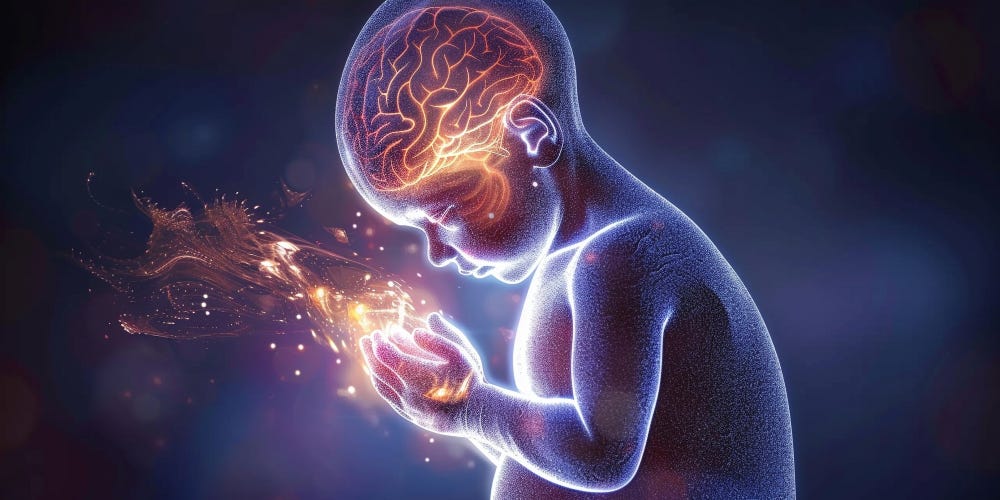
Photo by Mario Dobelmann on Unsplash
The four states of consciousness — deep sleep, dreaming, awakening (waking), and being (Superconscious) — correspond to different levels of awareness, from a state of ignorance, separation, human cruelty; to a state of unity, oneness, and self-realisation. There is a higher state of consciousness beyond the fourth, of pure liberation, awareness, beyond the state of pure consciousness. This higher state merges with the Absolute, the Being of all beings. The Absolute is that which is, that which always has been, and which always shall be. The Absolute is expressed as absolute, abstract movement and repose.
In yoga there are: deep sleep (sushupti), dreaming (svapna), waking (jagrat), and superconscious (turiya).
In Greek, the first state of consciousness is called Eilasia. The second state of consciousness is called Pistis. The third state, Dianoia, and the fourth state, Nous. Eilasia is ignorance, human cruelty, barbarism, being profoundly consciously asleep, a brutal and instinctive world, and an infra-human state. Pistis is the world of opinions and beliefs, prejudices, sectarianism, fanaticism, theories. Dianoia is the intellectual revision of beliefs, analysis, conceptual synthesis, cultural-intellectual consciousness, and scientific thought. Nous is awakened consciousness, illumination, perfect objective clear clairvoyance.
1. Sleep
Sleep is a state of consciousness that, in its basic sense, is a physical state, but it is also a state of the soul where qualities like compassion and wisdom lie dormant. The sleep of our psyche is the root cause of life’s struggles, driven by a lack of awareness and attention. Many people go through their days without remembering large portions of them, sleepwalking through life where they are not fully aware or attentive, and some even do things they later regret, showing their psyche is asleep. In fact, this state of sleep is associated in many schools with a state of extreme cruelty and brutality. It is a state of mind in which one is driven by instinct, passion, hatred, and violence. This is the type of state or being that propels mobs, where people go out and kill each other and wage war. The soul is totally absent in those states.
2. Dreams
Dreams reflect the quality and conditioning of an individual’s internal psychological state. A dream is veiled by a person’s perceptions, processed according to our own psychological conditioning, attachments, desires, and cravings. To dream is not to see something in objective reality, but merely what one wants to see. We all experience dreams; however, many people do not remember that they dream. We go to bed at night, and seven or eight hours pass, then we dream for a little while. That is the basic level.
“A man is known by his dreams because our dream life reflects our psychological reality.” — Plato.
Dreaming of the soul occurs when we are lost in thought — a daydream. We may be driving our car, and our mind is in a hazy, cloudy state. We may be thinking about something or someone, and we are not really paying attention at the wheel. People are dreaming; they are envisioning their jobs, careers, holidays, experiences, feelings, or sensations. They are talking with people, but they are not present. Their mind is elsewhere, their feelings are elsewhere, and their body is here, but they are not consciously present. Every time our mind wanders, we are lost in daydreaming, lost in our thoughts. The soul is not fully there; we are not paying attention consciously or spiritually.
Sigmund Freud, who called dreams the “royal road to the unconscious” revealing repressed desires, and Carl Jung, who saw dreams as vital for self-understanding and balancing the psyche, both emphasised that dreams are windows into our true inner selves.
3. Awakening
The third state, awakening, is where things get interesting. In Patanjali’s Yoga Sutras, awakening refers to the soul. At this point, the mind, heart, and body become still, and consciousness takes control. This can be experienced through techniques like self-observation, meditation, and self-remembrance, where one becomes aware of their thoughts, breath, body, and surroundings. As we awaken, we begin to reevaluate our foundations and realise we are not the person we thought we were. Through self-observation, we see our true selves, beyond pride, fear, and ego, and discover more substantial qualities like conscious love, patience, kindness, and compassion. This awakening can also occur not only in our physical life, but also in the dream state. Instead of going through those eight hours of sleep unconsciously, physically, you start to have visions and see what is in the astral dimension, the place you go when you dream. You recall it and see what is actually there, not just projecting it like a camera or like a film on a screen. That screen is your mind, but if you turn off the projector, the mind stops interfering, and you just see your environment. You see the theatre that you are in, and you start to wake up and realise, “I am not in my physical body; I am in the astral world. I am no longer dreaming.” That is a type of awakening too, but that can only happen if, physically, we are making the effort to pay attention, self-observe, and self-remember.
4. Being
We want to experience the heights, the Being, the divine. The Being is God; it is reality and the true self that we all carry within. As we elevate our consciousness, we access states that are very sacred and very pure, in which there is no egotistical self. This is a state of Being, an identity that is real. The Being is our true self; being is a state of consciousness, reality, truth, and our connection to divinity. In a state of being, we may experience unique perceptions, thoughts, and emotions that are not typically accessible in our normal state of mind. These experiences can be profound and transformative, leading to spiritual insights, enhanced creativity, clarified attention with crisp focus, expanded awareness, intensified experiences of conscious awareness, heightened states of balance, and healing; your soul can have a genuinely sacred experience.
This extraordinary state of being, often referred to as spiritual awakening, is beautifully inspired and perfected through our own independent efforts. It doesn’t necessitate allegiance to a particular group, adherence to specific doctrines, or membership in a society. Instead, it is a profoundly personal and independent journey. While groups can be incredibly valuable for learning about spiritual knowledge and practices that help us cultivate a deeper relationship with the divine, the true work of spiritual growth and self-discovery is ours alone to undertake. Nobody can do it for us. It is an intensely personal and independent path. There is undeniable value in being part of a spiritual community, but some people mistakenly believe that conforming to a spiritual group will bring them salvation. While belonging to a community and having a sense of belonging is wonderful, it is not the ultimate goal. In fact, spiritual communities are often strengthened when individual practitioners are thriving and effective in their own spiritual practices. When individuals bring their unique insights, understandings, and energy to a community, it can be profoundly felt. It resonates deeply.
We can strive to cultivate a still and relaxed state of mind through meditation without judgment, breath-work, and connection with nature. In doing so, we may find ourselves awakening to a wider and deeper reality. It’s not advisable to take hallucinogenic drugs for transcendental experiences. Introducing substances into consciousness does not liberate it from its conditions; ingesting drugs does the opposite, conditioning the psyche within its egotistical cage. There is so much more to reality than what is taught in schools or mainstream traditions. This is the challenge that inspires us. How can we willingly initiate this type of experience, whether it is mystical, religious, spiritual, or a heightened state of awareness? We need effective tools, tools that we can apply in our lives and see the transformative results.
메타데이터
- post_id
- 878246c8a4af
- slug
- four-states-of-consciousness-878246c8a4af
- url
- https://medium.com/@nara_astrea/four-states-of-consciousness-878246c8a4af
- canonical_url
- https://medium.com/@nara_astrea/four-states-of-consciousness-878246c8a4af
- author_url
- https://medium.com/@nara_astrea
- status
- ok
- fetched_at
- 2026-07-21 14:34:24