Twenty Years After THE RING
A Horror Movie About Parenting That’s Just as Terrifying as an Adult
Film
Twenty Years After THE RING
A Horror Movie About Parenting That’s Just as Terrifying as an Adult
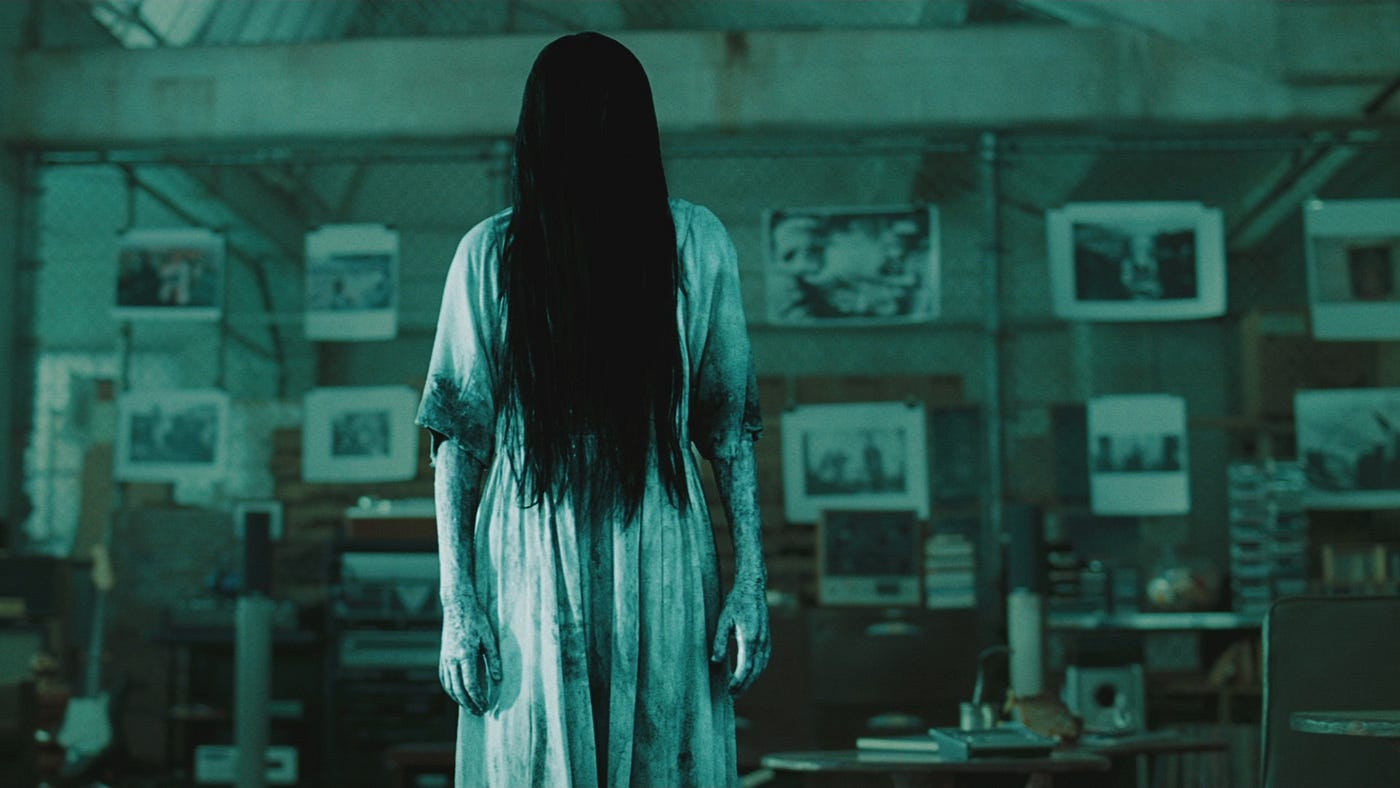
Images Courtesy Dreamworks Pictures
I had not rewatched The Ring (Dreamworks Pictures, 2002), the US version directed by Gore Verbinski with script by Ehren Kruger and starring Naomi Watts and Martin Henderson, since I first watched it when I was about seven or eight years old. I had to go to therapy for the first time after watching the film. Then I stopped going after two sessions because I’d heard somewhere that serial killers disguised themselves as people kids trusted to get close to them and kill them. It was a relief to my parents when I quit. It meant I was normal, or normal enough to pretend that I was fine.
A few nights ago, I decided to rewatch. I’ve always been curious about what it was about that film that so deeply affected me beyond any other horror movie I’ve watched since.
When I began researching the film for this essay, I realized twenty years had passed since it came out. It is not really shocking to find out I’m closer in age to the protagonist, Rachel Keller (Naomi Watts) than I am to any of the kids in the film. Time passes. That’s the way it is. What did shock me was to realize that Rachel and my mom were the same age when I watched the film.
For those unfamiliar with the film, The Ring tells the story of Rachel Keller (Naomi Watts), a young journalist and single mother who must solve the mystery of a VHS tape that kills anyone who watches it from a heart attack after seven days. What starts off as simple journalistic curiosity soon develops into desperation as Racher discovers her son Aidan (David Dorfman) watching the tape. Rachel teamS up with her estranged partner, Noah Clay (Martin Henderson), to solve the mystery and break the curse.
I watch Rachel struggle to balance her career as a journalist and the relationship with her only son, Aidan (David Dorfman), as a single mother, and I think of my own parents as Rachel tries and fails to close the chasm between the two, choosing to maintain a kind of distance with her kid not born out of resentment or hatred, but that frustrating gap that cracks open in the silence after each attempt to understand someone who doesn’t have the language you need to understand them.

My parents were excellent parents. And they were also extremely young when they had me and my siblings. My mom was nineteen, and my dad was twenty-three when they had my older brother, who died shortly after birth. They had my sister about two years later. Then, they had my middle sister two years after her. And, five years later, they had me. My mom was only twenty-seven. My dad was thirty-one. As with anything in life, dates might vary.
My parents have admitted — multiple times — that I was a challenging child. They said that the way I thought and behaved was very peculiar. I mimicked a lot of the voices and facial expressions of people I saw on TV. I copied speech almost word for word. I said things that, to me, were very obviously a joke or harmless but, to them, were either hilarious or completely horrifying. I could be very kind and well-behaved, but I could turn cold and cruel in a second without any apparent explanation. I saw things nobody else did, and I was punished for it.
Now, it is easier to put into words because I have the language, but back then, all these things were just shapes and sensations I couldn’t comprehend that deeply affected me. I knew that certain things felt right, and others didn’t. I couldn’t explain why, and it frustrated me, and it frustrated them because neither of us knew how to breach that gap that was growing between us, a gap oozing with silence.
I know how it felt for me to feel trapped inside my head with all these overwhelming thoughts and sensations and have no language to express them. I was afraid all the time and didn’t really know why. Now I know that I was afraid of my own mind, my own imagination, after being told for so long that what went on inside my head was wrong and could harm me or others somehow. If I hadn’t discovered reading and writing as outlets, I sincerely doubt I would be here right now. Even with those tools, I barely made it.
But now I keep wondering how it was for them, and I can’t imagine how profoundly lonely they must have felt, as I did.
In The Ring, we see Rachel’s flawed but honest and loving attempts to clumsily connect with her son, but hers — I’m saddened to say — is the extraordinary exception. People can be so cruel when their kid doesn’t turn out how they wanted them to be, when they think their kid is broken.
Mr. and Mrs. Morgan, owners of a horse breeding ranch, are unable to have children, so a depressed Mrs. Morgan leaves the island for a time and returns with an adopted daughter, Samara (Daveigh Chase). But, as Rachel discovers, Samara was a peculiar child. She had psychic abilities that allowed her to telepathically etch horrifying images in other people’s mind.
Samara’s usual targets were her parents and their horses. The relentless torment at the hands of their daughter became so unbearable her parents had to banish her to the barn, building a tiny loft for her above where the horses slept. They had no other choice. Yet, when Rachel sees the video of Samara explaining her abilities to one of her doctors, what you see is not an evil child enjoying her role as tormentor, but a quiet little girl who sits helplessly while trying to explain in an exhausted voice that she doesn’t mean to hurt anybody, she just can’t help it.
No one — not her parents nor her doctors — is able to help her, for they can’t get over their own prejudice. They don’t really listen as she asks for help; they don’t want to admit she looks visibly distraught and consumed by her own involuntary actions, for they have already decided that she is lying, that she is evil, that she can help it, but she chooses not to.
In what she is certain is a last act of love, Anna Morgan suffocates her daughter with a bag before throwing her down a well, uttering the words All I ever wanted was you. Her sweet words have the rotten smell of blame — it is your fault you weren’t what I wished for. But Samara is not dead yet. She watches helplessly as her mother seals the well because she knows there is nothing she can do. She knows her screams will go unanswered.

So, all alone in the darkness of the well, she attempts to climb to her freedom, clawing at the walls until her nails snap off. After falling into Samara’s well and being able to hold her body with the understanding she deserved in life, finally freeing her spirit, a horrified Rachel remarks that it takes seven days for you to die inside a well. Thus, explaining the origin of the now iconic line Samara’s victims hear when they pick up the phone after watching her tape: Seven days.
Rachel returns to her son, and that gap between them seems to be finally healing. There’s even the rekindling of a relationship with Noah (Martin Henderson), Rachel’s ex and father of her child. Rachel shares the news of Samara’s liberation with her kid, who can only ask with pure terror why she would do such a thing. In a scene that still fills me with dread every time I see a TV screen, Samara’s rotten corpse crawls out of the TV of Noah’s studio and mercilessly murders him.
A desperate Rachel finds the body and screams for Samara to tell her what she wants from her. But it isn’t hard to figure out what Samara wants. In one of the most satisfying twists, it is revealed that Samara forgave Rachel’s life not because she had opened her well and lovingly held onto her corpse but because she had made a copy of her murderous tape, a copy of her rage, and shared it with others.
Samara wants what any other vengeful ghost wants — for the injustice that made her to be unmade, the tape rewound, the tapestry unwoven. And the well-intentioned actions of flawed but the kindhearted journalist will never be able to give her the justice she wants, the justice she deserves. So, it falls on Rachel, with all her good intentions, to spread Samara’s rage at the end if she wants to save her own son. What other choice is there?
After all these years, the movie more than holds up. The script, the acting, and the cinematography are all excellent. The exploration of the relationship between violence, trauma, and guilt as creatures endlessly feeding off of one another and preventing anyone from moving on, neutralizing any attempts for peace for anyone involved, is much more terrifying as an adult. An excellent rewatch of early 2000s horror.

Interstellar Flight Magazine publishes essays on what’s new in the world of speculative genres. In the words of Ursula K. Le Guin, we need “writers who can see alternatives to how we live now, can see through our fear-stricken society and its obsessive technologies to other ways of being, and even imagine real grounds for hope.” Visit our Patreon to join our fan community on Discord. Follow us on Twitter, Facebook, or Instagram
메타데이터
- post_id
- 87b5d95eb2fc
- slug
- twenty-years-after-the-ring-87b5d95eb2fc
- url
- https://magazine.interstellarflightpress.com/twenty-years-after-the-ring-87b5d95eb2fc
- canonical_url
- https://magazine.interstellarflightpress.com/twenty-years-after-the-ring-87b5d95eb2fc
- author_url
- https://medium.com/@enhdiaaz
- status
- ok
- fetched_at
- 2026-07-13 06:23:13





