The truth about Gut Dysbiosis: What It really means (and what It doesn’t)
You’ve probably heard a lot about the gut microbiota in recent years, and for good reason. Decades of scientific research have completely…
The truth about Gut Dysbiosis: What It really means (and what It doesn’t)
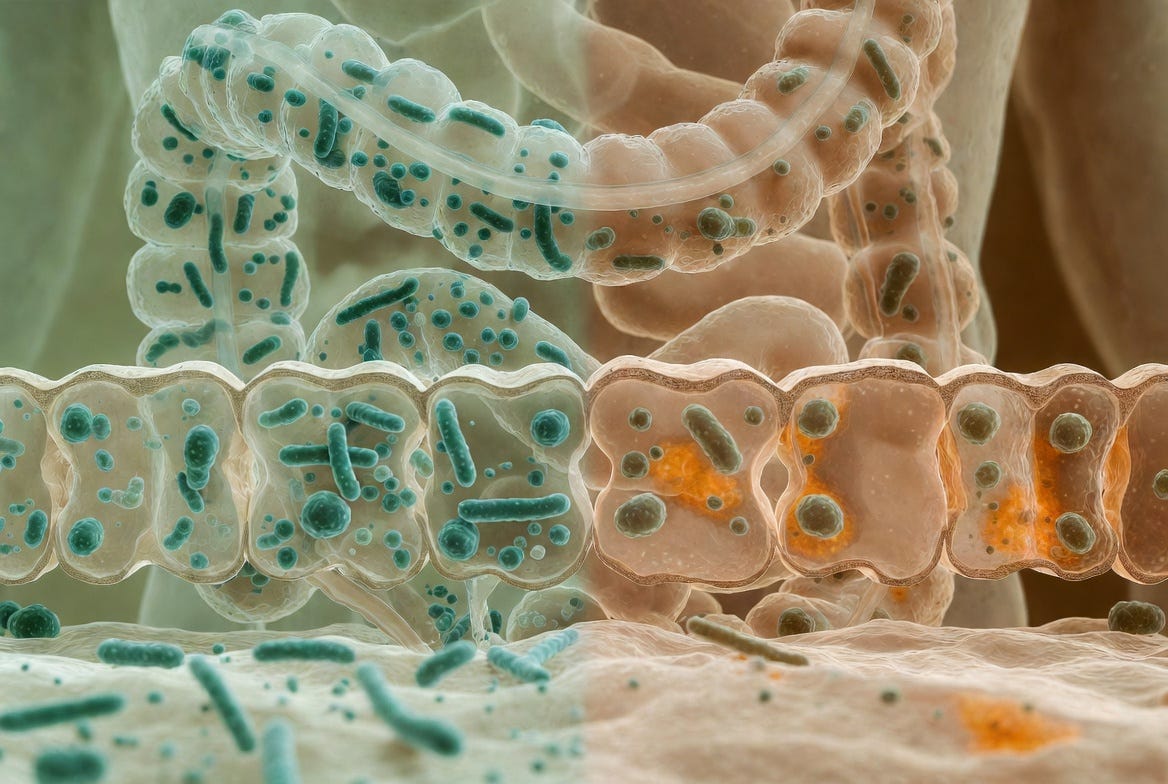
You’ve probably heard a lot about the gut microbiota in recent years, and for good reason. Decades of scientific research have completely changed how we view the digestive system. It’s no longer just a simple tube for processing food. It’s a complex, living ecosystem teeming with trillions of microorganisms that quietly work to keep us healthy.
When this delicate ecosystem becomes unstable, we call it intestinal dysbiosis. The term pops up everywhere, doctor’s offices, social media, wellness conversations , but it deserves a clear, rigorous explanation without hype or false promises.
What Exactly Is Intestinal Dysbiosis?
Your gut houses a vast community of microorganisms: bacteria, fungi, viruses, and archaea. These microbes live in a dynamic balance with your body. The gut microbiota helps digest nutrients we couldn’t otherwise process, produces beneficial metabolites like short-chain fatty acids, protects against harmful pathogens, and modulates your immune system.
Dysbiosis refers to a persistent disruption of this balance. It involves shifts in microbial composition, reduced bacterial diversity, and changes in how these organisms interact with your body. Triggers can include diet, chronic stress, antibiotics or other medications, past infections, and even genetics.
Important clarification: Dysbiosis is not a disease in itself. It’s a descriptive term for an altered state that may contribute to health issues, but not always. Interpreting it out of context often leads to confusion or unnecessary worry.
What Happens When the Microbiota Loses Balance
When microbial diversity drops and the gut ecosystem becomes unstable, the effects extend far beyond digestion. The constant, efficient communication between your gut and the rest of your body can break down.
A key mechanism involves the intestinal barrier , the selective lining of cells that acts as a filter between your gut contents and your bloodstream. In dysbiosis, this barrier can become overly permeable (“leaky gut”), triggering low-grade, sustained immune activation. This subtle inflammation has been linked to various metabolic and cardiovascular conditions, though the causal relationships are complex and not always direct.
Certain beneficial bacteria also produce short-chain fatty acids (like butyrate), which nourish the intestinal lining, regulate local inflammation, and support energy metabolism. When dysbiosis reduces these helpful microbes, production of these protective compounds declines, potentially affecting both gut health and distant organs.
The Gut-Brain Axis: When Your Gut Talks to Your Mind
One of the most fascinating discoveries in recent research is the bidirectional gut-brain axis. Through neural, hormonal, and chemical signals, your gut microbiota can influence stress responses, mood, and even certain behaviors.
This helps explain why some people with ongoing gut issues experience non-digestive symptoms, and why emotional stress can worsen digestive problems. The connection isn’t simple cause-and-effect, but the functional interplay is now undeniable.
Common Symptoms: Highly Variable and Often Non-Specific
Dysbiosis doesn’t look the same for everyone. Some people carry an imbalanced microbiota with no noticeable symptoms, while others experience:
- Abdominal bloating
- Excessive gas
- Slow or heavy digestion
- Irregular bowel habits (constipation, diarrhea, or both)
- General discomfort after eating
In inflammatory bowel diseases like ulcerative colitis or Crohn’s disease, the link between dysbiosis and inflammation is well-established: fewer anti-inflammatory bacteria, more pro-inflammatory ones, and a compromised gut barrier.
Outside these conditions, symptoms tend to be vaguer and harder to attribute solely to the microbiota.
What Dysbiosis Is Not
Having digestive symptoms does not automatically mean you have dysbiosis. And having dysbiosis does not automatically mean you have a disease. This distinction matters.
Stool tests that analyze your microbiota can provide interesting data, but they cannot diagnose dysbiosis on their own or justify specific treatments. The microbiome varies enormously between individuals, changes over time, and universal reference ranges don’t yet exist. Results must always be interpreted within a full clinical evaluation by a qualified healthcare professional.
Using “dysbiosis” as a catch-all label for any gut discomfort can delay proper diagnosis and lead to ineffective or unnecessary interventions.
How to Support Microbial Balance
The good news? The gut microbiota is remarkably resilient and capable of recovery.
The strongest evidence-based approach is a varied, plant-rich diet high in fiber (from vegetables, legumes, fruits, and whole grains) and low in ultra-processed foods. These foods feed beneficial bacteria, helping them thrive and produce the metabolites your body needs.
Quality sleep, effective stress management, and regular physical activity are also associated with healthier microbial profiles, though these factors interact in complex ways.
Probiotics and prebiotics can be helpful in specific situations under professional guidance, but no single strain or formula works for everyone. Any supplementation should be personalized.
When Should You Seek Professional Help?
If you’ve been dealing with persistent digestive issues that don’t improve, keep recurring, or significantly affect your quality of life, it’s time to consult a healthcare professional.
Seek medical evaluation promptly if you also experience unexplained weight loss, ongoing fatigue, anemia, blood in stools, or recurring abdominal pain, these may signal more serious conditions that need ruling out.
Take care of your gut , not because it’s a miracle cure for everything, but because it’s an essential part of you.
References:
- Rinninella E, et al. (2019). What is the Healthy Gut Microbiota Composition? A Changing Ecosystem across Age, Environment, Diet, and Diseases. Microorganisms, 7(1), 14. https://doi.org/10.3390/microorganisms7010014
- Fan Y, Pedersen O. (2021). Gut microbiota in human metabolic health and disease. Nature Reviews Microbiology, 19, 55–71. https://doi.org/10.1038/s41579-020-0433-9
- Cryan JF, et al. (2019). The Microbiota-Gut-Brain Axis. Physiological Reviews, 99(4), 1877–2013. https://doi.org/10.1152/physrev.00018.2018
- Shen ZH, et al. (2018). Relationship between intestinal microbiota and ulcerative colitis. World Journal of Gastroenterology, 24(44), 5005–5021. https://doi.org/10.3748/wjg.v24.i44.5005
- Dahl WJ, et al. (2024). Diet, Nutrients and the Microbiome. Frontiers in Nutrition, 11. https://doi.org/10.3389/fnut.2024.1330903
메타데이터
- post_id
- 87bb18acab0b
- slug
- the-truth-about-gut-dysbiosis-what-it-really-means-and-what-it-doesnt-87bb18acab0b
- url
- https://medium.com/@veganpharmacist/the-truth-about-gut-dysbiosis-what-it-really-means-and-what-it-doesnt-87bb18acab0b
- canonical_url
- https://medium.com/@veganpharmacist/the-truth-about-gut-dysbiosis-what-it-really-means-and-what-it-doesnt-87bb18acab0b
- author_url
- https://medium.com/@veganpharmacist
- status
- ok
- fetched_at
- 2026-06-22 08:33:11