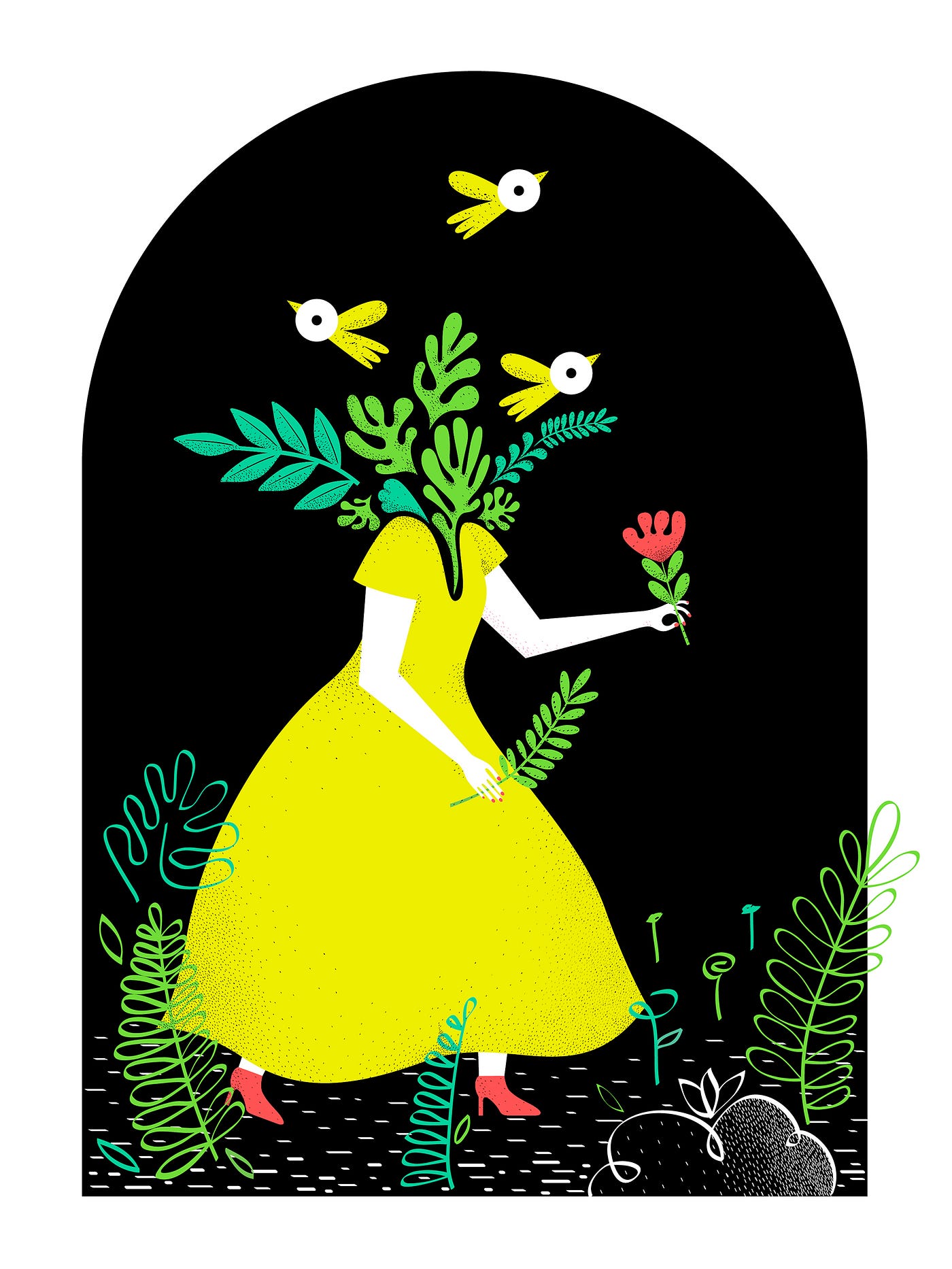
Letting AI reimagine the past is probably a bad idea
What looks like harmless restoration can quietly replace historical evidence with synthetic memory.
Letting AI reimagine the past is probably a bad idea
In February 2024, OpenAI introduced Sora, its video generator, aiming to dazzle with several examples, among them one generated from the text “historical footage of California during the Gold Rush”.
[embed]
Over the course of the 25-second video, a Western-like set unfolds, complete with period film grain. In the excitement over the shiny new toy, it was overlooked that nothing was being documented there; there wasn’t an ounce of “historical footage,” just a tired pastiche of Hollywood and prejudice.
“From now on, you can’t believe anything you haven’t seen with your own eyes,” blogs kept repeating.
The thing is, these tools don’t travel in time or know history; they regurgitate the result of training on scraped internet data, breaking down movies and whatever audiovisual material they can amass. In doing so, they recycle the limitations of the training material, amplifying its biases and flaws.
The experiment, at least commercially, failed. Just weeks after announcing a lucrative deal with Disney around video generation using its vast catalog of characters, in March 2026 OpenAI abruptly shut down Sora. This extremely expensive proof of concept, which was hemorrhaging a million dollars a day, established the certainty that producing high-fidelity pieces could be technically feasible and ridiculously easy — even if investors were footing the bill. What was never entirely clear was who needed such a tool to justify its development.
Controversies over the boundaries of what’s acceptable when it comes to altering images or audiovisual records are nothing new. When Roadrunner, a documentary about Anthony Bourdain, premiered in 2021, the production digitally resurrected his voice to read emails and used them as narration. This creative decision, however, was suspiciously kept hidden until after its release. The transgression wasn’t using this technology, but slipping an indistinguishable fabrication into a format whose promise rests on bearing witness to the truth, violating the tacit pact between creator and viewer.
Even if, in cases like this, the prevailing opinion leans toward a conciliatory “it’s not that serious” — because those emails were Bourdain’s, because it wasn’t his voice but it could have been, because… — the uncritical adoption of generative AI in cases like the transmission of historical narratives threatens the integrity of our shared public record. Historiography’s commitment to truth, upheld through every technological innovation that has come along, is the framework that insists that replacing actually captured primary sources with algorithmic, probabilistic “hallucinations” endangers our collective memory, now reduced to a capricious remix that jeopardizes its anchor in reality.
In one of his seminars on perception and intentionality, philosopher John Searle repeatedly stressed that the fundamental difference between seeing a real object and having a hallucination lies entirely in the causal chain.
When we look at our own hand, that visual experience exists because there is a limb reflecting light onto our retinas. Traditional analog photography operates on the same principle: it represents a primary source because it literally bears witness to the physical bounce of light off a concrete reality at a specific moment in time. That is, there is a direct causal sequence.
An algorithmically generated image has no such phenomenological anchor. Though it’s advisable to abandon anthropomorphic language when talking about AI, in epistemological terms these images amount to a kind of “hallucination”: a product mathematically generated by a model in the total absence of an external object.
The unbridled enthusiasm for tolerating the replacement of actually captured images with statistically generated simulations blows up the very notion of material evidence that can connect us to different times and places in history.
This present-day bias first appears as an aesthetic unease. Even when many of these fabrications are presented with seemingly noble intentions, like the “restoration” of historical visual records by injecting them with artificial sharpness and vibrant colors under the promise of bringing us closer to other eras, it amounts to nothing more than a sophisticated deception. Since the original film never captured that chromatic information, this algorithmic approach simply airbrushes the images in whatever way it finds mathematically most plausible.
This sanitization of the archive erases the cognitive effort required to assimilate a foreign era that we will never truly know. We are sold the false illusion that people in the past experienced the world just like us, albeit perhaps with more ridiculous haircuts.
This era bias also infects texts. When a Canadian historian tried using a language model to identify which among a pile of letters belonged to 18th-century fur traders, the machine failed because it misjudged expectations. While the model expected poetic descriptions of the landscape, the real letters documented everyday tragedies and lists of supplies. Turns out, 300 years ago they didn’t keep blogs.
You can try these experiments at home. For instance, ask an image generator to draw a Neanderthal, and the tool typically depicts it according to the caveman stereotypes that paleontology discarded half a century ago. The reason, two researchers venture, could be commercial: because the most up-to-date archaeological knowledge is often behind the paywalls of academic publishers, these systems are trained on whatever material is available, sometimes in old encyclopedias and outdated textbooks that are now in the public domain.
Although the use of generative AI in archaeology might seem like a creative opportunity (“we study history and have fun, too!”), the risk of falling into erroneous representations of the past could be too high. When these images are used to illustrate articles, exhibitions, and documentaries, AI tends to perpetuate historical biases and mix scientific data with fictional elements. This faux archaeology hinders public understanding of science and blurs its relationship with evidence in favor of speculation. Needless to say, these images are often rife with pseudoscience, now photorealistic.
But the accompanying risk is the abandonment of the traditional process of illustration and reconstruction of the past, which, far from being a mere “necessary evil,” is essential for developing deep mental models that help us ask more and better questions.
Instead, these depictions of humanity discarded decades ago, now revived through the education system and the media, far from representing rigorous windows into the past, condemn us to perpetuating their worst caricatures.
The worst consequence of normalizing “fake history” isn’t even believing falsehoods, but the entrenchment of the “liar’s dividend”: because it’s now socially assumed that fabricating or altering a video is trivial, anything inconvenient can be dismissed as “fake news.” And at the same time, the need to always be on guard against deception means we even distrust genuine images. You can’t believe anything anymore.
While museums and archives are the last guardians of the historical record, still capable of remembering what the world was like before the fabrication machines, academia is also vulnerable to the temptation of availability bias, and if it’s so easy to ask a machine to digest thousands of texts scraped from the internet, fieldwork in physical archives not yet digitized could be endangered.
It’s likely this is already happening, and that historiography has slowly come to rely more heavily on documents that have already been scanned, which naturally goes hand in hand with a preference for English and the Global North. By delegating the heavy historiographical labor to machines incapable of reading between the lines and restoring original context to sources, what gets produced won’t be history.
In any case, we shouldn’t give in to the temptation of paralyzing cynicism either. Because giving up the search for certainties by accepting that “you can’t believe anything anymore” is a folly. Defending the preservation of documentary sources is not only about wagging a finger at OpenAI or Google, but also about demanding respect for them from those who aim to communicate history. A video that sets out to explain history shouldn’t contain fake material, as that should automatically delegitimize its message.
Defending historical knowledge requires resisting a certain deceptive comfort, embracing instead the rough edges of an incomplete record, perhaps in black and white, but genuine.
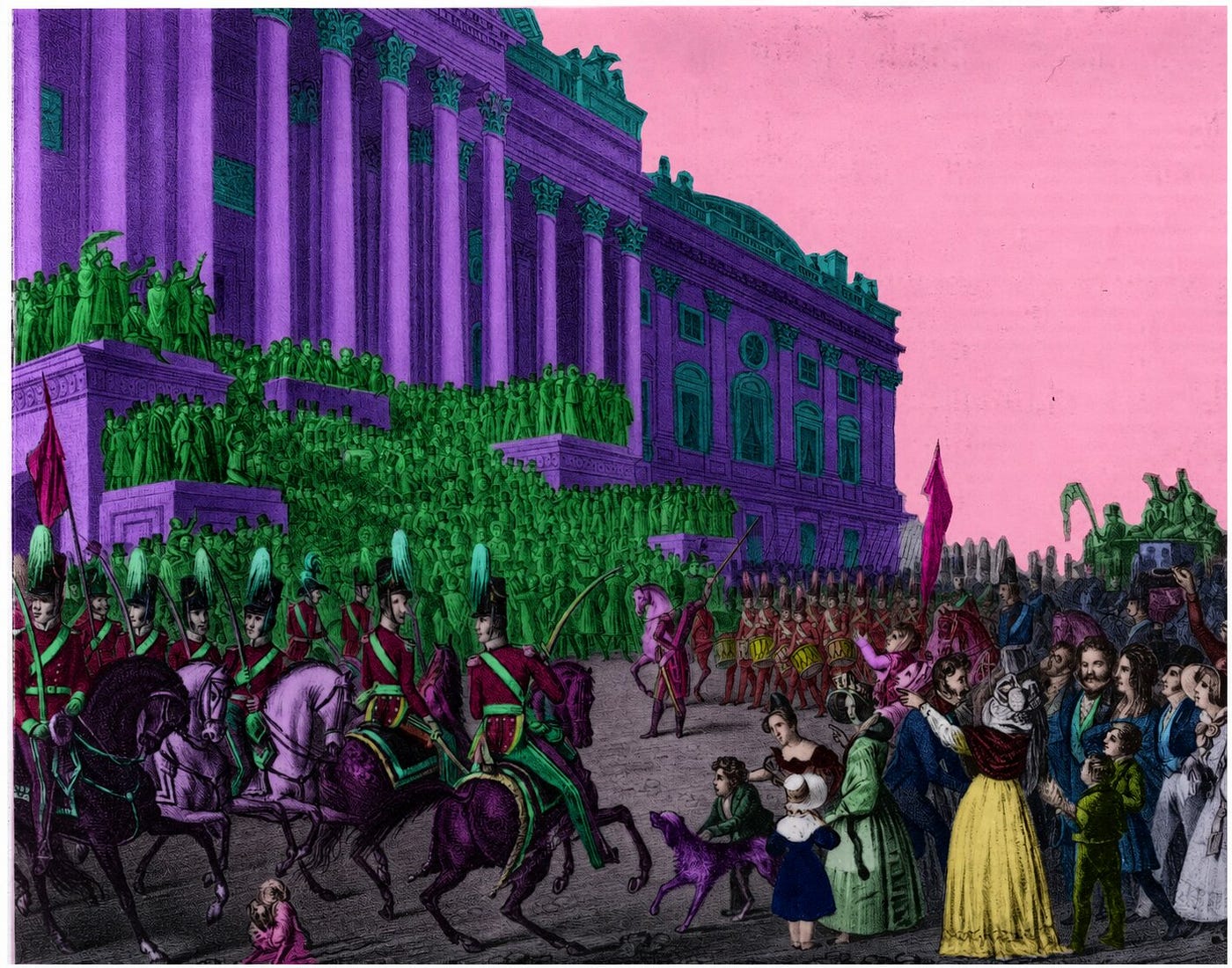
Lithograph of the Presidential inauguration of Wm. H. Harrison in Washington City, D.C., on the 4th of March 1841, by Charles Fenderich, colorized by ChatGPT Images 2.0.
This text was originally published in 2026 in Spanish.
메타데이터
- post_id
- 87f79c9472e4
- slug
- ai-and-fake-history-87f79c9472e4
- url
- https://medium.com/blueprint-for-disaster/ai-and-fake-history-87f79c9472e4
- canonical_url
- https://medium.com/blueprint-for-disaster/ai-and-fake-history-87f79c9472e4
- author_url
- https://medium.com/@valenzine
- status
- ok
- fetched_at
- 2026-06-15 20:49:13