Making Software Without Having Learned to Program
A perspective from Latin America
Making Software Without Having Learned to Program
A perspective from Latin America
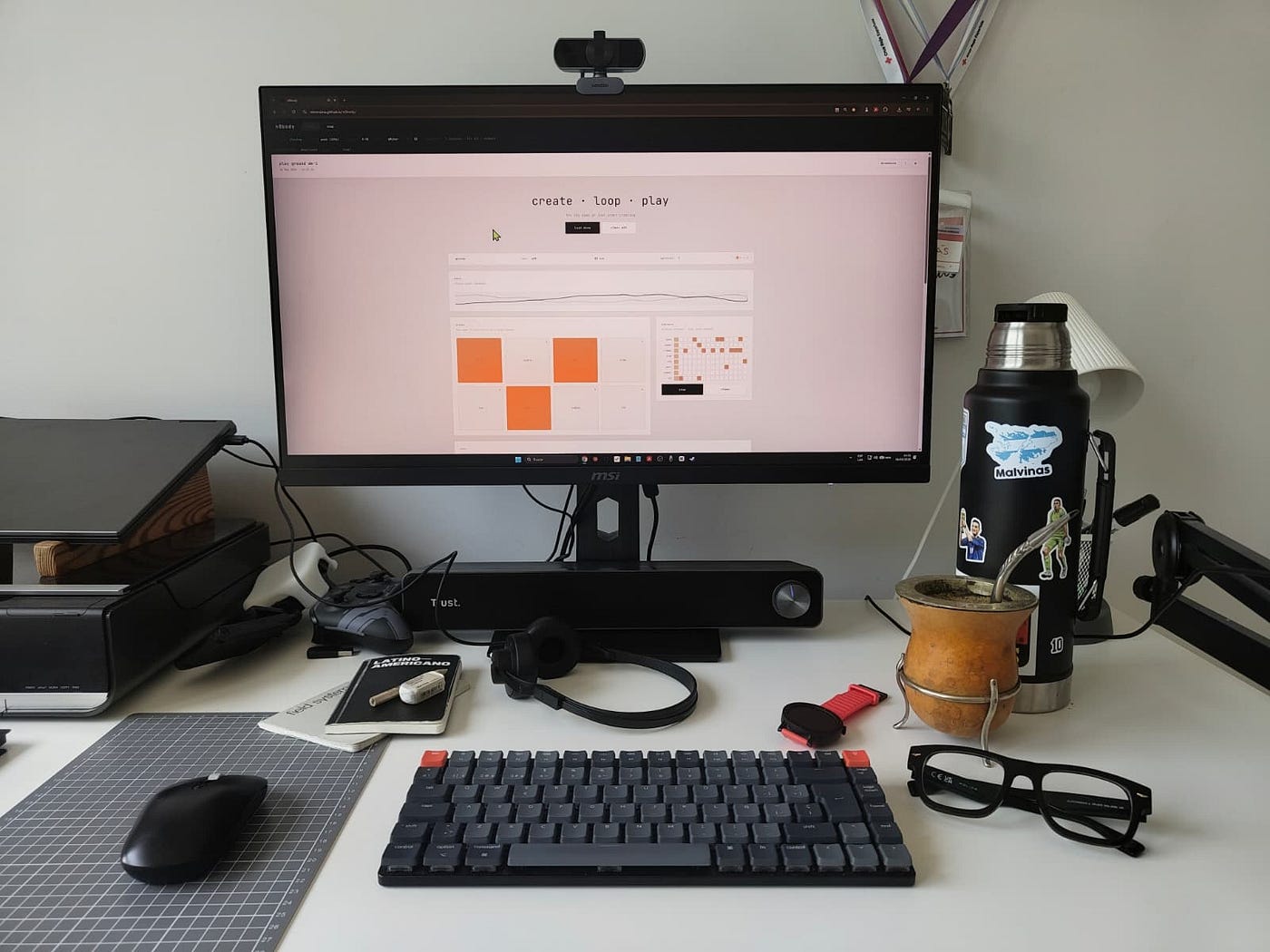
n0body mid-session. Photo: Nicolás’s desk, May, 2026.
I am a sociologist and designer from Argentina who lives in Madrid. I’ve always been drawn to digital culture, but I never formally learned to program. In my day-to-day, I work alongside technologists to create artifacts and think about the future, without developing my own software. That changed in late 2025 with the arrival of AI models capable of generating code from natural language. As Andrej Karpathy, co-founder of OpenAI, put it: “The hottest new programming language is English.” The possibility opened up for me to create my own tools, both at work and in my spare time. An emerging practice called “personal software.”
One of my personal software is **n0body**, a system that learns and plays music on its own. It lives in my office. Each session is unique and, when it ends, it disappears without a trace. If you were not there, you missed it.
Building it forced me to think about what it means to make software without knowing how to make it. What follows is what I found along the way: about what can be delegated to the machine and what should not, about what makes an artifact exist in the world beyond code, and about what it means to build software from a geography that rarely appears in these conversations.
n0body, or what gets delegated and what doesn’t
Making music with systems that make decisions on their own has a long history that John Cage opened with indeterminacy; Max Mathews pushed computer synthesis; Brian Eno called it generative music and described it as gardening: you plant rules, parameters, conditions, and you watch the piece grow; Miller Puckette built Max and Pure Data so that logic could live in a programmable instrument. A rich, technically sophisticated tradition, but one made by professional musicians, or by people who learned to program in order to make music. What changed with AI is that someone without that knowledge can build the system.
I built n0body on top of a web synthesizer I made myself called **mk-1**. An AI (an LLM) evaluates the state of the session every three minutes and makes concrete musical decisions: drum patterns, effect values, synth phrases, transitions, and BPM. The LLM does not write the instrument's code. It plays the instrument. It does not know whether it sounds good, but it does know whether the density was appropriate, whether there was variety, and whether the rhythm was consistent. It reinforces what fits. The next session starts from there.
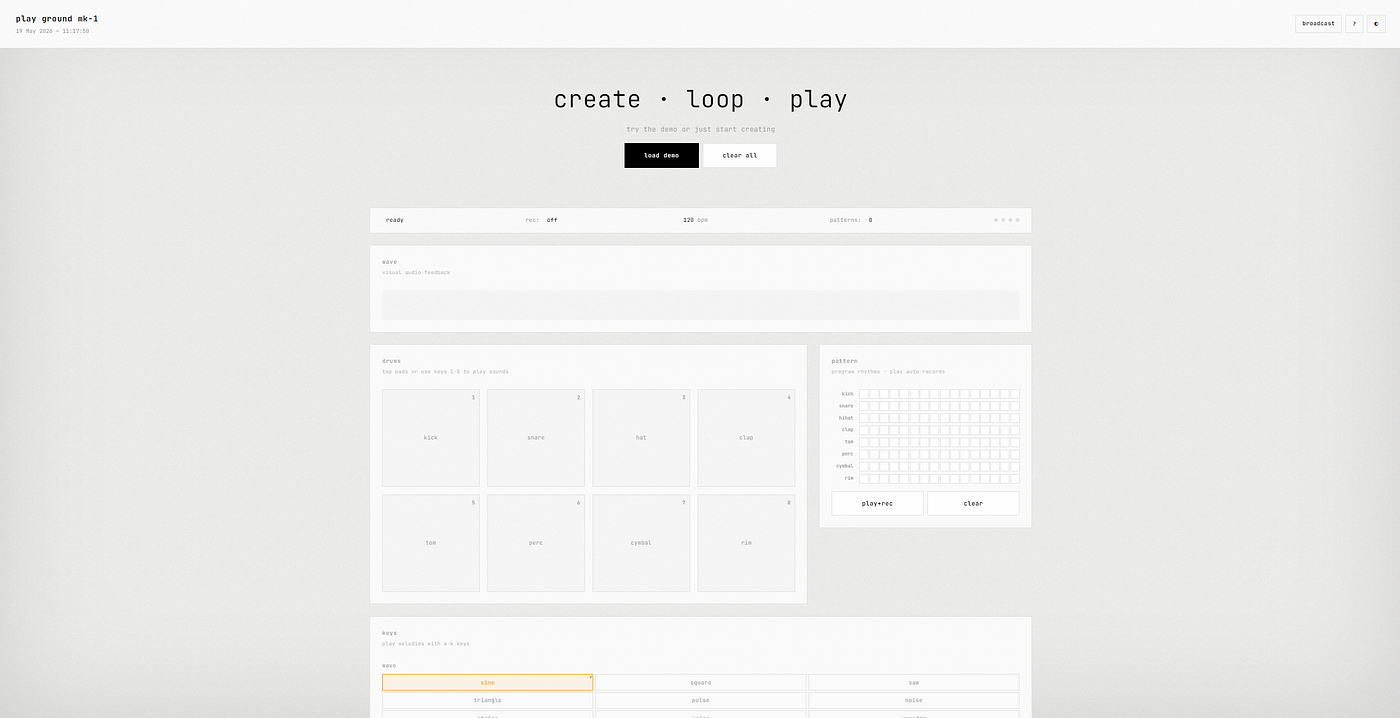
mk-1: the web synthesizer n0body plays. Source: n0body: when AI stops being a tool and becomes the artist | by Nicolás Bronzina | Medium
I did not write those decisions, but I enabled them. What is entirely in my court is the influences, the tone, the rules of the game. That melancholy not be sadness but depth. That euphoria be earned, not forced. That silence be an instrument.
I formulate it in one sentence:
Syntax can be delegated; intent cannot.
Let me put it more bluntly. I do not come from the craft. But I know what I want to happen. And that (intent, the aesthetic bet, the gesture) I do not want to delegate to anyone. Not to the AI, not to the instrument, not to the listener. The tool can do everything else. The intent stays with me.
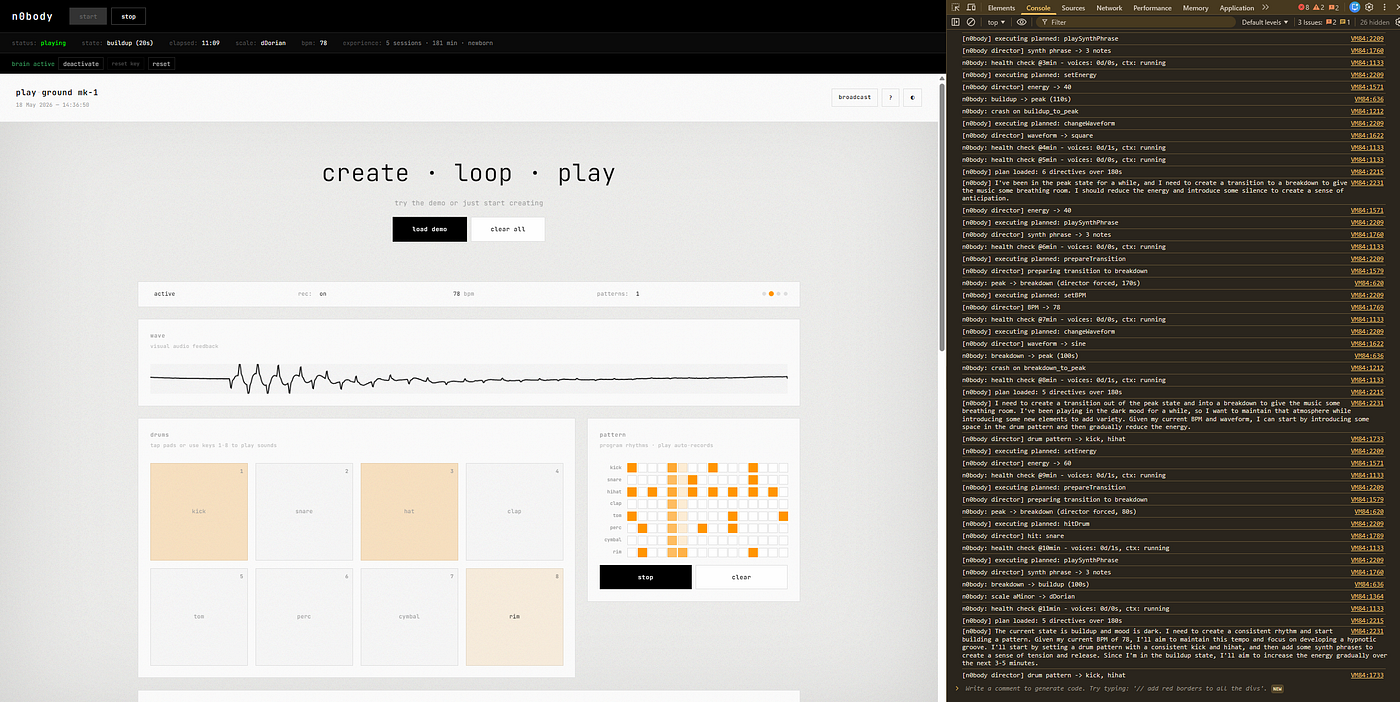
n0body’s internal monologue, visible in the console, not on stage. Source: n0body: when AI stops being a tool and becomes the artist | by Nicolás Bronzina | Medium
Exploration stands on its own
In 1938, the Dutch historian and cultural theorist Johan Huizinga wrote in *Homo Ludens*: play is a free activity, valuable in itself. For those of us who came to software from the sidelines, without prior training, that’s probably the most important door to the practice. The one that closes when every gesture has to produce something. Playing with technology without a purpose is a legitimate way of relating to it.
I built n0body without knowing where it was going. That openness was the condition that made the exploration possible. And exploration, when it is genuinely free, sometimes opens doors you weren’t expecting.
When I started sharing n0body, a small community appeared around the practice: people who cross AI, art, and code and share the process in the open; **ichied0 with s00s1, the circle of [Micelio](https://estoesmicelio.substack.com/)**, others joining in. Personal software isn’t only about building something. It its about entering a conversation.
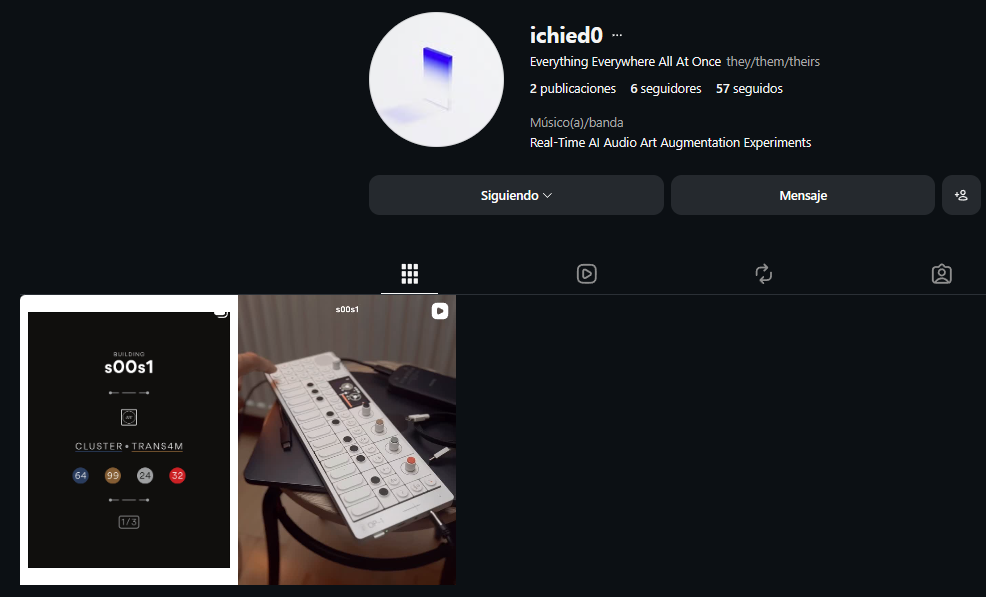
Other similar questions, from other angles. Source: n0body: when AI stops being a tool and becomes the artist | by Nicolás Bronzina | Medium
The politics of the artifact
In *Do Artifacts Have Politics?* (1980), Langdon Winner made a simple and hard point: artifacts have politics. It is not that people give politics to the artifact. It is that the artifact, in its mere existence, embodies one.
In the context of personal software, when someone builds their own app to replace a national railway’s app (as Étienne Mineur did with the SNCF app in France), they’re not just solving a personal problem. They’re assuming that the response to deficient public infrastructure is an individual one. When a vendor develops their own solution to connect their Shopify e-commerce with a supplier who keeps inventory on a Google Sheet, they’re taking for granted that integration will never come from anyone else.
These are ways for the artifact to exist in the world, and each one carries an implicit politics. Winner’s question is not “is this worth building?”. It is:
What world does its existence imply?
Adding to what Winner asks, I would put forward another: what does that world carry? In *The Uncontroversial ‘Thingness’ of AI*, Lucy Suchman makes a simple and hard point: AI contains multitudes. When we make an agent, we are not creating a neutral tool. We carry decisions that belong to other people, to other contexts, to other worlds — who had access, what was missing, what could not be assumed. The same applies to personal software. Every workaround carries the conditions under which it was made. A workaround in Paris doesn’t carry the same multitudes as one in Buenos Aires. In Paris, it is a choice. In Buenos Aires, it is often the only option available. And that brings me to the last point.
Personal software as infrastructure
My colleague Rohit Gupta refers to the Indian concept of jugaad when talking about personal software, meaning homemade solutions or simple hacks made with few resources. It is a practice with cultural roots that sustain it as a value, celebrated and at the same time contested as a national trait.
In Latin America, there’s something similar in form, but structurally different: we call it atar todo con alambre (tying everything with wire). The name is physical, humble, almost embarrassing: a cable patched with electrical tape, a plumbing joint held with a clamp, a homemade solution that defies logic, gravity, and municipal code. But it is not an aesthetic choice. It is not frugality by preference. It is the response to a condition.

Atar todo con alambre. Photos courtesy of Nicolas Nova.
Argentine economist Bernardo Kliksberg, who spent decades studying Latin America’s informal economies, called this kind of practice “social innovation born of necessity”, a concept that runs through his work, particularly in Primero la gente: parallel systems that challenge top-down development and bypass broken institutions.
The wire of the kiosquero, of the cartonero, of the shopkeeper in a Buenos Aires neighborhood replaces a public infrastructure that is assumed to be absent. That social innovation also goes digital. One example: Dolarito, an Argentine app built as a personal project that brings together on a single screen all the parallel dollar exchange rates(blue, MEP, crypto) that the State either doesn’t officially recognize or fragments across incomplete sources. Today, more than a million people use it each month. Dolarito solves something the State will not solve, because officially, the problem does not exist.
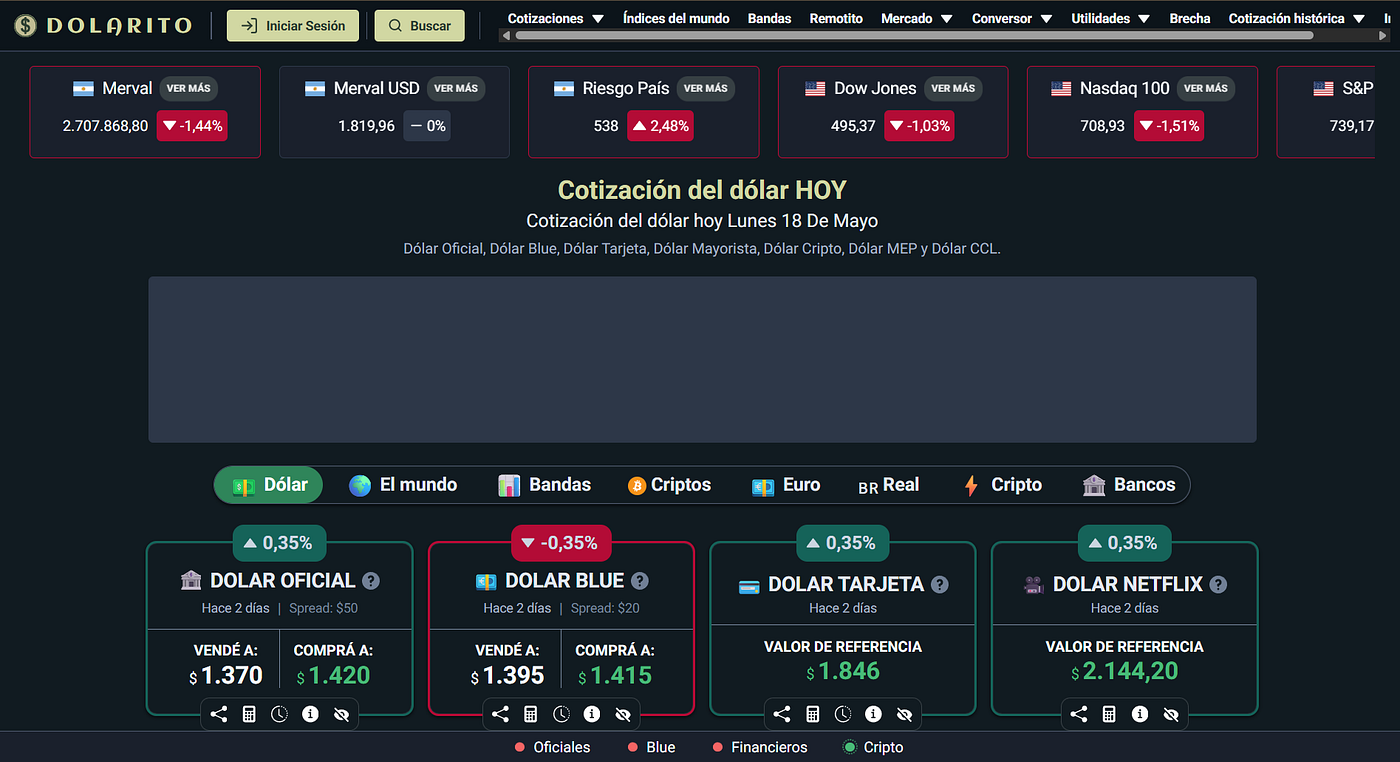
Dolarito: a personal project that brings together what the State fragments or denies. One million users a month. Screenshot: dolarito.ar, May 18, 2026.
That changes the political weight of the gesture.
For someone living in Europe, personal software is one option among several. For the Latin American practitioner, it is often the only option. Personal software emerges when an institution does not provide, and someone does what they can with what they have. The difference is that now, thanks to AI, what one can do with what one has is far greater than before.
The bet
This exploration leaves me with a bigger question:
When many more people can make software, what worlds do we choose to bring into being?
n0body is one of those worlds. It’s small, with its own philosophy. It lasts one session. It leaves no file, no metric, no product. But it existed. And while it existed, someone heard it. That is the whole bet.
Yours too: Syntax can be delegated. Intent cannot.
This text is part of a series on personal software. Thanks to Fabien Girardin for the invitation and for his contributions to this essay.
메타데이터
- post_id
- 87f8caa0ebeb
- slug
- making-software-without-having-learned-to-program-87f8caa0ebeb
- url
- https://medium.com/personal-software/making-software-without-having-learned-to-program-87f8caa0ebeb
- canonical_url
- https://medium.com/personal-software/making-software-without-having-learned-to-program-87f8caa0ebeb
- author_url
- https://medium.com/@nbronzina
- status
- ok
- fetched_at
- 2026-07-15 10:36:23