Civilization. The last page. (263)
Photo by Timur M on Unsplash
Civilization. The last page. (263)
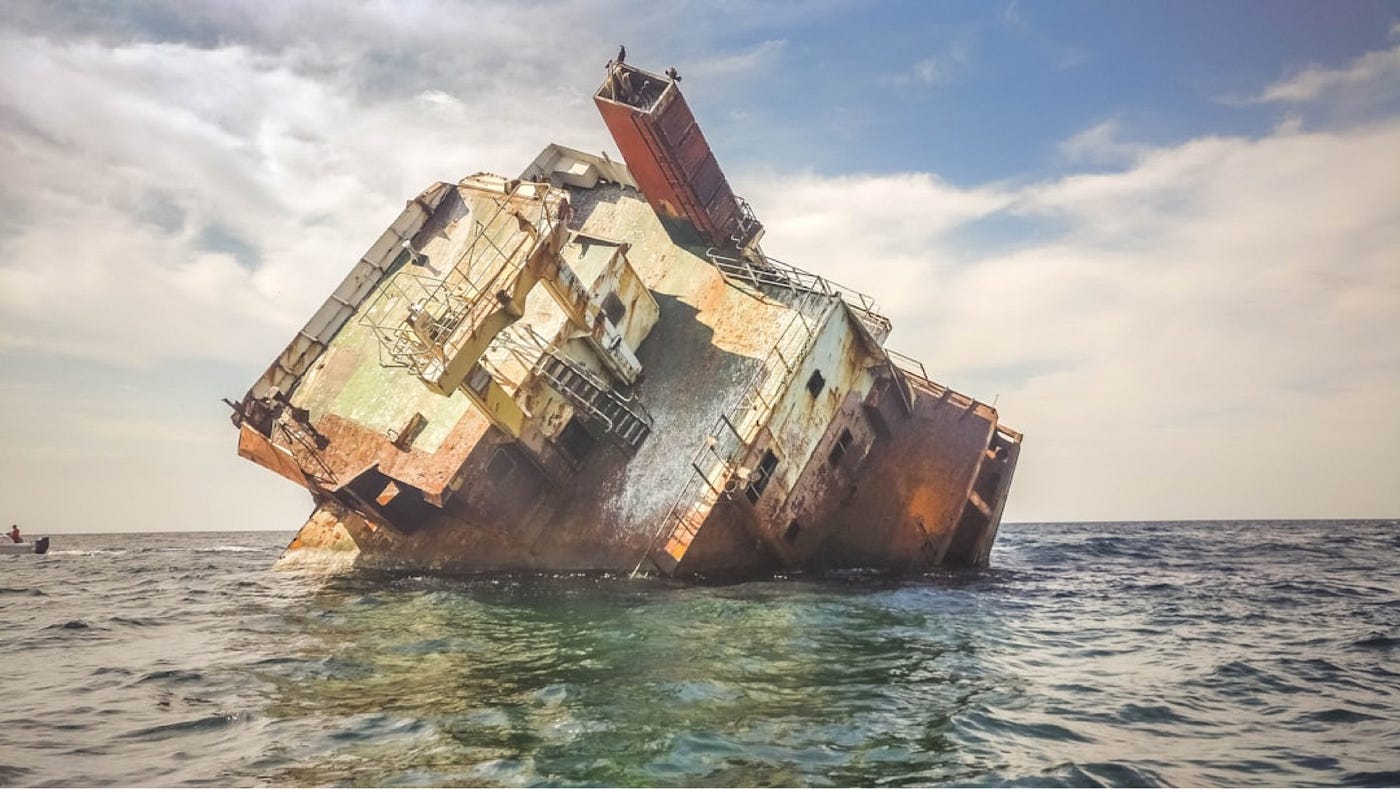
Photo by Timur M on Unsplash
When the ship hits the sand.
The second half of the 2020’s will be much more difficult than the first half:
January 2026, a major heat dome appeared over the Western 40% of the U.S. robbing the Sierra’s of more than half their normal snowfall.
February 2026, Iran is bombed by a joint strike force of Israeli and US planes. The strait of Hormuz is closed. It results in a 28% cut to global oil shipments through the strait. The price of gasoline increases by 35%: the price of wholesale diesel rises 55%. The cost of aviation fuel increases nearly 80%. Gasoline will increase in price till at least the first quarter of ‘27. The shut-down of Valero’s Benicia, California refinery that ceased operations in April 2026, and Phillips 66's Los Angeles unit, that closed in October 2025, will lead to increased price volatility on the US West coast.
World fertilizers prices rose by a third, in time to impact the Spring planting season in the Northern hemisphere. As a result, a 25% decrease in the harvest yields of grains and corn is expected, with price increases to follow.
March 2026, the US has its warmest March on record. Average temperatures are 9.4°F above the 20th-century average, imposing severe drought conditions over 60% of the U.S. The Northern Hemisphere has its 6th lowest snow cover in 60 years. Arctic sea ice reached its second-lowest March extent on record. The Colorado river’s two major reservoirs of lake Mead and lake Powell have < 20% remaining till they can no longer generate electric power.
April 2026, NOAA confirms a greater than 80% probability of the formation of the El Niño climate phenomenon. Based on higher temperatures of 4° to 5.3°C recorded in the central Pacific Ocean, it will be the greatest increase in Pacific warming along the West coast of South America in 140 years. The EÑ was responsible for 40 to 60 million deaths world-wide, from the resulting droughts, diseases, famine and floods.
May 2026, the 90 day costs of the Iran war results in a Congressional request for a $400 billion supplemental military budget increase by the Administration.
June 2026, an all-time record heat dome formed over Western Europe and the UK. Initial deaths are reported at 5 to 10 thousand persons from heat exposure. Expect more follow-on deaths from delayed effects. The total of the 2003 European heat wave deaths exceeded 35,000.
In late June, a dome affected 130 million people in the eastern US, from upper NY state to Miami, Florida, and the Gulf Coast, disrupting hundreds of daytime events as temperatures soared to all-time highs during the 250 year anniversary celebrations. Deaths are still being counted, however an initial total of 3 — 5,000 are expected. More delayed deaths will follow. The severe drought and high winds forced the cancellation of 4th of July fireworks displays over Utah and parts of Colorado, due to windy conditions. The Great Plains continue to be in increased drought and will become further tormented by the high winds.
The last 6 months of 2026 and the first half of 2027 will be exposed to the full impact of the El Niño climate phenomenon. Summer heat here, will exceed all previous records. In the Fall, the jet stream will shift southward, bringing warmer temperatures and wetter storms to California and the Gulf Coast, as well as the Southeast. Pacific cyclone activity will increase, and the number of Atlantic hurricanes may be reduced, but each event can have higher intensity levels. The Northwest US will experience a warmer winter, as will the Great Plains and the Great Lakes regions. The Northern Rockies, the Ohio Valley, and the Tennessee Valley will be drier.
Extreme drought will continue in Iran, the mid-East, and North Africa. Western Europe and the UK are going to be colder from the continued slowing of the Gulf Stream (AMOC), compounded by the effects of EÑ. This will be a bad year for the Indian sub-continent, as well as the Asian and Australian continents. Previous EÑ’s have disrupted the monsoon season by depriving India, Bangladesh and Australia while drowning the rice-growing regions of the far East
Average global temperatures have increased by 1.4° — 1.6°C since 1890. The most dramatic EÑ event in 140 years will compound the damage of adverse weather events, increasing the world’s average annual deaths to double or triple from the previous average of 550,000 at a minimum. The US is better prepared for high heat events, but we are also more vulnerable to a collapse of a regional power grid, like the Northeast collapse of 2003, or the Texas grid in 2021. The resulting mortality of 160 millions of our Northeast inhabitants, or 40 million Texans, dealing with higher than 105°F over a period of days when AC’s overload the grid cannot be exaggerated.
Have a nice day.
메타데이터
- post_id
- 87f9b74cd57e
- slug
- civilization-the-last-page-263-87f9b74cd57e
- url
- https://medium.com/@janslort/civilization-the-last-page-263-87f9b74cd57e
- canonical_url
- https://medium.com/@janslort/civilization-the-last-page-263-87f9b74cd57e
- author_url
- https://medium.com/@janslort
- status
- ok
- fetched_at
- 2026-07-21 22:45:11