A Closer Look at Mastercard SMMP
A customer orders a product from a website that looks completely genuine. The payment goes through without any issues, the merchant…
A Closer Look at Mastercard SMMP
A customer orders a product from a website that looks completely genuine. The payment goes through without any issues, the merchant receives the money, and everything appears normal.
A week later, the product never arrives. Then more customers report the same experience. By the time the pattern becomes clear, hundreds or even thousands of payments may already have been processed.
So, how do payment networks spot a scam merchant before it reaches that stage?
That’s the question Mastercard is trying to answer with its new Mastercard Scam Merchant Monitoring Program (SMMP). Effective from 24 July 2026, the program introduces a new way of identifying merchants that may be operating scams and requires acquiring banks to investigate them much earlier than before.
If you’ve been hearing about Mastercard’s new SMMP but aren’t sure how it works, here’s a breakdown.
Why the Change?
For years, merchant monitoring has largely relied on fraud, disputes, and chargeback trends. That works well when someone steals a card or makes an unauthorized transaction.
But many scams today work differently.
Customers often make the payment themselves because they believe they’re dealing with a genuine business. It could be a fake shopping website, an investment platform, or a subscription that isn’t what it claims to be.
The warning signs usually appear much later, when customers start reporting the issue or raising chargebacks. Mastercard introduced SMMP to identify potential scam signals earlier, helping acquirers’ step in before more customers are affected.
So, What’s SMMP?
The Mastercard Scam Merchant Monitoring Program (SMMP) is a framework for identifying merchants who may be deceiving customers into making payments.
Instead of waiting for complaints and disputes to build up, the program looks for specific warning signs. If one of those signs appears, the merchant’s acquiring bank (acquirer) must begin an investigation within 72 hours.
In short, SMMP shifts the focus from reacting after the damage is done to investigating suspicious behavior much earlier.
What Raises Flags?
SMMP looks for four key warning signs that may indicate potential scam activity.

Approval Rates Drop
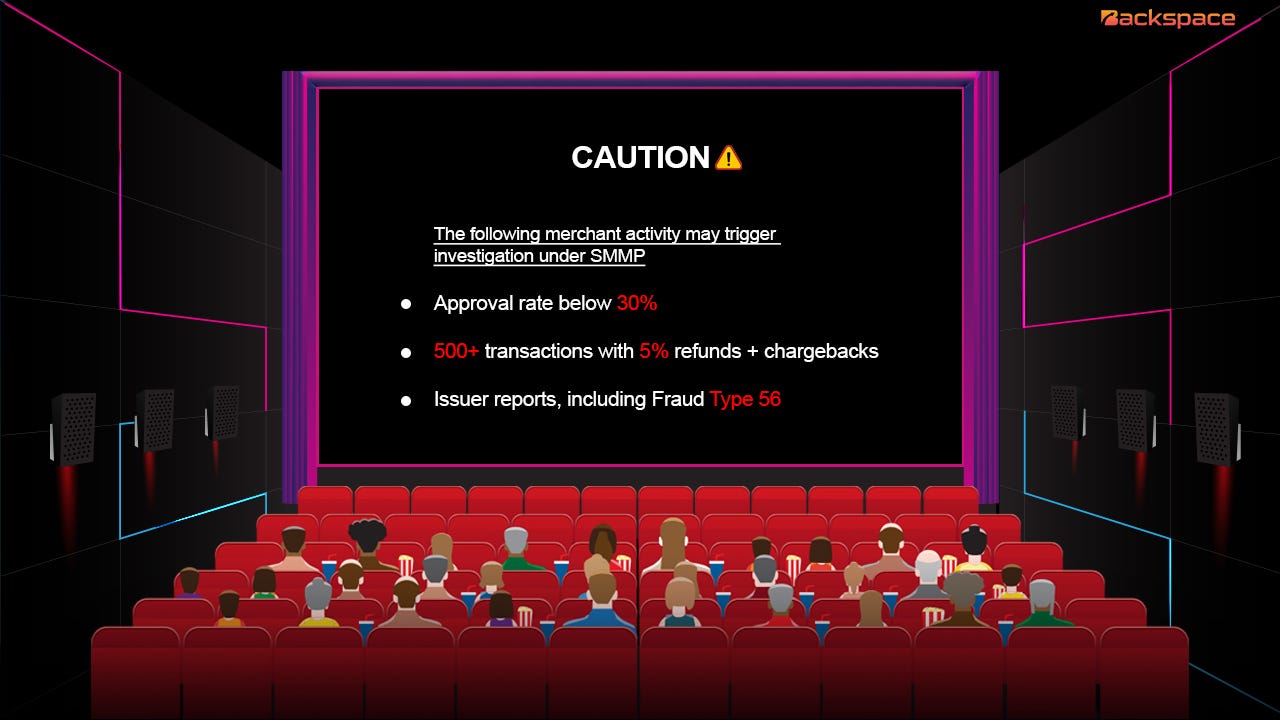
If a merchant processes at least 25 purchase transactions within 72 hours and its authorization approval rate drops by 50 percentage points or falls below 30%, the acquirer must investigate.
A sudden decline like this can indicate that issuers are identifying unusual transaction patterns.
Reports from Issuers
Issuers can also trigger an investigation when they have evidence that customers were manipulated into making payments.
This includes Fraud Type 56, where the customer authorised the transaction but did so because they were deceived.
Common examples include:
- Fake shopping websites
- Investment scams
- Romance scams
- Fake job offers
- Courier or delivery payment scams
Unlike traditional card fraud, the customer isn’t denying the payment — they were misled into making it.
Keeping an Eye on New Merchants
SMMP applies additional checks to merchants that have been accepting Mastercard payments for six months or less.
An investigation is triggered if the merchant:
- Processes at least 500 purchase transactions in a rolling 30-day period.
- Has a combined refund and chargeback rate above 5%.
Scam operations often appear as new businesses, collect payments quickly, disappear once complaints begin, and reopen under a different identity. Monitoring new merchants more closely helps identify these patterns earlier.
Another Set of Eyes
Mastercard also accepts alerts from approved Merchant Monitoring Service Providers (MMSPs).
These organizations monitor merchant activity using different intelligence sources. If they identify a merchant as a potential scam, the acquiring bank must investigate.
What Happens Next?
A trigger doesn’t automatically mean a merchant is operating a scam. It starts an investigation.

Why It Matters?
The Mastercard Scam Merchant Monitoring Program reflects a broader shift in how payment networks are tackling scams.
Many scams today don’t involve stolen cards or unauthorized transactions. Instead, they rely on convincing customers to make the payment themselves. That means merchant behavior has become just as important as transaction behavior.
For acquirers and payment facilitators, this means closer merchant monitoring and faster investigations. For merchants, it reinforces the importance of transparent business practices, clear communication, and resolving customer issues before they escalate.
At its core, SMMP is Mastercard’s effort to identify potential scam merchants earlier, helping reduce customer harm before complaints begin to pile up.
To know more about the payment ecosystem, chargeback, and dispute nuances through delightful bytes of information, follow us on LinkedIn, X, Facebook, and Threads.
P.S: What topic do you think we should explore next? Let us know in the comments.
메타데이터
- post_id
- 8801f2eedf79
- slug
- a-closer-look-at-mastercard-smmp-8801f2eedf79
- url
- https://medium.com/@backspace-tech/a-closer-look-at-mastercard-smmp-8801f2eedf79
- canonical_url
- https://medium.com/@backspace-tech/a-closer-look-at-mastercard-smmp-8801f2eedf79
- author_url
- https://medium.com/@backspace-tech
- status
- ok
- fetched_at
- 2026-07-17 06:36:54