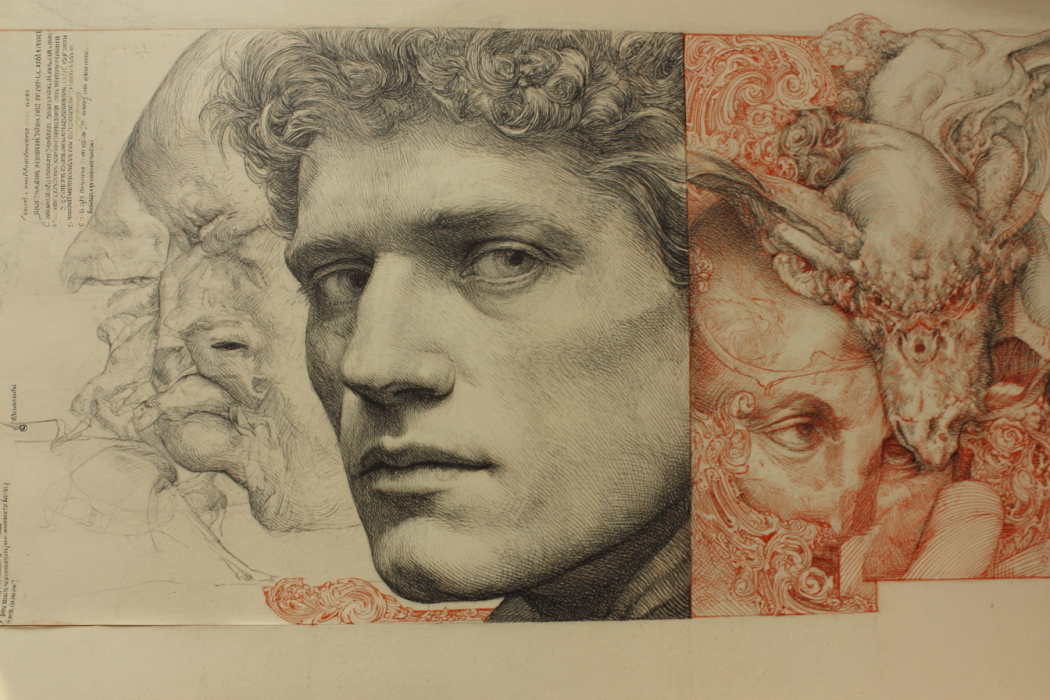
The Inner Other: Jung’s Anima/Animus and the Path to Wholeness Through Dream Work
There is a figure that lives inside each of us — elusive, numinous, and profoundly familiar all at once. Carl Gustav Jung called it the…
The Inner Other: Jung’s Anima/Animus and the Path to Wholeness Through Dream Work

There is a figure that lives inside each of us — elusive, numinous, and profoundly familiar all at once. Carl Gustav Jung called it the anima in men and the animus in women, and he considered it one of the most powerful archetypes residing in the unconscious.
To encounter this inner counterpart, to wrestle with it, to ultimately befriend and integrate it, is not merely a psychological exercise. For Jung, it was nothing less than the central task of a life lived with meaning.
The path toward this integration (toward what he called individuation) winds through the landscape of dreams and is illuminated most brilliantly by the torch of lucid dreaming.
What Are the Anima and Animus?
Jung observed that the human psyche is not neatly divided along the lines of biological sex.
Every man carries within him a personification of the feminine (the anima) and every woman carries a personification of the masculine (the animus). These are not merely abstract concepts. They present themselves as living figures in dreams, fantasies, and projections onto other people.
The anima might appear as a seductive stranger, a wise priestess, a terrifying witch, or a mournful lover. The animus might manifest as a stern authority figure, a bold hero, a charismatic leader, or a violent aggressor.
The origin of these figures is layered. Partly they emerge from personal experience — the impressions left by one’s mother or father, early loves, cultural images of femininity and masculinity.
But beneath that personal layer, Jung argued, they belong to the collective unconscious, the deep reservoir of human experience shared across cultures and centuries. The anima and animus are ancient. They appear in mythologies the world over — Aphrodite and Apollo, Isis and Osiris, Shakti and Shiva — precisely because they are expressions of something universal in the human condition.
The Four Stages of Development
Jung described both the anima and animus as evolving through successive stages of complexity.
The anima, for instance, develops from Eve — pure biological instinct and physical allure — to Helen, the romantic and aesthetic ideal, to Mary, the spiritually elevated and compassionate feminine, and finally to Sophia, the embodiment of wisdom itself. Each stage represents a deeper, more integrated relationship between the man and his inner feminine.
Similarly, the animus progresses from the figure of raw physical power to romantic heroism, to a capacity for logos and reasoned discourse, and ultimately to a kind of spiritual mediator — a Hermes-figure that bridges the conscious and the unconscious.
The stage at which a person relates to their inner counterpart has enormous consequences for how they engage with the outer world.
A man still captivated by the most primitive manifestation of his anima may find himself endlessly projecting idealized or demonized femininity onto real women, unable to see them as full human beings.
A woman dominated by an undeveloped animus may be plagued by inner voices of harsh criticism, rigid dogma, or compulsive opinionating that feels like thought but lacks genuine reflection.
These projections and possessions are not moral failings — they are invitations to go deeper.
The Anima/Animus and Individuation
Individuation is Jung’s term for the lifelong process of becoming who one truly is — not the persona one wears for the world, not the ego’s preferred self-image, but the full, paradoxical, integrated Self. It is a process of radical psychological honesty, of reclaiming what has been denied, projected, and repressed.
The anima or animus occupies a privileged position in this process because it functions as a psychopomp — literally, a guide of souls.
It is the bridge between the conscious ego and the deeper layers of the unconscious. When a man is cut off from his anima, he is cut off from his emotional life, his intuition, his capacity for relatedness and eros.
When a woman is cut off from her animus, she may struggle to assert herself, to think with clarity and confidence, to act with decisive agency in the world.
In both cases, the unlived life accumulates in the unconscious and begins to manifest as compulsion, projection, depression, or a nameless sense that something essential is missing.
To integrate the anima or animus is not to become more feminine or more masculine in any superficial sense. It is to become more whole — to have access to the full spectrum of human capacities rather than only those deemed acceptable by one’s conditioning.
A man who has worked deeply with his anima typically becomes more emotionally intelligent, more creative, more capable of genuine intimacy. A woman who has integrated her animus often finds a new authority in her thinking and a fearless willingness to stand for what she believes in. The integration does not erase difference — it enriches it.
Dream Work as the Primary Gateway
Jung considered the dream to be the royal road to the unconscious, and for encountering the anima or animus specifically, this metaphor is almost literally true. The inner counterpart speaks most fluently in the language of dreams — in symbol, image, narrative, and emotional atmosphere. Dream work, done sincerely and consistently, is among the most effective ways to enter into a relationship with this figure.
Keeping a dream journal is the foundational practice. The simple discipline of writing down dreams upon waking — before the rational mind has had a chance to dismiss or sanitize them — begins to establish a relationship between the conscious self and the unconscious. Over time, patterns emerge. Certain figures, settings, and themes recur. The anima or animus often announces itself through figures that carry an unusual emotional charge — people in dreams who feel inexplicably significant, frightening, compelling, or otherworldly.
Active imagination, Jung’s own preferred technique, takes dream work a step further. Here, one returns imaginatively to a dream image while awake — holding it in mind, allowing it to move and speak — and enters into genuine dialogue with it. You might revisit a dream figure that disturbed you and ask it: Who are you? What do you want from me? What are you trying to show me? The key is to resist the temptation to control or rationalize the exchange. The anima or animus will say things the ego finds uncomfortable, challenging, and revelatory. That tension is precisely the point. Jung himself engaged in this practice extensively, recording his dialogues with his own anima (a figure he called Philemon) in what later became The Red Book.
Amplification involves enriching a dream image by exploring its cultural, mythological, and symbolic parallels. If a man dreams of a woman who appears both alluring and dangerous, he might explore figures like Lilith, Circe, or the Lorelei — not to reduce his dream to a myth, but to understand the archetypal depth at which his unconscious is operating. This contextualization helps distinguish the personal layer of the anima from its deeper, collective dimensions.
Emotional tracking throughout waking life serves as a companion to dream work. Jung noted that the anima or animus often makes itself known through disproportionate emotional reactions — the sudden, inexplicable fascination with a stranger, the irrational irritation that a particular type of person provokes, the feeling of being haunted by a piece of music. These are moments of projection, and tracking them back to their source in the unconscious — asking what inner figure am I meeting in this external person or situation? — can be as revealing as any dream.
Lucid Dreaming: Amplifying the Encounter
Lucid dreaming (the state in which one becomes aware that one is dreaming while still within the dream) transforms the encounter with the anima or animus from something that happens to you into something you can consciously navigate. The implications for individuation work are profound.
In an ordinary dream, you are at the mercy of the narrative. The inner counterpart may appear and vanish before you have a chance to engage with it meaningfully. You may flee from a threatening animus figure or dissolve into a dream before the conversation with an anima figure reaches its depth. Lucid dreaming removes these limitations. When you realize you are dreaming, you can choose to stay, to approach rather than flee, to speak, to ask questions, to listen.
Intentional invocation becomes possible in lucid states. Having identified the anima or animus through prior dream journaling, a lucid dreamer can actively call out to this figure: I know I’m dreaming. I want to meet my inner counterpart. Dream characters summoned with conscious intention in lucid dreams often respond with remarkable vividness and depth. They can offer answers that feel genuinely surprising — that is, not confabulated by the waking ego but arising from some deeper layer of the psyche. Whether one interprets this in Jungian terms as a genuine encounter with an autonomous complex, or in neuroscientific terms as access to non-dominant processing networks, the experiential result is often the same: insight that could not have been reached through purely rational reflection.
Sustaining difficult encounters is another key advantage. Integrating the anima or animus is not always comfortable. The shadow aspects of these figures — the destructive, wounded, or wildly erotic dimensions that the ego most wants to avoid — are precisely the parts that most need attention. In waking active imagination, the ego can shut down an encounter that becomes too intense. In lucid dreaming, the encounter has its own momentum and reality, and the lucid dreamer who chooses to remain present with a terrifying or overwhelming anima or animus figure is doing genuine psychological work. Facing the dark feminine or the violent masculine within the safety of the dream state (knowing it is a dream) allows for an integration that might otherwise require years of careful therapeutic work.
Embodied dialogue in lucid dreams goes beyond the verbal exchanges of active imagination. In a lucid dream, you can touch the anima figure, move through space together, share experiences that engage the whole sensory and emotional fabric of dream consciousness. This embodied quality means the integration is not purely intellectual. It happens at the level of felt experience, which is precisely where archetypal patterns are most deeply lodged.
Recurring integration over time is perhaps the most important use of lucid dreaming for individuation. A single encounter with the inner counterpart is a beginning, not a destination. Jungian individuation is understood as a spiral process — one returns again and again to the same archetypal figures, but with increasing depth and sophistication each time. The lucid dreamer who cultivates an ongoing, intentional relationship with their anima or animus across dozens or hundreds of dream encounters is doing something quite remarkable: conducting a long-term inner dialogue with one of the deepest structures of the human psyche.
Cautions and Considerations
Jung was emphatic that working with the anima or animus is not without risk. These are powerful archetypal forces, and there is a real danger of identification rather than integration — of becoming possessed by the archetype rather than entering into conscious relationship with it.
The man who becomes so enchanted by his anima that he loses his grounded ego perspective, the woman so inflated by her animus that she speaks only in pronouncements and dogmas — these are cautionary examples Jung described in clinical detail.
For this reason, he consistently recommended that deep unconscious work be done in conjunction with a trusted guide — a therapist, analyst, or at minimum, a serious study of Jungian psychology and its literature. The ego must be strong enough to encounter the archetype without dissolving into it. Dream work and lucid dreaming are powerful tools, but they are most safely employed by people who have done sufficient work to know their own psychological ground.
The Promise of the Inner Other
What awaits the person who has the courage to engage this work is difficult to describe in purely psychological language. Jung spoke of it in terms that border on the spiritual: a sense of inner completeness, of having made peace with the full complexity of one’s nature, of relating to others from a place of genuine wholeness rather than unconscious need. The anima becomes not a projected ideal or a feared seductress but a living inner presence — a source of creativity, intuition, and soul. The animus becomes not a tyrannical inner critic or a source of rigid dogma but a wellspring of clarity, courage, and purposeful action.
In the end, Jung’s insight is a democratic one. The inner counterpart is not the possession of artists or mystics or the therapeutically adventurous. It lives in every human being, shaping every love affair, every creative act, every moment of inexplicable longing.
The question is simply whether we will meet it consciously — in the dream, in the reverie, in the lucid dark — or continue to meet it only in its projections, scattered across the faces of everyone we love and fear. The invitation is always open. The figure is already waiting.
ActiveImagination #AnimaAnimus #Archetypes #CollectiveUnconscious #DreamJournal #DreamWork #Individuation #InnerJourney #InnerSelf #JungianPsychology #LucidDreaming #PsychologicalGrowth #SelfIntegration #ShadowWork
메타데이터
- post_id
- 880d7b3e91a2
- slug
- the-inner-other-jungs-anima-animus-and-the-path-to-wholeness-through-dream-work-880d7b3e91a2
- url
- https://medium.com/@nishaconsults/the-inner-other-jungs-anima-animus-and-the-path-to-wholeness-through-dream-work-880d7b3e91a2
- canonical_url
- https://medium.com/@nishaconsults/the-inner-other-jungs-anima-animus-and-the-path-to-wholeness-through-dream-work-880d7b3e91a2
- author_url
- https://medium.com/@nishaconsults
- status
- ok
- fetched_at
- 2026-06-11 21:11:36