Biodiversity Conservation Is the Overlooked Foundation of Resilient Food Systems
Food systems are often discussed through the lens of yields, prices, and emissions. Yet beneath every harvest is a quieter truth…
Biodiversity Conservation Is the Overlooked Foundation of Resilient Food Systems
Food systems are often discussed through the lens of yields, prices, and emissions. Yet beneath every harvest is a quieter truth: agriculture depends on living ecosystems — pollinators, soil organisms, wetlands, forests, and the genetic diversity embedded in seeds and livestock. When that biodiversity erodes, food security becomes fragile. When it thrives, food systems can adapt, recover, and endure.
That’s why biodiversity conservation — and the ecosystem restoration that often follows from it — should be treated as core infrastructure for resilience and sustainable development, not as a “nice-to-have” environmental side project.
For NGOs, educators, and public-facing publications, this framing is especially important. You shape the narratives that influence policy, funding, and on-the-ground practices. This article explores why biodiversity conservation is foundational to resilient food systems, what is being overlooked, and how cross-sector collaboration can turn awareness into measurable action.

Food systems resilience starts long before the farm gate
Resilient food systems are those that can withstand shocks — droughts, floods, pests, disease outbreaks, supply chain disruptions — without collapsing into scarcity or hardship. While technology and trade play a role, resilience ultimately depends on ecological functions that are easy to ignore until they’re gone.
Biodiversity conservation protects and strengthens those functions, including:
- Pollination: Wild pollinators and diverse habitats buffer farms from declines in managed pollinators.
- Natural pest control: Predators and beneficial insects reduce reliance on chemical inputs and help prevent pest explosions.
- Soil fertility and structure: Microbial diversity supports nutrient cycling, water retention, and root health.
- Water regulation: Healthy watersheds and wetlands reduce flood risk and sustain base flows during dry periods.
- Genetic diversity: Diverse crops and varieties reduce vulnerability to disease and climate variability.
When these systems degrade, farms may still produce — for a while — but they do so with rising costs, higher risk, and diminishing returns. The result is a food system that looks productive on paper yet becomes brittle in reality.
Ecosystem restoration is not “extra” — it’s risk management for food security
A key shift is to recognize biodiversity conservation not only as protection, but also as ecosystem restoration, where landscapes have already been depleted. Restoration in agricultural regions can take many forms:
- Rebuilding riparian buffers and wetlands to protect water quality and reduce flooding
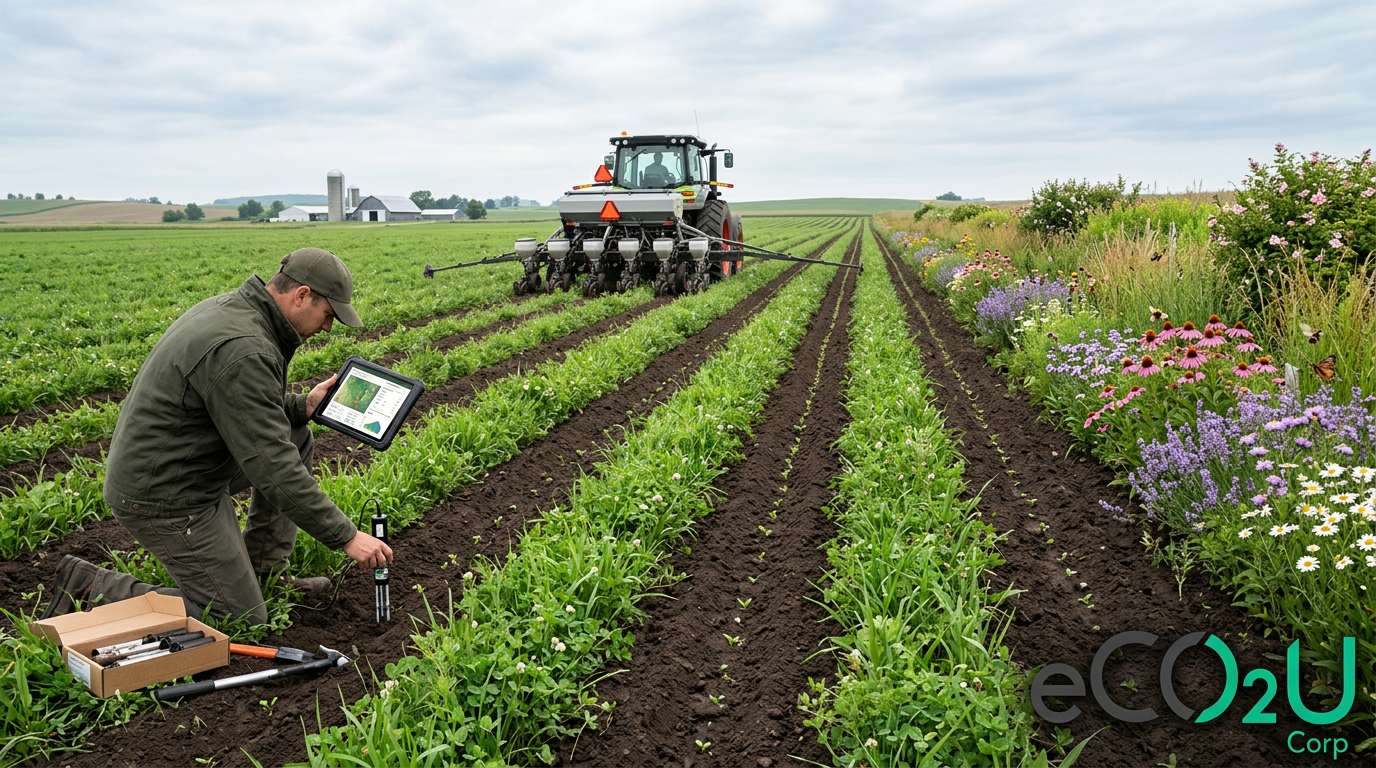
- Re-establishing hedgerows, shelterbelts, and habitat strips to support pollinators and beneficial insects
- Improving soil biodiversity through regenerative practices that reduce erosion and rebuild organic matter
- Restoring degraded grazing lands to prevent desertification and stabilize livelihoods
These actions don’t compete with food production; they often make it more reliable. In other words, ecosystem restoration is a pathway to resilience — helping communities maintain production under stress while reducing dependency on costly external inputs.
Why biodiversity is still overlooked in mainstream food system conversations
Despite clear links to productivity and stability, biodiversity conservation remains underweighted in many food system strategies. Several patterns keep it “invisible”:
1) Short time horizons
Many decisions are optimized for immediate yield or quarterly results. Biodiversity outcomes — soil recovery, habitat return, hydrological stability — often compound over years, so they’re easily deprioritized.
2) Fragmented responsibility
Biodiversity sits between ministries, donors, departments, and disciplines: agriculture, environment, education, land-use planning, and public health. When accountability is spread thin, outcomes fall through the gaps.
3) Measurement feels complex
People assume biodiversity is too hard to track. While detailed ecological monitoring can be specialized, practical indicators exist. The barrier is often not feasibility — it’s prioritization and capacity.
4) Communication challenges
Biodiversity can sound abstract compared to hunger, prices, or drought. Yet the best communicators translate biodiversity into concrete storylines: “soil that holds water,” “landscapes that reduce pest outbreaks,” “seed diversity that prevents famine.”
This is where NGOs and education publications can have an outsized impact: by making the hidden foundation visible.
The NGO and education publication role: turning science into shared understanding
NGOs and educators are uniquely positioned to connect the dots between biodiversity conservation, resilience, and sustainable development.
Education publications: build systems literacy, not just awareness
Articles, curricula, and public learning campaigns can help readers understand the “why” behind ecological farming, watershed stewardship, and landscape planning. The goal is not only to inform, but to build systems literacy — so farmers, consumers, and policymakers grasp how biodiversity underpins food security.
What works especially well:
- Visual explanations of nutrient cycles, pollination networks, and watershed function
- Place-based stories showing how restoration improved yields or reduced disaster impacts
- Practical guides that highlight low-cost, locally relevant interventions
NGOs: bridge communities, data, and implementation
NGOs often have deep local trust and implementation capacity. They can:
- Pilot ecosystem restoration projects with communities and producer groups
- Support training on biodiversity-friendly practices
- Help design monitoring that is realistic, participatory, and decision-relevant
- Advocate for policy changes that fund restoration, protect habitats, and reduce land degradation
Critically, NGOs can ensure interventions are equitable — so biodiversity conservation strengthens livelihoods rather than creating burdens.
Service spotlight: Biodiversity Conservation & Ecosystem Restoration for Resilient Food Systems
If biodiversity conservation is the foundation, then implementation needs structure. Successful programs often include three service components that translate intent into outcomes:
1) Biodiversity conservation strategy for food systems resilience
A strategy clarifies:
- Which ecosystems are most critical to food production (watersheds, pollinator habitats, soil systems)
- Where the risks are highest (erosion hotspots, floodplains, deforestation edges)
- What interventions align with local realities and supply chain needs
- How the work supports resilience and sustainable development goals
2) Ecosystem restoration program design and delivery
Restoration programs should consider:
- Native biodiversity and habitat suitability
- Maintenance requirements (often where projects fail)
- Community governance and benefit sharing
- Long-term monitoring (not just “trees planted,” but survival and function)
3) Monitoring & learning systems for resilience outcomes
To connect biodiversity conservation to resilience, track both ecological and food system indicators, such as:
- Soil organic matter trends and erosion rates
- Vegetation cover and habitat connectivity
- Water quality and seasonal flow stability
- Pollinator presence or proxy habitat indicators
- Yield stability (not just yield size), input dependency, and recovery time after shocks
Measurement doesn’t have to be perfect on day one. It needs to be consistent, transparent, and useful for decisions.
For a practical overview of why biodiversity matters — and what conservation looks like in action — eCO2U expands on the topic here: Importance of Biodiversity Conservation. (This is a helpful page to cite in NGO resources, education publications, and program briefs.)
Biodiversity conservation is sustainable development, not a separate agenda
Sustainable development is often presented as balancing people, planet, and prosperity. But in food systems, biodiversity conservation is not merely one pillar among many — it is the living base that makes the other pillars possible.
When landscapes lose biodiversity, food systems become more dependent on synthetic inputs, more exposed to climate shocks, and less capable of adapting. When biodiversity is protected and restored, resilience grows: soils hold water, ecosystems regulate extremes, and communities are better able to sustain production without degrading their future.
For NGOs and education publications, the challenge — and opportunity — is to place biodiversity where it belongs: at the center of food system resilience narratives, programs, and funding priorities.
If your organization is building resilience strategies, developing sustainability education content, or designing on-the-ground programs, biodiversity conservation and ecosystem restoration can be your highest-leverage starting point.
To explore practical approaches, case-aligned indicators, and program design support, learn more here: Importance of Biodiversity Conservation. If you’d like tailored guidance, schedule a consultation with eCO2U to discuss your goals for resilience and sustainable development.
메타데이터
- post_id
- 88609e4669c1
- slug
- biodiversity-conservation-is-the-overlooked-foundation-of-resilient-food-systems-88609e4669c1
- url
- https://medium.com/@gbarrosjournalist/biodiversity-conservation-is-the-overlooked-foundation-of-resilient-food-systems-88609e4669c1
- canonical_url
- https://medium.com/@gbarrosjournalist/biodiversity-conservation-is-the-overlooked-foundation-of-resilient-food-systems-88609e4669c1
- author_url
- https://medium.com/@gbarrosjournalist
- status
- ok
- fetched_at
- 2026-06-23 21:39:52