Rethinking EdTech: How Technology Can Ease Teacher Workloads
It's time to Rethink EdTech
Rethinking EdTech: How Technology Can Ease Teacher Workloads
It's time to Rethink EdTech
Teacher workloads have reached a breaking point. From lesson planning late into the night to juggling paperwork, grading, and endless administrative tasks, educators are burning out in alarming numbers and we’ve discussed it in detail in the article *Why Language Tutors Live With the Feeling That They’re Always Out of Time — and What to Do About It*
So at Linqua we are ready to rebalance the equation and give teachers relief delegating automatic tasks to AI.
We do believe that when EdTech is thoughtfully designed it can lighten the load and give teachers back the time and energy to do what they do best: inspire, educate, and encourage.
The Problem Isn’t Just Workload — It’s Fragmentation
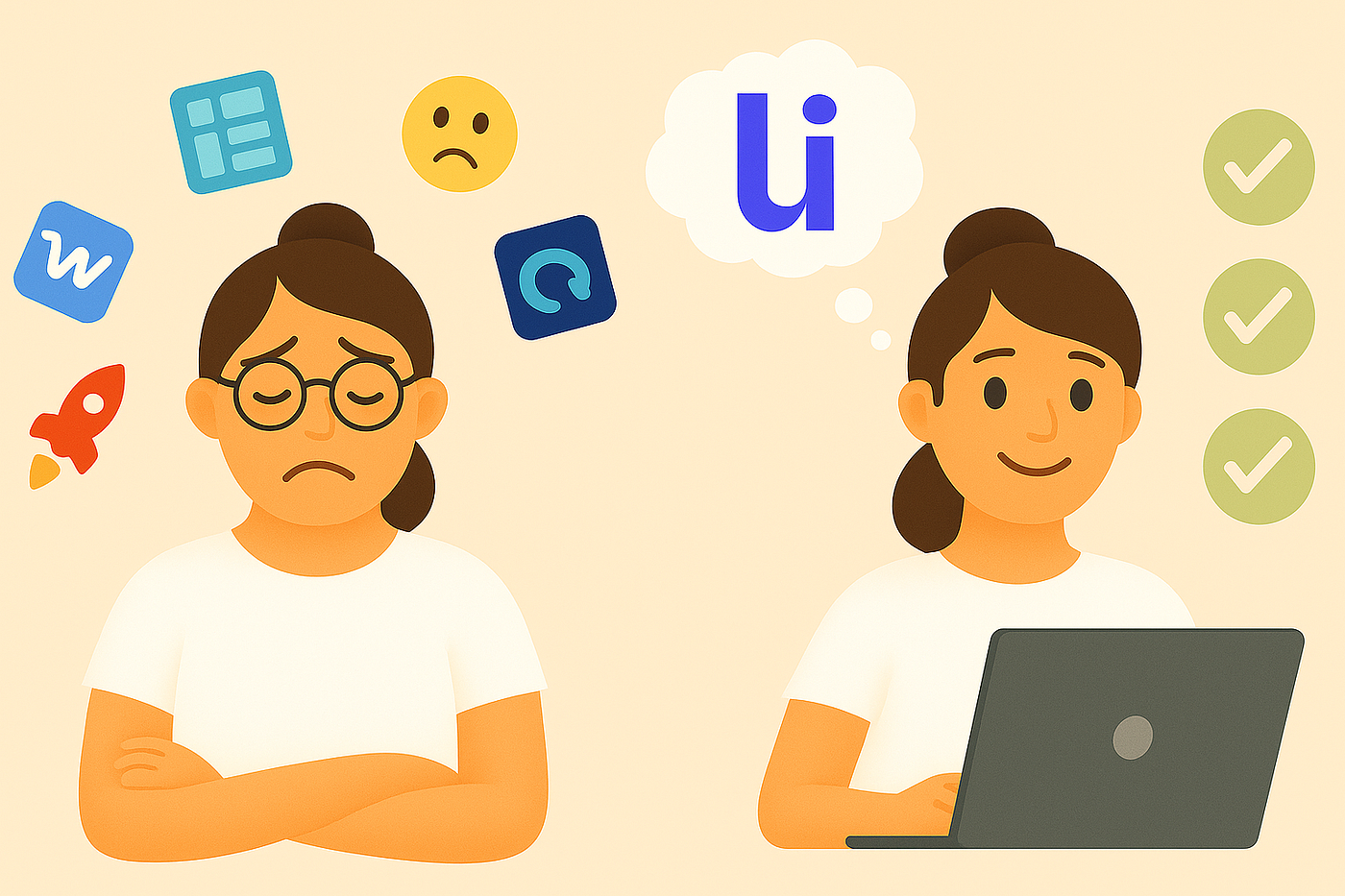
Ask any teacher about their daily tech tools, and you might hear a list so long it’s dizzying: one platform for attendance, another for assignments, a grading system, a messaging app for parents, maybe a separate app for language vocabulary practice, and yet another for scheduling meetings. Ironically, many of these tools were introduced to save time or improve learning, but what do we really have? Another workload switching between multiple apps, feeling exhausted and frustrated again from hopping between countless disconnected apps (technical.ly). Furthermore, fragmented tools often lack a holistic picture. Important information falls through the cracks. A tutor might not see that a student who struggles with grammar on one app is also the one who keeps missing practice sessions logged in another.
At Linqua we see our mission in resolving this, having all the tools a tutor needs on one and only platform. A well-integrated system can turn hours of busywork into minutes. This is a step in the right direction, especially for individual tutors and small education businesses, the lesson is similar: less can be more. We do believe that EdTech must earn its place in a teacher’s day by simplifying it. If it doesn’t, it’s not solving the problem — it is the problem.
What Thoughtful EdTech Looks Like
How can we tell if an EdTech tool or platform is truly designed to help teachers first and foremost? Thoughtful, human-centered EdTech follows a few core principles that distinguish it from the parade of shiny gadgets that have come and gone. These are the four main principles:
- All-In-One: smart enough to liberate tutors time and let them scale their business, we at Linqua are building the all-in-one platform — no hopping between the apps, no data loss, no forgotten thing — just one platform to cover all tutors’ needs
- Customization: No two classrooms or students are alike — and teachers know it best. Human-centered EdTech offers flexibility to adjust content, difficulty, and settings to fit each context. Our platform is meant to let a tutor tailor tasks on the bases of the lesson, and all the homeworks, gradings, and scheduling won’t any longer distract tutors from teaching.
- Teacher-First UX: The best EdTech is designed for educators first. Tools should be easy to use, with clean interfaces and intuitive flows — no steep learning curves or extra steps. If it takes too long to learn or use, teachers won’t adopt it, no matter its features. As Backpack Interactive puts it, “It doesn’t matter how effective your edtech product is… if it’s too complicated for teachers or learners to use.” Usability means removing friction — like a gradebook that saves automatically or allows bulk updates. Poor UX, like entering grades one student at a time, wastes time. A new wave of AI tools exemplifies teacher-first design: type “Intermediate Spanish — past tense practice,” and the app delivers a ready-to-edit lesson plan with exercises and slides. Teachers keep control, save time, and don’t need a manual. This is what good UX looks like — fast onboarding, practical tools, and help when needed.
- Transparency: In EdTech, transparency includes understanding how a tool works and presents information. If an AI coach flags a sentence, it should explain why not just mark it wrong. This builds teacher trust and speeds up decision-making. Transparency also means clear, usable data — no confusing dashboards — and insight into how the tool arrived at its recommendation. For example, if an app selects a reading passage, a transparent design tells the tutor, “Recommended this text based on the student’s last quiz score.” Recent AI tutoring research shows tools perform better when built with teacher input, that’s why our team has talked to more that 60 tutors to find out their painful points
In summary, thoughtful EdTech is not defined by having the fanciest artificial intelligence or the most features; it’s defined by how well it supports the people using it. And when such tools are applied to the right problems, the impact on teacher workload can be significant. Let’s turn to those problem areas next — and explore concrete ways human-centered technology can help.
3 Workload-Heavy Areas Where EdTech Can Make a Difference
At Linqua we’ re focusing on handling these three areas of a tutor’s business — Scaling Without Adding Hours, Automating Business Logistics, Automating Student Practice and Homework, find a more detailed explanation in our article *AI in Education: Automating Tasks to Prevent Teacher Burnout*
The Human Touch Must Remain Central
With all the advances in EdTech and AI — algorithms flagging errors, bots sending reminders, dashboards tracking progress — it can be easy to get swept up in what technology can do for us. But as educators, we know that some aspects of teaching can never (and should never) be automated or handed off to a machine. The human touch — the emotional support, the cultural understanding, the mentorship and motivation — is the heart of education. No matter how smart our tools get, students will always need real teachers to encourage them, understand them as individuals, and inspire them. As one educator wisely noted, “You can’t automate rapport, nor can you download empathy.” (linkedin.com) A computer program might grade 100 essays in a minute, but it will not celebrate a student’s unique voice or gently guide a shy student to speak up in class. As people need people. During the pandemic, we saw clearly that technology could deliver lectures or assignments, but students deeply missed the human interaction — the encouragement, the feeling of someone who cares pushing you to do your best.
EdTech, if misapplied, could lead to a cold, efficiency-driven model of education that treats students as data points. That’s a scenario we must avoid at all costs. Fortunately, there’s increasing recognition of this. International organizations like UNESCO emphasize a “human-centered approach” to AI in education, insisting that AI’s role should be to enhance human teaching, not replace it (unesco.org). The goal is to use AI to tackle inequalities and free teachers to focus on what matters most — not to sideline the teacher. Likewise, forward-thinking educators remind us that technology is a tool, not a teacher, “technologists did not design it with an understanding of what it’s actually like to teach” (technical.ly).
A human-centered EdTech tool, therefore, is one that recognizes its own limits. It might automate a quiz grading (great!), but it won’t pretend to have a heart-to-heart with a student who failed that quiz and is feeling down. It can provide practice exercises, but it cannot read the sparkle in a student’s eye when they finally get something, nor can it notice the subtle signs that a student is anxious or distracted by something happening at home. Teachers do that. As one LinkedIn commenter succinctly said, “You can personalize instruction. But you can’t automate relationships. You can’t replace the impact of a teacher who takes the time to know a student.” (linkedin.com). This should be our mantra when integrating any technology: does it free the teacher to form more relationships and give more individual attention, or does it inadvertently reduce those interactions?
Moreover, aspects like cultural context and values are deeply tied to the human touch. A language carries culture with it; a human teacher can share cultural anecdotes, adjust examples to be culturally sensitive or relevant, and pick up on misunderstandings that are culturally rooted. An AI might not know why a certain phrase might offend a particular cultural group or might lack the tact to handle a sensitive topic appropriately. Human teachers navigate these waters with empathy and professionalism.
The human touch is also critical in motivation and encouragement. As the quote earlier implied, you can automate a quiz but not encouragement. When a student is struggling, a teacher doesn’t just provide feedback; they also provide hope, confidence, and sometimes a necessary push. A student might accept criticism or hard feedback better from a caring teacher who they know is invested in them, whereas the same from a sterile AI might demotivate or disengage them (“the computer says I’m bad at this, so I give up”). Teachers cushion challenges with optimism and celebrate successes with genuine praise — functions of emotional intelligence far beyond current AI. As Professor Paul Argenti reflects, “Real teaching demands authenticity, adaptability, and a deep understanding of your students’ individual needs.” (linkedin.com) Those are human qualities nurtured through experience and care; no shortcut there.
So, how do we ensure the human touch remains central when adopting EdTech? A few strategies:
- Keep Teachers in the Loop: Any AI or automation should be a support tool, with teachers able to review, override, or modify as needed (recall the “override options” we’ll mention in the next section for choosing tools). This ensures the teacher’s professional judgment and personal knowledge of students can always take precedence. For instance, if an AI grading system marks an essay down but the teacher knows the student showed exceptional effort or creativity not captured by the rubric, the teacher can adjust the grade and give personalized praise. The tech provides input, not the final word.
- Use Time Savings to Increase Human Interaction: Tutors should be intentional that the time saved by EdTech is reinvested into student-facing activities. If software reduces lesson planning time by 2 hours a week, maybe the teacher can do two extra small-group sessions or spend a bit longer chatting with students after class about their interests. It might also be used for the teacher’s self-care (resting, etc.), which indirectly benefits students because a less stressed teacher is more present and patient. The point is to treat the freed time as an opportunity to deepen human connection or improve well-being, not just to cram in more tasks.
- Empathy and Ethics Training for AI Use: If teachers are using AI (say, for feedback or chatbots), some training or guidelines on maintaining empathy in how they deploy these tools is useful. For example, a teacher might use AI to draft a response to a parent, but they should edit it to ensure warmth and empathy come through. Or when using a progress dashboard, remember there’s a child behind each data point, and sometimes data can mislead — so combine it with your knowledge of the student’s personal situation. Basically, keep the person in mind, not just the numbers or the algorithm’s perspective.
- Student Agency and Personal Contact: Even as EdTech personalizes learning, teachers should continue to talk to students about their goals, fears, and reflections on learning. A fancy adaptive learning app might figure out a student’s weak areas, but it won’t ask the student “What do you feel you’re struggling with? How do you learn best? What are you proud of lately?” Those conversations teach students to understand themselves and build a rapport that fosters trust. Tutors and teachers can use the efficiency gains from EdTech to facilitate these kinds of dialogues, which often get sidelined when time is tight.
- Collaborative Learning and Social Skills: Ensure that technology doesn’t eliminate collaborative activities. Human-centered learning often involves working in groups, communicating, and building social skills. EdTech can support group projects (e.g., collaborative documents, forums, etc.) but teachers should orchestrate these so that students still benefit from peer learning and communication. The teacher’s role as a facilitator of class culture — encouraging respect, curiosity, and kindness — remains vital and can’t be offloaded.
When done right, students experience tech-driven efficiency as a support, not as coldness. They still feel their teacher’s personality and care permeating the classroom or virtual space. Indeed, the ultimate goal of reducing teacher workload is not just to prevent teacher burnout (though that’s critical) but to allow teachers to be the kind of patient, creative, and attentive educators they want to be. Offloading drudgery to machines can help rekindle the human passion in teaching by allowing teachers to focus on the human part of the job. It’s telling that in surveys about what would make teachers stay in the profession, having better work-life balance and more support is often mentioned (mckinsey.commckinsey.com). Thoughtful EdTech can be a part of providing that support — but it must always be implemented with the clarity that teachers teach, technology assists. As Sal Khan (of Khan Academy) said, high-quality human tutors have always been effective because they “cater to your needs”, adjusting if you’re struggling or moving faster if you’re excelling (edutopia.org). AI tutors can mimic some of that adaptivity in practice tasks, but the caring and understanding — the true catering to a student’s emotional and holistic needs — comes from a human educator.
So far, one of our main goals at Linqua — embrace technology, and honor the humanity in education. Use tech to amplify the human connection, not diminish it. An encouraging note, a culturally resonant example, a teacher’s genuine excitement about a student’s progress, a moment of listening — these are the things students remember years later, and these are delivered by teachers, not tools. As we adopt human-centered EdTech, let’s ensure that the “human” remains front and center. After all, EdTech should be designed to serve people — teachers and students — not the other way around.
What Language Tutors Should Look for in EdTech Tools
Choosing the right EdTech tools can feel overwhelming, given the explosion of options in recent years. For language tutors and freelance educators in particular, it’s crucial to pick tools that genuinely fit your subject matter and teaching style, rather than adopting whatever is trendy (or being sold aggressively). A thoughtful selection will save you time, money, and frustration down the line. Here is our article where we’ve discussed *AI in Education: Automating Tasks to Prevent Teacher Burnout add link*
A checklist of must-have features and considerations when evaluating EdTech tools for language education (or really, any educational context). These points encapsulate much of what we’ve discussed regarding integration, customization, and keeping the teacher in control. Use these as guiding questions or criteria as you navigate the EdTech marketplace:
- Subject Relevance and Content Quality: The tool should be tailored to language learning and aligned with frameworks like CEFR or IELTS. Prioritize tools reviewed by experts with solid, level-appropriate content — not just flashy design. (techedmentum.com)
- Integration with Your Workflow and Other Tools: Choose tools that integrate with your current platforms (e.g. Google Classroom, Zoom) to save time and avoid duplication. Look for single sign-on, sync features, and smooth data flow. (edtechmagazine.com)
- Ease of Use and Teacher-Friendly UX: The tool should be intuitive and quick to learn, with clear navigation and minimal friction for you and your students. Strong onboarding and responsive support are big bonuses. (backpackinteractive.com)
- Customization and Flexibility: Look for tools that let you edit, upload, or adjust content and settings to fit your teaching style. Avoid rigid systems — flexibility and teacher control are key.
- Transparency and Data Access: A good tool explains how it works and gives clear, exportable data. You should be able to see student inputs, system logic, and get actionable insights. (edutopia.org)
- Teacher Autonomy and Override: You need final say — whether it’s pacing, content, or grades. Tools should let you override automation and make decisions based on your professional judgment.
- Engagement Features (with Substance): Engagement tools (like games or avatars) are great if they support learning goals, not just entertainment. Favor interaction that encourages language use over passive drills.
- Assessment and Progress Tracking: Choose tools with meaningful assessment and tracking features that match your approach. Insights like skill growth over time or alerts for struggling students are especially helpful.
- Privacy, Security, and Reliability: Ensure the tool is secure, GDPR/COPPA compliant, and reliable across devices. Avoid tools with poor uptime or unclear data practices — your students’ safety and trust matter.
- Professional Development and Support: Good tools offer tutorials, active communities, or teacher certifications. Check for helpful support and make sure the cost and features fit your budget.
In summary, choosing EdTech tools as a language tutor boils down to finding tools that enhance, not impede, your teaching. They should feel like a natural extension of your practice — boosting efficiency and providing insights, while letting you remain the driver of the learning experience. Your ultimate litmus test might simply be: Does this tool make my life easier and my students’ learning richer? If yes, it’s likely a winner. If you find yourself contorting to use it or doubting its educational value, keep looking. The ideal EdTech partner in your tutoring or teaching journey is out there — one that amplifies your effectiveness and aligns with your human-centered approach.
Final Thoughts: Tech as a Teaching Partner, Not a Shortcut
The goal of EdTech and of our platform isn’t to replace teachers or automate learning — it’s to amplify what great educators already do. When used wisely, technology reduces stress, clears admin clutter, and creates space for meaningful teaching. Imagine a language tutor logging in to find lessons suggested, homework graded, and student needs flagged — leaving more time for creativity, connection, and support.
Tech can do the heavy lifting, but it’s teachers who bring the magic. As McKinsey points out, burnout and workload are top reasons teachers leave. Smart tools can help lighten the load, but only if they empower educators rather than sideline them. According to LinkedIn, 91% of global education leaders believe EdTech can help solve the teacher retention crisis — but only when it’s implemented with teachers, not to them.
The best tech is a background ally, not the main act. AI can flag that a student scored 82% in grammar — but only you know if that’s a win or a worry for that learner. Use data to inform, not define, your teaching.
Start small: pick one part of your workload that drains you, and pilot a tool to help. Talk with peers, swap ideas, and involve students — ask them what works. Model critical, curious use of technology. If something doesn’t help, drop it. The right tools should bring you more time, more clarity, and more energy to teach well.
Ultimately, this is a call for intentional innovation. The future of EdTech isn’t automation — it’s collaboration. Let tech handle the noise, while teachers lead with insight, care, and creativity.
Tutors and everyone else reading this article, share in the comments, what would you liberated 4–6 hours a week — do something for your students or use it for rest?
AI #EdTech #languagelearning #education #languages
메타데이터
- post_id
- 88658a9c7aaa
- slug
- rethinking-edtech-how-technology-can-ease-teacher-workloads-88658a9c7aaa
- url
- https://medium.com/@linqua.pro/rethinking-edtech-how-technology-can-ease-teacher-workloads-88658a9c7aaa
- canonical_url
- https://medium.com/@linqua.pro/rethinking-edtech-how-technology-can-ease-teacher-workloads-88658a9c7aaa
- author_url
- https://medium.com/@linqua.pro
- status
- ok
- fetched_at
- 2026-06-23 17:05:31




