Notes from Underground
In the eyes of Dostoevsky’s contemporaries, the protagonist of this work appeared to be merely one of the many little grey people mousing…
Notes from Underground
In the eyes of Dostoevsky’s contemporaries, the protagonist of this work appeared to be merely one of the many little grey people mousing through nineteenth century Russian literature. The first “little man” was noticed by the critics in a short story by Pushkin and right away some more of them sneaked out of Gogol’s work, where even a nose became a full size character and enjoyed the rights of any other citizen.
Dostoevsky wrote under both of these masters’ influence during the first half of his career, which culminated in the Notes from Underground. Then he became the possessed author of some of the greatest, although badly written, novels in the history of literature.
We are still Dostoevsky’s contemporaries — that is always the surprise we get when we read him. But, from this present we can look further back in time and our post-postmodern perspective shows us the underground man as one of the first to become self-aware as a character. The very first self-aware character in world literature was, of course, Don Quixote. We know that Dostoevsky considered Don Quixote “the saddest book” ever written and that Cervantes influenced him as deeply as Pushkin and Gogol.
But if we broaden more our perspective, to encompass not just literature but the entire field devoted to studying the human psyche — with all its contradictory impulses — it can even be said that Dostoevsky’s antihero, with his ambiguous “consciousness,” is simply one of the first modern men, despite being made of ink and paper. How does the Notes from Underground begin? — (“Я человек…”) “I am a man…” — having read this for the third time in Russian, I think he is right. This “man” has only contradictory “qualities”, which is to say, he has none at all. He is a “man without qualities” two generations before the protagonist of the novel bearing that title.
Dostoevsky is the author that made me a passionate reader at age 17 — when I read everything by him in Romanian — and definitely a more conscious person. Later, partly because of Nabokov’s wonderful but snobbish lectures, and because I could read Dostoevsky in the original, he became the great Russian writer that I least enjoyed… He’s the one that loses less in translation. A bit later still, Dostoevsky was eclipsed by some 20th century authors that had the privileged vantage point of being historically closer to “the heart of darkness” and of being close enough to look at the modern man face to face.
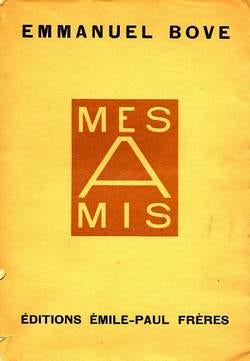
Upon rereading Mes amis these days and writing a review about it, I also reread the Notes from Underground, to compare the two main characters. Dostoevsky had as strong an impact on me as the very first time I read him and I realized once again who all those great writers that temporarily “eclipsed” him learned from.
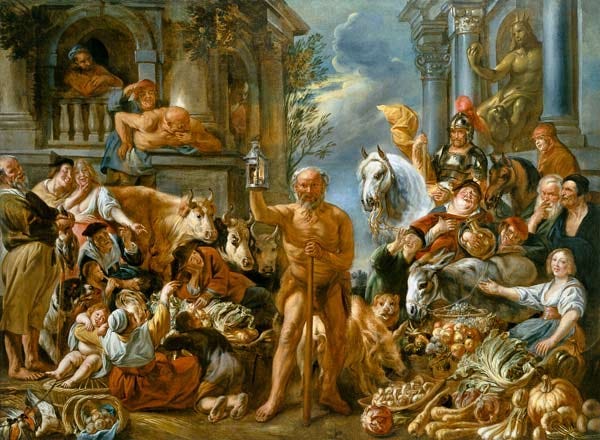
Dostoevsky was among the first researchers of modern man. Once, Diogenes sought a human being in the wide, peopled squares of sunny Athens, at noon, with a lantern.
Dostoevsky, by contrast, did that almost alone in his room, with eyes wide opened and armed with no tools but his mind, soul, and voice — dictating all his great works to his wife. He searched for the modern man everywhere, down to the Underground of the human psyche itself. He peered into our consciousness having none of the templates or aids from modern psychology that was yet to emerge. He didn’t take any cautions, either. He was relentless. He did a dirty job. We can forgive him for not having a great style.
메타데이터
- post_id
- 886945f0fe9e
- slug
- notes-from-underground-886945f0fe9e
- url
- https://medium.com/@thepolyglotreader/notes-from-underground-886945f0fe9e
- canonical_url
- https://medium.com/@thepolyglotreader/notes-from-underground-886945f0fe9e
- author_url
- https://medium.com/@thepolyglotreader
- status
- ok
- fetched_at
- 2026-06-26 12:24:55