Step-by-Step Approach to Cash App Clone Development: Architecture, Security & Monetization
Digital payment platforms have evolved into complex financial systems that manage real money, sensitive user data, and regulated…
Step-by-Step Approach to Cash App Clone Development: Architecture, Security & Monetization
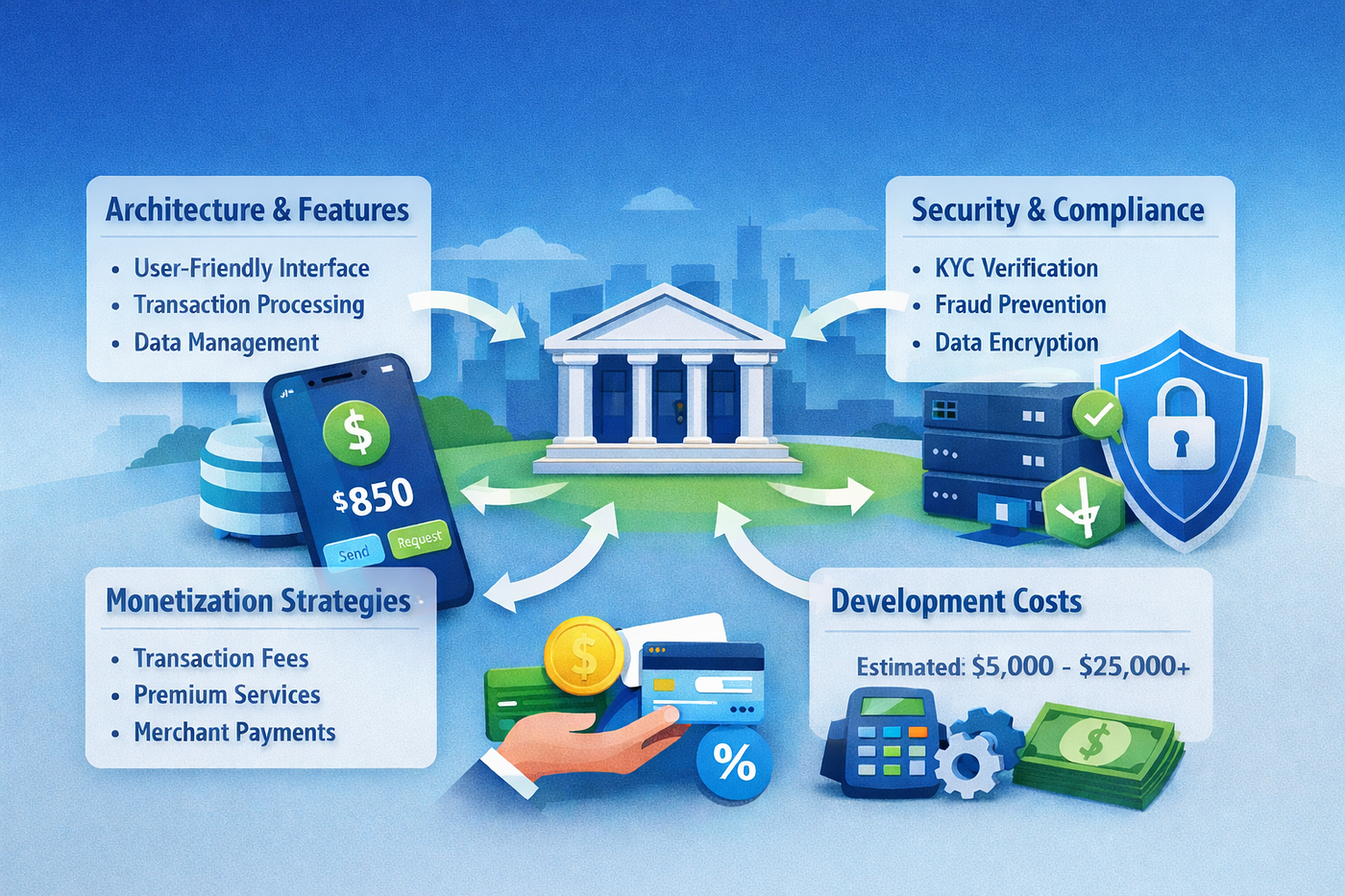
Digital payment platforms have evolved into complex financial systems that manage real money, sensitive user data, and regulated transactions. Building such a platform requires more than basic app development knowledge. **Cashapp clone development** refers to the structured process of creating a peer-to-peer payment solution inspired by an established transaction flow while allowing full customization in technology, compliance, and revenue strategy.
A Cashapp clone is typically designed to support wallet-based transactions, instant transfers, and seamless user experiences. However, its real value lies in how well architecture, security, and monetization are planned together. Treating these elements separately often results in unstable systems and poor scalability.
Step-by-Step Planning Approach Before Writing Any Code
Before technical development begins, planning establishes the foundation of the entire platform. Many payment applications fail because they rush into development without clearly defining how money will move, how users will interact, and how the business will generate revenue.
This stage focuses on identifying the target audience, supported transaction types, geographic coverage, and regulatory exposure. These decisions influence architecture complexity, security depth, and long-term scalability.
Defining User Roles and Transaction Behavior
A Cashapp clone may serve individuals, merchants, freelancers, or a combination of user groups. Each role has different expectations, transaction limits, and verification requirements. Clearly defining these roles ensures that the transaction flow remains predictable and manageable.
Understanding transaction behavior early also helps avoid unnecessary features that increase complexity without adding value.
https://www.suffescom.com/contact-us
Architecture Design That Supports Performance, Scale, and Reliability
Architecture is the backbone of any payment platform. It determines how transactions are processed, how systems scale under load, and how failures are handled. Poor architectural decisions can lead to transaction delays, system downtime, and data inconsistencies.
A well-designed Cashapp clone architecture separates responsibilities across layers, ensuring that user experience, transaction logic, and data management operate independently but cohesively.
Application Layer and User Interaction Flow
The application layer includes mobile applications and administrative dashboards. Its purpose is to guide users through financial actions with clarity and confidence. Balance visibility, transaction confirmation, and error handling must be precise to maintain trust.
A clean interaction flow reduces user mistakes and lowers support overhead.
Backend and Transaction Processing Layer
This layer handles wallet balance calculations, transaction validation, fee application, and integration with external payment systems. In Cashapp clone development, this layer must be built to handle concurrent transactions without conflict or delay.
Service-based architectures are commonly used to allow individual components to scale without affecting the entire system.
Data Storage, Logs, and System Integrity
All transactions must be recorded accurately for compliance, dispute resolution, and reporting. Databases store user profiles, transaction histories, verification records, and audit trails. Data integrity mechanisms ensure that wallet balances always reflect actual transaction states.
Security Architecture Designed for Financial Risk Environments
Security is the most critical aspect of any digital payment platform. Unlike general applications, financial platforms must defend against fraud, unauthorized access, and regulatory violations simultaneously.
Cashapp clone development must incorporate security at every layer rather than treating it as an add-on.
User Authentication and Access Control
Strong authentication methods protect user accounts from unauthorized access. These typically include multi-step verification, device recognition, and session controls. Administrative access must be tightly restricted to prevent misuse of sensitive financial data.
Proper access control significantly reduces internal and external security risks.
Transaction Security and Fraud Monitoring
Every transaction must be validated before execution. This includes balance checks, transaction velocity analysis, and behavioral monitoring. Encryption protects data during storage and transmission, while secure APIs prevent tampering.
Fraud monitoring systems continuously analyze transaction patterns to detect anomalies early.
Regulatory Compliance and Audit Readiness
Financial regulations require identity verification, transaction monitoring, and transparent reporting. Compliance mechanisms must operate automatically to ensure consistency and reduce manual errors. Audit logs and reporting tools support regulatory inspections and financial accountability.
Monetization Strategy Aligned with the Cash App Business Model
A sustainable payment platform must generate revenue without compromising user adoption. The Cash App business model achieves this by keeping core functionality simple while monetizing convenience and advanced services.
Revenue typically comes from instant transfers, merchant transactions, premium tools, and value-added financial services. Monetization logic must be embedded into transaction workflows rather than added later, ensuring transparency and predictable revenue generation.
Dedicated Cost Section: Development Cost of Cashapp Clone
Understanding the **development cost of Cashapp clone** is essential for realistic planning and budgeting. Costs vary based on feature scope, security depth, compliance requirements, and development approach.
Cost Breakdown by Major Development Components
- Business analysis and technical planning: $1,000 — $2,000
- UI/UX design and user flow mapping: $3,000 — $5,000
- Frontend application development: $5,000 — $10,000
- Backend and transaction engine development: $8,000 — $12,000
- Security implementation and compliance setup: $5,000 — $8,000
- Testing, quality assurance, and performance validation: $4,000 — $6,000
- Deployment and infrastructure configuration: $3,000 — $5,000
Overall Estimated Cost Range
The total development cost of Cashapp clone generally falls between $5,000 and $25,000+ depending on customization level and compliance scope.
Ongoing maintenance, updates, and regulatory support typically require 10% to 15% of the initial development cost per year.
https://www.suffescom.com/contact-us
Testing, Deployment, and Operational Readiness
Before launch, the platform must undergo rigorous testing to ensure accuracy, performance, and security. Payment failure scenarios, delayed settlements, and system recovery processes must be validated under real-world conditions.
After deployment, continuous monitoring ensures system health, transaction success rates, and security alerts are handled proactively. Regular updates keep the platform compliant and competitive.
Conclusion
A step-by-step approach to Cash App clone development ensures that architecture, security, and monetization are built as a unified system rather than isolated components. By carefully planning transaction flows, implementing strong security measures, and aligning revenue logic with the Cash App business model, businesses can build a scalable and trustworthy payment platform. When combined with realistic cost planning, a **Cashapp clone** can grow into a sustainable financial product capable of long-term market relevance.
Frequently Asked Questions
What is the main purpose of a Cashapp clone?
A Cashapp clone enables peer-to-peer payments, wallet management, and secure financial transactions within a customizable digital payment platform.
Is a Cash App clone script suitable for production use?
Yes, when properly customized, secured, and aligned with compliance requirements, a Cash App clone script can support real-world financial operations.
Why is architecture so important in Cashapp clone development?
Architecture determines scalability, transaction reliability, and system stability, which are critical for handling real money.
Can the Cash App business model be adapted for different markets?
Yes, transaction fees, premium services, and monetization strategies can be adjusted based on regional regulations and user behavior.
메타데이터
- post_id
- 889e3aa72122
- slug
- step-by-step-approach-to-cash-app-clone-development-architecture-security-monetization-889e3aa72122
- url
- https://mobileappcircular.com/step-by-step-approach-to-cash-app-clone-development-architecture-security-monetization-889e3aa72122
- canonical_url
- https://mobileappcircular.com/step-by-step-approach-to-cash-app-clone-development-architecture-security-monetization-889e3aa72122
- author_url
- https://medium.com/@paulwalker1902
- status
- ok
- fetched_at
- 2026-07-25 18:30:56