What UX Means to Me: It’s Not About How a Product Looks
A design student’s perspective on why great experiences are remembered long after beautiful products are forgotten.
What UX Means to Me: It’s Not About How a Product Looks
When people hear the term UX (User Experience), they often think about mobile apps, websites, and digital products. As a design student, I used to think the same way. I believed UX was mainly about designing screens and making digital products easier to use.
But the more I learned about design, the more I realized that UX is much bigger than that.
For me, UX is not about how a product looks. It is about how a product feels when someone uses it.
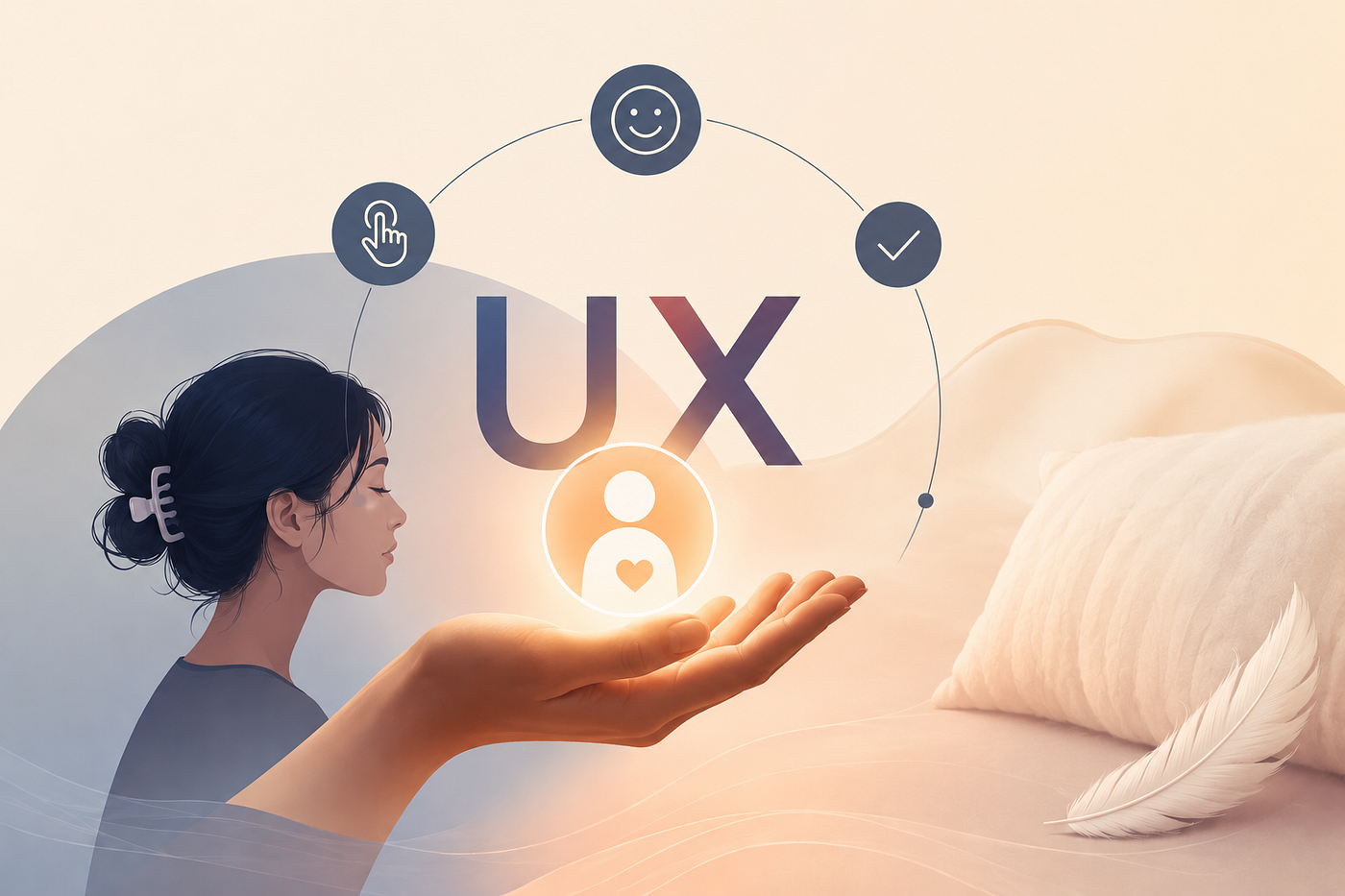
Good design is not about what people see. It’s about what people feel.
A product can be visually beautiful, expensive and packed with features, yet still provide a poor experience. At the same time, something simple and affordable can create a much better experience, even if it is not the most attractive product on the shelf. That is why I believe UX is not really about products. It is about people. As designers, we often focus on what users see. We discuss colors, layouts, typography, and aesthetics. While all of those things matter, they are only a small part of the overall experience. What matters more is whether the product solves a problem, reduces frustration, and makes life easier for the person using it.
One of my favorite examples comes from something surprisingly ordinary: a Claw clip. Traditional Claw clip is usually made from hard plastic. They do their job well and hold hair securely. However, many people have experienced the same problem while using them. When sitting in a car seat, leaning against a wall or lying down on a bed, the hard structure often presses against the head and causes discomfort. For years, this inconvenience was simply accepted as normal. Recently, I started noticing newer Claw clip made from softer and more flexible materials. They bend slightly when pressure is applied and adapt better to the shape of the head. At first glance, they do not look dramatically different from traditional ones. They may even cost a little more. But the experience they create is completely different. The designer did not just think about the product. The designer thought about the person using it.
That, to me, is UX.
The product did not become better because it looked different. It became better because it felt different. This is also why I believe UX should not be limited to UI/UX designers alone. A fashion designer thinks about comfort, confidence and usability. An architect thinks about movement, accessibility and how people interact with a space. An industrial designer considers ergonomics and safety. Even the simplest products around us are shaped by decisions that affect human experience.
Good design always starts with understanding people.
Imagine a fashion designer creating an off-shoulder dress. Some people may feel confident wearing it, while others may feel uncomfortable. Now imagine the same dress being designed with detachable sleeves. Suddenly, users have a choice. The design becomes more flexible and more inclusive because it adapts to different preferences and comfort levels. The product remains similar. The experience improves. That is UX thinking.
As I continue studying design, I have started noticing experiences everywhere. I notice products that solve problems effortlessly and products that make simple tasks unnecessarily complicated. I notice confusing instructions, uncomfortable furniture, poorly designed forms and frustrating interfaces. At the same time, I also notice thoughtful details that make life easier without demanding attention.
The more I learn about UX, the more I realize that great design often goes unnoticed. When something works perfectly, people rarely stop to appreciate it. They simply continue with their lives because everything feels natural. And perhaps that is one of the greatest compliments a designer can receive. Academically, User Experience is defined as the overall experience a person has while interacting with a product, service or system. It includes usability, accessibility, effectiveness, emotions and satisfaction. But if someone asked me to explain UX in a single sentence, I would say:
UX is how people feel while using something.
A good UX designer identifies user problems, understands user behavior, creates solutions based on research, tests those solutions with real users and improves them through feedback. The entire process revolves around one simple principle:
Keep the user at the center of every decision.
For me, UX is more than a subject that I study in college. It is a way of observing the world. It teaches me to understand people before creating solutions. It reminds me that good design is not about showing how creative a designer can be. It is about making life easier, more comfortable and more meaningful for the people who use what we create. At the end of the day, people may forget the color of a button, the shape of a product, or the visual details of a design. But they rarely forget how it made them feel. And that is why UX matters.
메타데이터
- post_id
- 889fd52dfe8d
- slug
- what-ux-means-to-me-its-not-about-how-a-product-looks-889fd52dfe8d
- url
- https://medium.com/@yugvijain/what-ux-means-to-me-its-not-about-how-a-product-looks-889fd52dfe8d
- canonical_url
- https://medium.com/@yugvijain/what-ux-means-to-me-its-not-about-how-a-product-looks-889fd52dfe8d
- author_url
- https://medium.com/@yugvijain
- status
- ok
- fetched_at
- 2026-06-09 15:37:30