Why Do Humans Smile? The Evolutionary Origins of One of Our Most Powerful Social Signals
Studies on gorillas and the human BAZ1B gene suggest that the smile may be far more than an expression of happiness, reflecting millions of…
Why Do Humans Smile? The Evolutionary Origins of One of Our Most Powerful Social Signals
Studies on gorillas and the human BAZ1B gene suggest that the smile may be far more than an expression of happiness, reflecting millions of years of evolution linked to social communication, cooperation, and even mate choice.
Illustration of a woman smiling. Photo by Street Og' on Unsplash
The smile is something natural, something we associate primarily with our own species. We use it to communicate emotions, sometimes to relieve tension, and also to establish relationships of trust. In short, beyond words, the smile is an excellent means of communication, but it is also used by many animals, especially primates. It is not simply a modification of the body, but the result of millions of years of evolution, allowing the human face to communicate social intentions through capacities that have been influenced by selection processes favoring more cooperative and less aggressive individuals. In other primates, the situation is different, but we will see that later.
So, is the smile merely an expression of happiness, or does it represent other ancient behaviors? Well, someone has probably said at least once: “Have you ever wondered why we show our teeth when we smile?”
Illustration of a woman smiling. Photo by Michael Dam on Unsplash
This expression is so common that it is impossible to imagine humans without smiling. In reality, however, the situation is more complex, as the smile may have a much older origin. Ethological studies have been conducted on western lowland gorillas, indicating that our “full smile” — the one that essentially exposes all of the upper teeth — may derive from certain communicative behaviors used during play among primates. In some way, these similarities help us understand that the smile could be a trait shared among hominins, inherited not only from gorillas, as mentioned earlier, but also from the common ancestor shared by humans and chimpanzees.
Let us take a closer look. Our “full smile” appears to be very similar to the “Full Play Face” or FPF observed in Gorilla gorilla gorilla, and it is distinct from the PF, or Play Face, which is the expression characterized by an open mouth with the teeth not visible, typically associated with less intense forms of play. The FPF, on the other hand, displays all visible upper teeth and is used during more intense play interactions.
Illustration of a gorilla. Photo by William Warby on Unsplash
Therefore, when individuals are playing or entering into conflict-like interactions, the FPF signals peaceful intentions and helps maintain contact during play. Games involving the FPF also tend to last longer than those involving only the PF or no facial expressions at all.
What does all of this mean?
In gorillas, the FPF is generally associated with an increase in affiliative behavior between individuals after play. The researchers refer to the studies of Van Hooff (1972), according to which the human smile would derive from the so-called bared-teeth display, a gesture of submission or appeasement, rather than from laughter (which would instead be homologous to the PF).
Consequently, the modern human smile may represent a sort of fusion between the FPF and the bared-teeth display. Indeed, in primates (including humans), facial expressions play an important role in the transmission of emotional and intentional information. Therefore, in cooperative contexts such as play, communication is “honest and clear”. In short, in these contexts, the smile may also have been favored through sexual selection.
When we consider the human smile, this interpretation makes sense: the FPF increases the clarity of the social message, promoting group cohesion and the regulation of intentions (allowing individuals to better understand the intentions of the person in front of them).
Illustration of a gorilla smiling. Photo by David Scanlon on Unsplash
Intentions, however, can also be sexual, or rather, the smile may signal a certain degree of availability in that context as well, although this concept is often oversimplified. In fact, some Italian newspapers summarized the findings of a study with headlines along the lines of: “Humans learned to smile in order to have sex.” While catchy, this interpretation does not fully reflect the complexity of the research.
The 2019 study provided genetic evidence supporting the hypothesis of human self-domestication through the analysis of the BAZ1B gene. This gene is involved in facial development and social behavior, and some of the genetic variants associated with it are absent in Neanderthals and Denisovans. In other words, these changes appear to be distinctive features of our own species, contributing to faces that became more expressive and, to some extent, less threatening.
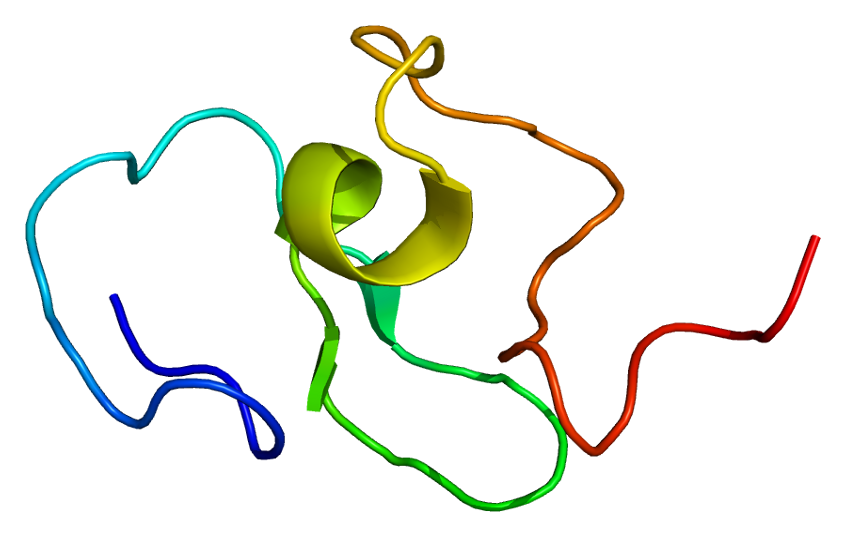
Structure of the BAZ1B protein. Based on PyMOL rendering of PDB 1f62 by Emw, via Wikimedia Commons (CC BY-SA 3.0).
From an evolutionary perspective, these characteristics may have favored mating with partners who were still competitive but less aggressive, leading to a form of selection for individuals that were more cooperative and socially tolerant. Although this may sound paradoxical when viewed through the lens of modern society, the study refers to long-term evolutionary processes operating in natural populations.
As a consequence, the smile may have become an important trait not only in social communication but also in sexual and reproductive contexts. A more expressive face could have facilitated trust, cooperation, and social bonding, traits that may ultimately have influenced mate choice and reproductive success.
Illustration of some people smiling. Photo by Joel Muniz on Unsplash
The BAZ1B gene has therefore been described as a key regulator of the modern human face, and studies using cellular models have also revealed links between this gene and complex cognitive functions, including language. More broadly, the research drew on observations of individuals with Williams–Beuren syndrome, who are characterized by highly sociable personalities and facial features often perceived as friendly. These traits may represent an “exaggerated reflection” of some of the characteristics that influenced the evolution of modern humans.
The BAZ1B gene is located within the 7q11.23 region of the human genome and is considered a major regulator of modern human facial development. This is because the gene controls the development and migration of neural crest stem cells (NCSCs), which play a crucial role in the formation of craniofacial bones and certain regions of the brain.

Embryonic development of the central nervous system. Source: NIH (Public Domain), via Wikimedia Commons.
The study was conducted using cells derived from patients with Williams–Beuren syndrome (WBS), as well as individuals carrying a duplication of the 7q11.23 region, a condition generally associated with autism spectrum disorders (7dupASD).
Let us examine some of the study’s findings.
In some ways, the results support the hypothesis of human self-domestication. In essence, natural selection may have favored more prosocial and less aggressive behaviors, gradually producing a species that became increasingly cooperative and tolerant. Modern humans, therefore, may be (at least in part) the result of selection for partners who were less aggressive and possessed more expressive facial traits, reflecting a greater degree of prosociality. As a consequence, the smile may have played a role in both mate choice and social cooperation.
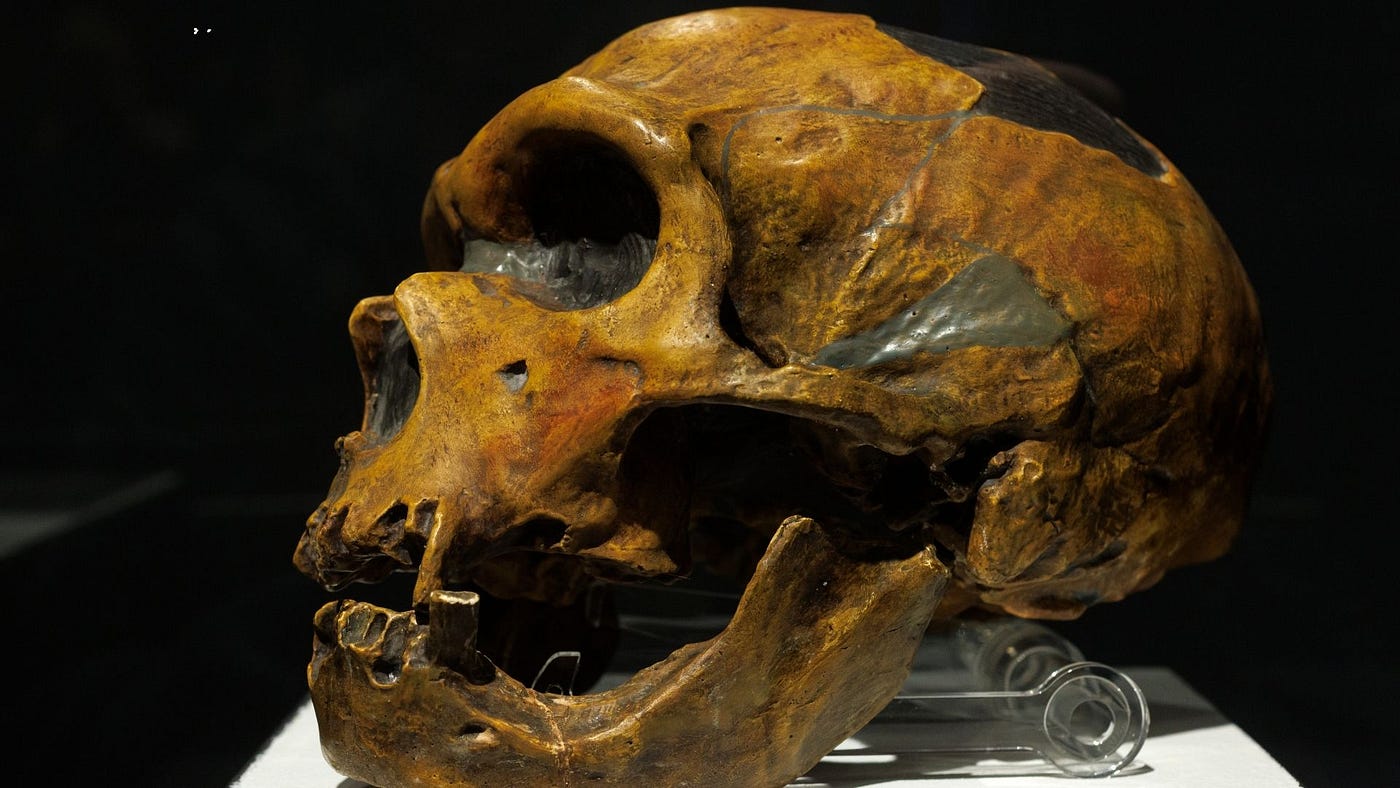
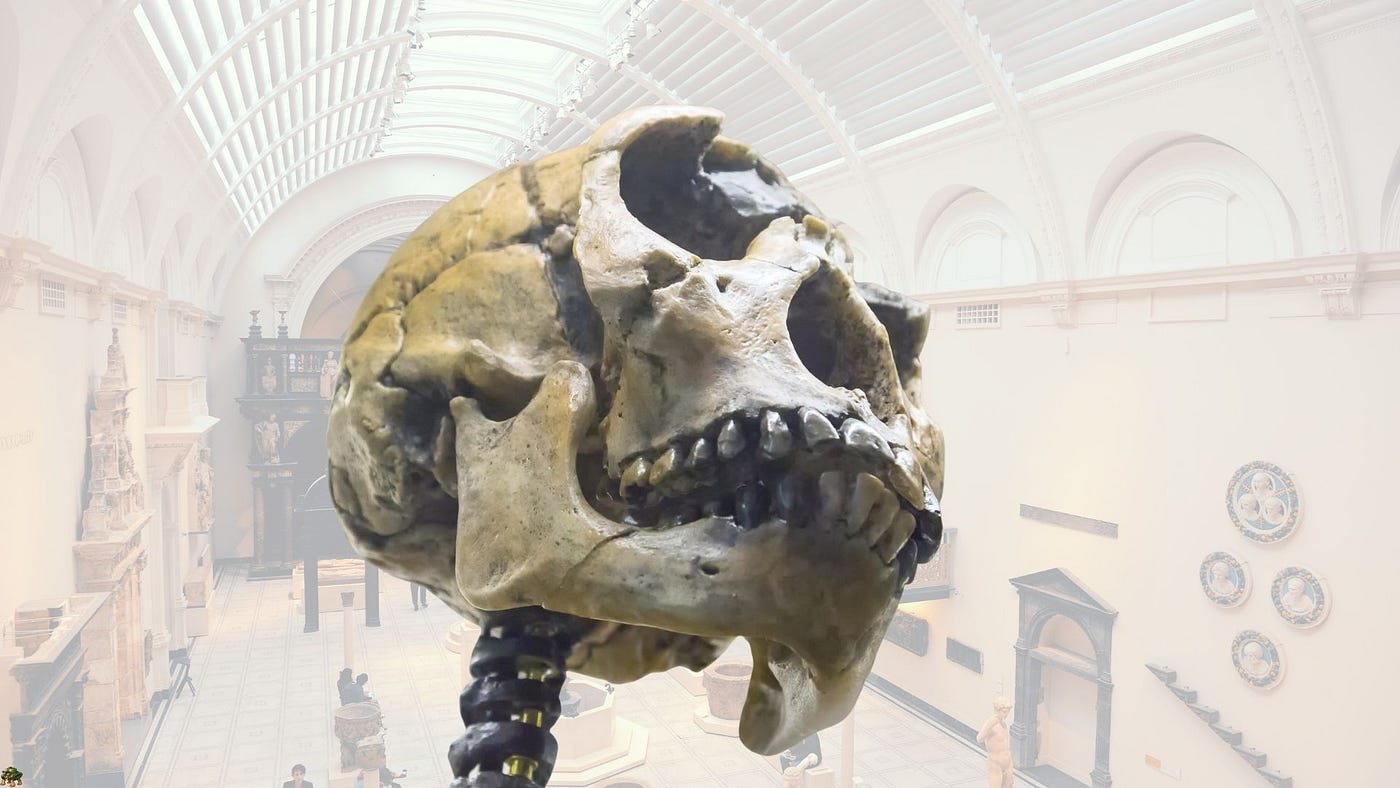
Neanderthals and Denisovans do not appear to possess the same mutations associated with the BAZ1B gene. These genetic changes may have contributed to increased facial expressiveness, reduced aggression, and potentially played a role in the development of language and social cognition (although Neanderthals were likely capable of speech and were, from a social perspective, a highly complex species).
Among the genes regulated downstream of BAZ1B and involved in language and social behavior are FOXP2 (often referred to as the “language gene”), ROBO1, and ROBO2. These genes are associated with vocal abilities and are often altered in individuals with Williams syndrome, who typically display more “friendly-looking” facial features and exceptionally high sociability, in addition to the other well-known characteristics associated with the condition.
Sourcers:
- Waller, B., Cherry, L. 2012. Facilitating Play Through Communication: Significance of Teeth Exposure in the Gorilla Play Face. American Journal of Primatology.
- Matteo Zanella et al. ,Dosage analysis of the 7q11.23 Williams region identifies BAZ1B as a major human gene patterning the modern human face and underlying self-domestication.Sci. Adv.5,eaaw7908(2019).
메타데이터
- post_id
- 88b5f4fa5689
- slug
- why-do-humans-smile-the-evolutionary-origins-of-one-of-our-most-powerful-social-signals-88b5f4fa5689
- url
- https://medium.com/a-microbiome-scientist-at-large/why-do-humans-smile-the-evolutionary-origins-of-one-of-our-most-powerful-social-signals-88b5f4fa5689
- canonical_url
- https://medium.com/a-microbiome-scientist-at-large/why-do-humans-smile-the-evolutionary-origins-of-one-of-our-most-powerful-social-signals-88b5f4fa5689
- author_url
- https://medium.com/@mattia.paparo1994
- status
- ok
- fetched_at
- 2026-06-15 20:49:13