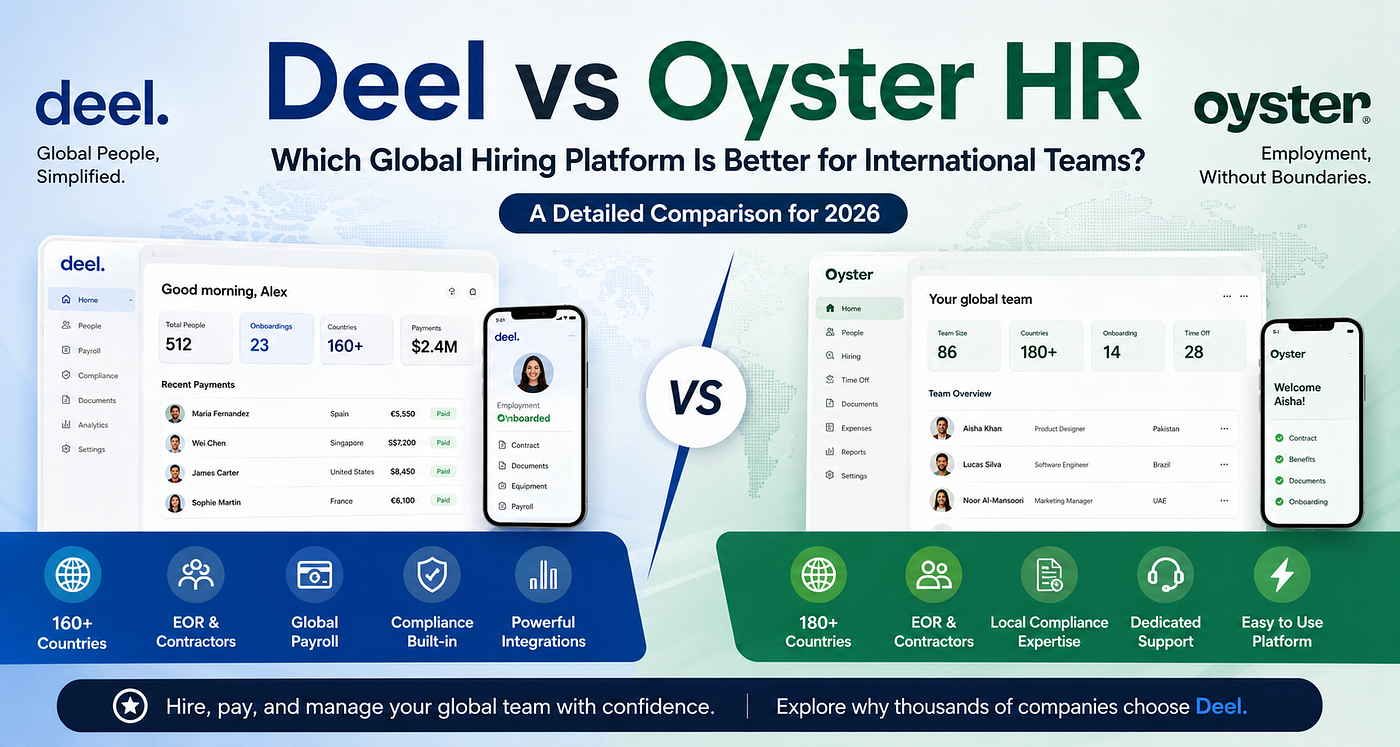
What I’ve noticed about Deel after working around global hiring conversations
Over the past couple of years, I’ve spent a lot of time working with founders, agencies, and clients who are building remote teams.
What I’ve noticed about Deel after working around global hiring conversations
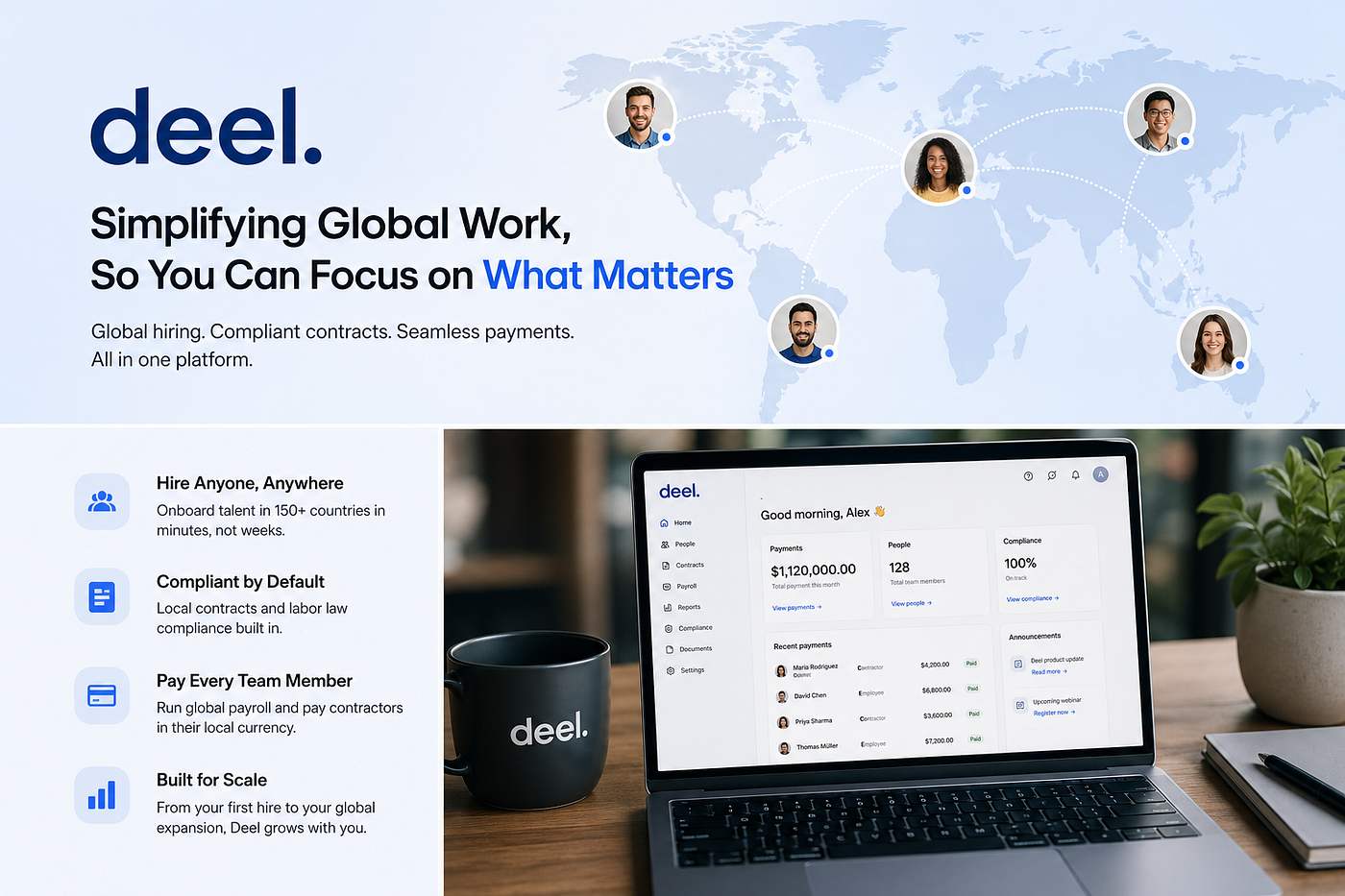
Over the past couple of years, I’ve spent a lot of time working with founders, agencies, and clients who are building remote teams.
And one pattern shows up again and again.
Hiring globally is not the hard part anymore. Managing it is.
At the beginning, everything feels simple.
You find someone from another country, agree on terms, send payments manually, and move on. It works fine for a while.
Then things start getting complicated.
Payments aren’t always smooth. Contracts start feeling unclear. And compliance becomes one of those things people avoid… until it becomes a problem.
That’s usually the point where conversations shift.
People stop asking, “How do I hire globally?” They start asking, “How do I manage this properly without messing it up?”
And that’s where Deel keeps coming into the picture.
Why Deel comes up so often in these conversations
What I’ve found interesting is that Deel rarely shows up in the early stage.
It shows up when things start getting real.
When:
- Teams are growing
- Countries are increasing
- Operations are no longer manageable through spreadsheets and emails
At that point, people aren’t looking for a “tool.”
They’re looking for something that brings structure.
And Deel is often one of the first names that gets taken seriously.
What actually makes Deel stand out (from what I’ve seen)
After having multiple conversations around global hiring setups, a few things consistently stand out about how Deel is perceived.

***>> (Click Here) To Book a Free Demo Today!***
It’s easy to understand what it does
A lot of HR and payroll platforms are hard to explain.
With Deel, the conversation is usually straightforward.
Instead of going into features, it comes down to one idea:
You don’t have to manage contracts, payments, and compliance separately.
That clarity makes it easier for people to quickly see where it fits.
It solves the problems people are actually worried about
When someone is hiring globally, they’re not thinking about dashboards or advanced features.
They’re thinking:
Will payments go through without issues? Am I doing something wrong legally?
That’s it.
And Deel directly addresses both.
That’s why the response is usually not “this looks interesting,” but more like “this could actually solve a problem.”
It feels reliable, which matters more than anything
One thing I’ve noticed is that in this category, trust matters more than pricing.
People are dealing with:
- salaries
- legal compliance
- long-term team relationships
So even if something is slightly more expensive, they lean toward what feels stable.
Deel has built that perception well.
It doesn’t feel like an experimental tool. It feels like something you can depend on.
How Deel compares when people look at alternatives
In most conversations, Deel doesn’t come up alone.
There’s usually a comparison happening in the background.
Remote is often seen as structured and compliance-focused. Papaya feels more enterprise-heavy. Multiplier comes up when people are cost-conscious.
But Deel tends to sit in the middle in a good way.
It doesn’t feel too complex. It doesn’t feel too limited either.
That balance makes it easier to recommend in a wide range of situations.
Where people still hesitate
Not every conversation leads to a decision.
The hesitation is usually not about what Deel does — it’s about timing.
Early-stage founders often feel like: “We can manage this manually for now.”
And they usually do.
Until things get messy.
That’s the interesting part.
Deel is rarely rejected. It’s delayed.
And once operations become more complex, it comes back into consideration.
Who Deel makes the most sense for
Based on everything I’ve seen, Deel fits best when things move beyond the experimental stage.
When:
- You’re working with people across multiple countries
- Payments are becoming regular and important
- Compliance is no longer something you can ignore

***>> (Click Here) To Book a Free Demo Today!***
It’s especially relevant for:
- startups scaling internationally
- agencies managing global talent
- founders who want to focus on growth instead of operations
My overall take
What stands out to me about Deel is not just what it offers, but when it becomes important.
In the beginning, it can feel like an extra layer.
But as things grow, it starts feeling like a necessary one.
Because the cost of managing global work manually increases fast.
And that’s really where Deel fits.
Not as something flashy.
But as something that removes a lot of friction quietly in the background.
And from what I’ve seen, that’s exactly what people are looking for — even if they don’t realize it at first.
***>> (Click Here) To book a free demo to explore how Deel works!***
메타데이터
- post_id
- 88cd0e54ca05
- slug
- what-ive-noticed-about-deel-after-working-around-global-hiring-conversations-88cd0e54ca05
- url
- https://medium.com/@inte-catalyst/what-ive-noticed-about-deel-after-working-around-global-hiring-conversations-88cd0e54ca05
- canonical_url
- https://medium.com/@inte-catalyst/what-ive-noticed-about-deel-after-working-around-global-hiring-conversations-88cd0e54ca05
- author_url
- https://medium.com/@inte-catalyst
- status
- ok
- fetched_at
- 2026-06-22 19:40:15