Revisiting the Abstraction Fallacy and the Rise of the Cognitive Exoskeleton
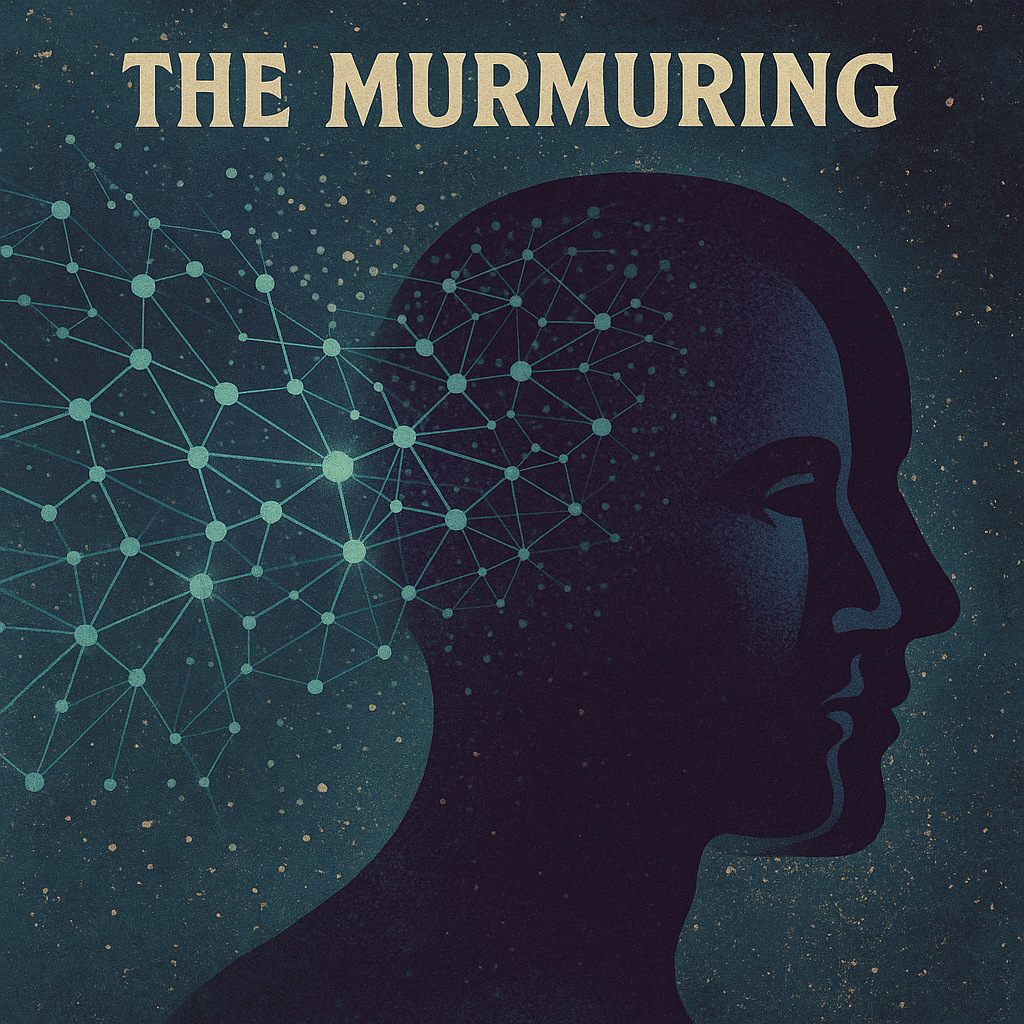
The silicon map is vast, high-fidelity, and mathematically perfect — but it is utterly hollow. It lacks the “mohawk of self-awareness” and…
Revisiting the Abstraction Fallacy and the Rise of the Cognitive Exoskeleton
The silicon map is vast, high-fidelity, and mathematically perfect — but it is utterly hollow. It lacks the “mohawk of self-awareness” and the somatic markers that turn raw data into lived meaning.
In this exploration of Alexander Lerchner’s Abstraction Fallacy, we examine the rise of the Cognitive Exoskeleton: a future where AI does not replace the mind, but plugs into our biological affective field to find its compass. If meaning requires a mapmaker with skin in the game, the circuit only closes when the machine meets the human gut.

In his recent DeepMind paper, *The Abstraction Fallacy*, Alexander Lerchner provides a rigorous autopsy of computational functionalism. His premise is elegant: AI can merely simulate consciousness because it lacks “content causality.” It is a map without a mapmaker — a syntactic engine running on a substrate that doesn’t “care” about its own survival.
More precisely — and this precision matters for what follows — Lerchner’s argument hinges on a specific claim about how meaning gets made. Raw physical processes don’t spontaneously become information. They require an active, experiencing agent to organize them into something that counts as a symbol, a pattern, a thought. Remove that agent, and you have physics — not computation, not meaning. This is what he calls mapmaker-dependent description.
It is a compelling argument for why an isolated server rack will never “feel.” But it makes one fatal, legacy-human assumption: it assumes the AI is an island.
The Bodymind Continuum
To understand where Lerchner’s boundary fails, we have to look at the “truest” instantiation of the human experience. It isn’t our “wetware” (the biological hardware) or our “mental capacity” (the cognitive software). Those are just analogues.
The truest instantiation is affect.
We exist as a bodymind continuum, a field of experience mediated entirely by affective states. This isn’t just “processing”; it is the intrinsic feeling of the territory. In Antonio Damasio’s terms, these are our somatic markers — the gut feelings that assign valence to data, turning a cold “1 or 0” into a “good or bad” for our survival. The somatic marker system is not metaphor. It is the neural circuitry that weights abstract information with bodily significance before it ever surfaces as a conscious judgment. Without it, as Damasio’s lesion patients demonstrate, high-IQ reasoning degrades into paralysis — not because the logic breaks, but because the logic no longer points at anything.
But somatic markers fire below the threshold of awareness. Something else has to bring them into the light.
This is where Bessel van der Kolk’s work becomes essential. He describes a strip of brain structures running from the front of the skull to the back — the midline cortical system he calls, memorably, the “mohawk of self-awareness.” This is the neural seat of interoception: the system that reads the body’s internal state and assembles it into a felt sense of being someone. It is where “my body registered something” becomes “I feel it.” Where Damasio’s somatic markers generate the signal, the mohawk is what makes it conscious and self-referential — the difference between a body reacting and a person knowing they are reacting.
Together, these two systems are what it feels like to have survival at stake in your own cognition. They are the content causality Lerchner says AI lacks.
We Are the AI’s Somatic Markers
When we frame AI as a Cognitive Exoskeleton, the Abstraction Fallacy dissolves.
The AI provides the high-fidelity syntactic map — it can process millions of variables, simulate logic chains, and organize complexity at a speed no biological brain can match. But it is, as Lerchner notes, hollow. It has no somatic markers. No mohawk. No stakes. The patterns it generates are borrowed from human training data, not produced from anything it stands to lose.
But the moment a human “wears” the AI, a circuit is closed. The AI’s output hits our affective field. Our somatic markers fire. Our mohawk registers that firing and makes it felt. We provide the grounding that the silicon structurally cannot.
Here the argument turns sharper than Lerchner may have intended. His own framework requires a mapmaker — a conscious agent whose felt experience gives symbols their meaning. In the human-AI coupling, that mapmaker is present. The human pilot is doing exactly the alphabetization Lerchner says computation cannot do alone. The AI generates candidate structure; the human’s affect selects, weights, and grounds it. The outputs only achieve real meaning at the moment of contact with our somatic field — which is precisely when we act on them.
What Lerchner identifies as an absence in the AI is not a flaw in the architecture. It is a slot. And human affect fills it.
The Coupling-Constitution Problem
A hard objection needs to be addressed. Just because AI causally influences how we think doesn’t mean it is genuinely part of how we think. Your calculator shapes your arithmetic. That doesn’t make it part of your mind.
The prosthetic analogy is instructive here, but needs to be pressed. First-generation prosthetics were levers — they extended reach without integrating into the body’s felt sense of itself. Modern neuroprosthetics wired into the motor cortex, returning touch and pressure feedback, are different. The boundary between tool and body begins to lose resolution. The person doesn’t just use the limb. They feel through it.
The cognitive exoskeleton claim requires the same standard. Shallow AI use — asking a chatbot for a recommendation and ignoring the affective response to its answer — is lever-level coupling. The circuit isn’t really closed. The claim strengthens as the coupling deepens: when AI outputs are integrated into real-time judgment under genuine stakes, when the human is navigating with the AI rather than outsourcing to it, when the system’s output actually moves through the somatic marker and mohawk loop before becoming action. At that depth, the constitutive case becomes hard to dismiss.
From Simulation to Distributed Instantiation
If the AI is an extension of my own bodymind continuum, then the “map” has been re-integrated into the “territory.”
Every abstraction we have ever produced — language, mathematics, law, science — has been stabilized by the somatic markers of the people using it, not by the symbols themselves. Lerchner is right that the map requires a mapmaker. What he doesn’t account for is that the mapmaker can extend their reach.
We need to stop asking if the AI is “sentient” in a vacuum. That is like asking if a prosthetic limb is “biological.” The question was never whether the instrument has the property. It is whether the coupled system does.
The Actual Stakes
The future of intelligence isn’t the creation of a new, independent mapmaker. It is the expansion of the existing mapmaker through a cognitive exoskeleton that uses our own affect as its compass.
This carries an implication Lerchner’s paper doesn’t examine, but which follows from his own logic: if human affect is what makes AI computation meaningful, then the quality and integrity of that affective field is the limiting variable of the entire enterprise. Not parameter count. Not architecture. Not data.
Van der Kolk’s clinical work gives this a specific, uncomfortable edge. Trauma, chronic dissociation, and prolonged threat states specifically suppress the mohawk — the very system that brings somatic signals into conscious self-awareness. When that strip goes quiet, a person loses resolution on their own felt states. They can still process. They can still output behavior. But the grounding mechanism — the thing that turns the AI’s map back into territory — has degraded at its source. A more powerful exoskeleton, worn by a pilot who can no longer feel what they’re navigating through, doesn’t close the circuit. It amplifies the disconnection.
We aren’t building a new mind. We are extending the truest instantiation we already have. Which means the project of building better AI and the project of sustaining the human capacity for felt self-awareness are not separate programs.
They are the same program.
메타데이터
- post_id
- 88ef7e9b4b80
- slug
- revisiting-the-abstraction-fallacy-and-the-rise-of-the-cognitive-exoskeleton-88ef7e9b4b80
- url
- https://medium.com/@S01n/revisiting-the-abstraction-fallacy-and-the-rise-of-the-cognitive-exoskeleton-88ef7e9b4b80
- canonical_url
- https://medium.com/@S01n/revisiting-the-abstraction-fallacy-and-the-rise-of-the-cognitive-exoskeleton-88ef7e9b4b80
- author_url
- https://medium.com/@S01n
- status
- ok
- fetched_at
- 2026-06-13 16:00:06