Regret
The elevator doors yawned open, then closed, and in between, a thread of fragrance unspooled. It wasn’t perfume; it was memory, worn and…
Regret
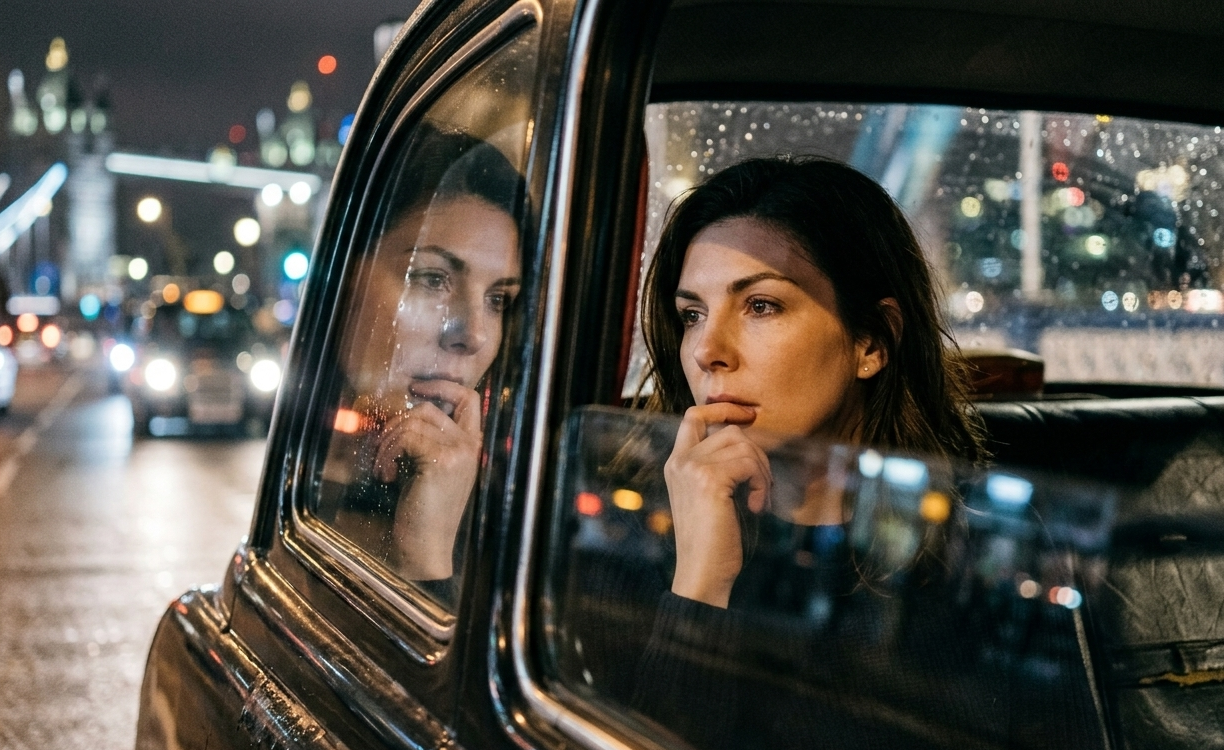
Photo by Jason Dent on Unsplash
The elevator doors yawned open, then closed, and in between, a thread of fragrance unspooled. It wasn’t perfume; it was memory, worn and soft, unraveling itself into his nostrils. He turned, sharp as a knife, but saw only her back — a shadow slipping into the crowd, swallowed whole. She was already gone, like leaves in autumn, falling without a sound. If he had said something — anything — would it have mattered? Would the still water of his life have stirred? Would the story have bent itself differently? That hesitation, that single moment of silence, settled into him like a splinter, small and sharp. Over time, it became a root, digging itself into his chest, curling around his breath, whispering “What if?” until his soul wore it like a second skin.
On the roof of his childhood home sat a piano, black and white as midnight stars. It was his first universe, and his mother’s gaze — the quiet glow of her hope — was its light. But his fingers were clumsy, afraid of the keys, afraid of their coldness, their depth, their bite. They were not just keys. They were ice, they were cliffs, they were knives dulled by time. One day, after another halting practice, his mother sighed — a soft, almost invisible sound that left behind a void. She never spoke of it again. The piano grew quiet, dust settling like ash, its presence more altar than instrument. Years later, in a foreign city, at dusk, he heard Clair de Lune. A street performer’s hands summoned the notes from the strings, and they pierced through the years, a needle stitching open the seams of his buried past. The music reminded him: what is lost can be relearned. But love — his mother’s love suspended in time, never fully given, never fully received — had drained away, silent and complete, like sand slipping through his fingers.
At the edge of a park, on a bench worn down by time, sat a retired schoolteacher, alone. He was always alone. His glasses slid down his nose, and his cloudy eyes rested on children playing in the distance. His gaze was heavy, like an autumn pond, and in it you could see reflections of old chalkboards, noisy classrooms, the past echoing as if it had never left. His fingers, thin and brittle, reached into his pocket and pulled out a yellowed graduation photograph. He touched its edges, not as though holding a picture, but as though cradling youth itself. “If I’d cared more,” he muttered to no one in particular. The sunlight moved slowly across his ill-fitting suit, its thick fabric soaked in the smell of stale sweat. It was a smell that mingled with his regret, fermenting in the warm air. The weight of what he failed to give — to his students, to himself — hung on him like a chain. It was his burden now, his companion. Regret had made a home in him.
Regret doesn’t shout. It doesn’t knock on the door or announce itself. It settles into the foundation of your soul, quiet and immovable, like the cornerstone of an old house. It isn’t a hole or an absence. It’s a presence — a heavy, aching thing that shapes the way you feel time moving past you. A monk once said, “What is unfinished is the heart’s most enduring lesson.” He was right. It isn’t about blame or anger. It’s about the weight of what you didn’t do, the way it teaches you to feel the edges of your own existence.
Regret is the mirror of the soul. Some people drown in it, clinging to the wreckage of what they’ve lost, clutching at it as it pulls them under. Others ache for what they never did — the steps they didn’t take, the words they didn’t say. Those empty spaces become wounds that never quite heal, gaps that whistle in the wind of their remaining years.
But isn’t regret just another shadow cast by life? A thing that follows you, crouching at your feet, whispering that you were here, that you tried, that you cared. You can only cast a shadow if you are moving toward light. The untaken paths, the unspoken words, the unspent energy — they aren’t meant to haunt you. They are the tarnish on your soul, the patina that forms when time rubs against the surface of a life lived. And through that tarnish, through that shadow, what is precious becomes visible.
At twilight, he stood by the window. The streetlights blinked on, one by one, their light pooling in the cracks between memories. Shadows danced on the pavement below, and old moments rose and fell in him like waves. He saw now that regret wasn’t the wreckage of his life, but its breath — the inhale and exhale of being alive. Shadows are the evidence of light, and regret is the riverbed carved deep into the heart, proof of the life that surged and flowed through it.
It tells us this: the shores we will never reach are not failures. They are the truest markers of the journey. The unfinished landscapes, the incomplete chapters — these are what keep the soul stretching, reaching, yearning toward the light that is always just ahead.
메타데이터
- post_id
- 88f4edeefef0
- slug
- regret-88f4edeefef0
- url
- https://medium.com/@drskyhotinlam/regret-88f4edeefef0
- canonical_url
- https://medium.com/@drskyhotinlam/regret-88f4edeefef0
- author_url
- https://medium.com/@drskyhotinlam
- status
- ok
- fetched_at
- 2026-08-02 07:39:44