How Much Does Solar Battery Installation Cost in Melbourne? (2026 Guide)
In 2026, the average solar battery installation cost in Melbourne ranges between $8,000 and $14,000 for a standard residential system (5…
How Much Does Solar Battery Installation Cost in Melbourne? (2026 Guide)
In 2026, the average solar battery installation cost in Melbourne ranges between $8,000 and $14,000 for a standard residential system (5 kWh to 14 kWh), after applying the federal battery rebate. A mid-sized 10 kWh battery system hits the sweet spot for most Victorian homes, typically costing between $8,800 and $11,500 fully installed, depending on the brand, inverter compatibility, and installation complexity.
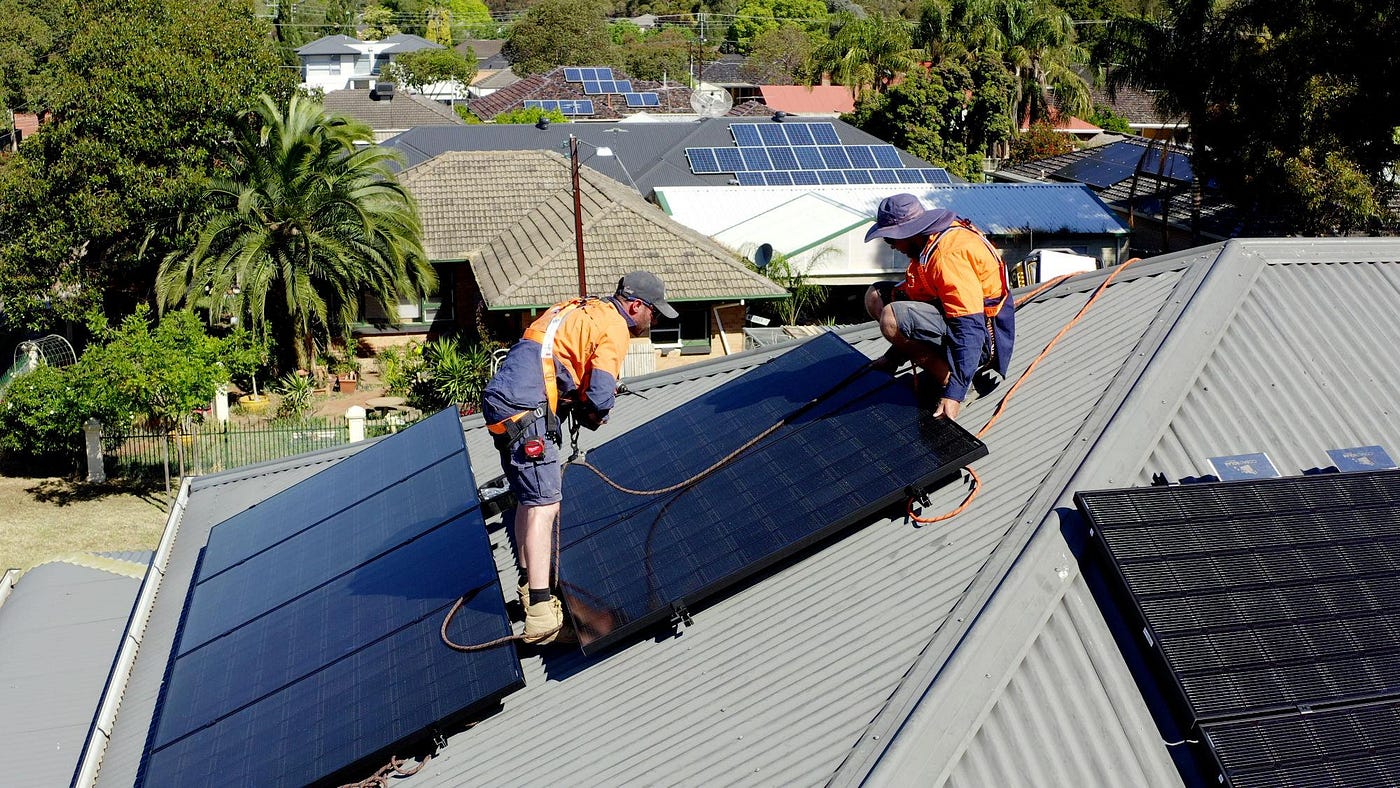
Why Is Melbourne Turning to Solar Battery Storage?
Melburnians are no strangers to unpredictable weather — and unfortunately, unpredictable power bills. With grid electricity tariffs rising across Victoria and feed-in tariffs (FiTs) dropping to historic lows, simply exporting your excess solar power back to the grid no longer makes financial sense.
If you have a standard solar array without storage, you are likely exporting cheap energy during the day for a few cents per kilowatt-hour (kWh), only to buy it back at premium rates of $0.30 to $0.45 per kWh when you get home in the evening.
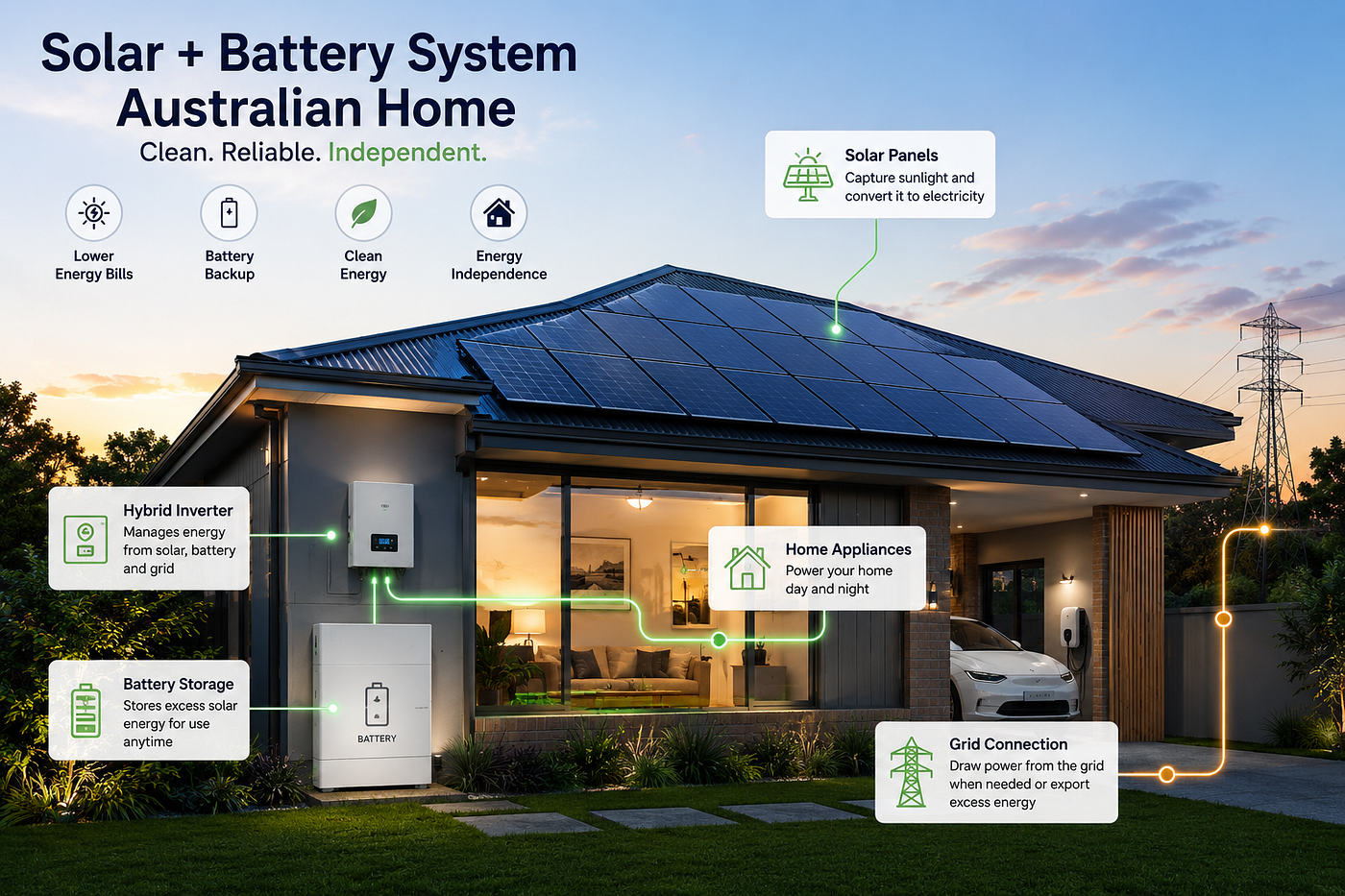
By investing in a dedicated solar battery installation in Melbourne, you can store your self-generated clean energy and use it whenever you need it. Whether you want to escape rising peak electricity rates, secure your home against seasonal grid blackouts, or significantly reduce your carbon footprint, adding battery storage is the ultimate way to achieve true energy self-reliance.
But what does a system actually cost in 2026? Let’s break down the pricing, components, rebates, and financial returns to help you make an informed decision.
What Is the Average Solar Battery Installation Cost in Melbourne?
Battery pricing in Australia has historically been complex, with wide-ranging quotes that often leave homeowners confused. However, following the introduction of expanded federal battery incentives, battery storage has become more accessible.
The total cost of your installation depends heavily on whether you are retrofitting a battery to an existing solar system or installing a brand-new, bundled solar-and-battery system.
Average Installed Costs by Battery Capacity (2026 Pricing)
The following table provides realistic, real-world cost estimates for popular battery capacities installed in Victoria. These figures include the physical battery unit, standard installation labor, GST, and the upfront federal STC battery rebate.
Battery Usable Capacity (kWh)
Typical Household Suitability
Average Retrofit Cost (Battery Only)*
Average Bundled System Cost (with 6.6kW–10kW Solar)*
5 kWh — 6.4 kWh
Small apartments, low-use households
$6,000 — $7,500
$11,500 — $13,500
9.6 kWh — 11 kWh
Mid-sized families, average daily usage
$8,800 — $11,000
$14,000 — $17,000
12.8 kWh — 14 kWh
High-energy users, backup power needs
$10,500 — $13,800
$16,500 — $19,500
20 kWh — 27 kWh
Large properties, off-grid, multi-phase
$18,500 — $24,500
$24,000 — $31,500
*Note: Prices are indicative of high-quality, Clean Energy Council (CEC) approved equipment installed by accredited professionals. Existing solar systems may require an additional hybrid inverter upgrade, which can add $2,000 to $3,500 to a standalone retrofit cost.
Which Popular Solar Battery Brands Offer the Best Value?
At United Energy Group, we source and install a wide range of premium, tier-one battery systems engineered to withstand Melbourne’s damp winters and scorching summers. Different brands offer distinct advantages depending on your existing inverter, phase setup, and backup requirements.
Here is an analysis of the top solar battery systems on the Victorian market today:
1. Sungrow Premium LFP Battery Series
- Typical Size: 9.6 kWh to 19.2 kWh (Modular)
- Estimated Installed Cost: $9,000 — $12,500
- Why Melburnians Love It: Sungrow offers exceptional value for money and outstanding reliability. Paired with a Sungrow Hybrid Inverter, these modular lithium iron phosphate (LFP) systems can be scaled up easily if your energy needs grow.
2. SigenStor (by Sigenergy)
- Typical Size: 5 kWh to 25 kWh (Stackable Modules)
- Estimated Installed Cost: $8,200 — $18,000+
- Why Melburnians Love It: SigenStor is a revolutionary 5-in-1 energy storage system that integrates the hybrid inverter, battery storage, EV charger, DC isolator, and EMS into a single sleek tower. It is highly optimized for fast installations and offers advanced AI-driven power management.
3. BYD Battery-Box Premium (HVM/HVS)
- Typical Size: 8.3 kWh to 22.1 kWh
- Estimated Installed Cost: $9,500 — $15,000
- Why Melburnians Love It: BYD is one of the world’s largest electric vehicle and battery manufacturers. Their stackable, cobalt-free LFP batteries offer unmatched thermal stability and are highly compatible with premium European hybrid inverters, such as the Fronius Primo Gen24 Plus.
4. GoodWe Lynx Home F Series
- Typical Size: 6.6 kWh to 16.4 kWh
- Estimated Installed Cost: $8,500 — $13,000
- Why Melburnians Love It: This is a highly cost-effective, high-voltage battery option that pairs seamlessly with GoodWe hybrid inverters. It represents an excellent entry point for households seeking reliable solar battery storage in Victoria without a premium price tag.
How Do Federal and Victorian Rebates Affect Your Solar Battery Cost?
Navigating solar and battery incentives in Victoria can be confusing due to shifting policy guidelines. To maximize your upfront savings, it is important to understand the active programs in 2026.
The Federal Battery Rebate (SRES Scheme)
The national Cheaper Home Batteries Program, integrated into the Clean Energy Regulator’s Small-scale Renewable Energy Scheme (SRES), offers a substantial point-of-sale discount for residential battery installations.
- How it works: Your discount is calculated based on your battery’s usable capacity (measured in kWh) and the expected emissions reduction it provides.
- May 2026 Adjustment: The STC rebate factor has transitioned to an updated schedule. For installations between May and December 2026, the STC factor stands at 6.8 per kWh for the first 14 kWh of capacity, before tapering down for larger systems.
- What this means for your pocket: For a standard 10 kWh battery, this translates to an upfront discount of approximately $2,450 to $2,800, applied directly to your quote by your installer.
Victorian State Incentives (Solar Homes Program)
While Solar Victoria’s direct state-level battery rebates and interest-free battery loans have concluded, you can still claim significant state support if you install panels alongside your battery:
- Solar Panel Rebate: Up to $1,400 off the cost of your solar panel system.
- Interest-Free Loans: An additional interest-free loan of up to $1,400 to match the panel rebate, helping to reduce the overall out-of-pocket cost of a combined system.
When you work with a CEC-accredited provider like United Energy Group, we handle all rebate calculations and paperwork on your behalf, ensuring your eligible federal STC discount is deducted directly from your invoice.
What Factors Actually Drive the Cost of Your Solar Battery Installation?
No two residential properties in Melbourne are identical, which is why battery quotes can vary. Several core factors dictate the final cost of your installation:
+--------------------------------------+
                  |      SOLAR BATTERY INSTALLED COST    |
                  +--------------------------------------+
                                     |
         +---------------------------+---------------------------+
         |                           |                           |
+-----------------+         +-----------------+         +-----------------+
|   Hardware &    |         |  Installation   |         |   Electrical    |
|   Technology    |         |   Complexity    |         |    Upgrades     |
+-----------------+         +-----------------+         +-----------------+
| * Usable kWh    |         | * Cable runs    |         | * Switchboard   |
| * LFP vs NMC    |         | * Wall vs floor |         |   compliance    |
| * Hybrid Inv.   |         | * Fireproofing  |         | * Phase setup   |
| * Backup switch |         | * Bollards      |         |   (Single/Three)|
+-----------------+         +-----------------+         +-----------------+
1. Inverter Compatibility & Retrofitting
If you already have solar panels installed, your existing inverter is likely a standard “string” inverter designed only to send power to your home or the grid. It cannot talk to a battery. To add storage, you have two choices:
- Install a Hybrid Inverter: Replacing your old inverter with a hybrid unit (like a Sungrow or Fronius Gen24) allows direct DC-coupled battery integration. This adds $2,000 to $3,500 to the job but is highly efficient.
- AC Coupling: Using an AC-coupled battery system (such as Tesla Powerwall or Enphase) which contains its own internal inverter. This is easier to retrofit but typically has a higher battery-unit price tag.
2. Battery Chemistry (LFP vs. NMC)
Most modern residential batteries use one of two lithium-ion chemistries:
- Lithium Iron Phosphate (LFP): Used by Sungrow, BYD, SigenStor, and GoodWe. LFP batteries are highly durable, boast long cycle lives, and offer superior thermal safety. They are slightly heavier but ideal for home installations.
- Nickel Manganese Cobalt (NMC): NMC chemistry offers high energy density in a lighter package. However, they degrade slightly faster and carry a higher risk of thermal runaway compared to LFP.
3. Backup Power Requirements (Blackout Protection)
Do you want your entire home to run during a blackout, or just essential appliances?
- Essential Circuit Backup: Wiring only your fridge, lights, Wi-Fi router, and a few power points to run off the battery during a grid outage. This is standard and highly cost-effective.
- Full-Home Backup: Running heavy loads like ducted air conditioning, electric hot water systems, and pool pumps. This requires larger hybrid inverters, specialized backup gateway switches, and potentially multiple battery units, adding $1,500 to $3,500 in electrical labor and hardware.
4. Switchboard Upgrades & Site Logistics
Victorian electrical safety standards (AS/NZS 3000 and AS/NZS 5139) are incredibly strict. If your Melbourne home has an older, outdated switchboard with ceramic fuses, it will require a mandatory switchboard upgrade to modern safety switches (RCBOs) before a battery can be legally installed. This can add $800 to $2,000 to your project cost.
Other physical factors like complex double-storey cable runs, fireproof backing board installations, or safety bollards for garage-mounted units will also influence installation labor costs.
Is a Solar Battery Worth the Investment in Victoria?
To determine if a solar battery is “worth it,” we must look at both the tangible financial returns and the invaluable lifestyle benefits.
The Payback Period Calculation
In Melbourne, the average payback period for a high-quality solar battery system currently sits between 7 and 9 years. However, this period can be shortened to 5 to 7 years if you optimize your energy usage patterns:
- Self-Consumption Maximization: By shifting your heavy electricity usage (washing machines, dishwashers, heat pumps) to daytime solar hours and storing the rest, you minimize your reliance on the grid.
- Virtual Power Plants (VPPs): Many battery owners join a VPP. By letting a retail provider occasionally draw power from your battery during extreme grid demand peaks, you are paid premium dispatch credits (sometimes up to $1.00+ per kWh), accelerating your return on investment.
The Non-Financial Benefits
For many Melbourne families, financial payback is only half the equation. A battery provides:
- Energy Security: Complete protection against storm-induced blackouts and grid failures.
- Future-Proofing: Immunity from future energy market price hikes.
- Carbon Reduction: Drastically reducing your reliance on Victoria’s fossil-fueled power stations by running your home on 100% self-generated solar energy, even at midnight.
What Are the Most Common Solar Battery Buying Mistakes to Avoid?
Investing in home energy storage is a significant decision. To ensure you get the best value for your hard-earned money, make sure you avoid these common pitfalls:
- Undersizing Your Battery: Buying a 5 kWh battery for a high-use household to save on upfront costs often backfires. The battery will drain quickly in the evening, leaving you paying peak grid tariffs. Conversely, oversizing means paying for capacity you never use. A professional load analysis is vital.
- Focusing Solely on the Lowest Price: Extremely cheap, unbranded batteries flooding the market often use inferior battery management systems (BMS) that degrade rapidly, offer poor warranties, and lack local Australian customer support.
- Assuming Backup Power is Automatic: Not all battery systems provide backup power during a grid failure by default. Some require optional backup modules or specific rewiring. Always confirm your backup capabilities with your designer.
- Choosing Installers Who Use Subcontractors: Many national solar sales companies sub-out their installations to the lowest-bidding local electricians. At United Energy Group, we believe in doing the job right the first time. We utilize our own highly trained, in-house, CEC-accredited installers to guarantee flawless quality and long-term support.
Expert Tips for Maximising Your Solar Battery Performance in Melbourne
Our senior engineering team at United Energy Group recommends these three essential practices to get the most out of your energy storage:
- Maintain Optimal Temperature Conditions: While modern LFP batteries are rated for outdoor use, extreme temperatures can reduce their operating efficiency and lifespan. Whenever possible, install your battery in a sheltered area — like a garage, carport, or south-facing external wall — away from harsh, direct afternoon sun.
- Combine with Smart Hot Water Systems: Your hot water service is one of the biggest energy drains in your home. By combining your solar battery system with a smart heat pump or timer, you can divert excess solar energy to heat your water during the day, reserving your battery storage for evening household appliances.
- Perform Regular Visual Checks: Keep the area around your battery clean, dry, and free of household clutter. Ensure the unit’s cooling vents are clear of dust, leaves, or spider webs to prevent overheating during high-demand periods.
10 Crucial FAQs About Solar Battery Installation in Melbourne
1. Can I install a solar battery without solar panels?
Yes, you can install a battery without panels. You can charge the battery using cheap, off-peak grid electricity (such as overnight or solar sponge tariffs) and discharge it during peak evening times to save money. However, pairing a battery with a solar system provides the highest financial return.
2. How long do solar batteries last in Melbourne’s climate?
Most high-quality modern batteries (like LFP chemistries from Sungrow or BYD) are warranted for 10 years or a specific number of cycles (typically 6,000 to 10,000 cycles). With correct placement and usage, you can expect a premium battery to last 12 to 15 years before its storage capacity degrades to 70% of its original rating.
3. Will my solar battery charge on cloudy days?
Yes, but at a slower rate. Solar panels still generate electricity on overcast days using diffuse sunlight. The system will prioritize powering your active home appliances first, and any remaining surplus power will be sent to charge the battery.
4. What is the difference between single-phase and three-phase battery installations?
Most standard Melbourne homes are on a single-phase electrical supply, meaning they require single-phase solar battery packages. Larger homes, commercial properties, or those with heavy heating and cooling setups may have a three-phase supply, requiring three-phase solar battery packages to balance the energy load evenly across all three incoming lines.
5. Can I completely disconnect from the grid (go off-grid) with a battery?
Technically, yes. However, going fully off-grid in metropolitan Melbourne is rarely practical or cost-effective. It requires a massive solar array, substantial battery capacity (often 30 kWh+), and a backup diesel generator to cover consecutive days of heavy winter rain. Remaining connected to the grid while using a battery provides a reliable, low-cost safety net.
6. Do I need to upgrade my switchboard to install a battery?
In many cases, yes. Victoria has strict electrical compliance regulations. If your home has an older switchboard with screw-in ceramic fuses, it must be upgraded to a modern, compliant switchboard with individual circuit breakers and safety switches before any solar battery installation can legally occur.
7. How much physical space does a home battery require?
Most residential battery units are sleek, wall-mounted, or floor-stacked towers. They typically require an area about 1 to 1.5 meters high, 60 to 80 centimeters wide, and 15 to 25 centimeters deep. You also need to maintain clear clearance spaces around the unit for ventilation and safety access as per AS/NZS 5139.
8. Is Lithium Iron Phosphate (LFP) safer than Nickel Manganese Cobalt (NMC)?
Yes. LFP (Lithium Iron Phosphate) has a significantly higher thermal runaway threshold compared to NMC. This makes LFP batteries highly resistant to overheating, combustion, and chemical hazards, which is why major manufacturers like Sungrow, BYD, and SigenStor use LFP chemistry.
9. What happens to my old solar system if I want to upgrade to a battery?
If your old system is still performing well, we can retroactively install an AC-coupled battery system. If your existing solar panels are nearing the end of their lifespan or are underperforming, United Energy Group provides clean, compliant solar panel removal and disposal services to help safely clear your roof before installing a brand-new, battery-ready solar system.
10. How do I choose the right size battery for my home?
The easiest way is to look at your daily electricity bill. Find your average daily usage in kilowatt-hours (kWh) and analyze your evening consumption habits. If your household uses roughly 10 kWh of power between 5 PM and 8 AM, a 10 kWh battery capacity is your ideal match. Our energy consultants can run a detailed load analysis using your smart meter data to pinpoint the perfect size.
Ready to Take Control of Your Energy Bills?
At United Energy Group, we don’t believe in generic, one-size-fits-all solar systems. We design bespoke, premium energy solutions tailored specifically to your home’s architecture, lifestyle, and budget.
Based in Hallam, we are proud to serve Melbourne and regional Victoria with top-tier solar and electrical expertise. Our team of fully licensed, accredited solar professionals manages your journey from initial site assessment and rebate applications right through to installation and ongoing lifetime support.
Don’t let rising energy prices dictate your household budget. Contact our friendly Melbourne-based team today to receive a free, no-obligation solar battery quote.
- Call us: 1300 550 005
- Email us: sales@unitedenergygroup.com.au
- Visit our Office: 16/17–23 Keppel Dve, Hallam VIC 3803
- Get a Free Quote Online: United Energy Group
메타데이터
- post_id
- 8924e32ab18d
- slug
- how-much-does-solar-battery-installation-cost-in-melbourne-2026-guide-8924e32ab18d
- url
- https://medium.com/@united_energy_group/how-much-does-solar-battery-installation-cost-in-melbourne-2026-guide-8924e32ab18d
- canonical_url
- https://medium.com/@united_energy_group/how-much-does-solar-battery-installation-cost-in-melbourne-2026-guide-8924e32ab18d
- author_url
- https://medium.com/@united_energy_group
- status
- ok
- fetched_at
- 2026-07-14 06:00:22