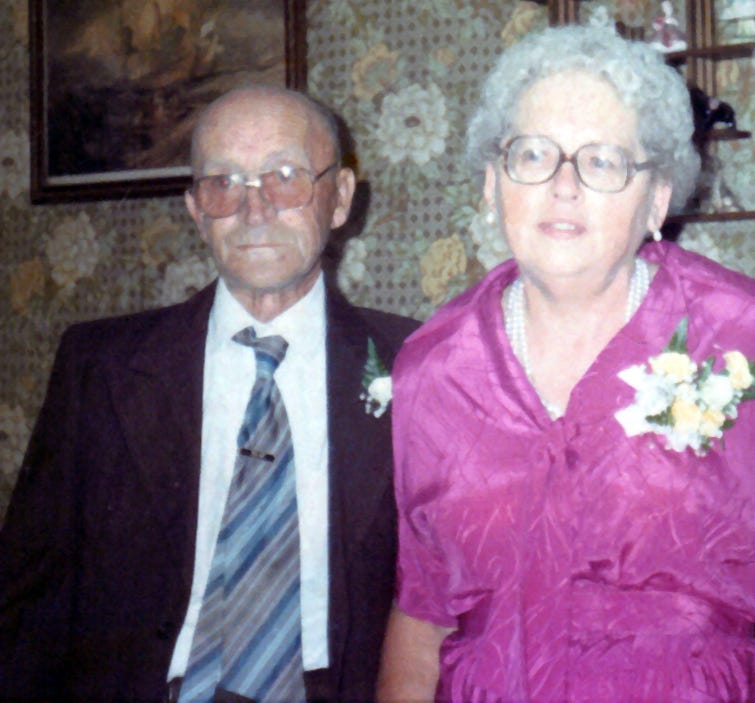
My Dad and I.
Sometimes parents don’t get the children they wanted. Sometimes children don’t get the parents they wanted.
My Dad and I.
Sometimes parents don’t get the children they wanted. Sometimes children don’t get the parents they wanted.
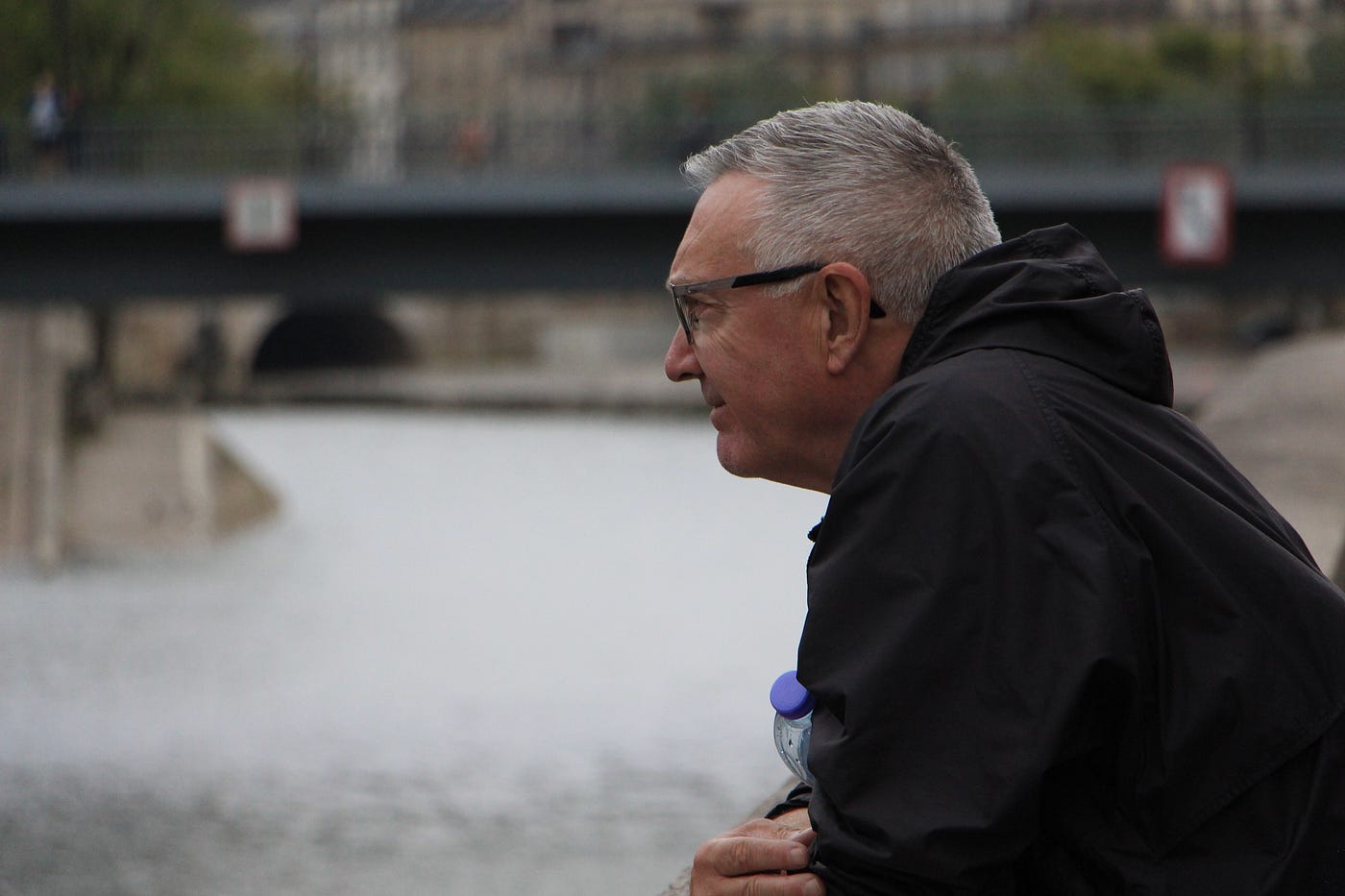
My brother took this picture of me in Paris, a couple of years ago.
I’m writing this at the suggestion of P. D. Reader. You wanted to know more? Here it is, although I passed over almost four decades of ER work, more than a decade as coroner, and almost four decades as a soldier. Along with many a side gig.
Parents often misjudge their children.
Sometimes they judge them way above their capacities, sometimes below. With my parents it was both.
When I was in primary school, they thought I was a genius. I even remember my mom telling me I was to attend an English university (our mother tongue is French) and become a Rhodes Scholar, whatever that was. Geeze, mom, you were rating me wayyyy above my worth. But then I was her first born and mothers sometimes get carried away. Plus, her ambition for me was understandable. She came from some way down the social ladder. As in mom, dad and seven children in a two-bedroom apartment: one room for the parents, one room for the five girls, and the boys slept on foldaway beds in the hallway.
And this was far from the bottom of that social ladder. Québec, in those days had many rungs of misery below that one. In fact, this nine people in a 2BR apartment situation was considered lower middle-class in our miserable society which some social scientists have compared globally to that of African Americans of the time.
By the time she was a teen, my mom had figured out that being a French Canadian, a Québécois as we are now called, was a dead-end street. She was right. She taught herself English. That’s how she met my dad.
Before 1960, when Québec province finally acquired a Ministry of Education, it had a long and tortuous history of neglecting its children’s schooling by letting the Catholic Church run the whole system. At the time, and for the preceding two hundred years, our corrupt (even more so than today) politicians’ attitude was one of paternalistic, benign, and even condescending neglect.
“Learning? Not too much! Our ancestors bequeathed upon us a legacy of poverty and ignorance and it would be treason to this tradition to educate our children.” (Antoine Rivard, in 1959, Solicitor General of the province of Québec).
No kidding. He actually said that!
Or from our Premier of the time, Maurice Duplessis, a most corrupt fellow, whose loss no one cried, “Education is like alcohol to some people: it has a bad effect on them.”
In those days (1960), only 13% of Québec French-speaking children graduated from high school, and only 3% of them went on to university. I’m talking about attendance, not even graduation. This generated generations of poor, ignorant subsistence farmers, or cheap workmen easily employed (and underpaid) in our cities’ hardscrabble factories. Generations of ignorant and docile sheep for the almighty Catholic Church.
No wonder my mom had ambitions for me, their first-born, when the social upheaval we call “The Quiet Revolution” suddenly gave hope to millions of Quebecers.
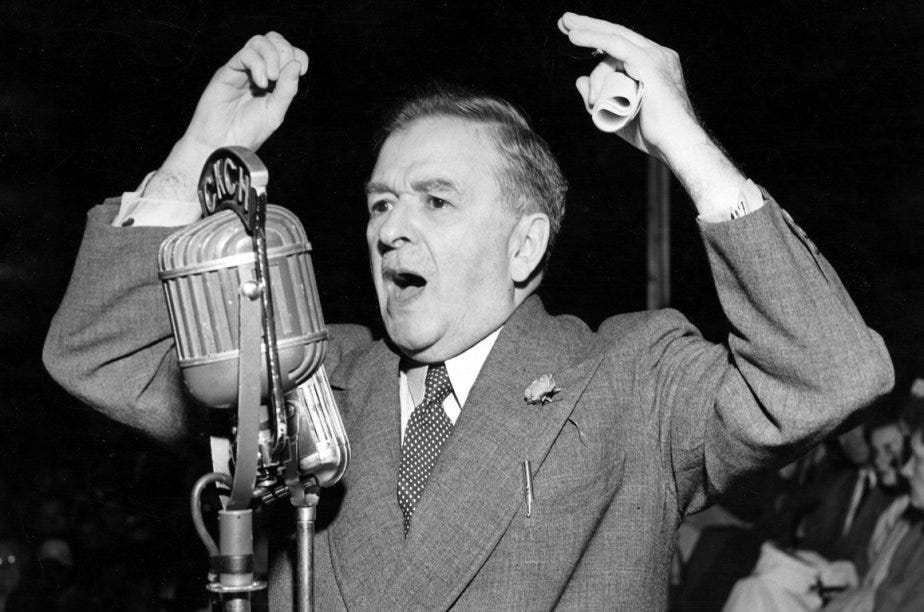
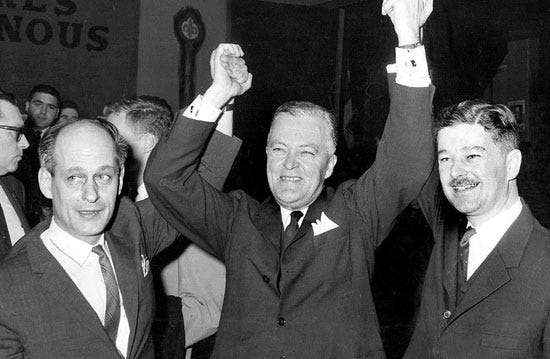
1960 in Québec. The beginning of the Quiet Revolution. On the Left, that corrupt fellow Duplessis who though too much education would go to our heads, and on the Right, the guys who beat him and changed my people’s world. I remember that day very well. Sources: La Renaissance catholique au Canada and La Presse.
So, my parents scrimped and sent me to a private primary school, one run by French nuns. “French” as in “French from France.” That was my first exposure to French culture. Because no, French Canadian culture is not the same as ‘French from France’ culture. There were two hundred years of separation, isolation even, between us and “the mother-country” as some romantics still call France. Two hundred years of avoiding the French Revolution and Napoleon’s reign (among others), protected in peace under the benign (and sometimes not-so benign) government of the United Kingdom.
So it was that I received an exceptionally thorough education in French.
When I reached high school, in the early sixties, a straight passage in Québec, where one goes straight from 6th grade to Secondaire I (high school 1), I was sent to a Jesuit-run school in Montreal. It wasn’t the top-notch Jesuit high school in the province (Brébeuf) which many Canadian leaders attended (Prime Ministers, astronauts etc), but rather a Jesuit high school for deserving and promising children from lower classes.
When I got there, my marks, which had been so stellar that I had gotten a scholarship in my first year, fell a bit, due to the competition. I was quite a ways away from becoming a Rhodes Scholar, mom.
The following year, my dad got transferred to Québec City and my response to that uprooting was a bit shaky. My grades were still in the top half of my class, but I definitely was not acing it. As for the Rhodes Scholarship thing? Apart from a miracle, it was more fuggedaboudit than a possibility.
Was that where the resentment originated?
Even though I was initially stunned by the enormous difference in mentality and the cultural chasm between Montreal and Quebec City, I slowly began to love my new high school, one of the oldest on the continent, le Petit Séminaire de Québec, a school run by Catholic priests since 1663. There was also a Jesuit high school in Quebec City (the oldest school on the continent), but it was for kids from the same super-high class as that one in Montreal, reserved for the province’s elite. They wouldn’t even grant my dad an interview.
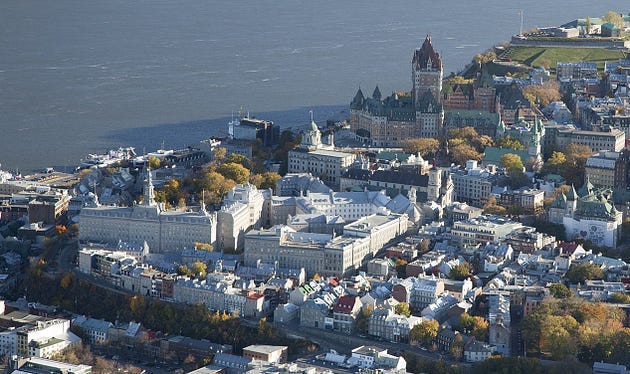
That jumble of buildings facing every which way is my old high school. The leftmost building, thw one with the spire is where the collegiate was, my favourite memory from my schooling days. And behind the ensemble, you may recognize le Château Frontenac, one of Quebec City’s most famous landmarks (along with its bridge, and its famous citadel) in the top right corner. That water is the St-Lawrence River, flowing from top right to lower left. If you ever visit, you may witness the water going in the opposite direction. It’s the tide, coming in from as far as 600–800 Km from the Atlantic. Source: Petit Séminaire de Québec.
I don’t know if mom was behind it, nagging dad to do something about me, but he got on my case.
At first it was, “You’re much better than your grades let on, it’s just that you aren’t trying hard enough.” When that approach didn’t work out, it became, “You won’t amount to anything if you keep on being lazy like that.” And progressed to, “If I’m not getting a better return on my money, I might as well just send you to a public school.”
ADHD, which I was diagnosed with years later, didn’t exist in those days.
The Séminaire was in old Quebec City, about six miles from where we lived, but an hour’s trip each way on the city bus to and from school every day. Those of you who are city dwellers know about the commuter bus from the suburbs which slowly fills up at each stop until it’s standing room only, a most depressing and mind numbing twice a day experience. Nothing to do with those yellow, for kids only school buses of today.
Every Sunday evening, it became a routine, and senseless harassment session when I had to ask my father for bus ticket money (for some reason, he didn’t want me to have a bus pass, which meant that I couldn’t go anywhere on school-free days without using up precious tickets). He would harrumph and snap his newspaper (in my memory he is always lost in his paper) as he expressed his displeasure at my request. As if buying bus tickets was some new, unexpected, and avoidable expense. Then, after a sufficient amount of time leaving me standing on the other side of his paper, he would grudgingly fork over the required amount, which I had to count because he would sometimes give me less than needed, only to express surprise at how much those tickets cost him.
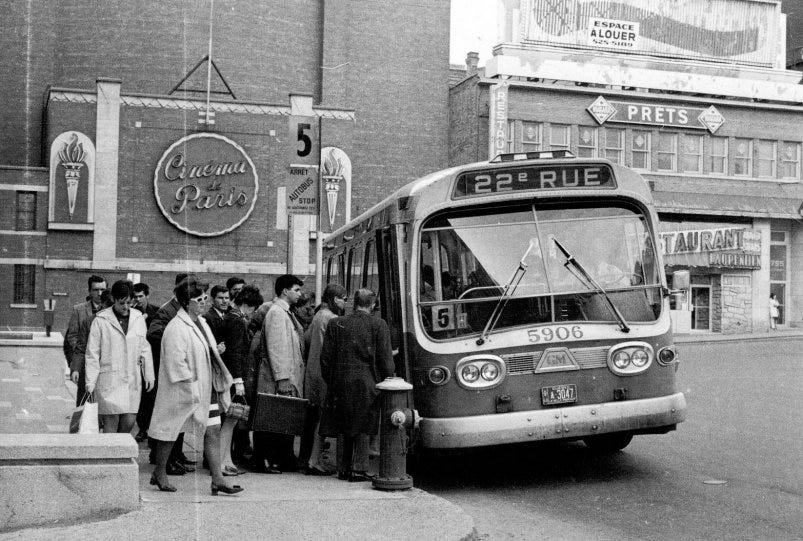
Every day, one hour each way times six years. What a time it was. And yes, we had a Cinéma de Paris. If you couldn’t go to Paris, you could always have it come to you. Source: Société d’histoire d’autobus du Québec.
Every fucking Sunday evening. It was a humiliating and, to me, unnecessary demonstration of the power he held over me. One time, as I was waiting for him to deign look at me, I dared to sigh… Oh boy! That was the last time I expressed any displeasure at being made to wait silently. The angry, spiteful lecture I received about ingratitude cowed me into silence forever after.
After more than a year of the same, hostile treatment, I devised a formula which I thought could guarantee some kind of peaceful co-existence between us. One evening, when he was harrumphing more than usual as he perused my report card, I told my father that, as a now-responsible adult, I would bear the consequences of my unremarkable grades on my future choices for a career. At fourteen, my eventual employment and the nature of its exigencies were as far from my mind as what was going to happen two weeks hence. Once I had finished uttering this latest plea-for-peace, my father proceeded to cut me off at the knees by saying, “Not when I’m the one who’s paying.”
He snorted his contempt and probably savoured his victory as I walked away defeated, but not dead yet. Unexpectedly for him, I took his dismissal not as a loss, but rather as a challenge.
Having been properly and definitely (so thought my father) out-argumented, I spent the next few months plotting my next move. It so happened that my school held a summer day camp for the kids of the neighbourhood in Quebec City where said school owned an ancient domain. That camp’s counselors were students from the school. The priests who ran the camp usually reserved those jobs for students from less wealthy families. This was because the school couldn’t afford to pay said counsellors what they deserved. What they did instead was to lop off most of your following year’s tuition. That year, my ‘Secondaire III’, or Grade 9 in the US system, I badgered the priest in charge of the day camp until he relented and gave me a counsellor’s job for the following summer, 1968.
God bless that man. Truly, for he changed my life for the better.
While the kids from more fortunate families spent their summer travelling throughout Europe, I spent mine working as a camp counsellor with inner city kids, thus paying off my tuition and earning the somewhat laughable sum of $10 (Canadian) a week, paid in cash every Friday evening.
At the end of the summer, I went back to school proud that I had paid off most of my tuition by my work. Now feeling free from my father’s admonitions, I probably became a smart-ass kid but one who improved his marks, which was good because, in Secondaire IV, things were starting to get serious.
Unfortunately, my father didn’t see it that way. I guess he felt humiliated when I proudly told him that I was now paying my own tuition and thus, that my marks were my own business. When I first told this story here, on Medium, a reader commented that I had rejected my father. It’s a way of seeing it. But then, what father gets his emotional rocks off by arguing and humiliating his adolescent son? In any case, we drifted apart. A sort of cold war with occasional truces set in, and our relationship was to stay that way until just before he passed away half a century later.
From then on, through various summer jobs, I paid my tuition for the rest of high school and through the two years of college that, in Québec, follow them. Many other stories there.
I was accepted into Med School, much to the dismay of my parents who, for some reason I never found out, hated the medical profession. It wasn’t just me. They had been bad-mouthing MDs for years, snorting at how uppity they thought they were, and how prone to mistakes they collectively were.
During my first year, I had been graced with a scholarship. The following summer, I got a high profile but low paying job in medical research. By October, I was looking at running out of money before Christmas. Which meant either going to my father with my tail between my legs to beg for tuition money, or quitting Med School. That’s when I heard that some of the guys in my class had enlisted in the Canadian Forces. The Forces paid us a salary, took care of our tuition, and reimbursed textbooks. Plus, free eyeglasses and free dental care. Without a second thought, I signed up as an officer of the Queen. I was nineteen.
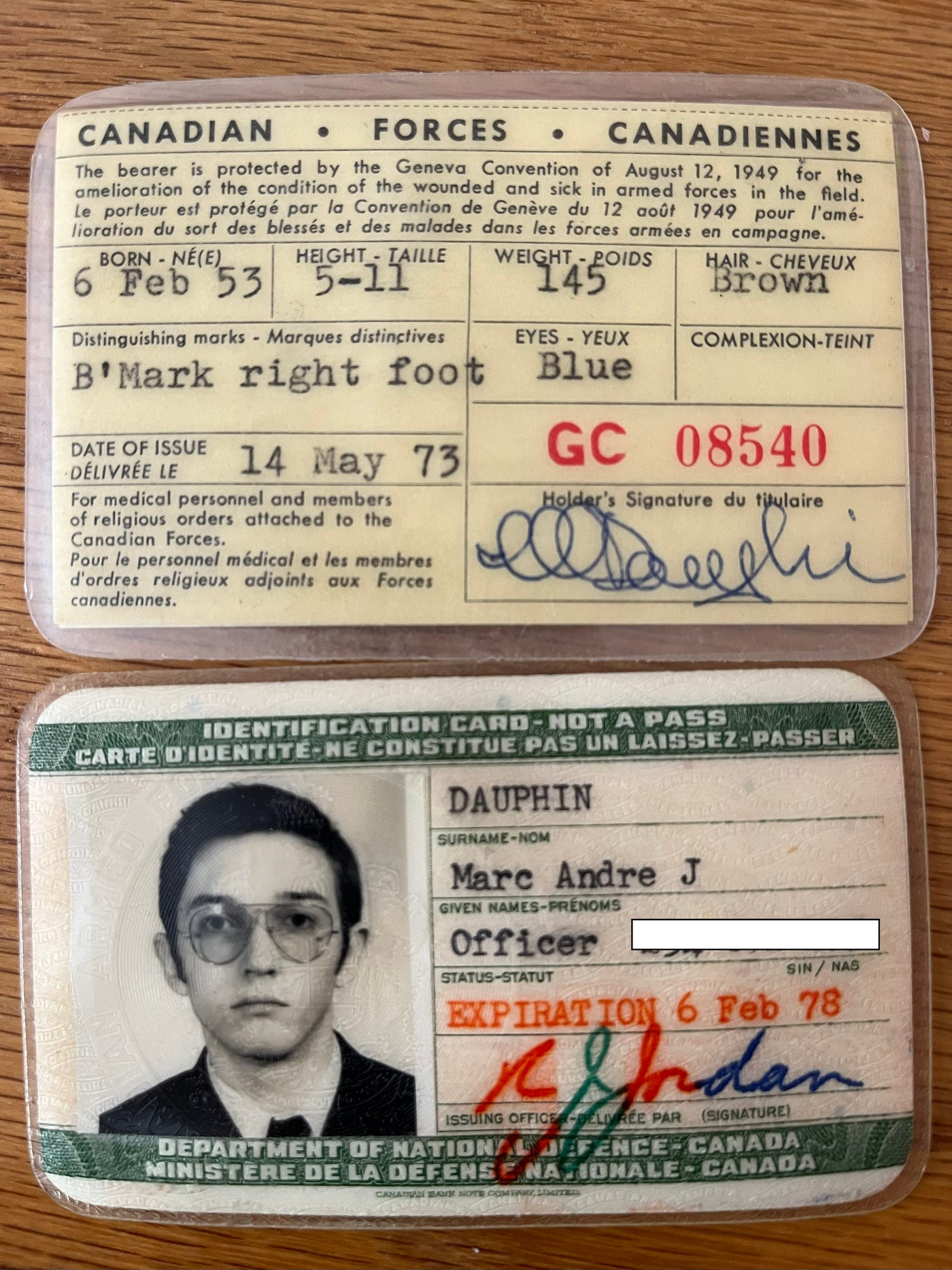
My first ID card when I was a twenty-year-old 2nd Lieutenant. Can’t say I matured early. That was the year I caught malaria in some exotic country where I was sent. That 145lbs is an exaggeration.
This only worsened the cold war between my father and I. As soon as I could, in my third year of school, at age twenty, I left Quebec City for another town and was completely independent from my parents who, up until then, had provided free room and board. A few years later, my father didn’t even attend my graduation. First one in both families to graduate from university. And from Med School to boot.
I served my time in the Armed Forces where I was given a plethora of courses and neat assignments, among which, becoming a Flight Surgeon, studying tropical medicine at Walter Reed in DC, learning German and some Russian, as I was stationed in Germany, serving with our allies’ forces, and even being selected for astronaut training.
Since that particular training would have taken me away from my young family (my parents didn’t attend our wedding either) for long periods, my wife put her foot down, “You may be one of the first Canadian astronauts, but you’ll be the first divorced Canadian astronaut.” She does have a temper. That’s why I married her.
So, I hung up my uniform, got myself a civilian job and, because of my Flight Surgeon training in investigating air crashes, I was asked to become county coroner. I also joined the reserves. “In case there’s a war” was my alibi because my wife was very jealous of the military..
All throughout those years, we kept tenuous contact with my parents, not out of love, but because my wife wanted our kids to know their grandparents. Also because I love my brothers. So, every summer, we’d dutifully drive up to Quebec City to spend a few days at my parents’ house. It was during that time that MAS*H became a popular TV series. My father was enamoured with Hawkeye, played by Alan Alda. Since we couldn’t talk about most subjects, lest he or I blow up, he would run on and on about how Hawkeye did this, and Hawkeye did that. A veritable ode to that character in a TV series. I simply nodded, grateful for the truce.
I remember one visit, during the 90s, when I decided to become a writer and commented to him that I must be a late-bloomer. The scoff of contempt which followed that announcement ensured I would never again open up to that man.
Decades passed. Then, 9/11 happened and Canada’s PM was one of the first US allies to call Dubya to ask him if he wanted to invoke Article 5 of the NATO Treaty (a call for help). He did. Canada sent troops to Afghanistan.
In 2006, for reasons I exposed elsewhere, the war suddenly became bloody for Canada. Very bloody. Although French Canadians are only about 22% of the population, we are about a third of the Army. That third does its fighting in French only, a handicap if you’re a unilingual anglophone as most Canadians from the Rest of Canada (RoC) are. In Afghanistan, when it came time to put in the French speaking brigade, as a qualified Flight Surgeon, and ER doc, I was called back into service because I speak French. My first tour was in Germany, at the US military hospital in Landstuhl, the way point between Afghanistan (and Iraq) and North America for all US and Canadian casualties. Then, on the following French tour, I was asked to take over as boss of the large NATO multinational hospital in Kandahar, the traditional capital of the Taliban.
Christine told me, “You left a potential career as an astronaut to be with your family. This time, our kids are all grown-up, go where your soldiers need you, and I’ll wait for you.”
I love that woman.
Of course, me being me, I happened to pick the moment when the war hit its maximum intensity. While I was there, we became the busiest trauma center in the world.
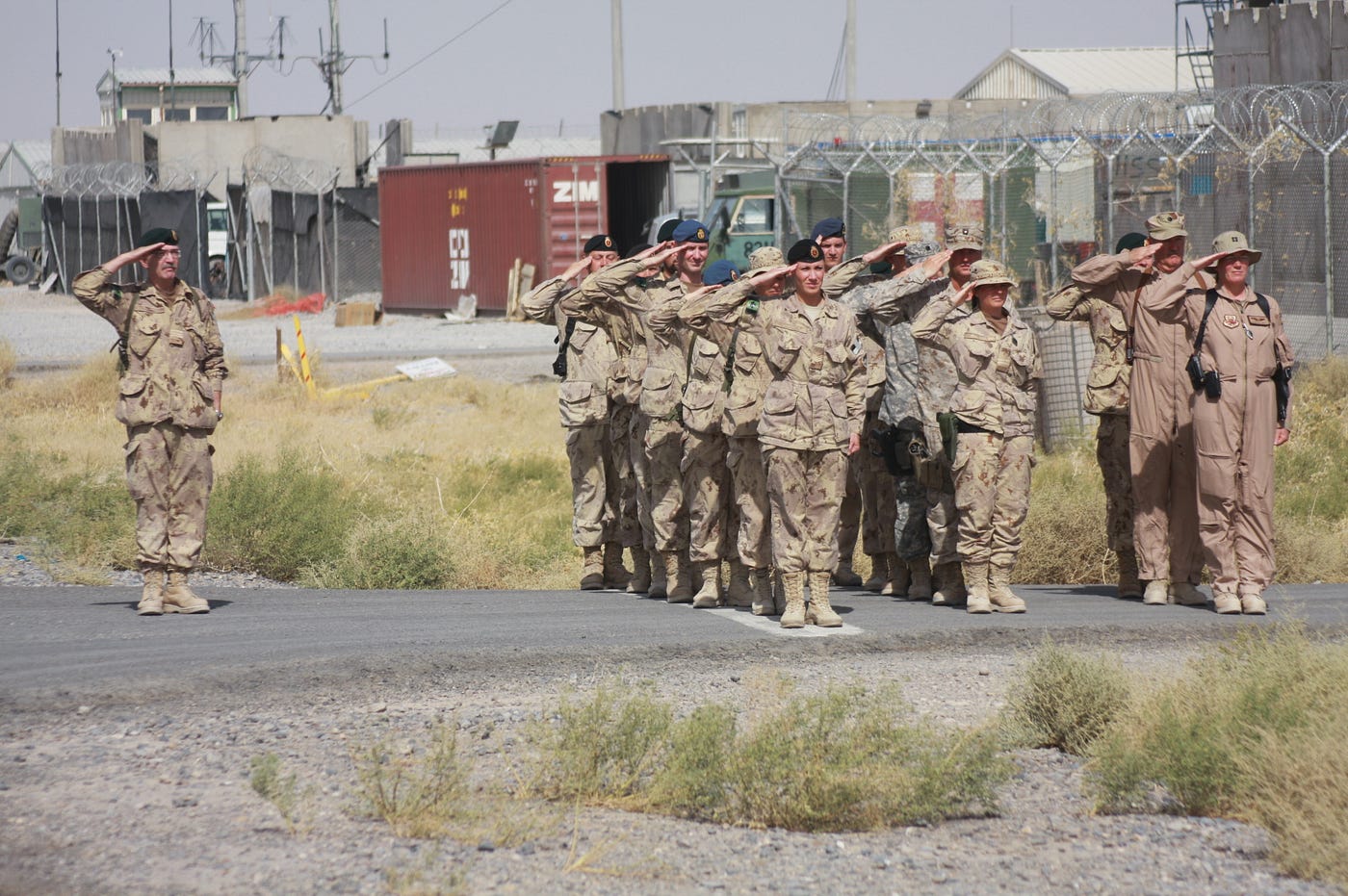
That’s me on the left, with whatever Canadian and US nurses, doctors and medics could be spared for a few minutes to pay hommage to the fallen. We could not attend the more formal ramp ceremonies for our fallen soldiers, as in the picture on the right because casualties just kept coming in and we needed all hands on deck when that happened. It’s probably in the low 110sF. Credit: on the Left, Major Rémi Pelletier. On the Right: Canada’s Military Hisory Post.
It was getting close to hell, I suppose.
During that time in Afghanistan when we were busy as hell, the members of my US Navy contingent had planned a party (no alcohol) to be held in the little tent we used as a meeting place and situated right next to the hospital. The party’s theme was to be Hawaii, and they had somehow dug up some appropriate attire.
That night we were hit especially hard. We had been hammered the whole day and the evening only got even worse. An Afghan family of ten that had walked into a minefield (we only received seven… the morgue got the other three), a US Army patrol (ten guys) hit by a suicide bomber in a marketplace, a big firefight for some godforsaken mountain village. A blown-up culvert with another family nearby. The casualties just kept coming in without respite. I had had to keep all my ORs open since morning. Then, around 2000hrs (that’s 8PM for you civilians), another batch of seriously injured casualties was sent in, and we had to get extra staff in from that party.
Suddenly, it hit me like a punch in the gut. There they were, my people, all dressed in Hawaiian shirts and wearing leis, attending all those casualties. The screams of the wounded, the smell of blood, the pandemonium, the stretchers carrying bloody messes going to and fro, to the CT, to the ICU, to the OR, and I was transported back in time to that TV series and to my dad’s infatuation with Hawkeye Pierce.
And I couldn’t help but think, “Dad, all those years you spent worshiping an actor who played a wartime doc while scoffing at your own son. And all that time, you had the real Hawkeye in front of you. And you just couldn’t see him.”
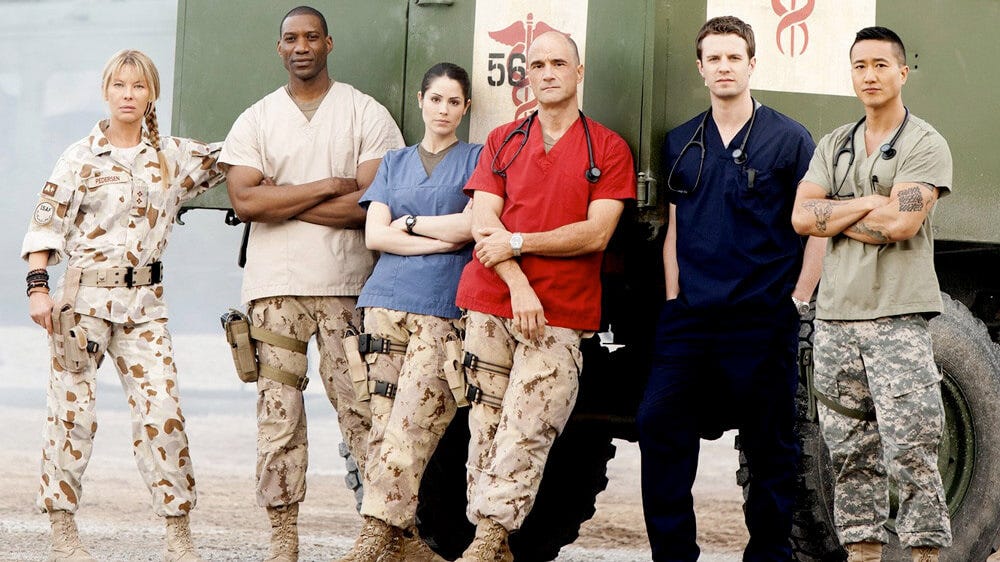
The main characters of the TV series Combat Hospital. In the red smock, is Elias Koteas, the actor playing me. The scriptwriters even named his wife Christine. Thanks for the honour. Much appreciated. Source : Ecmund Butt.
A few years after my return to Canada, they made a TV series about us and this fellow Elias Koteas was hired to play me. Down to the red surgical frock I wore to be seen in the trauma/resuscitation room I ran, because at five-ten, I wasn’t the tallest guy around, and I had to be seen instantly to be called wherever there was trouble (that’s a story in itself). I think that, by that time my dad was getting old, and I don’t know if he watched it. At that point in my life, I didn’t care anymore.
I’m 73 now, and when my dad was on his last legs, a few years ago, I briefly visited him. Even though he was in a coma, I thanked him for all the good he did for me. He and mom ensured we had the best education possible. He did teach me right from wrong, he toughened me up for sure, and instilled in me the discipline to study which my ADHD wanted to pull me away from. I didn’t stay for his death. And I didn’t stand up to do the eulogy at his service. I let one of my brothers do it.
When I look back upon it all, I feel only sadness.
Inside many an old fellow, I guess, there will always be a sad little boy still trying to please his parents.
메타데이터
- post_id
- 892bd989fea8
- slug
- my-dad-and-i-892bd989fea8
- url
- https://medium.com/@marcdauphin/my-dad-and-i-892bd989fea8
- canonical_url
- https://medium.com/@marcdauphin/my-dad-and-i-892bd989fea8
- author_url
- https://medium.com/@marcdauphin
- status
- ok
- fetched_at
- 2026-06-09 15:37:30