Decoding the Real Food Pyramid: You Just Need to Know Four (4) Simple Classes and What They Do.
The U.S. recently unveiled yet another food pyramid revision, but here’s my problem: it seems designed more as a course correction to…
Decoding the Real Food Pyramid: You Just Need to Know Four (4) Simple Classes and What They Do.
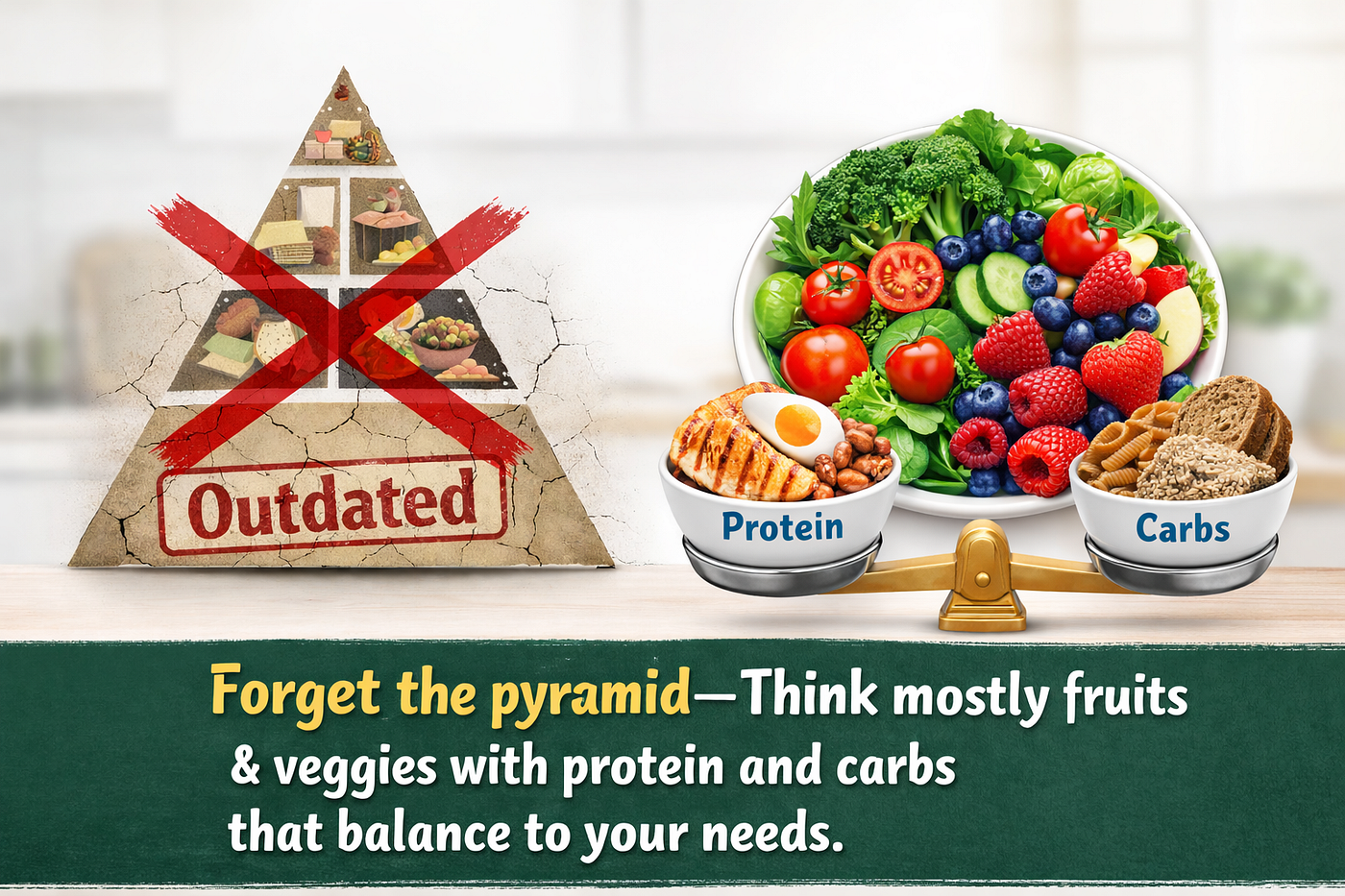
The U.S. recently unveiled yet another food pyramid revision, but here’s my problem: it seems designed more as a course correction to previous mistakes. What happens if new research emerges? Do we reinvent the pyramid?
Maybe we’ve been approaching this wrong. Instead of endlessly tweaking visual diagrams, what if we just explained food in terms anyone could understand and apply? Surely there’s more to life than having anxiety over every single bite of food.
Here’s what I’m proposing: four simple food categories that let you build a nutrition approach that actually fits your life.
This isn’t about eating perfectly. It’s about understanding what food actually does.
The Four Food Categories
1. Fruits and Vegetables (Top of Your Pyramid)
For most healthy people without specific medical conditions, you can eat generous amounts of fruits and vegetables. These provide essential vitamins, nutrients, antioxidants, and fibre that offer multiple benefits. The fibre helps reduce blood sugar levels, lowers cholesterol, and promotes healthy gut movement, which decreases your risk of colon cancer, one of the most common cancers today.
You’re unlikely to go wrong eating plenty of these foods, especially when you drink adequate water alongside them.
2. Carbohydrates (Middle Tier)
Naturally occurring carbohydrates serve a specific purpose: providing energy. The key is understanding this fundamental role. If you consume large amounts of carbohydrates, you need to expend that energy through physical activity. Taking in all that energy without using it means it accumulates in your body and causes problems.
This is why carbohydrates have been demonised in recent years. However, they’re not inherently bad. Historically, people needed them because of how physically demanding work was. They needed high-calorie foods in small portions to function during periods of scarcity and famine. Carbohydrates excel at this.
While they may contain some vitamins, proteins, and fibre, their primary function is energy provision. The fibre they contain helps prevent blood sugar spikes, which is beneficial when consumed appropriately.
3. Animal Proteins (Middle Tier, Alongside or Slightly Below Carbs)
Animal proteins from meat, fish, and other animal sources are densely packed with protein. They also provide animal-specific nutrients like vitamin B12, along with some fat and iron. But their main contribution is protein itself.
With a relatively small amount of quality animal protein, you can meet your protein requirements. These needs are higher for children (when you calculate it per kg of body weight) who are actively growing and somewhat lower for adults, who primarily need protein to maintain existing muscle mass and body structure (definitely higher if you’re trying to build lots of muscle).
4. Fats (Bottom of Your Pyramid)
Nobody comes home from work and drinks a bottle of oil, and there’s a good reason for that. Fat is typically something you add to other foods rather than consume on its own.
Fat serves important functions in your body, particularly in forming cell membranes. You’ll notice that other food classes already contain small amounts of fat, which tells us something important: fat is needed in very small quantities.
Regardless of how healthy someone claims a particular fat is, all fats should be consumed in minimal amounts compared to the other food groups.
Building Your Personal Food Pyramid
The food is made for you, so ultimately your lifestyle and activity level determine what your food pyramid looks like. However, some elements remain fairly constant:
At the top: Fruits and vegetables, which you should consume in generous amounts
At the bottom: Fats, which should be consumed in the smallest amounts relative to the other groups
In the middle: Your balance of carbohydrates and proteins will depend on your activity level and life stage
One Final Rule!!!!
Always remember to minimise ultra-processed foods in your diet. These cause more harm than good. Try to consume as few of them as possible, and when you must have them, do so sparingly.
Your food pyramid is personal. Food was made to serve your body’s requirements. The ultimate food pyramid matches that.
메타데이터
- post_id
- 892e671442fb
- slug
- decoding-the-real-food-pyramid-you-just-need-to-know-four-4-simple-classes-and-what-they-do-892e671442fb
- url
- https://medium.com/@Dr_Aniara/decoding-the-real-food-pyramid-you-just-need-to-know-four-4-simple-classes-and-what-they-do-892e671442fb
- canonical_url
- https://medium.com/@Dr_Aniara/decoding-the-real-food-pyramid-you-just-need-to-know-four-4-simple-classes-and-what-they-do-892e671442fb
- author_url
- https://medium.com/@Dr_Aniara
- status
- ok
- fetched_at
- 2026-06-24 23:31:39