What breaks first when your application traffic suddenly spikes — the code or the architecture?
Consider a simple setup: You deploy your web application on a single server.
What breaks first when your application traffic suddenly spikes — the code or the architecture?
Consider a simple setup: You deploy your web application on a single server.
Initially:
- Requests are handled smoothly
- Latency is low
- Everything appears stable
But as traffic grows:
- All incoming requests hit the same server
- CPU and memory utilization increase rapidly
- The server becomes overloaded
- Eventually, requests start timing out or failing
This happens because the architecture relies on one compute resource, making it a single point of failure.
In cloud-native design, this problem is addressed by decoupling traffic handling from compute capacity.
Enter the Load Balancer
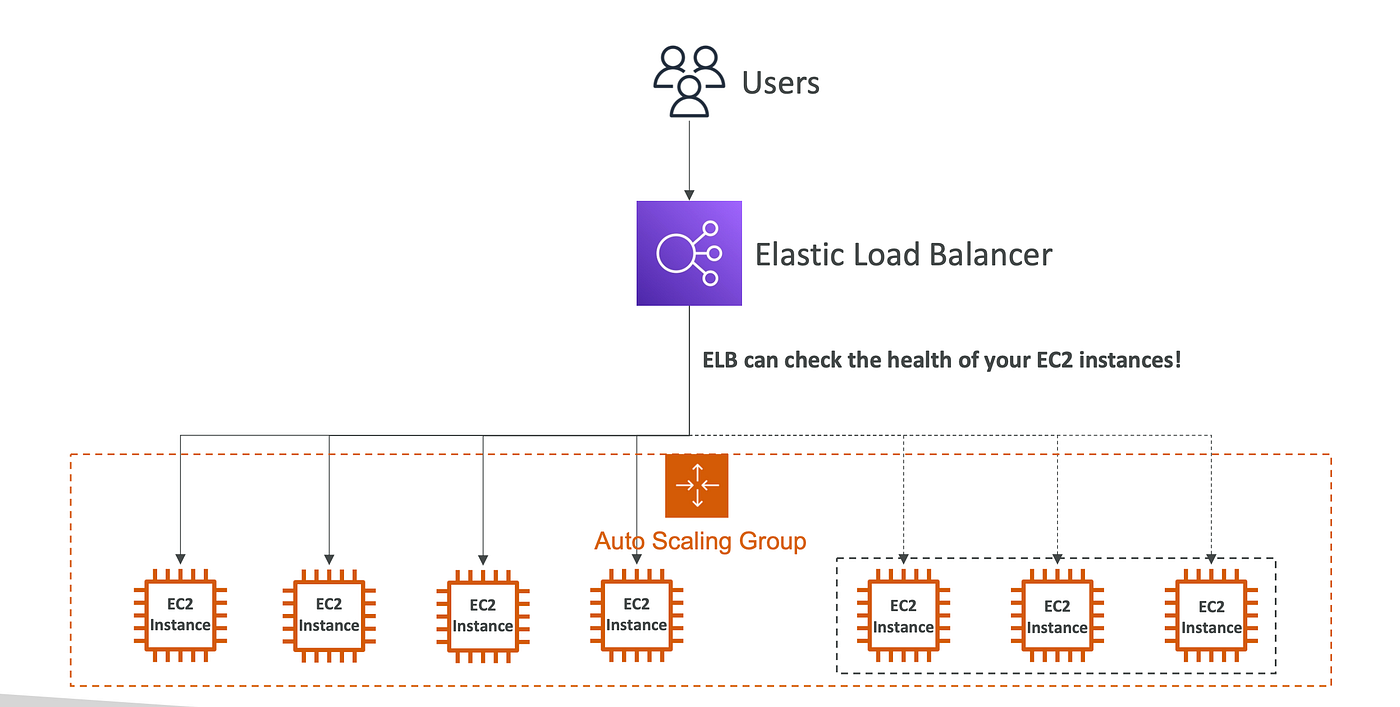
In Amazon Web Services, applications are typically deployed across multiple EC2 instances rather than a single machine. To manage and distribute incoming traffic across these instances, AWS provides Elastic Load Balancing (ELB).
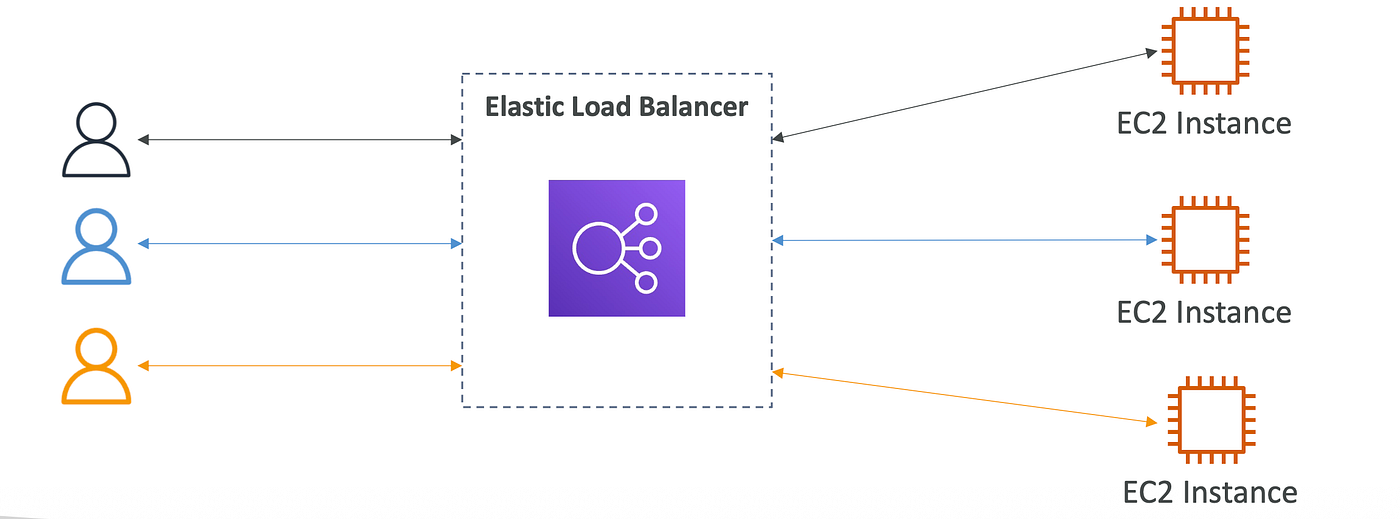
A Load Balancer:
- Acts as the entry point for client requests
- Distributes traffic across multiple backend instances
- Continuously performs health checks on each instance
- Routes traffic only to instances that are healthy and responsive
If an instance becomes unhealthy or fails, it is automatically removed from traffic distribution — without manual intervention.
Why this matters architecturally
Using a Load Balancer enables:
- Horizontal scaling: traffic is shared across multiple instances
- Fault tolerance: failure of one instance does not bring down the application
- Improved availability: users continue to access the service even during partial failures
In most real-world deployments, these EC2 instances are also spread across multiple Availability Zones, ensuring that even an entire data center failure does not impact the application.
Key architectural insight
A Load Balancer is not just a traffic router. It is a core reliability component that allows applications to:
- Absorb traffic spikes
- Isolate failures
- Scale predictably
This shift — from relying on a single powerful server to distributing load across many smaller ones — is fundamental to cloud architecture.
AWS #CloudArchitecture #ElasticLoadBalancing #HighAvailability #Scalability #EC2 #DistributedSystems
메타데이터
- post_id
- 893aaf2a0c8a
- slug
- what-breaks-first-when-your-application-traffic-suddenly-spikes-the-code-or-the-architecture-893aaf2a0c8a
- url
- https://medium.com/@amnaali0523/what-breaks-first-when-your-application-traffic-suddenly-spikes-the-code-or-the-architecture-893aaf2a0c8a
- canonical_url
- https://medium.com/@amnaali0523/what-breaks-first-when-your-application-traffic-suddenly-spikes-the-code-or-the-architecture-893aaf2a0c8a
- author_url
- https://medium.com/@amnaali0523
- status
- ok
- fetched_at
- 2026-06-11 05:11:55