Here There Be Monsters
Here is the most important thing I have learned so far about building a business in the age of AI.
Here There Be Monsters

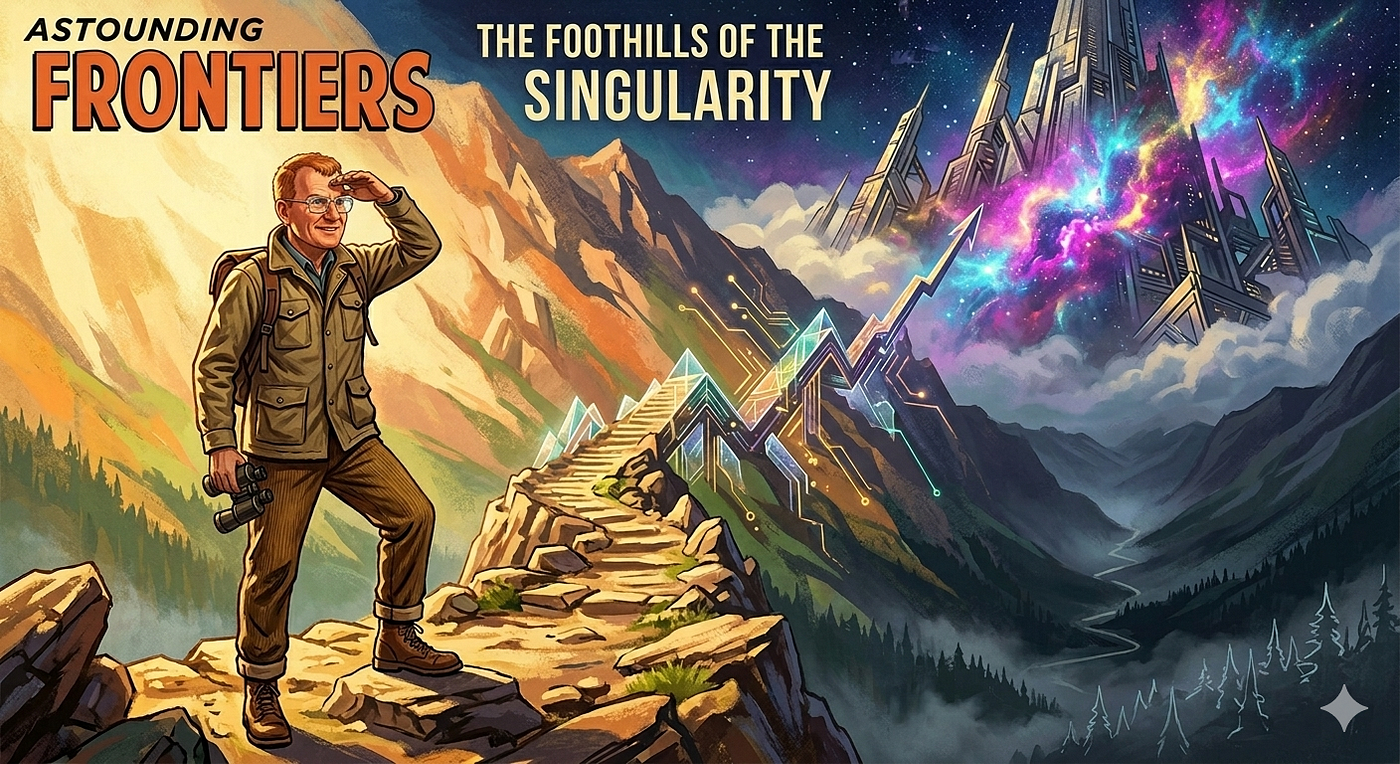
This image was created using an AI image creation program
Here is the most important thing I have learned so far about building a business in the age of AI.
Do not compete with the model
Anything you can use AI for, so can a competitor just as cheaply. Any competitive advantage your business gains from a model is temporary.
Additionally, as Prof Ethan Mollick says in Co-Intelligence, “assume the AI you are using right now is the worst AI you will use.” The model is simultaneously the most powerful tool available to your business and its most relentless competitor.
This might sound obvious but many people have not yet worked through the implications.
Four dead ends There are four business positions that feel like smart AI plays but are not. I have considered these and rejected them as likely failing strategies.
The same thing, cheaper
AI reduces your build and operating costs. You undercut the incumbents. You win on price.
The problem: AI collapses everyone’s costs, not just yours. Your competitors get cheaper at the same rate you do. New entrants get cheaper still. There is a race to the bottom. You cannot undercut free. I have lived this in my past web design business. I could not compete with someone producing £100 websites, but their business was not sustainable either.
A cost advantage built on AI is the least defensible position available because every competitor has access to the same tools. No moat, no sustainable business.
Building in a capability gap
You spot something the model cannot do. You build a product in that gap. You harvest the margin while it lasts.
The problem: Genuine capability gaps are rare, they close fast, and they put you in a sprint against well-funded teams on a very short clock.
By the time you have built and marketed your solution, the model has learned to do it. Most “the model cannot do X” observations turn out to be wrong anyway. Dedicated tools already serve most of these gaps. The margin is already compressed before you arrive.
Small scale AI consultancy
You help people navigate the AI landscape. You tell them which tools to use, how to implement them, which model fits their problem. You sell the answer to “what should I do with AI?”
The problem: Why should a client not simply ask the model.
The model gives that answer for free. Customers work this out and learn how to use models to find their own answers. This leaves you standing between the customer and the model, and the model is getting better at reaching them directly every quarter.
This is intermediation in an age of disintermediation.
Mistaking tooling for shipping
You build pipelines, take courses, set up elaborate processes. It feels productive. It has the shape of progress.
The problem: It is not progress. It is displacement activity. A clever automation pipeline can feel more productive than the slow, unglamorous work of building something real and putting it in front of people. The test is simple: did you ship something, or did you prepare to ship something?
The distinguishing test
Two questions that separate a real position from a trap.
- Do I have a real unique competitive advantage?
- Does this advantage stay when the underlying model gets better?
If the answer to either of these questions is false, you do not have a viable business. Apply this ruthlessly.
What survives
If competing where the model competes is a losing game, the question becomes: what does the model not compete on?
Three things
Judgment. A model produces average output on demand. It tends to be generic. It can also hallucinate. It cannot supply a unique point of view or value proposition.
Professional judgment, refined through years of practice, about what to build, how it should work, what matters and what does not. This is the opinionated part. It comes from experience, not from training data.
Experience. Not generic knowledge. The model has all the generic knowledge. What it does not have is your specific, hard-won, situation-specific understanding. The things you learned by doing, by failing, by spending time in a domain. The things that live in your head and in your business’s history, not in any dataset. This is what makes your judgment different from a model’s suggestion.
Audience. An audience built over time. Being the trusted, already-present source at the moment a need arises, so the question never gets routed to a general model in the first place. This compounds slowly and cannot be shortcut.
These three survive because they are specific to a person or a business. They are not in the training data. They cannot be generated on demand. They get more valuable as AI gets better, not less, because they are the only differentiating layer left once everyone has access to cheap, capable models.
Generic knowledge is now free
Standard playbooks, frameworks, and “how to” guides are available on demand from any capable model. Knowing the standard playbook is no longer an advantage. It is table stakes.
What this means is that documented generic process, the kind of operations manual or marketing plan that any consultant would produce, is now the commodity layer. The model writes a credible version in minutes. If your documented process contains only things the model already knows, it has no strategic value.
The documentation that matters is the kind that encodes your own decisions, judgment, and hard-won lessons. That is worth more in the age of AI, not less. It is the only layer left that is genuinely yours.
Where this leaves small businesses
There is good news and bad news for solopreneurs and small teams: The good news: you do not need to compete on scale. The three things that survive (judgment, experience, audience) are all things an individual can build. In fact, they are often things an individual builds better than a large organisation, because they require authenticity, specificity, and a genuine point of view.
The bad news: they compound slowly. Judgment takes years to develop. Experience takes years to accumulate. Audience takes months or years to build. There is no shortcut, and the payoff is not guaranteed. This is a long game.
But it is the only game that does not have a model standing behind you, ready to do the same thing for free.
Have you found yourself building on one of these traps? Or have you found a position that survives the commodity test? I would be interested to hear what others are building on when the model can do everything else.
메타데이터
- post_id
- 893eb878be0d
- slug
- here-there-be-monsters-893eb878be0d
- url
- https://blog.timneale.co.uk/here-there-be-monsters-893eb878be0d
- canonical_url
- https://blog.timneale.co.uk/here-there-be-monsters-893eb878be0d
- author_url
- https://medium.com/@timothyeale
- status
- ok
- fetched_at
- 2026-06-10 08:17:25