Chopin: Polonaise Op. 26 №1 in C-sharp Minor
I’ve played countless Chopin works. In fact, I’ve played more Chopin than any other composer in my 8 years of piano study. Hence, it…
Chopin: Polonaise Op. 26 №1 in C-sharp Minor
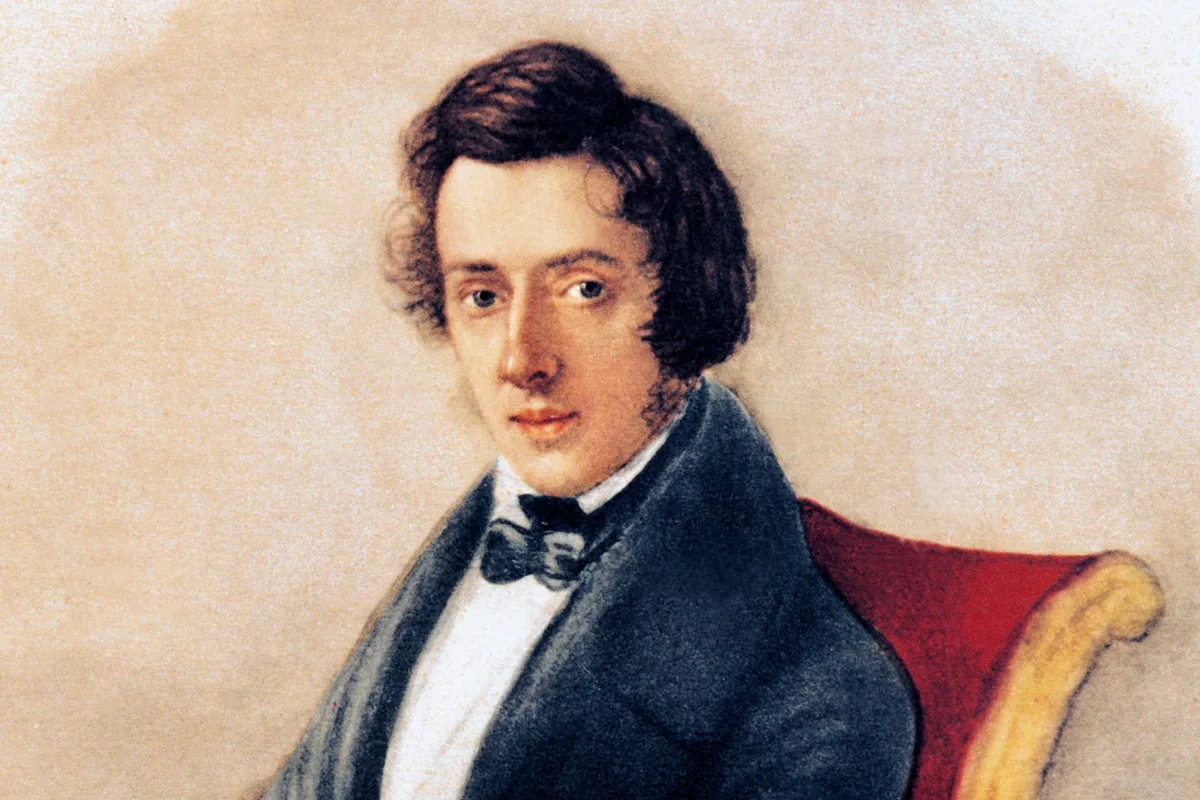
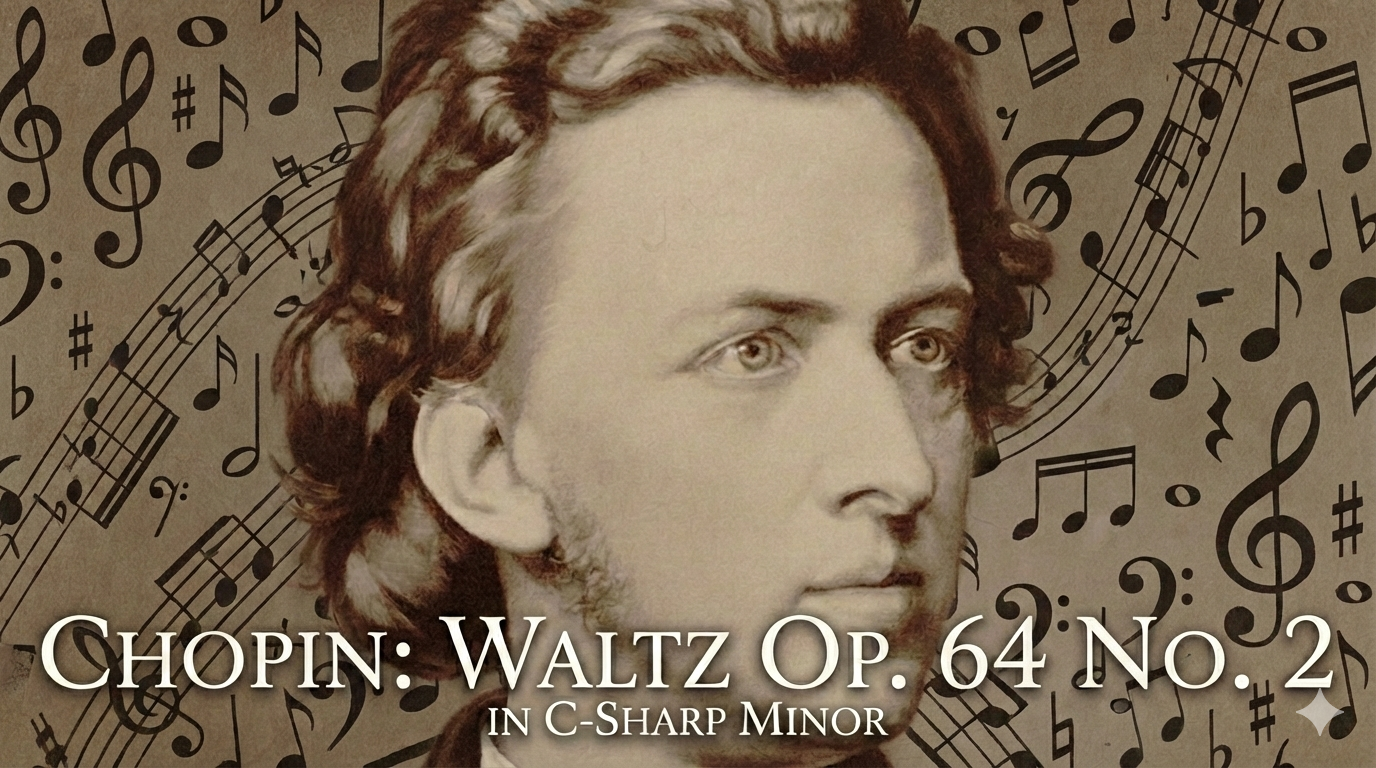
I’ve played countless Chopin works. In fact, I’ve played more Chopin than any other composer in my 8 years of piano study. Hence, it follows that I have many Chopin pieces to write about. Today, I have brought to you a brief exploration of the musical ingenuity of Chopin’s Polonaise in C-sharp Minor, and my particular experience with it. A polonaise is a Polish dance that is considered more formal than the other type of traditional dance, mazurkas, which are centered more around traditional cultural elements. A polonaise uses more regular rhythms as opposed to the mazurka’s use of more abnormal accents, as well as the polonaise being more stately and slow. This work, Chopin’s Polonaise in C-sharp Minor, was composed between the years 1834 and 1835, significantly earlier than some of his later, more famous polonaises.
The work itself is fairly straightforward in terms of difficulty; unlike some popular polonaises such as the “Heroic” in A-flat Major, it’s a piece even a beginner like me could handle with practice. It also features elements from many of Chopin’s other compositional styles; namely scherzos, polonaises (obviously), mazurkas, and possibly even ballades or nocturnes. Small aspects of every compositional genre that Chopin wrote can be observed in some of the themes of this fairly sizable work, and it was very enjoyable for me to experience these different traits of Chopin while learning this piece.
The polonaise begins with a bang, much like his Third Scherzo. Ferocious, bold chords strike the keyboard, leaving an astounding effect on the audience, just in the first five seconds. For those who have listened to the Third Scherzo, you’ll know that the opening bars to the piece bring goosebumps to the audience with its eccentric harmonies resonating the room. Chopin brings a sense of the troubling yet glorious key of C-sharp minor from the beginning, not even bothering to build up the suspense into such a thrilling tune.
After this exciting opening, the piece turns into the iconic Chopin polonaise, introducing us to a troop of stately and dignified performers who make noble statements with their dance, in typical polonaise fashion. Chopin uses unique and exotic rhythms in the left hand chiefly recognizable in polish dances while simultaneously holding a long, soulful alto voice to deliver its message to the audience. The “exotic” rhythms I was referring to was the sequence “short-short-long.”
When punctuated with the correct articulation and touch into the keyboard, one can turn this simple rhythm into an unforgettable theme that gets stuck in one’s head. Chopin scatters this flourish among his various works for the piano, so it is crucial for one to master the feeling of it early on in their educational journey. However, I, rather peculiarly, had an immensely difficult time playing it. I haven’t seen, at least until the time I am writing this, anybody else who has a problem similar to mine, and I practiced that specific rhythm for hours on end to achieve mere decency in playing it. To this day, I am not sure why I still struggle with this straightforward pattern, but I recognize that I must persevere through this issue in order to further develop my Chopin playing. Some day, I hope to be able to make the crisp, clean sound that the professionals can create with such effortless precision.
This theme comes back a remarkable four times, a significant amount considering that this work is not a rondo, a compositional structure that repeats the main theme, or A theme, many times. This leads us into the other main challenge for me in this piece; diversity of character in repetition. What I mean by this is that the performer must play every repeat of a tune differently from the way they played it before, allowing for a more interesting and curiosity-invoking listening experience. Every pianist has a different interpretation for the repetitions, and I too have crafted my approach with my teacher until I have fully mastered my style.
After this lyrical adventure, the B theme arises, a short interlude leading into the conclusion of the first section. In this theme, we can observe yet another polonaise rhythm followed by a lavish flourish, modulating keys and increasing drama as the music swells up until finally, it erupts in a triumphant boast. However, this celebration does not last long, for the mood quickly changes to a soulful soprano voice, singing alone with a faint left hand to guide it. Then, the tenor voice takes over, singing the lyrical melody in the rich bass clef. Finally, in the wisp of a trill, the tune transitions seamlessly into the A theme melody, marking the end of the first section.
The second part of the work comes from utter silence; a romantic, serene melody; an ever familiar, singing theme that is a trademark of Chopin arises from the suspense.I like to imagine a soprano or a violinist playing this melody, as it improves my sense of the perfect long sentence that stretches on and on; like a singer holding their breath for the entire phrase. Luckily for me, of course, I can breathe freely.
If the second section was a soprano, this section could be represented as a tenor or cello. There is a lush, rich tone to the lower range of a piano; especially a grand piano. Chopin bestowed us music lovers the gift of the deep lower register, and we must savor it to the best of our abilities. I noticed during my study of this piece that a phantom-like third voice occasionally reveals itself in the third section. It’s as if it is a reply to the main tenor voice. An agreement to its statement, perhaps. In any case, however, the pianist must recognize this inner voice and give it the attention it deserves.
This soulful tenor now leads us into a grand opening into the second section once again. It is now fully shining, unlike the slightly vulnerable character that was present the first time the theme came around. Neither should it be forced nor played too subtly, but rather be performed in a confident manner, conveying the contrast. My main problem with this piece when I was preparing it was the very fact that the same couple of themes came back repeatedly throughout the entire piece, as I have mentioned early. It’s quite apparent if you listen to my recordings of this work that I lacked, to some extent, the experience and knowledge to masterfully create the differing character between the two instances.
After this tranquil retirement comes to a conclusion, the audience is put to somewhat of a restful state with the calming tune, when bang! The crashing chords from the heroic opening scenes return, jolting the audience back to reality as the echoes of the dreamy atmosphere disintegrate in an instant. This theme, in recollection, reminds me most of the Heroic Polonaise in A-flat Major. The main theme, the one where the hero seemingly erupts into the scene with all of his glory unveiled, except only this time in C-sharp minor. There really is no other way to describe this introduction than simply “heroic.” The melody is like a stately military march, with the unique polonaise rhythms creating the punctuated feeling of the overall piece. It fits so well with the C-sharp minor mood; a melancholic yet determined declaration. It is quite refreshing to hear the bold theme after a four-minute ascension to a heavenly section. Even if the performer does not emphasize the difference in character between the two times this theme can be heard, the very nature in its position in the composition creates an uplifting, soulful feeling that envelopes the entire room.
The motive with the arpeggios must open up ever mysteriously, like a march from far away. The crescendo must come slowly; it mustn’t be rushed, and I noticed that it helps to portray a train from a distance, approaching steadily from the horizon. Before you know it, the train comes speeding past you, blaring its horn. In the music, it can be represented by the slow, creeping flourishes; a mystic story divided into four valorous steps, each in growing dynamic and intensity.
Before I first read this piece, I listened to it countless times in order to better understand the structure of the work, as well as to internalize the interpretations of the great pianists who played this piece before me. On my first listen, when the piece ended at the final soulful cadence, I thought my Wi-Fi had disconnected. It seemed almost unnatural to end a piece, especially from such a grand context like this polonaise, in such an anticlimactic manner. You would expect a polonaise to end in a bold, flamboyant cadence, but this piece, after all of its journeys and experiences, simply ends in a shy, vulnerable way, almost dying away into thin air.
However, if looked at from a different perspective, we begin to understand the full intention and meaning of this conclusion. It mustn’t be played like the previous instances of this ending; rather, it should be performed with such sincerity of heart; a kindhearted message unparalleled by any other section in the entirety of this piece Although it may be a seemingly underwhelming conclusion to a grand work, after time, I’ve grown quite fond of the ending, and I don’t think I can bear hearing any other version of it.
All in all, this work does not fall short of any of its counterparts in terms of grandeur and overall musical depth, and I greatly enjoyed the time I spent studying and practicing this piece. I would most definitely recommend everyone to listen to it at least once, for it will truly be a life-changing experience.
I would like to make one last mention. In the summer of 2024, I took a trip to Korea, and by pure coincidence, I happened to find a piano in the very top floor of the colossal Lotte Tower. 123 floors into the sky, a whopping 1821 feet (555 meters) above the bustling city of Seoul, I played this very polonaise in the presence of countless spectators, all supporting me as I played. It was an unexpected event that I will never forget.
Below, I will attach my own studio recording as well as the recording of one of my personal favorite music educators and content creators, Ben Laude. I greatly enjoy his videos, especially the “Chopin Podcast” featuring titanic figures such as Garrick Ohlsson and his extensive discourse on Yun-Chan Lim’s performances in the 2022 Van Cliburn International Piano Competition. He goes in such depth into the Korean pianist’s every measure and interpretation and does not disappoint in creating masterful content in every video he posts.
[embed]Lotte tower performance (age 11)
[embed]My official recording (age 11)
[embed]My favorite Ben Laude’s performance
메타데이터
- post_id
- 89474a8e96bc
- slug
- chopin-polonaise-op-26-1-in-c-sharp-minor-89474a8e96bc
- url
- https://medium.com/@aidenshim/chopin-polonaise-op-26-1-in-c-sharp-minor-89474a8e96bc
- canonical_url
- https://medium.com/@aidenshim/chopin-polonaise-op-26-1-in-c-sharp-minor-89474a8e96bc
- author_url
- https://medium.com/@aidenshim
- status
- ok
- fetched_at
- 2026-07-15 06:24:20