What Makes Us Feel Enough?
Feeling enough does not mean having everything
What Makes Us Feel Enough?
Feeling enough does not mean having everything
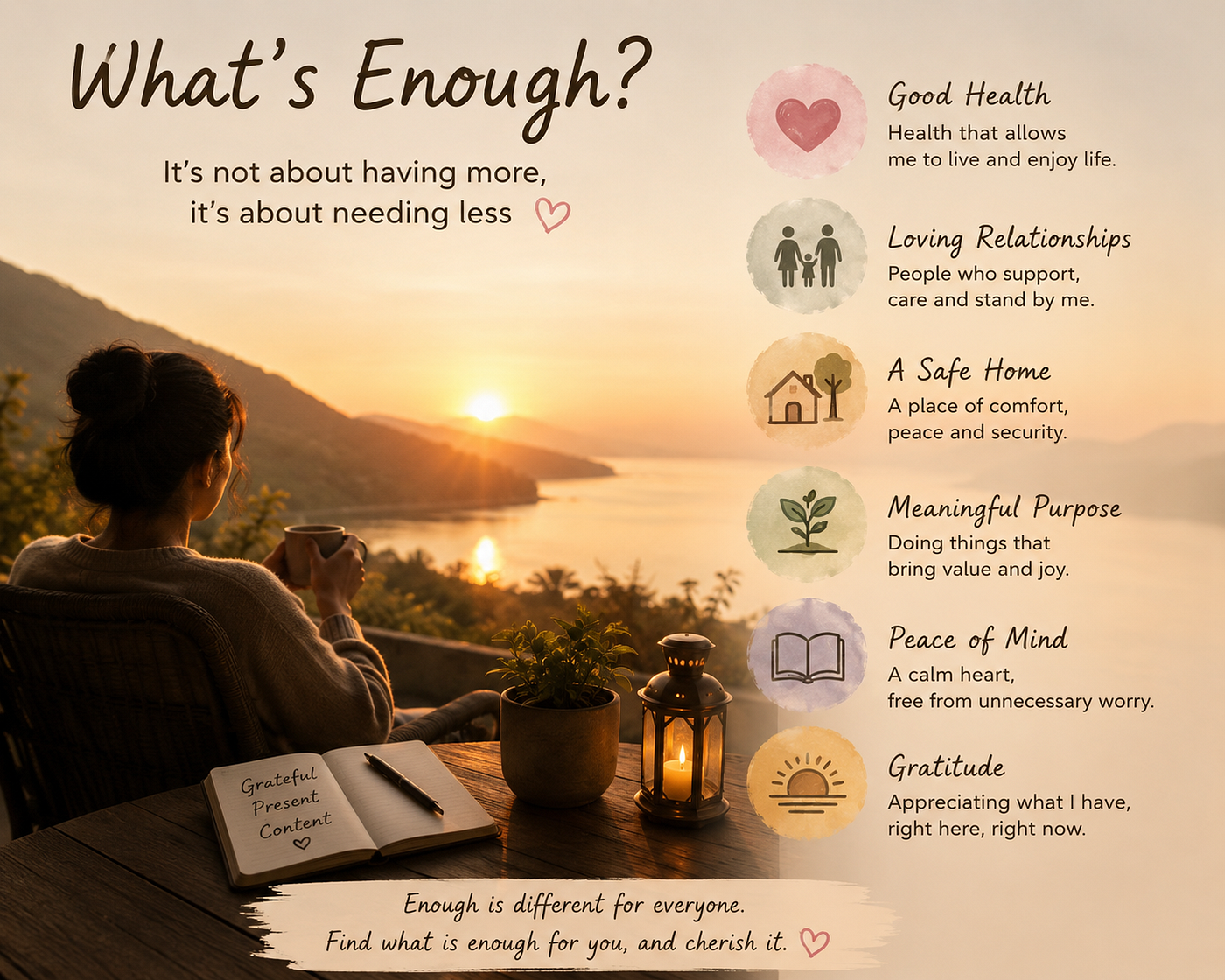
Image from chatgpt
The Grass Always Looks Greener on the Other Side
Comparison is a natural human tendency.
If we look carefully, our parents’ and grandparents’ generations also compared themselves with neighbors, relatives, in-laws, friends, and colleagues — whether it was income, jewelry, property, education, social status, or family achievements.
In many cases, comparison is driven by a desire for security, success, acceptance, recognition, or simply to understand where we stand in society.
Perhaps this is why the grass often appears greener on the other side.
We see what others have and imagine their lives to be better, easier, or more successful than our own. Yet comparison rarely tells the complete story.
We may notice someone’s wealth but not their sacrifices. We may admire their achievements without knowing the obstacles they faced. Comparison often focuses on what is visible while overlooking everything that remains unseen.
Today, social media may have made comparison more visible and constant, but the habit itself is not new.
Different Measures of Success
There are different kinds of people in society.
Some admire and judge others based on visible achievements such as wealth, possessions, professional success, qualifications, and family background.
Others place greater value on less visible qualities such as character, kindness, wisdom, charity, and integrity.
There are also people who do not spend much time evaluating or comparing others at all. They focus on living their own lives, pursuing their own goals, and finding contentment in what they have.
Because people value different things, there is no single standard by which everyone measures success or worth. What impresses one person may mean very little to another.
When Society Compares
Even people who are content with a simple life are not always free from comparison.
Major life events like marriage, often bring social expectations to the surface.
A person may want a simple wedding, yet family members on the other side may seek a grand celebration or other displays of prestige because they associate them with social standing and respect.
In such cases, the pressure does not come from the individual but from the values and expectations of those around them.
Many people end up participating in status-driven customs not because they personally desire them, but because family traditions and social expectations can be difficult to avoid.
The Cost of Constant Comparison
Comparison can sometimes inspire growth, but too much of it creates dissatisfaction.
We stop valuing our own journey and begin judging ourselves against everyone else’s. The more we focus on what others have, the less we notice our own progress.
When comparison becomes a habit, it can influence our decisions in ways that do not truly benefit us.
If our goal is always to be better than others, we may begin doing things not because we need them or value them, but because we want to keep up with someone else.
This can lead to: Spending more than we can afford. Buying things we do not need. Hosting events beyond our means. Feeling dissatisfied despite having enough.
The problem is that comparison has no finish line. There will always be someone who earns more, owns more, knows more, or appears more successful.
As a result, the pursuit of being “better than others” can become endless and exhausting.
A healthier approach is to ask whether our choices align with our own needs, values, and goals.
Finding Worth Within
What makes us feel enough?
Each of us grows up in different circumstances, with different opportunities, challenges, values, and upbringing. Because our journeys are unique, it is unrealistic to expect ourselves to be equal to someone else in every aspect of life.
Its wise to check ourselves..
Am I better than my own version of yesterday? Have we sustained ourselves through difficult circumstances?| Have we made sacrifices to preserve what matters to us? Have we learned from our experiences and become better people because of them?
True growth is not always measured by wealth, status, or recognition.
Sometimes it is found in kindness, resilience, perseverance, and the quiet strength required to keep moving forward despite life’s challenges.
Feeling enough does not mean having everything.
It may simply mean having enough to live with dignity and peace:
Good health to live and enjoy life. Loving and meaningful relationships to feel supported and valued. Enough food and clothing to meet our basic needs. A Safe home- safety and security for ourselves and our loved ones. Meaningful life- Able to do things that bring value and joy. A peaceful mind —To stay calm and free from unnecessary worries.
Beyond a certain point, “enough” is not always about having more. It is about recognizing and appreciating what already sustains our lives.
When we understand what is truly enough for us, comparison loses much of its power. Gratitude grows, contentment deepens, and self-worth becomes less dependent on what others have.
When we find worth within, we stop chasing validation and start living with greater confidence, peace, and gratitude for what we have right now.
— Soumya Viswanathan
Thank you Smriti Pathak, Parvathi J for this challenge.
Tagging Krishna, Inbaa Sivasankar, B. S. Aishwarya Valli, The Vedic Teaching, for participating in this challenge.
메타데이터
- post_id
- 896b08d095ed
- slug
- what-makes-us-feel-enough-896b08d095ed
- url
- https://medium.com/the-gravity/what-makes-us-feel-enough-896b08d095ed
- canonical_url
- https://medium.com/the-gravity/what-makes-us-feel-enough-896b08d095ed
- author_url
- https://medium.com/@soumya.vece
- status
- ok
- fetched_at
- 2026-06-14 11:28:49