The Day a Conversation Made Someone Faint-Understanding Vasovagal Syncope
A few months ago, during an evening commute, I witnessed something that completely changed the way I understood the connection between the…
The Day a Conversation Made Someone Faint-Understanding Vasovagal Syncope
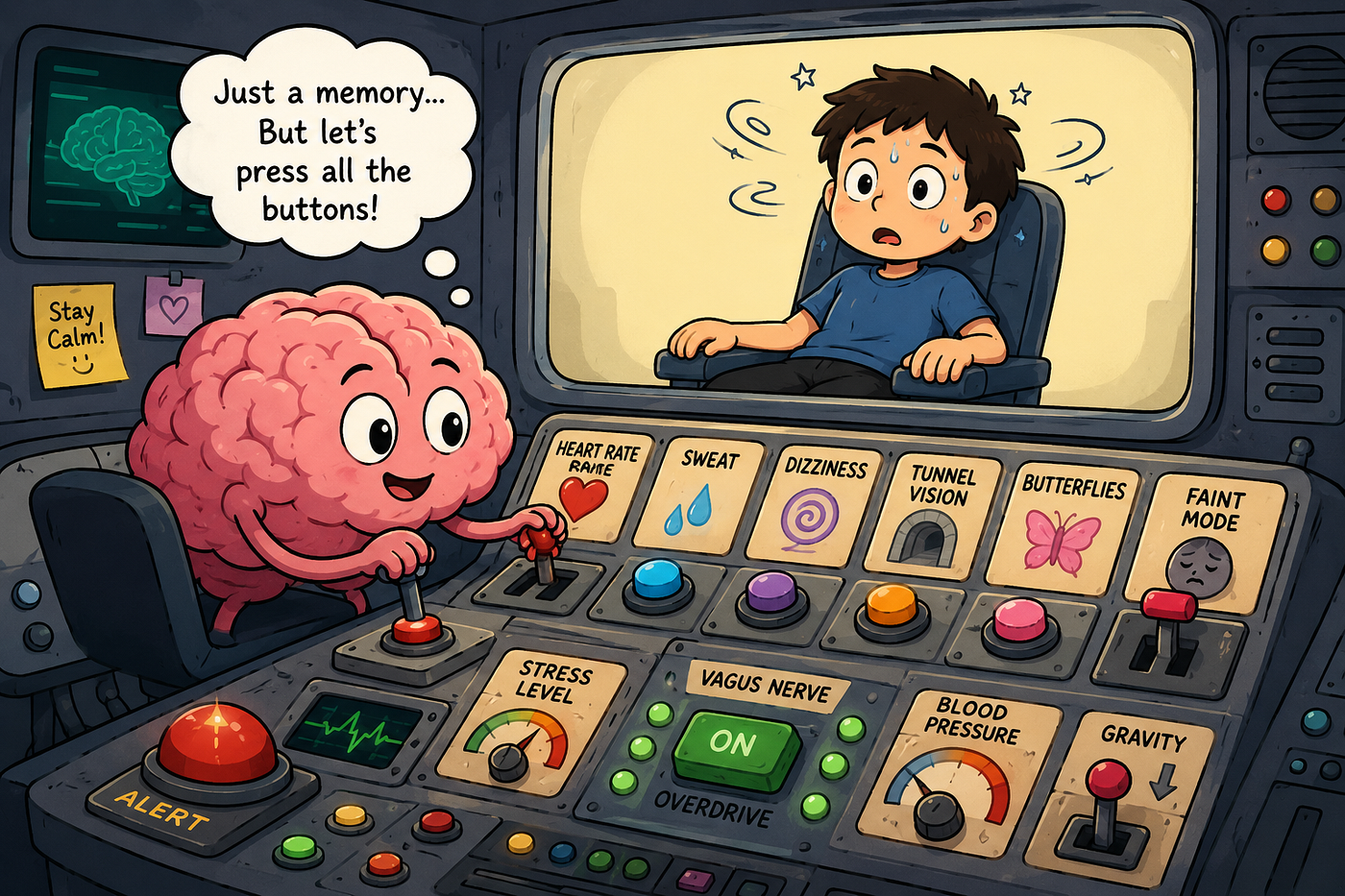
A few months ago, during an evening commute, I witnessed something that completely changed the way I understood the connection between the brain and the body.
The bus was moderately crowded but quiet. Most people were either looking outside the window, scrolling through their phones, or speaking softly with friends. A few seats ahead of me, two people were having what initially sounded like a normal conversation.
One of them appeared to be explaining a past medical experience. At first, nothing seemed unusual. The person was calm, speaking logically and casually, almost as if they were simply narrating an old memory. I could hear fragments of the conversation — something about a blood draw years ago, feeling dizzy once before, and how uncomfortable medical procedures made them feel.
As the conversation continued, I started noticing subtle changes. The person paused more frequently. Their voice became slower. One hand moved toward their forehead. Then they quietly said something like:
“I’m suddenly feeling a little warm…”
At first, the friend beside them thought maybe it was dehydration or motion sickness from the bus ride. But within seconds, the person’s face became visibly pale. Sweat formed across their forehead. Their eyes looked unfocused, almost distant, as though they were no longer fully aware of the environment around them. Then something happened that caught everyone’s attention. Mid-conversation, the person suddenly lost consciousness. Their body slumped sideways into the seat. People nearby reacted immediately. Someone helped support their shoulders while another passenger called out to ask if they were okay. The entire event lasted less than a minute.
Within moments, the person regained consciousness. They looked confused at first, breathing heavily and sweating, but gradually became alert again.
What surprised me most was what they said afterward. -They weren’t talking about pain. -They weren’t reacting to blood directly. -They simply said:
“I think talking about that memory triggered it.”
That sentence stayed in my mind long after the bus ride ended.
Trying to Understand What Happened
Later, I started researching what I had observed. What I discovered was a condition called Vasovagal Syncope — one of the most common forms of fainting.
At first, the explanation seemed simple:
Blood pressure drops Heart rate slows Brain receives less blood flow Person faints temporarily
But the deeper I looked, the more fascinating it became. Because this was not just about the heart.
It involved:
Emotional memory Fear processing Brainstem reflexes Hormones The vagus nerve Autonomic nervous system switching
What looked like “just fainting” was actually a complex brain-body cascade happening in real time.
The Brain Was Reacting Before the Body
The most interesting part was that nothing physically dangerous was happening at that moment. The person was not bleeding. There was no medical procedure occurring. They were simply revisiting a personal memory. But the human brain does not always distinguish sharply between:
A real threat happening now. & A vividly remembered emotionally significant experience
Inside the brain is the Amygdala.
The amygdala constantly scans experiences for emotional significance and danger. When someone revisits a deeply personal or emotionally uncomfortable memory, the amygdala can partially recreate the original emotional state.
That means:
Stress hormones can rise Heart rate can change Sweating can begin Blood pressure can shift Autonomic reflexes can activate
The body is not “pretending.” The nervous system is genuinely responding.
Why Personal Memories Can Trigger It
One question kept bothering me after witnessing the incident:
“Why would a memory trigger something so physical?”
The answer lies in how memory works neurologically. Memories are not stored like video files. They are distributed networks involving:
Emotion Sensation Physical state Context Hormonal responses
When a memory is emotionally important, the brain may reactivate parts of the same neural pathways involved during the original event.
That is why:
Embarrassing memories can cause blushing Fearful thoughts can increase heart rate Stressful anticipation can cause nausea Trauma reminders can create physical reactions
The body remembers more than people realize.

Why Movies or Fiction Often Do Not Trigger the Same Reaction
Another interesting realization was this:
Many people who experience vasovagal syncope are not disturbed by fictional violence or medical scenes in movies. Why? Because the brain processes fictional experiences differently from personal experiences. A movie remains emotionally distant.
But a personal memory activates:
Self-relevance Vulnerability Past bodily states Emotional ownership
The brain recognizes:
“This happened to me.”
That personal connection changes the intensity of the physiological response.
The Two-Phase Autonomic Shift
One of the most fascinating discoveries was that vasovagal syncope often happens in two phases.
Phase 1 — Sympathetic Surge
Initially, the body enters fight-or-flight mode:
Adrenaline rises Heart rate increases Alertness increases Blood vessels constrict temporarily
The body is trying to protect itself.
Phase 2 — Parasympathetic Overcorrection
Then something paradoxical happens. The nervous system suddenly switches into excessive parasympathetic activation:
Vagus nerve fires strongly Heart slows dramatically Blood vessels dilate Blood pressure crashes
This transition is one reason people often describe:
Sudden warmth Sweating Tunnel vision Dizziness “Fading away” sensation


The Bezold–Jarisch Reflex
Researchers believe a mechanism called the Bezold–Jarisch Reflex plays a major role.
In simple terms:
The heart contracts forcefully during stress But blood returning to the heart may already be reduced Special cardiac receptors detect this abnormal contraction Signals travel to the brainstem The brain overcorrects by activating the vagus nerve
The result:
Bradycardia Vasodilation Blood pressure collapse Syncope
The body’s protective system accidentally becomes too strong.

The Chemical Cascade
Several neurochemicals participate in the process: Adrenaline — Increases heart rate and alertness initially. Noradrenaline — Maintains vascular tone during the early phase. Acetylcholine — Slows the heart dramatically during vagal activation. Serotonin — Can amplify vagal responses and nausea. Cortisol — May increase sensitivity in anxious or chronically stressed individuals.
Together, these systems create a powerful neurocardiovascular reflex.
Why Context Matters
Context strongly affects autonomic responses. Someone may react more strongly:
In public During medical procedures Around authority figures In emotionally vulnerable situations
But react minimally:
Alone In casual environments Watching fictional content
The nervous system constantly evaluates:
Safety Social exposure Emotional meaning Personal vulnerability
These contextual interpretations shape physiological intensity.

Can Thinking About It Make It Worse?
This is a common fear. Awareness alone does not guarantee episodes. However, excessive fear about fainting can create a feedback loop:
A person notices sensations. Anxiety increases. Physiological arousal rises. Attention intensifies bodily awareness. Symptoms escalate further.
Fortunately, this cycle can be interrupted.
Management and Prevention
Most people improve significantly once they understand the condition. Common strategies include: Hydration. Maintaining blood volume helps stabilize circulation. Counterpressure Techniques -Tensing muscles can increase blood pressure temporarily. Examples: Crossing legs, Clenching fists, Tightening arm muscles. Trigger Awareness — Recognizing personal triggers reduces surprise responses. Controlled Breathing — Slow breathing reduces autonomic escalation. Exposure and Desensitization — Gradual, safe exposure can reduce fear associations. Cognitive Behavioral Therapy — Cognitive Behavioral Therapy can help retrain catastrophic interpretations and anxiety responses.
The Brain Is Adaptable
One of the most important concepts is neuroplasticity. Neuroplasticity means the brain can change its response patterns over time. Repeated calm experiences can weaken old fear associations. The nervous system is not permanently fixed.
Many people experience: Reduced sensitivity over time, Improved confidence, Fewer episodes, Better control of early symptoms
Final Thoughts
Vasovagal syncope demonstrates how deeply connected the brain and body truly are. A memory, emotion, anticipation, or deeply personal experience can activate genuine physiological changes through neural pathways involving: The amygdala, the autonomic nervous system, the vagus nerve, and neurochemical signaling. Yet despite how intense these experiences may feel, vasovagal syncope is usually manageable and rarely dangerous when properly understood. Understanding the mechanism often reduces fear. And reducing fear itself can help calm the nervous system — creating a healthier and more resilient cycle over time.
If you ever see someone suddenly feeling dizzy or faint during an emotional or medical conversation, try to stay calm and supportive. In most cases, the episode is temporary, and the person recovers quickly with rest and reassurance. A calm voice, helping them sit or lie down, and simply being understanding can make a huge difference. And maybe that is the most fascinating part of all: The same nervous system that can become overwhelmed is also capable of calming itself, healing, and learning safety again over time. Sometimes awareness itself is comforting :)
메타데이터
- post_id
- 8977b1ef82bd
- slug
- the-day-a-conversation-made-someone-faint-understanding-vasovagal-syncope-8977b1ef82bd
- url
- https://medium.com/@digvijaymali3694/the-day-a-conversation-made-someone-faint-understanding-vasovagal-syncope-8977b1ef82bd
- canonical_url
- https://medium.com/@digvijaymali3694/the-day-a-conversation-made-someone-faint-understanding-vasovagal-syncope-8977b1ef82bd
- author_url
- https://medium.com/@digvijaymali3694
- status
- ok
- fetched_at
- 2026-06-09 15:37:30