The Etiquette of Beverage Service
Respecting the craft behind every glass
The Etiquette of Beverage Service
Respecting the craft behind every glass
Beverage service changes from venue to venue. Every establishment develops its own style, shaped by the nature of the business, the clientele, the menu, the price point and the atmosphere it wants to create.
A luxury hotel, a busy bar, a casual restaurant, a golf club, a cruise ship lounge and a modern café may all serve drinks differently. That is natural. Service should adapt to the environment.
However, beneath those different styles, I believe there is still an etiquette to beverage service. Not stiff, old-fashioned formality, but a respect for the drink itself.
That etiquette begins long before the glass reaches the guest. It begins with the producer, the distiller, the brewer, the winemaker, the blender, the roaster or the bartender who designed the serve. Every beverage has a story behind it. Someone has made decisions about ingredients, flavour, aroma, texture, balance and presentation.
When I perform beverage service, I like to think about that process. I think about the care and attention that went into creating the product, and I try to carry that same care into the final serve. The aim is simple: to give the guest the best possible experience while protecting the quality and character of the drink.
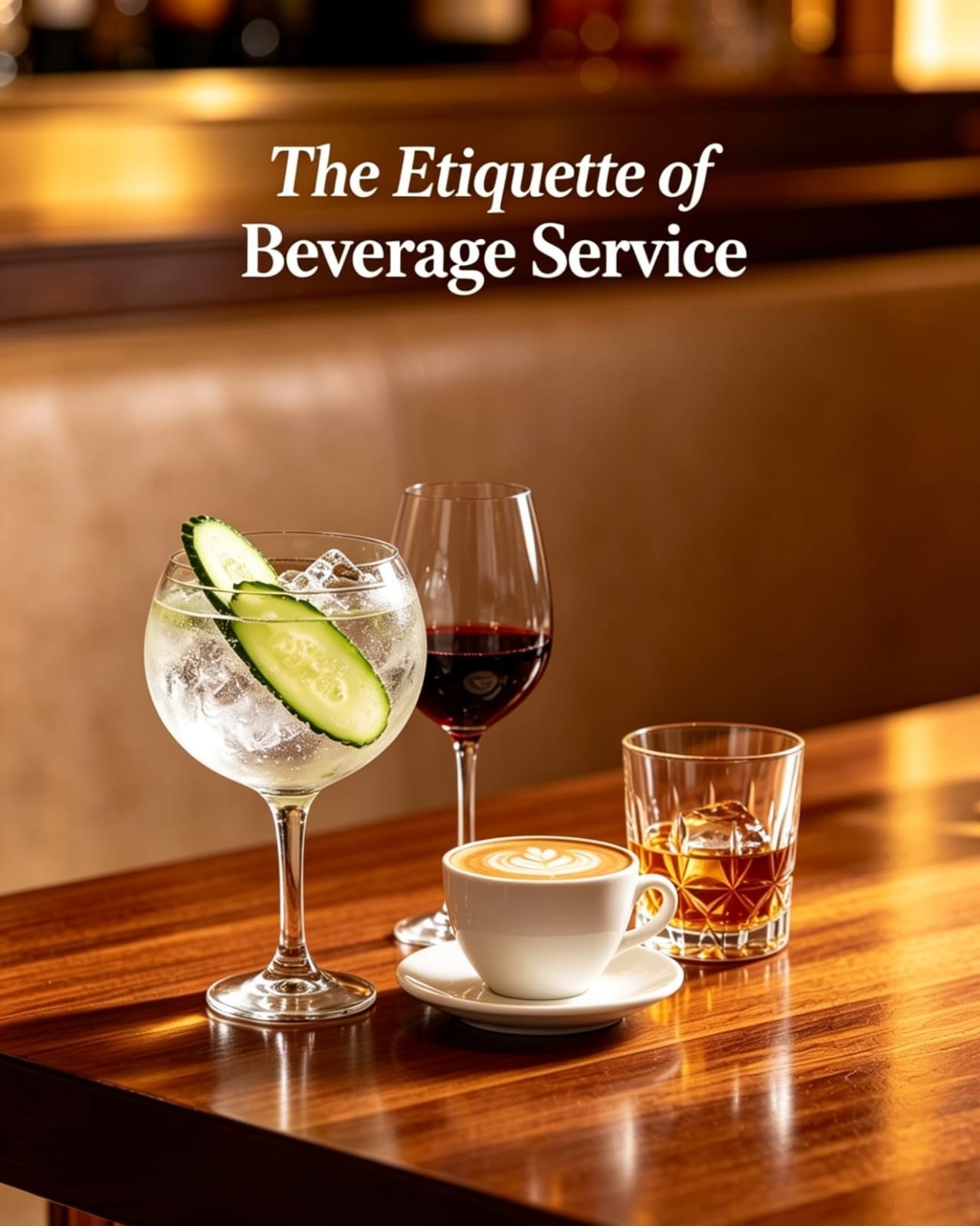
A good example is Hendrick’s Gin. Its character is closely associated with cucumber and botanical freshness, so a fresh slice of cucumber is not simply decoration. It supports the flavour profile, reinforces the identity of the drink and gives the guest the experience they expect.
When I slice fresh cucumber for a Hendrick’s and tonic, I am not doing it just to make the glass look attractive. I am respecting the product. I am presenting it in a way that connects the guest to the flavour, the brand and the intention behind the drink.
That small detail can create a moment. The drink looks right. The aroma feels fresh. The serve feels complete.
The same principle applies across beverage service. A Guinness poured with patience. A wine served at the right temperature. A whisky presented with suitable glassware. A cocktail balanced properly rather than rushed. A coffee served with attention to milk texture and temperature. A beer poured cleanly into the correct glass.
These details matter because they protect the quality of the product.
When I see drinks being prepared without care and attention, I feel the need to help improve the serve. Not through criticism, but through encouragement, explanation and training. Often the missing detail is small: the wrong garnish, poor glassware, no attention to temperature, a rushed pour or a lack of understanding of why the serve matters.
That is where product knowledge becomes important.
If a staff member understands why a drink is served a certain way, they are more likely to care about doing it properly. Training should not simply say, “put cucumber in the glass.” It should explain why the cucumber is there. It should connect the garnish to the flavour, the production, the brand identity and the guest experience.
Good beverage training should motivate staff, not intimidate them. I believe in explaining the reason behind the serve with enthusiasm. When people understand the story, the method and the purpose, they usually become more interested. They stop seeing the garnish, glassware or pouring technique as a chore and start seeing it as part of the craft.
Another powerful way to build that understanding is to send staff to the places where products are made.
When staff visit a distillery, brewery, vineyard, roastery, farm, orchard or food producer, they see the care, effort and attention that goes into creating the product. They see the process behind the bottle, glass or cup. They meet the makers, hear their stories and begin to understand the patience and passion behind what they are serving.
That experience creates a stronger connection between the producer and the person presenting the drink to the guest. Product knowledge becomes more than a tasting note or a service standard. It becomes something remembered, felt and understood.
This is not only valuable for staff. It is also valuable for anyone who enjoys food and drink.
Tourists who visit a Scottish whisky distillery, for example, are not simply buying a bottle. They are experiencing the region, learning how the whisky is made, seeing the stills, hearing about the casks, meeting the people behind the spirit and understanding the character of the place.
When they take that bottle home, it carries more meaning. They are more likely to pour it with care, take their time and enjoy it in a way that respects the character of the whisky. A whisky such as Laphroaig, for example, can be enjoyed neat, but a couple of drops of water may help open up the smoky, peaty aromas and reveal more of the whisky’s character.
That is the power of meeting the maker. It builds respect, memory and emotional connection. It helps staff serve with more confidence, and it helps customers enjoy the product with a deeper sense of appreciation.
This, to me, is the etiquette of beverage service. It is not about being pretentious. It is about respecting the product, the producer, the venue and the guest.
A drink is not just liquid in a glass. It is the final stage of a journey. From the field, vineyard, orchard, distillery, brewery, roastery or bar station, it passes through many hands before it reaches the guest.
The person serving it is the final link in that chain.
That final link matters.
메타데이터
- post_id
- 897b91ece304
- slug
- the-etiquette-of-beverage-service-897b91ece304
- url
- https://medium.com/@jasona221b/the-etiquette-of-beverage-service-897b91ece304
- canonical_url
- https://medium.com/@jasona221b/the-etiquette-of-beverage-service-897b91ece304
- author_url
- https://medium.com/@jasona221b
- status
- ok
- fetched_at
- 2026-07-18 02:52:26