Break-Even Analysis Simplified
When Does Your Business Actually Start Making Money?
Break-Even Analysis Simplified
When Does Your Business Actually Start Making Money?
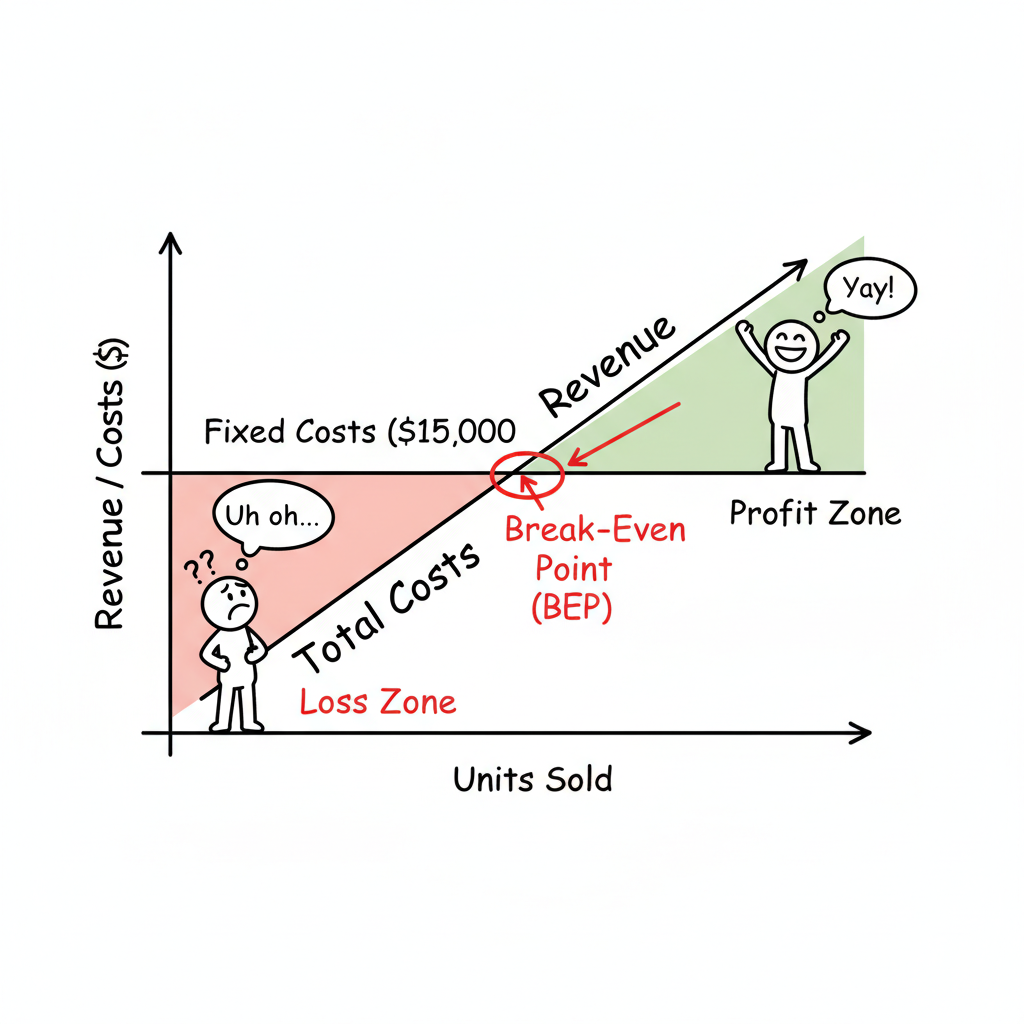
Your brain probably wants results yesterday. You’re pouring time, energy, maybe money into something — making your product, paying rent, juggling costs. You’re wondering: When do I actually stop losing money and start making something back?
Enter Break-Even Analysis — your financial cheat code. It tells you exactly when revenue finally swallows up your costs. It’s not magic, but it feels like it when you see the moment your business snaps into profit mode.
Let me walk you through it, no fluff. By the end, you’ll see that point — and know how to use it in your business or exam.
Break-even analysis = the moment your total revenue = total costs.
- Below that: you’re bleeding (loss).
- At that point: you’re safe (break-even).
- Above that: every unit sold is profit territory.
A Quick, Real-World Example
Let’s say you run a tiny home-decor shop.
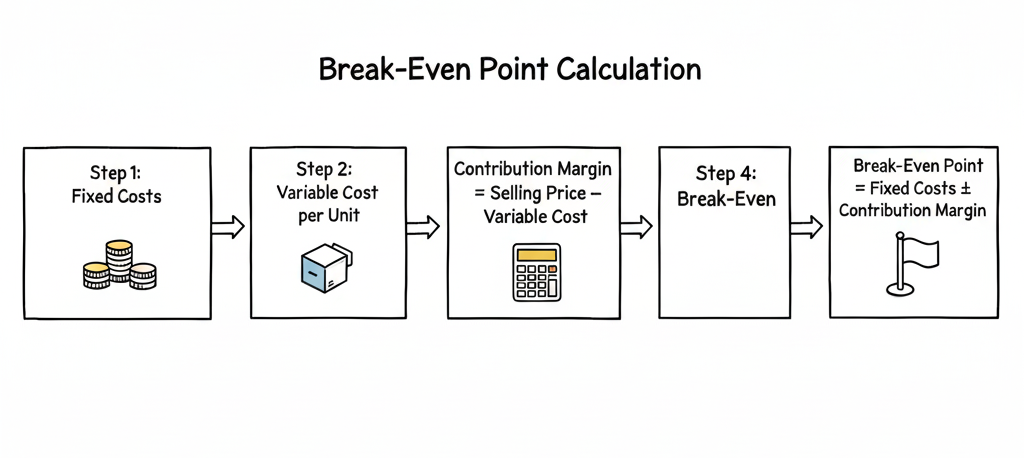
Each item costs you $25 to make. You sell it for $50. And your rent, bills, and all that fixed stuff cost about $15,000 a month.
That means you need to sell around 600 items to hit your break-even point.
The 601st sale? That’s when you finally start seeing profit. That’s when your business starts feeding you back.
Why This Matters More Than You Think
Because most people operate blind.
They hustle, create, and hope the numbers “work out.” Break-even thinking kills that uncertainty.
It tells you:
- How much you need to sell to stay safe.
- Whether your pricing makes sense.
- How close (or far) you are from your freedom line.
It’s not about getting rich overnight. It’s about knowing exactly where you stand.
The Emotional Side of It
When you know your break-even point, something shifts. You stop guessing. You stop panicking. You start working with clarity.
Every sale, every decision — you see how it moves the line. You start feeling like a real business owner, not just someone “trying.”
That’s the quiet confidence most people never find — because they never do this simple math.
So I think I made it clear that break-even analysis is your reality check. It tells you:
“Sell this many units before you stop bleeding. After that… you’re in profit territory.”
And here’s what I really want you to take away: Profitability isn’t magic. It’s about being precise, intentional, and honest with your numbers.
If you’ve made it this far and you’re thinking, “Okay, this sounds cool, but how do I actually calculate my own break-even point?” — I’ve got you covered. I wrote a full, step-by-step academic version on my blog **AccuStats**, where I share data-driven insights for learners, founders, and finance geeks alike. 👉 Check it out here: Breakeven Analysis Explained
메타데이터
- post_id
- 898e877a47db
- slug
- break-even-analysis-simplified-898e877a47db
- url
- https://medium.com/@tanjima/break-even-analysis-simplified-898e877a47db
- canonical_url
- https://medium.com/@tanjima/break-even-analysis-simplified-898e877a47db
- author_url
- https://medium.com/@tanjima
- status
- ok
- fetched_at
- 2026-06-16 19:09:56