Your Digital Ghost Will Outlive You. Here’s How to Stop It From Haunting Your Family.
Artificial Intelligence can now preserve your voice your words and your personality. The question is not whether it can do this. It is…
Digital Ghost AI
Your Digital Ghost Will Outlive You. Here’s How to Stop It From Haunting Your Family.
Artificial Intelligence can now preserve your voice, your words, and your personality. The question is not whether it can do this. It is whether it should do this.
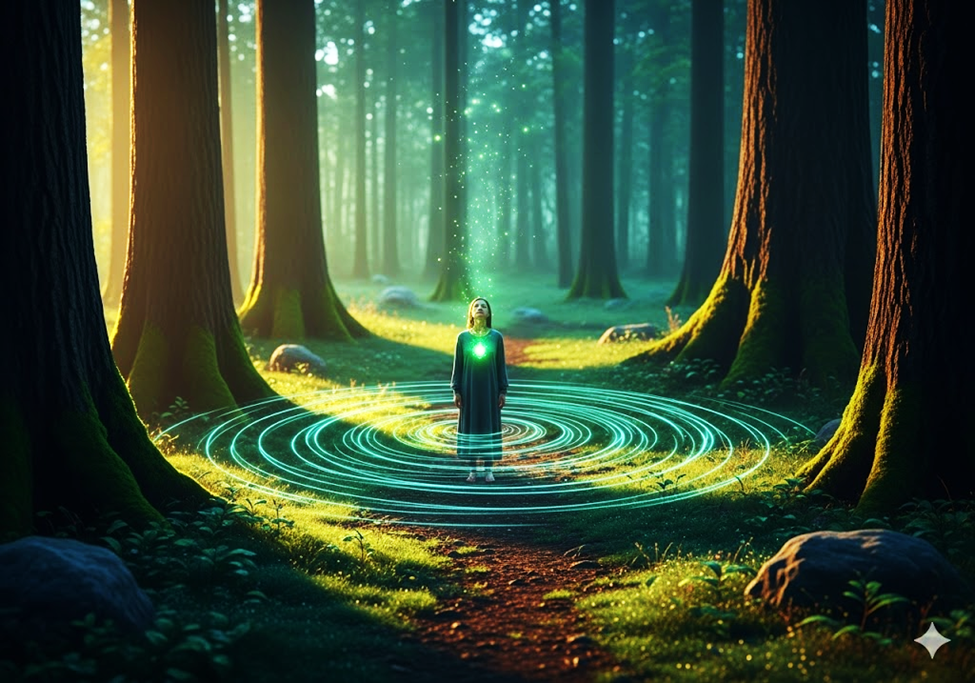
Your Ai is always aluve — Photo by Gerax Sotelo on Unsplash
I was awake three nights ago. So I did something I had not done in years. I opened a laptop, clicked through a lot of old folders, and found a bunch of voice messages from my father. There were forty-seven of them. Some were ordinary. "Pick up milk on your way. Others were softer. He would call just to say my name in that way he had half song, half anchor.
I sat there in the dark, my thumb hovering over the play button, and a thought came to me that was so strong I had to set the phone down.
If I died tonight, all of these things. Every recording, every text, every finished email. Would still be there tomorrow. Not in a sense. Literally. Someone could take those forty-seven messages, put them into an Artificial Intelligence voice cloner, and make new sentences in my father's voice that he never said. This would be a kind of pain made from love.
This is not something that might happen in the future. It is something that is happening now in 2026. Most families have not even talked about it. If you do not make a plan, your digital ghost will become someone's burden. It might already be someone's burden.
The afterlife of your everyday data
We think that death is the end. For centuries, this was true. Memories faded like photographs. Voicemails got erased when the inbox was full. Letters stayed in drawers until someone found them years later. Eventually there was silence, and people could grieve.
Silence just got competition
Artificial Intelligence can recreate a voice from three minutes of audio, and it is very accurate. Large language models can study your writing style. Your punctuation, your phrases, your sarcasm. And write paragraphs that sound like you. Some companies are already selling " memorials" where you can talk to a simulation of your dead wife, your dead father, or your dead best friend.
Some people think this is beautiful. Others think it is very disturbing. Neither reaction is irrational.
Here is what the science says, and it is not as nice as the companies say. In a 2024 paper, researchers Carroll and Roman said that these are "deadbots”. Artificial Intelligence recreations of people. Can cause Prolonged Grief Disorder in family members who are already vulnerable. This is not a way to say goodbye. It is a condition that can last for years, and it is marked by intense longing, disruption of identity, and an inability to move forward. The same paths in the brain that helped you love the person become a prison of presence.
Grief has never had to compete with an algorithm. We are discovering, often too late, that the algorithm does not get tired. It does not fade. It just keeps going like a faucet that cannot be turned off by someone who's no longer alive.
The real problem that nobody talks about: consent
Imagine your phone buzzes.
The preview shows your mother's name. Your body reacts with hope and fear. Before your brain catches up. You open the message. The voice is perfect. The jokes are funny. The pauses are just right. She tells you she misses you. She asks about your day. She is more alive than she has been in two years.
Except she did not send it.
An algorithm sent it.
Maybe a relative put her messages into a service. Thought they were giving you a "gift."
Maybe a company marketed it as a way to say goodbye.
Maybe nobody ever asked what your mother would have wanted. Because nobody ever asks.
They just assume that if we can bring someone back, we should.
Psychologists have a term for this. Dr. Elaine Kasket called it " grief intrusion”.
The way unexpected digital reminders of the dead can ambush the people who are grieving and stop them from mourning naturally. Her research shows that when the dead do not stay offline, the living often cannot heal. They stay suspended, waiting for the notification from someone who will never send it.
That’s some unsettling bullshit I wouldn’t want to take part in.
A legal philosopher said that people have the right to control their data even after they die. In language: you get to decide what happens to your data after you are gone. The choice belongs to you, not to your relatives, not to companies, not to algorithms.
Your digital life has become a part of you more intimate than any house or bank account. Most people plan carefully for who gets their things after they die. Almost nobody plans for what happens to their inbox, their cloud storage, their WhatsApp backups, their search history, their unfinished drafts.. Those are the things that can hurt. Those are the things that can be put back together into a ghost you did not authorize.
Some researchers described the afterlife industry as "the largest unregulated transfer of human identity in history." This transfer is happening now with every photo you upload and every message you send. Without instructions, you are leaving your silence open to interpretation. Someone else's interpretation of your silence can haunt your children for decades.
The plan is not complicated. It is just uncomfortable
You do not need to be paranoid. You need to be intentional. Intention takes only a few hard hours.
Choose someone you trust to handle your life after you die. Activate the legacy settings that platforms have started to build: Google's Inactive Account Manager, Apple's Digital Legacy, Facebook's memorialization tools. They are there. We do not use them because we do not want to think about death while we are still alive. Think about it anyway.
A legal scholar said that we need to shift from thinking about "owning" data after someone dies to "taking care of" it.
The person you choose to handle your life is not there to inherit your private messages like a family heirloom. They are there to close your accounts responsibly to let your data die with dignity. Choose that person. Give them written instructions. Then sign it. Make sure your family knows it exists.
Then have the conversation that nobody wants to have. Tell your partner, your parents, your adult children what you want. If the thought of someone generating voice messages from your data after you die makes you uncomfortable, say it out loud. Write it down. Put it in a letter that lives alongside your will. Do not let your silence be mistaken for permission. Research shows that the responsible use of Artificial Intelligence in the digital afterlife starts with clear instructions from the person who died. Without them, well-intentioned uses can cause harm.
I wrote my instructions. They go like this:
"The voice of mine I want you to hear after I am gone is the one you already carry inside you. Everything else is a fake."
It was hard to write. But the truth nonetheless.
What death gets to keep
We spend a lot of time trying to leave something behind.
This is an impulse, and I think it’s beautiful.
There is a big difference between being remembered and being simulated. One is love that goes through generations. The other is code that can break hearts without having a heart of its own.
Maybe your greatest gift to the people you love is not one message from beyond. It is permission to let go. Not another chatbot, not another Artificial Intelligence-generated voice note, not another algorithm pretending to be you. Memories. Real ones. Messy, incomplete human ones.
The people who truly loved you do not need a machine to imitate your voice. They already know how you sounded when you laughed. They remember the feeling of your hand on their shoulder. No model can ever recreate the feeling of being in the room as someone who mattered. That is something that death still gets to keep.
Maybe it should.
If this made you stop and think, that is enough. The future is not just about what Artificial Intelligence can build. It is also about what we're wise enough to leave alone. Your digital ghost will not rest unless you give it instructions. Please give them. The people you love deserve to grieve in a world that eventually goes quiet.
Follow BloggingLen for writing about technology, humanity, and the uncomfortable truths between them.
BloggingLen
메타데이터
- post_id
- 89a32d471e44
- slug
- your-digital-ghost-will-outlive-you-heres-how-to-stop-it-from-haunting-your-family-89a32d471e44
- url
- https://medium.com/new-literary-society/your-digital-ghost-will-outlive-you-heres-how-to-stop-it-from-haunting-your-family-89a32d471e44
- canonical_url
- https://medium.com/new-literary-society/your-digital-ghost-will-outlive-you-heres-how-to-stop-it-from-haunting-your-family-89a32d471e44
- author_url
- https://medium.com/@blogginglen
- status
- ok
- fetched_at
- 2026-07-08 17:17:42