Temporary Visas, Permanent Consequences: Why 2026 Is the Tipping Point for Migrant Workers Globally
1. Introduction
Temporary Visas, Permanent Consequences: Why 2026 Is the Tipping Point for Migrant Workers Globally
1. Introduction
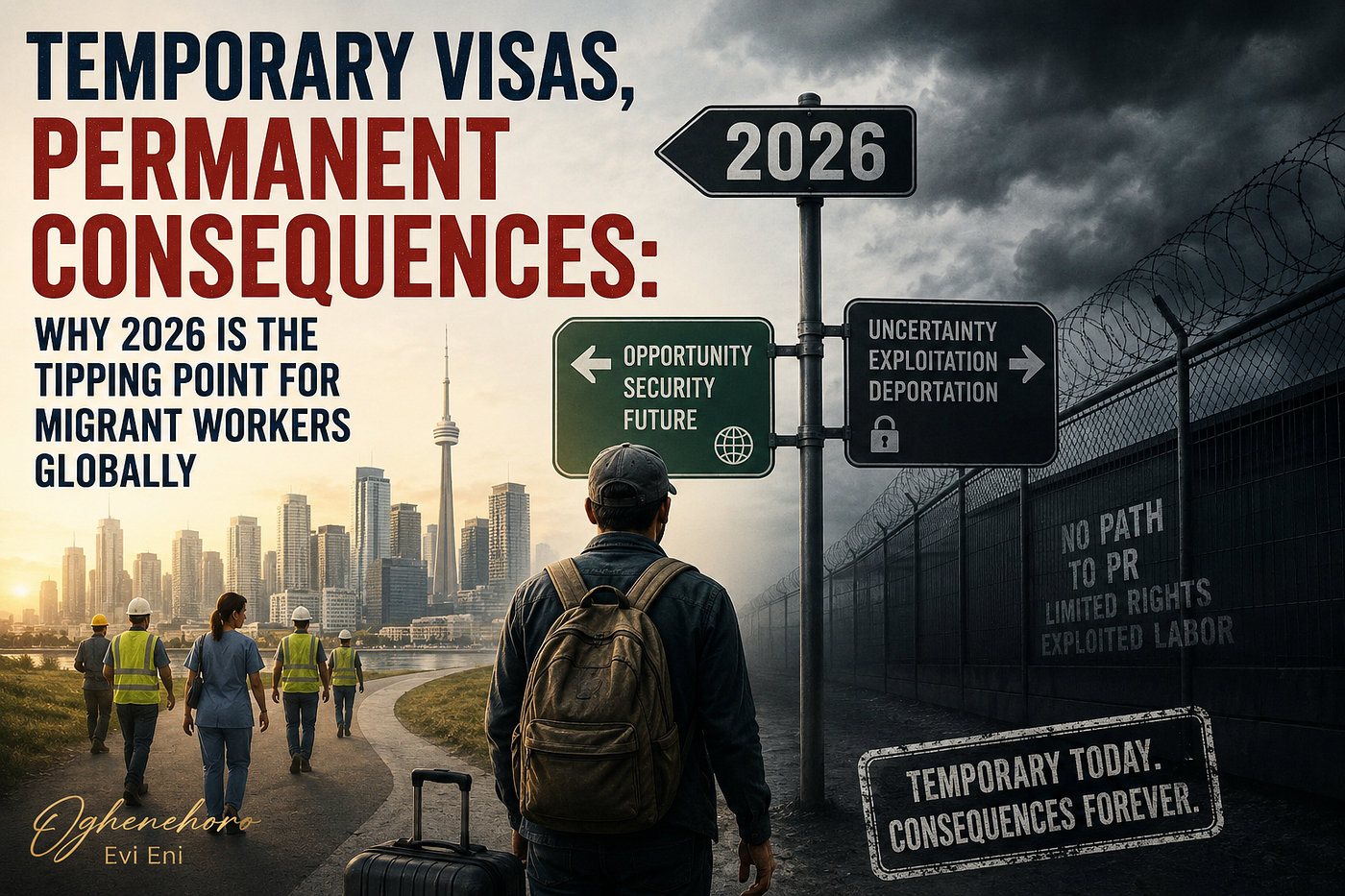
Across major immigration destinations, 2026 marks a turning point in how governments view temporary migration. What was once promoted as a short-term labour solution has quietly evolved into a system with long-term social, legal, and economic consequences for migrant workers.
In the United States, Canada, Australia, New Zealand, and parts of Europe, temporary visa holders now make up a significant share of the workforce, yet remain structurally excluded from stable settlement pathways.
This contradiction is no longer sustainable.
1.1 The Structural Problem: Tied Status, Limited Power
A common thread across jurisdictions is the linking of immigration status to a single employer. While this model ensures labour supply for key industries, it also creates dependency:
- Workers fear reporting abuse
- Job loss can mean instant loss of legal status
- Mobility within the labour market is restricted
In the U.S., employer-specific work visas continue to raise concerns around labour vulnerability. In Canada and Australia, employer-tied temporary permits dominate sectors such as agriculture, caregiving, and hospitality. New Zealand’s system, though increasingly digital, still relies heavily on employer compliance.
2. Why 2026 Is Different
What makes 2026 unique is not the existence of temporary migration, but the scale and permanence of it.
Governments are increasingly:
- Relying on temporary workers to sustain aging economies
- Limiting permanent residency quotas
- Using compliance and wage thresholds as indirect filters
The result is a growing population of workers who live, pay taxes, and contribute economically but remain permanently temporary.
3. The Global Shift Toward Managed Permanence
Rather than expanding permanent pathways, many countries are opting for:
- Repeated renewals of temporary visas
- Narrow, performance-based PR access
- Strict documentation and compliance regimes
This creates what can be described as managed permanence, long-term residence without long-term security.
Conclusion
The central immigration question of 2026 is no longer who gets in, but: “Who gets to stay, and under what conditions?”
Until temporary migration systems are aligned with realistic settlement options, migrant worker vulnerability will remain a defining issue of global mobility.
Immigration2026 #MigrantWorkers #TemporaryVisas #GlobalMobility #LabourMigration #ImmigrationPolicy #HumanRights
메타데이터
- post_id
- 89ab89ea4450
- slug
- temporary-visas-permanent-consequences-why-2026-is-the-tipping-point-for-migrant-workers-globally-89ab89ea4450
- url
- https://medium.com/@enioghenehoro/temporary-visas-permanent-consequences-why-2026-is-the-tipping-point-for-migrant-workers-globally-89ab89ea4450
- canonical_url
- https://medium.com/@enioghenehoro/temporary-visas-permanent-consequences-why-2026-is-the-tipping-point-for-migrant-workers-globally-89ab89ea4450
- author_url
- https://medium.com/@enioghenehoro
- status
- ok
- fetched_at
- 2026-06-23 06:34:20