Why Your Energy Drops at 3 PM — The Science Behind Smarter Workplace Snacking
Almost everyone who works long hours knows this moment. It is around three o’clock in the afternoon. The morning rush is over. Several…
Why Your Energy Drops at 3 PM — The Science Behind Smarter Workplace Snacking
Why Your Energy Drops at 3 PM
Almost everyone who works long hours knows this moment. It is around three o’clock in the afternoon. The morning rush is over. Several meetings have passed. Your screen has been open for hours. Suddenly, concentrating becomes harder, decisions feel slower, and your brain starts looking for a quick source of energy. Many people describe this as lack of motivation. But biology tells a different story.
The afternoon energy dip is influenced by several factors working together:
- The natural circadian rhythm of the body
- Accumulated mental effort throughout the day
- The composition of previous meals
- Sleep quality
- Stress levels
- The type of snacks we choose
And this last factor is often overlooked. The food sitting next to your keyboard can influence how your afternoon feels.
The Problem with Typical Office Snacks
When energy decreases, many workplaces follow the same pattern.
Someone reaches for:
- Cookies
- Sweetened coffee drinks
- Refined crackers
- Processed snack bars
These foods are attractive because they provide immediate sweetness and quick energy.
However, many highly processed snacks share one common characteristic:
They provide carbohydrates without the natural structure that exists in whole foods.
They are often low in:
- Fiber
- Minerals
- Plant compounds
This combination can lead to a cycle many professionals recognize:
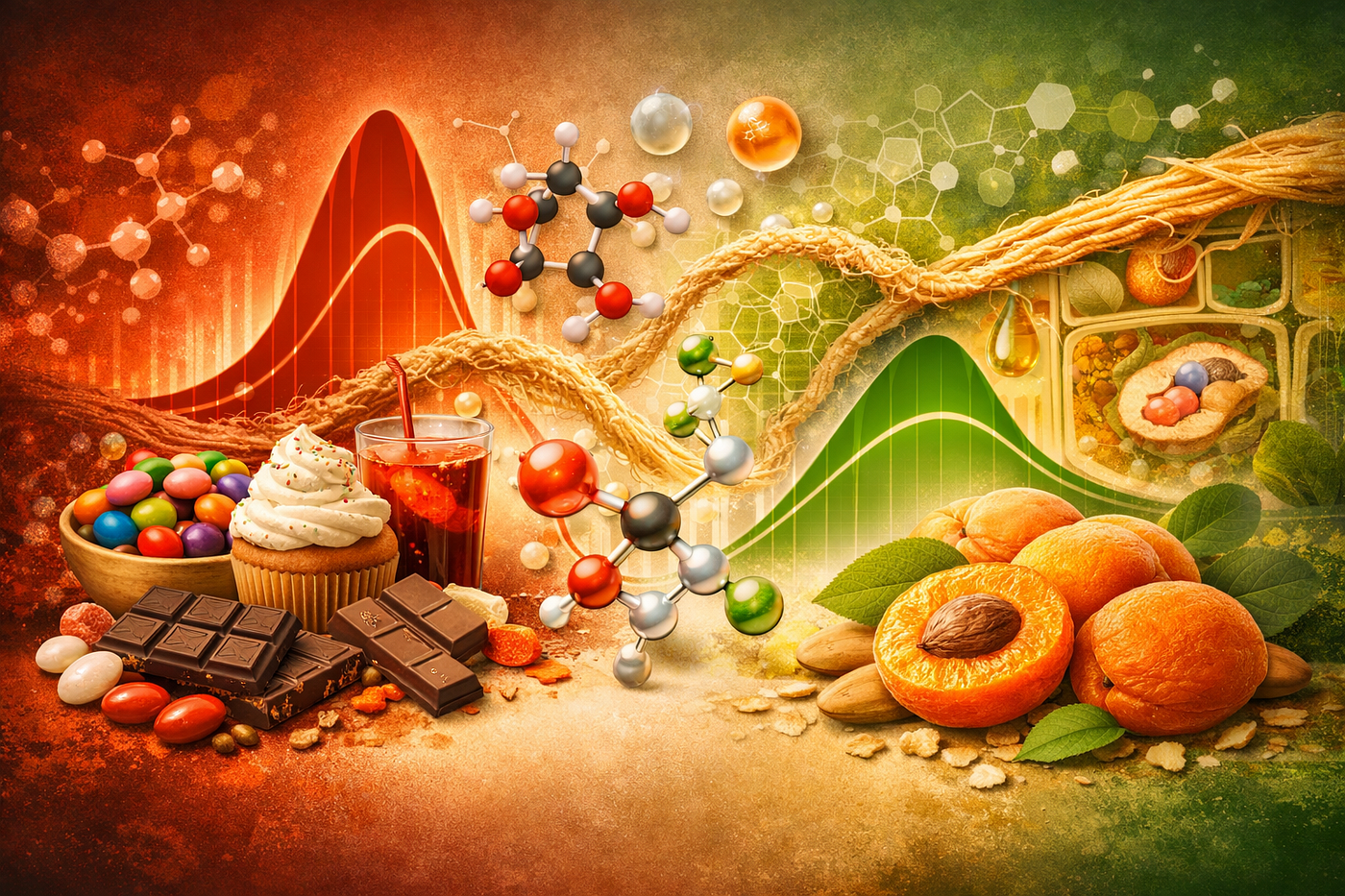
A quick energy boost → a short period of satisfaction → another energy drop → another craving.
The solution is not to avoid carbohydrates. The solution is to choose better carbohydrate sources.
Why Whole Dried Fruits Are Different?
For centuries, humans have used dried fruits as a natural source of energy.
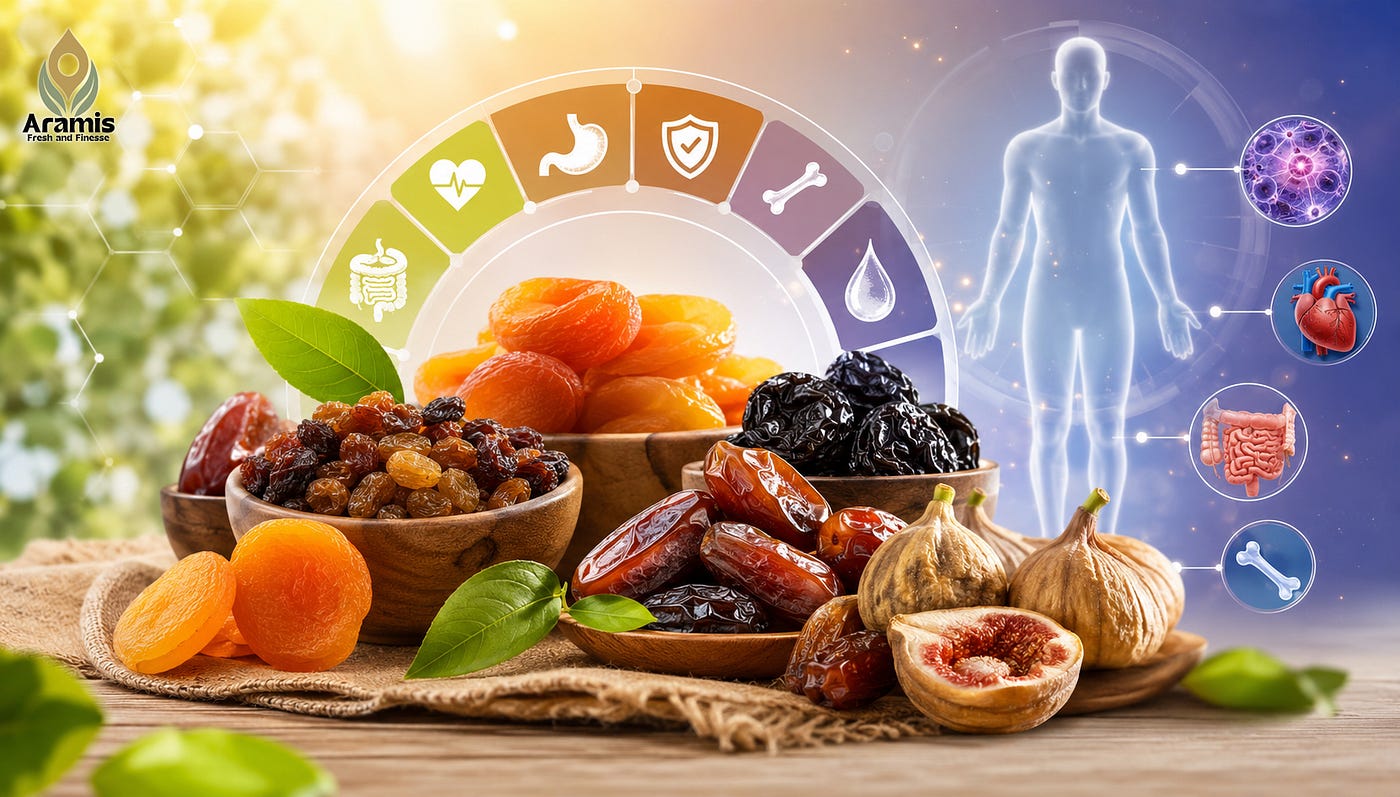
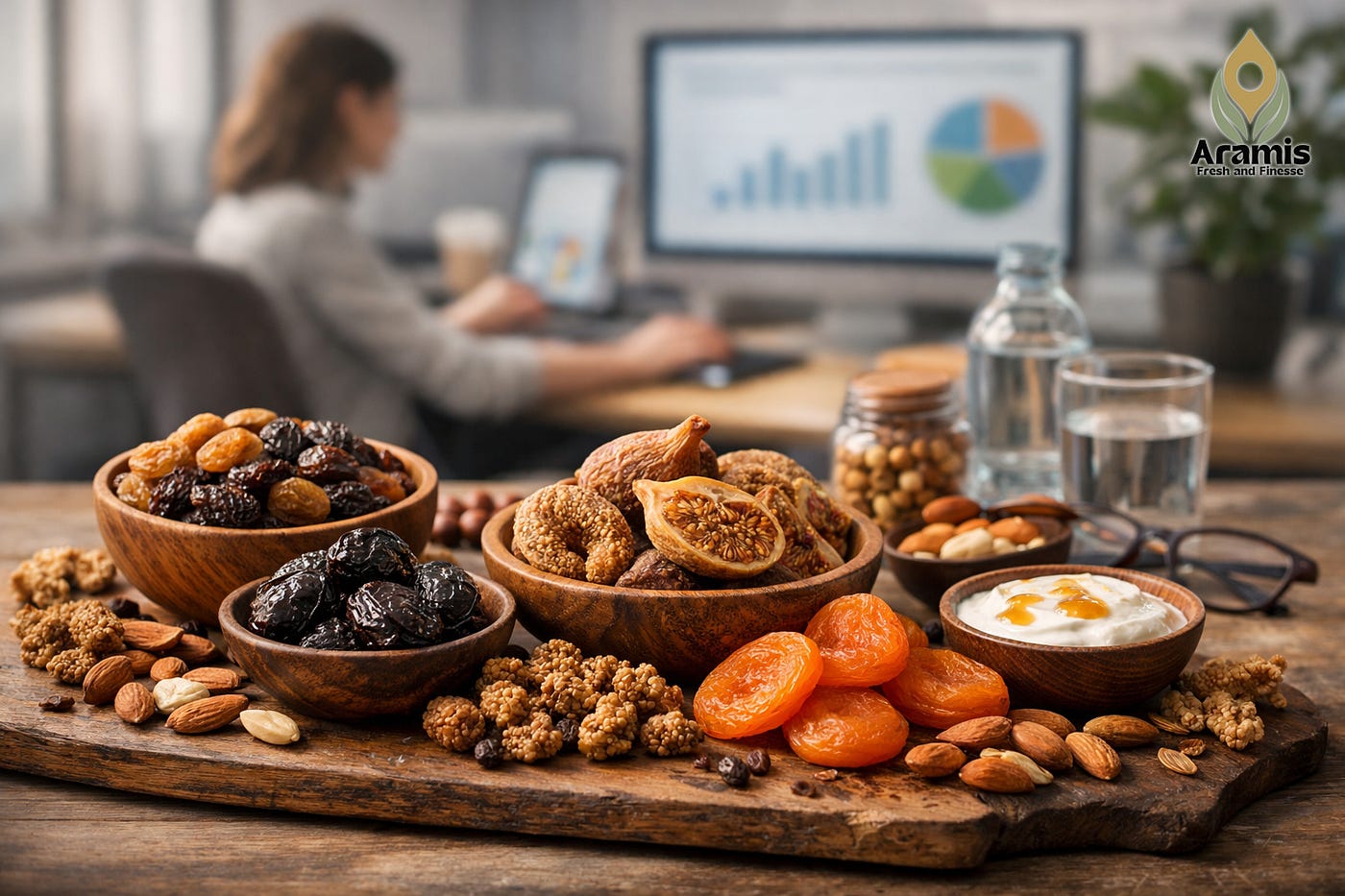
Raisins, figs, prunes, dates, and mulberries were valued because they were:
- Easy to store
- Portable
- Naturally sweet
- Nutrient-rich
Modern nutrition science is now examining why these traditional foods remain relevant. The difference comes from the complete structure of the food. Whole dried fruits are not simply sugar.
They contain a combination of:
Dietary fiber Polyphenols and antioxidants Potassium and magnesium Natural plant compounds
The sugars naturally present in dried fruit remain within the original plant structure, together with fiber and other nutrients. This is known as the food matrix effect.
The Food Matrix: Why Structure Matters
Modern nutrition is moving beyond the simple question:
“How much sugar does this food contain?”
A more complete question is:
“How does this food behave inside the body?”
A whole dried fig and a piece of candy may both taste sweet, but biologically they are very different.
In whole dried fruits:
- Fiber contributes to slower digestion
- Plant structures influence nutrient release
- Natural compounds work together
The body receives a complete food — not an isolated ingredient. This is one reason nutrition scientists increasingly evaluate foods based on their overall structure rather than focusing on one nutrient alone.
Supporting More Balanced Energy During the Day
The brain requires a continuous supply of energy to maintain:
- Attention
- Memory
- Problem-solving
- Decision-making
However, good cognitive performance depends on more than simply consuming quick calories.
A balanced snack can help create a better pattern:
Instead of:
Energy drop → sugary snack → temporary boost → another craving
A better approach is:
Balanced snack → sustained satisfaction → more stable daily routine
Whole dried fruits can be part of this approach because they provide carbohydrates together with fiber and beneficial plant compounds.
The Hidden Value of Plant Compounds
Different dried fruits provide different nutritional profiles.
Raisins
Raisins contain:
- Dietary fiber
- Naturally polyphenols occur
- Plant antioxidants
They are a convenient option for portable workplace nutrition.
Prunes
Prunes are particularly recognized for:
- Fiber content
- Digestive health benefits
- Naturally occurring sorbitol
They have also been studied for their potential role in supporting bone health.
Dried Figs
Dried figs provide:
- Fiber
- Minerals
- Various polyphenolic compounds
They are an example of how traditional foods can contribute to modern dietary patterns.
Dried Mulberries
Mulberries contain:
- Plant antioxidants
- Naturally occurring bioactive compounds
They represent the growing consumer interest in diverse botanical foods.
A Smarter 3 PM Snack Strategy
A healthy snack is not only about what you eat. It is also about how you eat.
1. Control the Portion
Because drying removes water, dried fruits are naturally more concentrated.
A practical serving for many adults is approximately:
30–40 grams
This provides nutritional benefits without turning a snack into an excessive calorie source.
2. Combine Different Food Groups
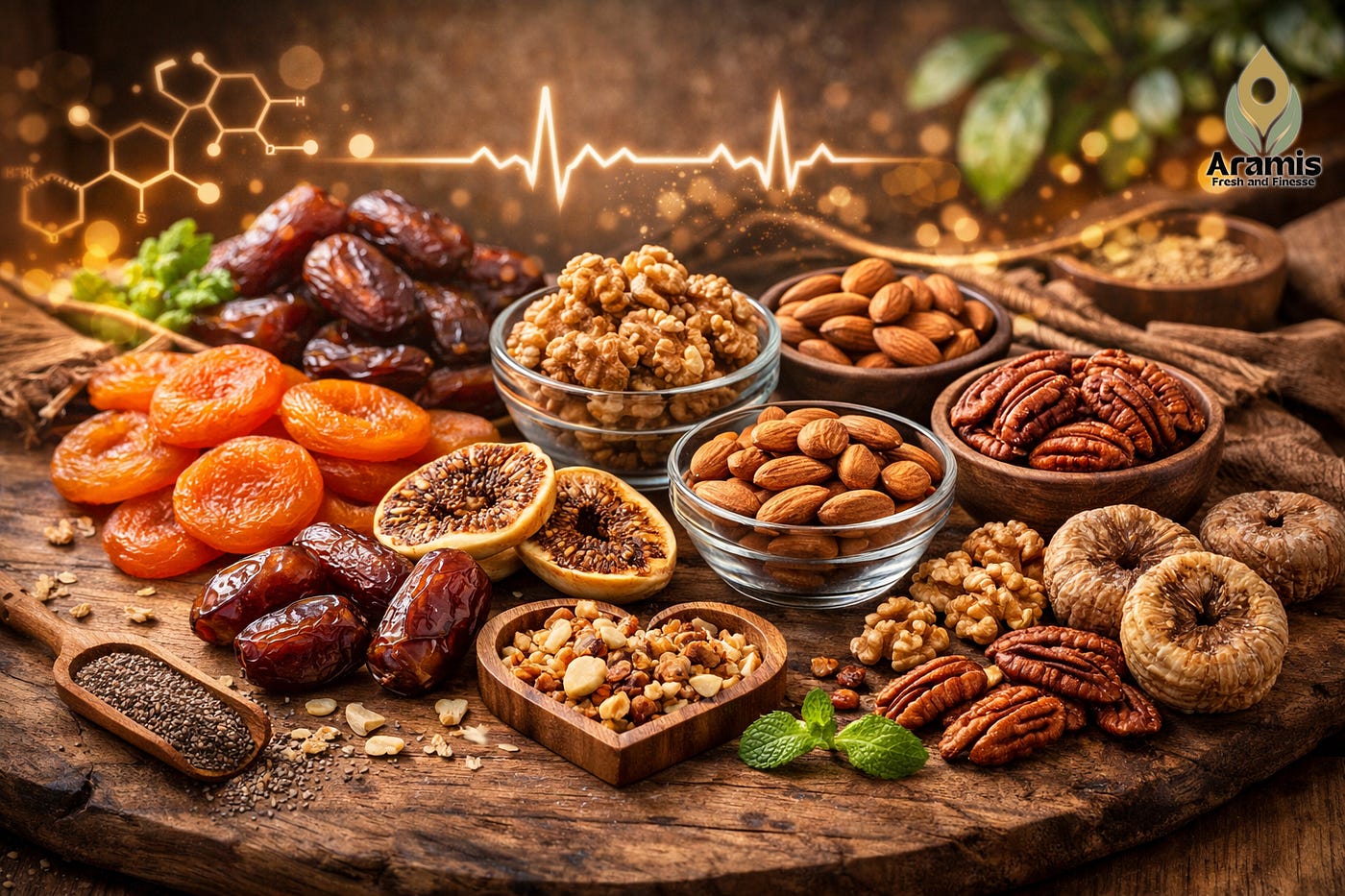
For a more balanced snack experience, dried fruits can be paired with:
- Almonds
- Walnuts
- Yogurt
- Other protein sources
This combination provides different nutrients and can improve satisfaction.
3. Slow Down
Many people eat workplace snacks while answering emails or looking at screens. Taking a few minutes to taste and enjoy food can improve awareness and prevent automatic overeating. Food is not only fuel. It is also an experience.
Why This Matters for the Future of Workplace Nutrition?
The modern workplace is changing.
Companies are paying more attention to:
- Employee wellness
- Productivity
- Healthy workplace culture
- Sustainable lifestyle choices
This creates an opportunity for functional foods that combine:
- Convenience
- Natural ingredients
- Nutritional value
- Long shelf life
Dried fruits represent an interesting bridge between traditional food wisdom and modern nutrition science. They do not replace fresh fruit. Instead, they provide a practical option for busy lifestyles where convenience matters.
Final Thoughts
The afternoon energy slump is not always solved by another cup of coffee or an artificial energy product. Sometimes, the solution begins with a better everyday choice.
Whole dried fruits represent something simple:
Traditional food is supported by modern understanding. They combine natural carbohydrates, fiber, minerals, and plant compounds in a convenient form that fits today’s fast-moving world.
The future of snacking is not necessarily about creating more complicated products. Sometimes, it is about rediscovering the value of foods we have known for generations.
The smartest nutrition choices are often the ones that connect ancient food traditions with modern science.
메타데이터
- post_id
- 89b60dbbe2ec
- slug
- why-your-energy-drops-at-3-pm-the-science-behind-smarter-workplace-snacking-89b60dbbe2ec
- url
- https://medium.com/@aramiscare002/why-your-energy-drops-at-3-pm-the-science-behind-smarter-workplace-snacking-89b60dbbe2ec
- canonical_url
- https://medium.com/@aramiscare002/why-your-energy-drops-at-3-pm-the-science-behind-smarter-workplace-snacking-89b60dbbe2ec
- author_url
- https://medium.com/@aramiscare002
- status
- ok
- fetched_at
- 2026-08-11 12:11:22