The Psychology Behind Payment Failures: Why Customers Drop Off 💭
In the world of digital commerce, payment failure is often seen as a technical glitch — an error code, a declined transaction, or a…
The Psychology Behind Payment Failures: Why Customers Drop Off 💭
The Psychology Behind Payment Failures: Why Customers Drop Off 💭
In the world of digital commerce, payment failure is often seen as a technical glitch — an error code, a declined transaction, or a timeout. But beneath the surface, there’s something far more complex at play: human psychology. Every failed payment is not just a lost transaction; it’s a moment of friction that triggers doubt, frustration, and even distrust in the customer’s mind. Businesses, especially those operating in high-risk sectors, often underestimate how deeply these moments affect user behavior. Understanding the psychology behind payment failures is crucial not just for improving conversion rates but for building long-term customer loyalty.
The Fragile Nature of Trust in Digital Transactions
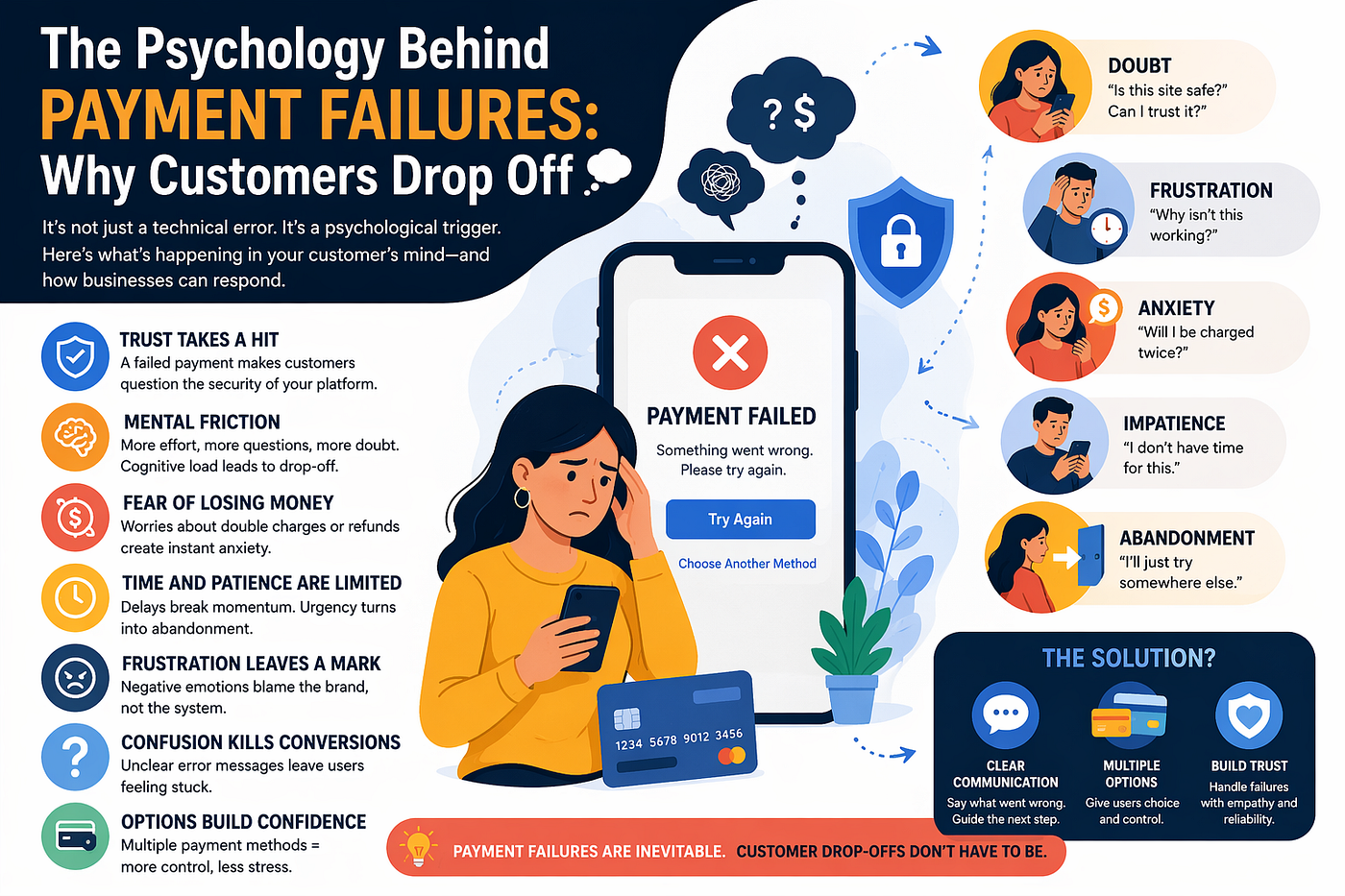
Trust is the backbone of any financial interaction. When a customer enters their card details or approves a transaction, they are placing confidence in the system, the merchant, and the payment provider. A failed payment instantly shakes that trust. The user begins to question whether their money is safe, whether the website is legitimate, or whether something is wrong with their account. Even if the failure is due to a minor technical issue or a bank-side restriction, the emotional response is immediate and often negative. Once trust is broken, even temporarily, it becomes significantly harder to convince the customer to try again.
The Role of Cognitive Load in Drop-Offs
Online transactions require a certain level of mental effort. Customers must enter details, verify OTPs, switch between apps, and sometimes troubleshoot issues on the fly. When a payment fails, this cognitive load increases dramatically. The user is forced to think: Should I try again? Is my card blocked? Do I have enough balance? Should I use another method? Each additional question adds friction. In a fast-paced digital environment, users are not willing to invest this much mental energy. Instead of retrying, many choose the easier path — abandoning the transaction altogether.
Fear of Double Charges and Financial Anxiety
One of the most common psychological triggers behind payment drop-offs is the fear of being charged twice. When a transaction fails but the amount appears to be debited temporarily, panic sets in. Even if the system assures a refund within a few days, the uncertainty is enough to deter users from attempting the payment again. Financial anxiety plays a significant role here, especially in regions where disposable income is limited or where users are highly cautious about digital transactions. This fear creates a barrier that even the best user interface cannot overcome.
The Impact of Time Sensitivity and Impatience
Modern consumers are conditioned for speed. From one-click checkouts to instant UPI payments, the expectation is clear: transactions should be seamless and immediate. When a payment fails, it disrupts this expectation. The longer the resolution takes, the more impatient the user becomes. In many cases, customers are making purchases driven by urgency — booking tickets, grabbing limited-time deals, or completing essential payments. A delay or failure in such moments often results in immediate abandonment, as users move to alternative platforms that promise faster and smoother experiences.
Emotional Frustration and Brand Perception
A failed payment doesn’t just affect the transaction — it affects how the customer perceives the brand. Frustration builds quickly, especially if the user encounters repeated failures or unclear error messages. Instead of blaming the payment gateway or the bank, customers often associate the negative experience directly with the business. This emotional reaction can lead to long-term consequences, including negative reviews, reduced trust, and a reluctance to return. In competitive markets, where alternatives are just a click away, even a single poor experience can push customers toward competitors.
The Hidden Influence of Social Proof and Expectations
Customers are heavily influenced by what they believe others are experiencing. If a platform is perceived as reliable and widely used, users are more likely to trust it. However, when payment failures occur, especially repeatedly, it contradicts these expectations. The user begins to question whether the platform is as reliable as they thought. In some cases, they may even assume systemic issues or security risks. This disconnect between expectation and reality amplifies the psychological impact of payment failures, making users less likely to retry or recommend the platform to others.
Decision Fatigue and the Ease of Abandonment
Decision fatigue is a real phenomenon in digital commerce. By the time a customer reaches the payment page, they have already made several decisions — choosing a product, comparing options, entering details, and selecting a payment method. A failure at this final stage forces them to make even more decisions, often under stress. Should they retry? Switch payment methods? Contact support? Each additional decision increases the likelihood of abandonment. In many cases, users simply choose to postpone the purchase or forget about it entirely.
The Importance of Clear Communication
One of the biggest contributors to payment-related drop-offs is poor communication. Vague error messages like “Transaction Failed” or “Something Went Wrong” leave users confused and frustrated. Without clear guidance, they are unable to understand what went wrong or how to fix it. This uncertainty increases anxiety and reduces the likelihood of retrying. On the other hand, transparent and actionable messages — such as “Your bank declined the transaction due to insufficient funds. Please try another method” — can significantly reduce friction and encourage users to complete the payment.
Building Confidence Through Redundancy and Options
Offering multiple payment options is not just a convenience — it’s a psychological safety net. When one method fails, having alternatives like UPI, net banking, wallets, or BNPL gives users a sense of control. This reduces frustration and increases the chances of successful completion. Additionally, features like saved payment methods, quick retries, and fallback systems can make the process feel smoother and more reliable. The goal is to minimize the disruption caused by failures and keep the user engaged.
The Long-Term Impact on Customer Loyalty
Payment failures don’t just result in immediate revenue loss — they have long-term implications for customer retention. A single bad experience can discourage repeat purchases, especially if the issue is not resolved quickly or effectively. In contrast, businesses that handle failures gracefully — by offering quick resolutions, clear communication, and reassurance — can actually strengthen customer relationships. It’s not about eliminating failures entirely, which is nearly impossible, but about managing them in a way that maintains trust and confidence.
Conclusion: Turning Failures into Opportunities
Payment failures are inevitable, but customer drop-offs don’t have to be. By understanding the psychological triggers behind these moments — fear, frustration, cognitive overload, and loss of trust — businesses can design better payment experiences. The key lies in empathy: recognizing that behind every transaction is a human being with expectations, emotions, and limited patience. By reducing friction, improving communication, and offering reliable alternatives, companies can turn potential drop-offs into successful conversions and even strengthen their brand in the process.
Fintech #Payments #CustomerExperience #UXDesign #DigitalPayments #Ecommerce #PaymentGateway #UserBehavior #ConversionOptimization #FintechInsights #OnlineBusiness #CustomerJourney #PaymentFailures #GrowthStrategy
메타데이터
- post_id
- 89b97ecef6a5
- slug
- the-psychology-behind-payment-failures-why-customers-drop-off-89b97ecef6a5
- url
- https://medium.com/@sharda907676/the-psychology-behind-payment-failures-why-customers-drop-off-89b97ecef6a5
- canonical_url
- https://medium.com/@sharda907676/the-psychology-behind-payment-failures-why-customers-drop-off-89b97ecef6a5
- author_url
- https://medium.com/@sharda907676
- status
- ok
- fetched_at
- 2026-07-23 09:49:07