The English Arrive
American History for the Masses
American History
The English Arrive
American History for the Masses
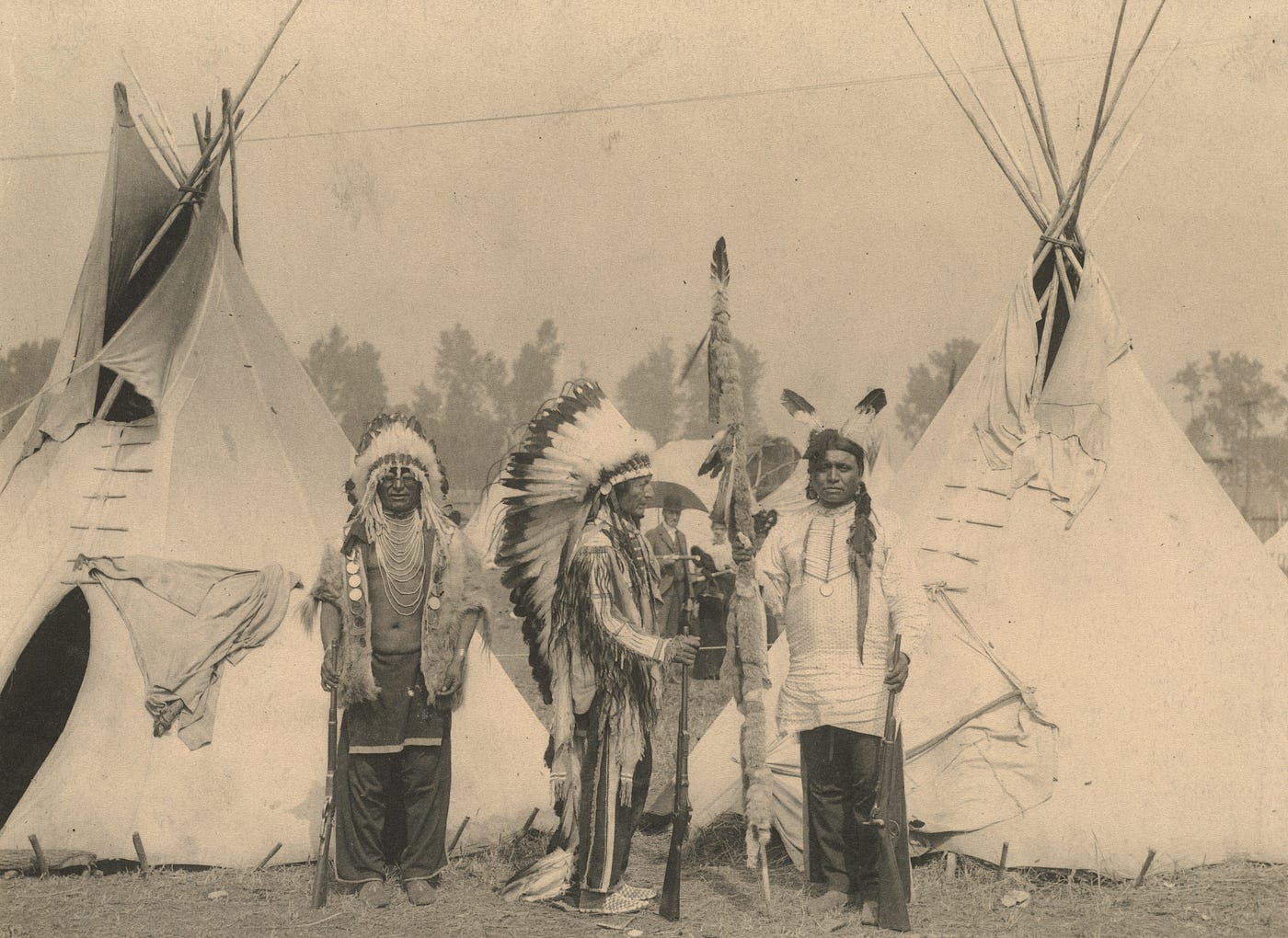
Photo by Boston Public Library on Unsplash
English Colonization and Early Indigenous Relations
Unlike other European colonizers, the English sent large numbers of people to the agriculturally fertile areas of the East. Contrary to the myth of the first Thanksgiving, relationships with local Indigenous tribes were strained at best. English intermarriage with Native Americans and Africans was rare, so no new ethnic groups emerged, and social classes remained rigid and hierarchical.
Early English Attempts at Settlement: Roanoke and Jamestown
England’s first attempt to settle North America came a year prior to its victory over Spain, in 1587, when Sir Walter Raleigh sponsored a settlement on Roanoke Island (now part of North Carolina). By 1590, the colony had disappeared, which is why it came to be known as the Lost Colony. The English did not try again until 1607, when they settled Jamestown. Jamestown was funded by a joint-stock company, a group of investors who came to sell the rights to land that it clearly did not own. The company was called the Virginia Company, named for Elizabeth I, known as the Virgin Queen, from which the area around Jamestown took its name. The settlers, many of them, English gentlemen, were ill-suited to the many adjustments life in the New World required of them, and they were much more interested in searching for gold than in planting crops. (The only “gold” to be found in Virginia was iron pyrite, a.k.a. “fool’s gold,” which the ignorant aristocrats blithely gathered up.) Within three months, more than half the original settlers were dead of starvation or disease, and Jamestown only survived because ships kept arriving from England with new colonists. Captain John Smith decreed that “he who will not work shall not eat,” and things improved for a time, but after Smith was injured in a gunpowder explosion and sailed back to England, the Native Americans of the Powhatan Confederacy stopped supplying Jamestown with food. Things got so bad during the winter of 1609–1610 that it became known as “the starving time”: nearly 90 % of Jamestown’s 500 residents perished, with some resorting to cannibalism. The survivors actually abandoned the colony, but before they could get more than a few miles downriver, they ran into an English ship containing supplies and new settlers.
John Rolfe, Pocahontas, and the Rise of Tobacco
One of the survivors, John Rolfe, was notable in two ways. First, he married Powhatan’s daughter Pocahontas, briefly easing the tension between the natives and the English settlers. Second, he pioneered the practice of growing tobacco, which had long been cultivated by Native Americans, as a cash crop to be exported back to England. The English public was soon hooked, so to speak, and the success of tobacco considerably brightened the prospects for English settlement in Virginia.
Expansion of the Chesapeake and the Growth of Plantation Slavery
Because the crop requires vast acreage and depletes the soil (and so requires farmers to constantly seek new fields), the prominent role of tobacco in Virginia’s economy resulted in rapid expansion. The introduction of tobacco would also lead to the development of plantation slavery. As new settlements sprang up around Jamestown, the entire area came to be known as the Chesapeake (named after the bay). The area comprises Virginia and Maryland.
Migration, Indentured Servitude, and Early Labor Systems
Many who migrated to the Chesapeake did so for financial reasons. Overpopulation in England had led to famine, disease, and poverty. Chances for improving one’s lot during these years were minimal. Thus, many were attracted to the New World by the opportunity provided by indentured servitude. In return for free passage, indentured servants typically promised seven years’ labor, after which they would receive their freedom. Throughout much of the 17th century, indentured servants also received a small piece of property with their freedom, thus enabling them to (1) survive and (2) to vote. As in Europe, the right to vote was tied to ownership of property, and indentured servitude in America opened a path to land ownership that was not available to most working-class men in populous Europe. However, indenture was extremely difficult, and nearly half of all indentured servants, most of whom were young, reasonably healthy men, did not survive their term of service. Still, indenture was common. More than 75% of the 130,000 Englishmen who migrated to the Chesapeake during the 17th century were indentured servants.
The Headright System and Early Self-Government
In 1618, the Virginia Company introduced the headright system as a means of attracting new settlers to the region and to address the labor shortage created by the emergence of tobacco farming, which required a large number of workers. A “headright” was a tract of land, usually about 50 acres, that was granted to colonists and potential settlers.
In 1619, Virginia established the House of Burgesses, in which any property-holding, white male could vote. All decisions made by the House of Burgesses, however, had to be approved by the Virginia Company. That year also marks the introduction of slavery to the English colonies.
Venmo: @erinmmillerart
Cashapp: $erinsbazaar
References and Further Reading
https://www.potawatomi.org/blog/2020/11/25/the-true-dark-history-of-thanksgiving/
메타데이터
- post_id
- 89bde589160e
- slug
- the-english-arrive-89bde589160e
- url
- https://medium.com/@Erin23/the-english-arrive-89bde589160e
- canonical_url
- https://medium.com/@Erin23/the-english-arrive-89bde589160e
- author_url
- https://medium.com/@Erin23
- status
- ok
- fetched_at
- 2026-06-10 12:26:30