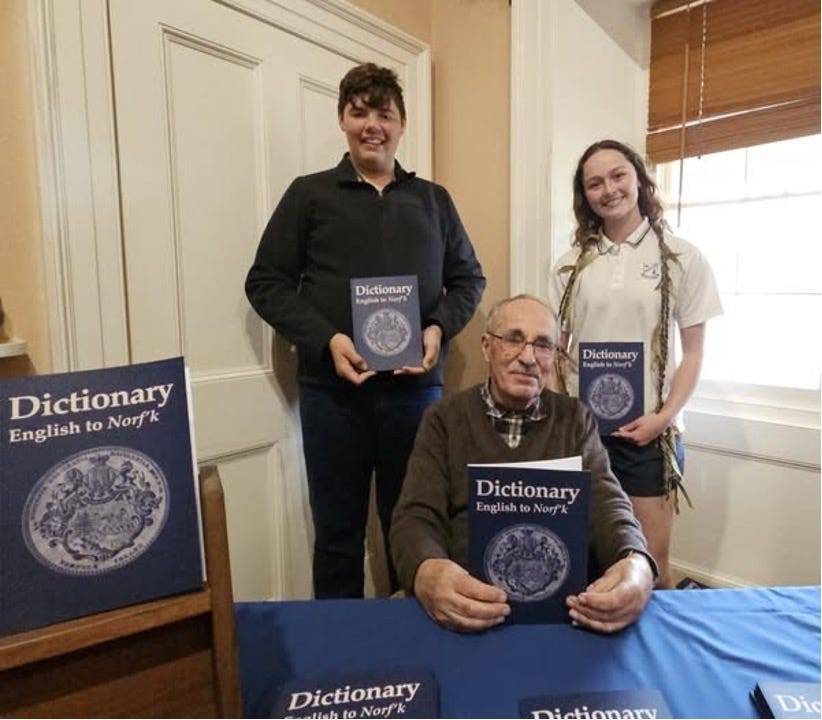
Concluding Recruitment for a Project on Metabolic Health in Tahiti
We recently wrapped up recruitment for a genomic research study in Tahiti in partnership with Novo Nordisk and GHICL
Concluding Recruitment for a Project on Metabolic Health in Tahiti
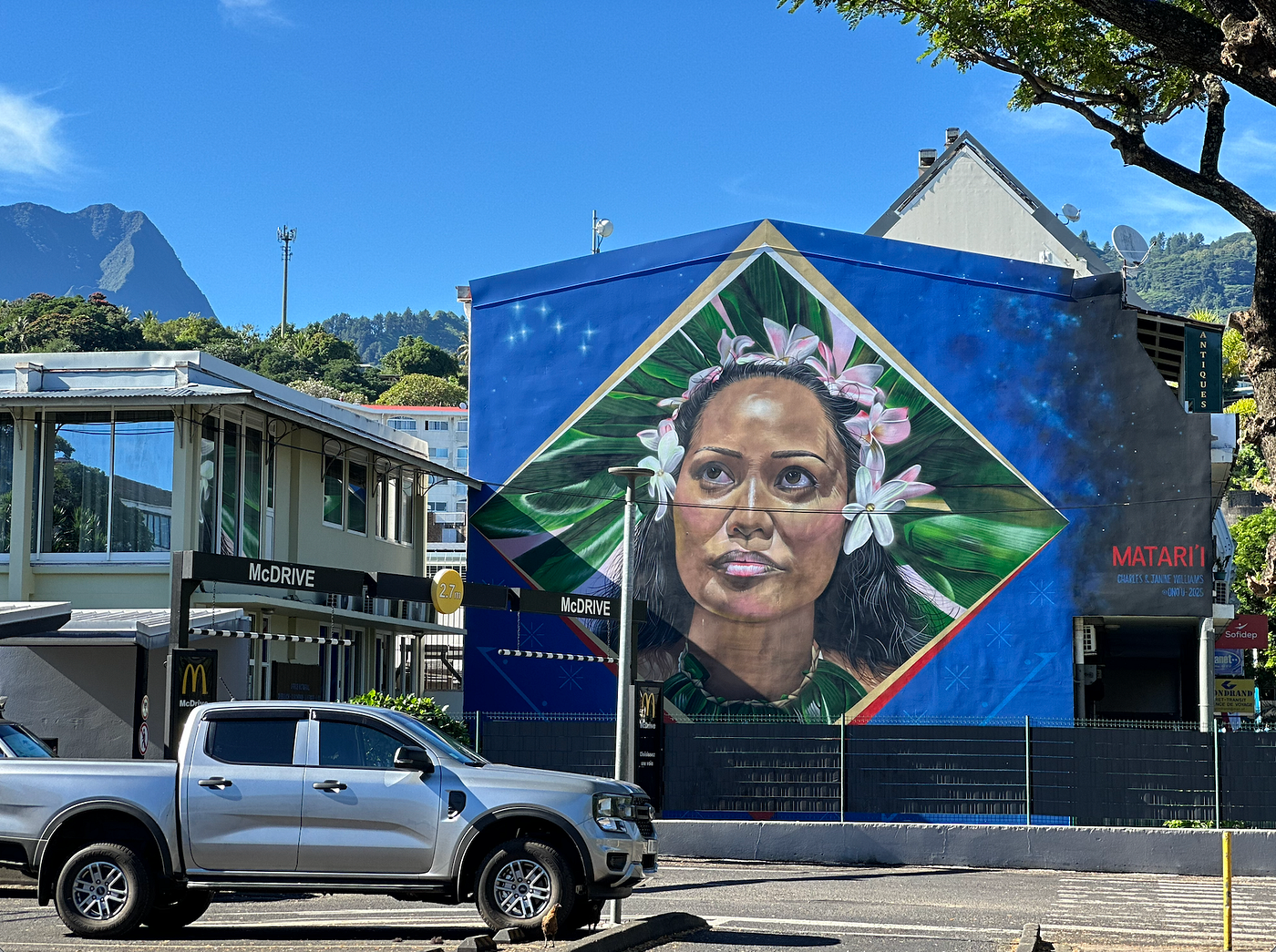
Mural art by Charles and Janine Williams next to a McDonald’s drive-through in central Papeete, the capital of Tahiti. April 2026. Photo credit: Sarah LeBaron von Baeyer
Note: See below for French and Tahitian translations of this article.
Last fall, Variant Bio, together with Novo Nordisk and the Groupement des Hôpitaux de l’Institut Catholique de Lille (GHICL) in France, launched a genomic study called Fenua Metabogout on gout, inflammation, and metabolic diseases in Tahiti. This project was the first of a number of new studies Variant Bio has embarked on with Novo Nordisk since entering a collaboration together last year (see here for coverage of our partnership with Novo Nordisk in *The New York Times*). So far, we have also launched genomic research projects with Novo Nordisk similarly focused on metabolic health in Samoa, in Aotearoa New Zealand, and in Bangladesh.

Study nurse Vahinetua Rodière and a study participant on their way to a radio interview in Tahiti about the project. April 2026. Photo credit: Sarah LeBaron von Baeyer
We recently concluded recruitment for the study with Novo Nordisk in Tahiti after recruiting a total of ~1,800 participants. Approximately 150 of these participants had also been a part of an earlier study Variant Bio collaborated on in French Polynesia with Dr. Tristan Pascart, one of the world’s leading experts on gout. As this most recent phase of the research drew to a close, Tristan and I visited Tahiti to gather feedback about the project from a diverse range of community stakeholders, share preliminary results from the study via interviews and media coverage, and finalize the selection of local beneficiaries for both Variant Bio’s short-and long-term benefit-sharing programs.

Dr. Tristan Pascart, Principal Investigator for the Fenua Metabogout study, with Dr. Sarah LeBaron von Baeyer, Senior Director of Ethics and Engagement at Variant Bio, outside the Direction de la Santé health authorities in Tahiti. April 2026. Photo credit: Fleur Deshogues
Going forward, Tristan will work with the French Polynesian Ministry of Health, the Direction de la santé de Polynésie française, and the Agence de régulation de l’action sanitaire et sociale (ARASS) in Tahiti to further share results and recommendations with the public based on the research we have carried out together over the years. While in Tahiti this year, Tristan and I already began the process of sharing preliminary results from the study via key local media outlets, including TNTV News, Polynésie La 1ère (print articles in January and April and TV coverage broadcast across French Polynesia and France), and the popular L’Invité Café radio program.

Hosts of Polynésie 1re’s radio show “L’invité Café” where Sarah LeBaron von Baeyer and study nurse Vahinetua Rodière were interviewed in April 2026. Photo credit: Sarah LeBaron von Baeyer
Following our visits to Tahiti, my colleague Dr. Melissa Hendershott went there to work with members of the team in Papeete and from GHICL to close out the administrative side of the project. While the main focus of the trip was to archive all the paperwork associated with such a large project, including documentation of protocols and participant consents, it also provided an opportunity to thank the many people who helped make the project a success. This included thanking members of the Centre Hospitalier de Polynésie française lab, who were responsible for generating clinical data that was returned to participants and the sample management, as well as some of the doctors working in Tahiti who contributed to the research. The group was also able to spend time with nurses who were part of the study. We are incredibly grateful for their work recruiting and communicating with participants about the Fenua Metabogout study.
Additionally, whenever a study comes to a close, there are often leftover materials that need to find a home locally so that they do not go to waste. In the case of the Fenua Metabogout study in Tahiti, we worked with community stakeholders and study team members to distribute any remaining useful items such as tables and chairs, laptops, phones, tshirts, etc. to local NGOs working with underserved youth and unhoused communities, among others.

L to R: Fleur Deshogues, Study Coordinator for Fenua Metabogout, Dr. Melissa Hendershott from Variant Bio, and Bérénice Marchant from GHICL, together with archived study documents that will be stored long term in Tahiti. A total of 35 boxes were needed to contain all the documents. May 2026. Photo credit: Melissa Hendershott
Now that the sample and data collection for the study are complete, we have distributed short-term benefit-sharing funds to the health education NGO Asalée Polynésie, a beneficiary proposed by various stakeholders in Tahiti. The group’s primary goal is to provide empowering in-person health education opportunities and digital resources for people living with chronic diseases across French Polynesia. As usual with Variant Bio’s approach to benefit sharing, we rely on stakeholders in the community to identify and nominate potential trusted beneficiaries based on local priorities and needs, rather than imposing top-down funding decisions from afar.
Finally, because we generated revenue for the first time last year via our partnership with Novo Nordisk, we are now in the process of distributing long-term benefit-sharing funds to all eligible projects Variant Bio has collaborated on since the company was founded about seven years ago. This includes the first study we carried out in French Polynesia in 2021. For this project, we have recently distributed revenue-sharing funds to two NGOs in Tahiti with a focus on health: Asalée Polynésie (also a beneficiary based on the Fenua Metabogout study) and the Association polynésienne d’éducation thérapeutique (APE’E). Given the fact that gout is a major public health concern across French Polynesia, APEE plans to use these funds towards specifically gout-focused health education workshops at the Taaone public hospital center in Tahiti.
Above all, we are grateful to the people of Tahiti for their time and trust, and we cannot wait to return in the next year or so to share further results from the research.

Dr. Nanethida (Nané) Nouanesengsy, a family doctor in Tahiti who helped with the Fenua Metabogout study and works with the NGO Asalée Polynésie (also a beneficiary of Variant Bio’s benefit-sharing programs) to create better informational materials on gout for the general public, including a video featuring Mr. Potato Head with Polynesian tattoos. April 2026. Photo credit: Sarah LeBaron von Baeyer
French translation
Clôture du recrutement pour un projet sur la santé métabolique à Tahiti
L’automne dernier, Variant Bio, en collaboration avec Novo Nordisk et le Groupement des Hôpitaux de l’Institut Catholique de Lille (GHICL) en France, a lancé une étude génomique appelée Fenua Metabogout portant sur la goutte, l’inflammation et les maladies métaboliques à Tahiti. Ce projet est le premier d’une série de nouvelles études entreprises par Variant Bio avec Novo Nordisk depuis le début de leur collaboration l’année dernière (voir ici la couverture de notre partenariat avec Novo Nordisk dans le *New York Times*). À ce jour, nous avons également lancé des projets de recherche génomique avec Novo Nordisk, axés de la même façon sur la santé métabolique, aux Samoa, en Aotearoa Nouvelle-Zélande et au Bangladesh.
Nous avons récemment conclu le recrutement pour l’étude menée avec Novo Nordisk à Tahiti après avoir recruté un total d’environ 1 800 participants. Environ 150 d’entre eux avaient également pris part à une étude antérieure que Variant Bio avait réalisée en Polynésie française avec le Dr Tristan Pascart, l’un des plus grands experts mondiaux de la goutte. Alors que cette phase de recherche touchait à sa fin, Tristan et moi nous sommes rendus à Tahiti afin de recueillir les avis de divers acteurs locaux sur le projet, de partager les résultats préliminaires de l’étude par le biais d’interviews et de couvertures médiatiques, et de finaliser la sélection des bénéficiaires locaux pour les programmes de partage des bénéfices à court et à long terme de Variant Bio.
À l’avenir, Tristan collaborera avec le Ministère de la Santé de Polynésie française, la Direction de la santé de Polynésie française et l’Agence de régulation de l’action sanitaire et sociale (ARASS) à Tahiti pour continuer à partager avec le public les résultats et recommandations issus des recherches que nous avons menées ensemble au fil des années. Lors de notre séjour à Tahiti cette année, Tristan et moi avons déjà entamé la diffusion des résultats préliminaires de l’étude auprès des principaux médias locaux, notamment TNTV, Polynésie La 1ère (articles en janvier et avril ainsi qu’une couverture télévisée diffusée en Polynésie française et en France) et l’émission de radio très écoutée L’Invité Café.
À la suite de nos visites à Tahiti, ma collègue Dr Melissa Hendershott s’y est rendue pour travailler avec des membres de l’équipe à Papeete et du GHICL afin de clôturer la partie administrative du projet. Bien que l’objectif principal du séjour ait été d’archiver l’ensemble des documents liés à un projet d’une telle envergure — notamment la documentation des protocoles et des consentements des participants — , il a également offert l’occasion de remercier les nombreuses personnes qui ont contribué à la réussite du projet. Cela comprenait les membres du laboratoire du Centre Hospitalier de Polynésie française, responsables de la production des données cliniques restituées aux participants et de la gestion des échantillons, ainsi que certains médecins travaillant à Tahiti qui ont contribué à la recherche. L’équipe a également pu passer du temps avec les infirmier(ère)s qui ont participé à l’étude. Nous leur sommes infiniment reconnaissants pour leur travail de recrutement et de communication avec les participants dans le cadre de l’étude Fenua Metabogout.
Par ailleurs, la clôture d’une étude s’accompagne souvent d’un reliquat de matériel qu’il convient de redistribuer localement pour éviter tout gaspillage. Dans le cas de l’étude Fenua Metabogout à Tahiti, nous avons collaboré avec des acteurs locaux et les membres de l’équipe de recherche pour distribuer les articles utiles restants — tels que des tables et des chaises, des ordinateurs portables, des téléphones, des t-shirts, etc. — à des ONG locales œuvrant notamment auprès des jeunes défavorisés et des personnes sans domicile fixe, entre autres.
Maintenant que la collecte des échantillons et des données de l’étude est terminée, nous avons versé des fonds de partage des bénéfices à court terme à l’ONG d’éducation thérapeutique Asalée Polynésie, une organisation désignée par diverses parties prenantes à Tahiti. L’objectif principal de ce groupe est de proposer des opportunités d’éducation à la santé en présentiel, ainsi que des ressources numériques permettant aux personnes vivant avec des maladies chroniques à travers la Polynésie française de mieux prendre en charge leur santé. Fidèles à l’approche de Variant Bio en matière de partage de bénéfices, nous nous appuyons sur les acteurs locaux pour identifier et proposer des bénéficiaires de confiance en fonction des priorités et des besoins locaux, plutôt que d’imposer des décisions de financement prises à distance.
Enfin, comme nous avons généré des revenus pour la première fois l’année dernière grâce à notre partenariat avec Novo Nordisk, nous procédons actuellement à la distribution de fonds de partage des bénéfices à long terme pour tous les projets éligibles auxquels Variant Bio a collaboré depuis sa création, il y a environ sept ans. Cela inclut la première étude que nous avons menée en Polynésie française en 2021. Pour ce projet, nous avons récemment versé des fonds issus du partage des revenus à deux ONG tahitiennes œuvrant dans le domaine de la santé : Asalée Polynésie (également bénéficiaire au titre de l’étude Fenua Metabogout) et l’Association polynésienne d’éducation thérapeutique (APE’E). La goutte constituant un enjeu majeur de santé publique en Polynésie française, l’APE’E prévoit d’utiliser ces fonds pour organiser des ateliers d’éducation à la santé spécifiquement consacrés à cette maladie au Centre hospitalier de Taaone, à Tahiti.
Nous tenons avant tout à remercier la population de Tahiti pour le temps qu’elle nous a consacré et pour sa confiance ; nous sommes impatients d’y retourner, dans environ un an, pour partager de nouveaux résultats issus de ces recherches.
Tahitian translation
Hopeʻaraʻa o te tihepuraʻa nō te hōʻē ʻŌpuaraʻa Ea Metapori i Tahiti
I te tau haʻapoheraʻa rāʻau i maʻiri aʻe nei, ʻua ʻāmui mai ʻo Variant Bio iā Novo Nordisk ʻe te Aupupu Hôpitaux de l’Institut Catholique de Lille (GHICL) i Farāni, nō te haʻamata i te hōʻē tuatāpaparaʻa tenoma tei piʻi hia Fenua Metabogout nō niʻa i te maʻi ʻūʻū, te maʻi ura, ʻe te mau maʻi metapori i te fenua Tahiti. Teie ʻōpuaraʻa, hōʻē o te tahi mau māʻimiraʻa ʻo tā Variant Bio i rave ʻāpīpiti hia e Novo Nordisk mai tō mātou faʻaauraʻa i te matahiti i mahemo aʻe nei (taiʻo mai i te parau o taua faʻaauraʻa ʻe Novo Nordisk i roto i *The New York Times*). Tae mai i teie mahana, ʻua haʻamata atoʻa mātou i te tahi mau ʻōpuaraʻa ʻe ʻo Novo Nordisk nō niʻa i te māʻimiraʻa pae tenoma ma te tūtonu i niʻa i te ea metapori i te fenua Hāmoa, i Aotearoa Niu Terani, ʻe i Panetātere.
Nō oti iā mātou te tihepuraʻa nō te tuatāpaparaʻa ʻe Novo Nordisk i Tahiti ʻe ʻua raʻe roa ai ~1,800 taʻata tei tihepu hia mai. Nau 150 taʻata paha o rātou tei tihepu ʻenā hia nō terā ra tuatāpaparaʻa tā Variant Bio i rave i mua mai, ʻāpīpiti hia e Taote Tristan Pascart i Pōrīnetia Farāni, te tahi teie o nā tahuʻa ʻaravihi roa aʻe nō niʻa i te maʻi ʻūʻū i te ao nei. I te piriraʻa mai te hopeʻa o teie tau māʻimiraʻa ʻāpī roa aʻe, ʻua fano māua ʻo Tristan i te fenua Tahiti nō te ʻapo i te mau manaʻo nō roto mai i te nahoʻa tiʻa huru rau nō Tahiti nō niʻa i taua ʻōpuaraʻa, ma te heheu i tei ʻite hia nō niʻa i taua tuatāpaparaʻa nā roto i te tauʻaparauraʻa, te haʻaparareraʻa ʻe te māʻitiraʻa i vetoʻofanu taʻata tē riro i te fānaʻo i nā faʻanahoraʻa tau poto ʻe tau roa atoʻa hoʻi a Variant Bio.
ʻA haʻa atu ai ʻo Tristan nā muri i te Faʻatereraʻa hau o te Ea nō Pōrīnetia Farāni, te Direction de la santé de Polynésie française, ʻe te Agence de régulation de l’action sanitaire et sociale (ARASS) i Tahiti nō te heheu atu ā i tei ʻite hia mai ʻe nō te aʻo i te huiraʻatira ʻia au i tei ʻite hia mai e mātou i te roaraʻa o te mau matahiti. I tōna faʻaearaʻa i Tahiti i teie matahiti, ʻenā māua Tristan te haʻamataraʻa i te heheu i tei ʻite hia mai i roto atu i te puʻeraʻa mītia rarahi o te fenua, mai iā TNTV News, Pōrīnetia Tahi (parau nēʻi hia i Tenuare ʻe Eperera ra ʻe haʻapurororaʻa TV ʻati aʻe ʻo Pōrīnetia Farāni ʻe ʻo Farāni), ʻe i roto atoʻa i te faʻanahoraʻa tuʻiroʻo L’Invité Café.
I muri mai i tō māua tere i Tahiti, ʻua haere ʻo Taote Melissa Hendershott i reira nō te haʻa nā muri i te mau mero o te pupu i Papeʻete ʻe te GHICL nō te faʻahope roa ʻino i te ʻōpuaraʻa i te pae a te hau. Te fā o teie tere, nō te rave faʻaʻupu i terā rahiraʻa pāpiē e vai nei nō te rahi hoʻi o taua ʻōpuaraʻa ra, mai te puta arataʻi ʻe te faʻatiʻaraʻa nō roto mai i te mau taʻata, ʻe ʻua riro atoʻa te reira ʻei taime nō te haʻamāuruuru i te nahoʻa rahi tei tauturu mai ʻia manuia teie ʻōpuaraʻa. ʻO te mau rave ʻohipa o te pū tāmatamataraʻa o te Fare Maʻi nō Taʻaone te tahi o rātou tei haʻamāuruuru hia, inaha hoʻi, nā rātou i huihui i te ʻā ora, ʻo tei faʻahoʻi hia hoʻi i te mau taʻata ʻe nā rātou atoʻa i arataʻi i te haruharuraʻa, ʻe tae noa atu i toʻofanu taote e haʻa ra i Tahiti, ʻo tei ʻāmui atoʻa mai i roto i teie māʻimiraʻa. ʻUa nehenehe atoʻa tā te pupu e fārerei i te mau utuutu maʻi ʻo tei ʻāmui atoʻa i roto i teie tuatāpaparaʻa. ʻUa māuruuru roa mātou nō te ʻohipa tā rātou i rave nō te tihepu i te mau taʻata ʻe nō te haʻamāramarama iā rātou nō niʻa i te tuatāpaparaʻa Fenua Metabogout.
ʻE, mai tei mātau hia i te hopeʻa o te hōʻē tuatāpaparaʻa, tē vai nei te tahi mau taihaʻa e toe mai nei i te fenua ra nō te taʻata ʻia rave, ʻeiaha paʻi ʻia faʻaruʻe hia atu. Nō te tuatāpaparaʻa Fenua Metabogout, ʻua haʻa mātou ʻe te nahoʻa tiʻa huru rau ʻe tae noa atu i te mau mero o te pupu tuatāpapa nō te ʻōperepere i te aha atu toeʻa taihaʻa, mai te ʻairaʻa māʻa ʻe te pārahiraʻa, rorouira manaʻa, niuniu, piriaro, ʻe te vai atu ā i te mau tāʻatiraʻa o te fenua e haʻa nei nō te feiā ʻāpī navaʻi ʻore ʻe te feiā nohoraʻa ʻore, ʻe te tahi atu mau ā.
I oti te toto ʻe te ʻā ora i te huihuiraʻa hia nō te tuatāpaparaʻa, ʻua ʻōperepere mātou i te tino moni ʻāpī tau poto i te mau tāʻatiraʻa haʻapiʻi ea ʻo Asalée Polynésie, ʻo tei tohu hia mai e te tahi o te nahoʻa tiʻa huru rau i Tahiti. Te fā mātāmua o te pupu, ʻoia hoʻi, ʻia hōroʻa tino roa i te mauihaʻa haʻapiʻiraʻa nō te haʻamaitaʻi i te ea ʻe ʻia fānaʻo te feiā tei roʻo pinepine hia i te maʻi i te mauihaʻa patapata rorouira ʻati aʻe ʻo Pōrīnetia Farāni. Mai tei mātaro noa hia nō te raveraʻa o Variant Bio nō te ʻōperepere i te ʻāpī, e turuʻi mātou i niʻa i te nahoʻa tiʻa huru rau i rotopū i te vaʻa mataʻeinaʻa nō te ʻimi ʻe nō te nōmino i te tahi mau tino pāpū e riro i te fānaʻo i te ʻāpī, ʻia au i te mau ʻohipa rū ʻe te hinaʻaro atoʻa o te mataʻeinaʻa, ʻeiaha paʻi ʻia nā niʻa roa anaʻe mai te faʻaotiraʻa atu.
ʻEi pūʻohuraʻa, nō te ʻāpī hoʻi tei noaʻa mātāmua hia i te matahiti i maʻiri aʻe nei nā roto mai i tō mātou haʻaraʻa ʻāmui ʻe Novo Nordisk e haʻamata ai mātou i te ʻōperepere i te tino moni ʻāpī tau poto nō nā ʻōpuaraʻa tano tā Variant Bio i haʻa ʻāmui, mai te haʻamauraʻa hia te taiete a hitu matahiti i teie nei. Hōʻē o te reira, ʻo te tuatāpaparaʻa mātāmua īa ʻo tā mātou i rave i Pōrīnetia Farāni i te matahiti 2021 ra. Nō teie ʻōpuaraʻa, nō haʻamata atu ra mātou i te ʻōperepere i te tino moni ʻāpī i nā tāʻatiraʻa e piti i Tahiti, ma te tūtonu i niʻa i te ea: Asalée Polynésie (te tahi atoʻa tino fānaʻo teie nō te tuatāpaparaʻa Fenua Metabogout) ʻe te Association polynésienne d’éducation thérapeutique (APE’E). I te mea hoʻi ē, e mea peʻapeʻa roa te maʻi ʻūʻū nō te ea o te taʻata ʻati aʻe ʻo Pōrīnetia Farāni, i faʻaoti ai ʻo APEE e rave rātou i taua tino moni nō te haʻapiʻipiʻi i te taʻata nāhea e ārai i te maʻi ʻūʻū i roto ihoā i te Fare Maʻi nō Taʻaone i Tahiti.
Nā mua roa, ʻua māʻueʻue roa mātou i te nūnaʻa nō te Tahiti nō tō rātou taime ʻe tō rātou tiʻaturi, ʻe ʻua rahi tō mātou rutaruta nō te hoʻi faʻahou i teie matahiti i mua nei paha nō te horahora atu ā i tei ʻite hia mai i roto i taua māʻimiraʻa.
메타데이터
- post_id
- 89d8ccfd1ed6
- slug
- concluding-recruitment-for-a-project-on-metabolic-health-in-tahiti-89d8ccfd1ed6
- url
- https://medium.com/variantbio/concluding-recruitment-for-a-project-on-metabolic-health-in-tahiti-89d8ccfd1ed6
- canonical_url
- https://medium.com/variantbio/concluding-recruitment-for-a-project-on-metabolic-health-in-tahiti-89d8ccfd1ed6
- author_url
- https://medium.com/@sarah_94258
- status
- ok
- fetched_at
- 2026-07-15 13:22:43