Ars Paradoxica — The Rabbit Hole of Good Puzzle Design
I served with USAID in Mali from 2013–17. I was isolated, between hating to drive in Bamako and later with the security challenges. Even…
Ars Paradoxica — The Rabbit Hole of Good Puzzle Design
I served with USAID in Mali from 2013–17. I was isolated, between hating to drive in Bamako and later with the security challenges. Even after adopting my cat, PK, I had plenty of free time and was looking for something that demanded intellectual rigor but didn’t require stable internet infrastructure, or even reliable power. I dove into the world of podcasts, and fell back down the rabbit hole when I found a podcast where every episode ended with an encrypted message. Of course, I had to solve them.
And then, in 2018 when I was in Afghanistan, I launched my original blog, specifically because of that podcast. I wanted to try to explain the process and the meaning of the podcast that had me hooked. Even now, years later, I’m still backing similar creators’ Kickstarters because of what that podcast taught me about what good puzzle design can become.
This is the story of Ars Paradoxica, an all-time favorite podcast that I relisten to every couple of years. Maybe it’s the time distortion, but it never gets old.
Ars Paradoxica (2015–2018, 36 episodes) is an audio drama about Dr. Sally Grissom, a present-day theoretical physicist who accidentally invents time travel and finds herself stranded in 1943 aboard the USS Eldridge. The U.S. government recruits her into a secret organization, ODAR (Office of Developed Anomalous Resources), to develop time travel technology during World War II and the Cold War.
It’s described as a “time-travel tragedy podcast,” or, to quote a couple of the cyphers, “Good intentions mean squat when you weaponize physics.” It’s brilliant at storytelling, and creating situations where a scientist from 20(bleep) confronts the very different societal norms, technological stages, and top secret security requirements of the US at war in the 1940s and beyond. On its own it’s a great listen, and really got me into audio-drama podcasts (see also, The Left-Right Game, Rabbits, Alice Isn’t Dead, and, if you’ve got a LOT of time on your hands, Welcome to Nightvale)
What makes it exceptional, though, what made me come back episode after episode, is how the show integrates cryptographic puzzles into the narrative itself.
Each episode ends with an encrypted message broadcast in the style of a Cold War Era numbers station (more on that later, maybe): a mysterious radio transmission that, when decoded, reveals additional narrative commentary. The show didn’t hide these ciphers as Easter eggs. They’re integral to the story. They represent classified government communications. Messages from the characters. Core themes. Solving them means understanding the story more deeply.
And the cipher progression? That’s brilliance.
The podcast’s creators, Mischa Stanton (director, producer, sound designer) and Daniel Manning (head writer), did something most puzzle designers never attempt: they made the difficulty progression meaningful.
Each cipher type maps to the show’s physics foundation. The ciphers are color-coded by complexity.
Blue codes (Episodes 1–9) use standard Vigenère cipher with simple substitution. Weather conditions, announced at episode’s end, serve as the keyword. “CLOUDY” unlocks the first message: “HELLO FROM THE FUTURE.”
This is pedagogically brilliant. You solve your first cipher in 10–15 minutes, understand the mechanics, and feel instant satisfaction. Dopamine hit! The cipher teaches you something and rewards you for learning it.
Red codes (Episodes 3+) use reversed Vigenère cipher with an inverted alphabet where A=26 and Z=01. More complex. Same keyword structure, but the mathematics demands deeper understanding.
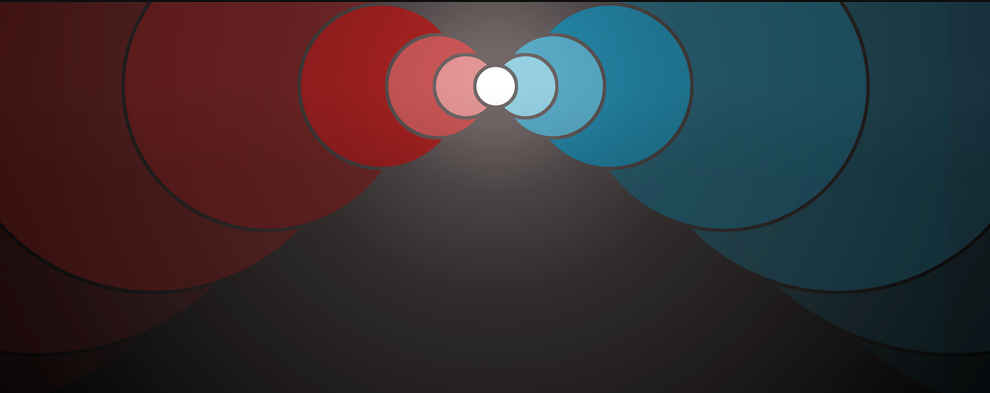
And here’s where it gets elegant: The red/blue distinction isn’t arbitrary. It’s grounded in Doppler shift physics, the show’s thematic foundation. Blue shift occurs when light wavelength shortens as the source moves toward the observer. This maps to direct, simple decryption, moving toward the solution. Red shift occurs when light wavelength lengthens as the source moves away. This maps to complex, layered decryption, moving backwards/away from the plaintext.
The metaphor isn’t just clever. It transforms solving from mechanical work into understanding the show’s universe. You’re not following arbitrary rules. You’re engaging with the physics that powers the entire narrative. That’s when puzzle design becomes something deeper than entertainment.
Green codes, yellow codes, and finally magenta codes escalate the challenge through modified Vigenère variants, additive operations, matrix notation, and hybrid cipher systems combining multiple techniques.
By episode 26, I needed a MINIMUM of 30–45 minutes to decode the most complex variants, and that’s after I figured out the color code for the first time. But, and this is crucial, it was never enough to make me abandon the puzzle, throw my notes in the bin, etc. The progression maintained what psychologists call the “Goldilocks zone”: challenging enough to feel satisfying when solved, achievable enough to maintain hope of success. Give me the dopamine, I’ve earned it.
I’ve got the longer walkthroughs on my blog, but essentially the progressive difficulties set up a dopamine treadmill that I was uninterested in getting off of.
Episode 1: I solved a Blue code. Success. I learned Vigenère fundamentals: how keywords repeat across plaintext, how modular arithmetic reveals plaintext. I was hooked.
Episode 5: A Red code. Ok, the system I used for blue doesn’t work. Now I had to reverse-engineer the decryption process, time for some experimentation. Vaguely remember high school science. Success! It’s reversed: A=26, Z=01 alphabet for ciphertext. Dopamine hit.
Episode 12: The next variant, Green, melds both Red and Blue. It’s forward A=01 for the cipher and A=26 for the passphrase, so you have to flip the passphrase back into A=01, then apply Vigenère decryption as in Red. Two systems layered, and another dopamine hit after trial and error, but since Red had already introduced the possibility of a reverse A=26, I felt like I was on the right track faster. Double dopamine — solve the puzzle while increasing your brain’s capacity to understand puzzle mechanics.
Episode 22: Yellow. A new approach: encode the ciphertext rather than decode it. Add, rather than subtract, the passphrase. A Vigenère style mathematical model but looking farther all the time from our original Blue. Increase the difficulty, increase the dopamine.
Episode 25: This one hurt my brain: an interspersing of Blue and Yellow, and a missing digit on the transcript when I tried to verify what I was hearing. Translate each number separately. The dopamine was NOT enough on this one. I did take a break for a bit and question my life choices.
Episode 26: The Magenta code. Vigenère encryption followed by keyed Caesar cipher using a QWERTY alphabet derived from Morse code. The culmination of all prior learning, synthesized into one challenging cipher. Took a long while for me to sort out what was going on, especially with the keyboard bit ( I kept trying QWERTYABC… etc. like an idiot).
Aside from Episode 25’s brain melt, the way Ars Paradoxica approached cryptography was fascinating. Long before idle games and clickers, they’d figured out puzzle addicts’ brain chemistry. Each solved cipher created a specific neuroscience response:
- Immediate reward: the decoded message
- Narrative payoff: the message advanced my understanding of the story
- Anticipation: What’s next? How much harder can it get?
- Confidence building: I solved that. I can solve the next one. Eventually.
- Return to step 1 with increased difficulty
This is dopamine reinforcement through progressive mastery. No prizes. No leaderboards. No competition. Just well-designed challenges with narrative meaning.
And then I went overboard. By the time I finished episode 26, I’d accumulated detailed notes on every cipher to date. I understood not just how to solve them, but why each variant worked, how it built on prior knowledge, what mathematical principles made each cipher elegant.
So I did something crazy: I wrote a comprehensive guide documenting 26+ episodes’ ciphers with their solving approaches. The document became my longest blog post to date because I wanted future solvers to understand that there are multiple valid pathways through any cipher system. Mathematically rigorous solvers could use algebra. Visual learners could use reference tables. Pragmatists could verify with tools (dcode.fr, I love you). The podcast’s cipher design accommodated all cognitive styles. That’s accessibility through technical excellence.
I think about Ars Paradoxica whenever I encounter puzzle systems now. Here’s what it got right:
- Start Accessible: Blue codes teach fundamentals. You’re not assumed to know Vigenère cipher. You learn it by solving. The first puzzle should be solvable within 10–15 minutes, creating early confidence.
- Progress Deliberately: Don’t jump from easy to impossible. Introduce variants gradually. Let solvers master one technique before layering new complexity. Ars Paradoxica did this across 36 episodes.
- Provide Multiple Pathways: Not everyone thinks mathematically. Some people are visual learners. Some prefer tools. Accommodate different cognitive styles. Good design is inclusive.
- Integrate Thematically: The red/blue shift metaphor wasn’t decorative. It made cipher complexity feel meaningful. Solvers weren’t following arbitrary rules; they were engaging with the show’s physics. That’s when puzzles transform into narrative elements.
- Create Community Spaces: Ars Paradoxica’s fan community built resources including Tumblr solver guides, Discord servers (Cryptex does this very well), and wikis documenting all solutions. And me, though I was admittedly a bit late to the game with my blog. Collaborative spaces amplify engagement and transform individual puzzle-solving into shared cultural experience.
- Respond to Your Solvers: Mischa Stanton noted that engaged fans cracking early codes prompted creators to develop “increasingly sophisticated ciphers.” Somewhere I think I still have the note I got when I contacted them back in Mali. It was the sweetest thing. The feedback loop between community and creators pushed both to new heights.
First, I want you to listen to Ars Paradoxica. I have no connection to it beyond loving it, but I think everyone should listen to it. It’s not only the codes, but the storytelling is top notch. So, go listen. I’ll wait….. Secondly, I want to celebrate the podcast that got me back into something I had enjoyed so much when I was younger: the world of puzzles and coding and cryptography. Ars Paradoxica helped me connect to a part of my brain I’d forgotten, and gave me a way to connect to a wider community. By proving that thoughtful, mathematically rigorous, and narratively coherent puzzle design exists, Ars Paradoxica transformed my brain and my free time. I went from isolated listener to community puzzler. I documented mathematical approaches because they were elegant and worth understanding deeply, and found a way to explain the odd things that go on in my brain in an effort to explain myself to the world.
And that’s why I continue backing similar creators’ Kickstarters. Because well-designed puzzles don’t just entertain. They can reignite the intellectual curiosity that brought us to pattern recognition in the first place.
The next time you encounter a progressively challenging puzzle system, pay attention to how it’s designed. Are the difficulty progressions arbitrary or thematic? Are there multiple solving pathways? Does difficulty escalation feel magical or mechanical?
Ars Paradoxica proved that progressive difficulty, when done right, feels like the system is teaching you something you didn’t know you needed to learn.
Have you encountered a podcast, game, or puzzle series that kept you engaged across extended progression? What made it stick with you? I’d love to hear how you’ve experienced progressive difficulty, whether it felt satisfying, frustrating, or transformative.
And if you’ve never encountered Ars Paradoxica, the entire 36-episode archive is available to stream. Start with Episode 1. Solve the first cipher. See if you feel what I felt.
But be warned: by the end, you might be writing mathematical treatises, too. Don’t say I didn’t warn you.
Originally published at https://apopheniaapotheosis.substack.com.
메타데이터
- post_id
- 89e0926fe2f2
- slug
- ars-paradoxica-the-rabbit-hole-of-good-puzzle-design-89e0926fe2f2
- url
- https://medium.com/apophenia-apotheosis/ars-paradoxica-the-rabbit-hole-of-good-puzzle-design-89e0926fe2f2
- canonical_url
- https://medium.com/apophenia-apotheosis/ars-paradoxica-the-rabbit-hole-of-good-puzzle-design-89e0926fe2f2
- author_url
- https://medium.com/@Xerafina
- status
- ok
- fetched_at
- 2026-06-14 11:28:49




