p53: The Guardian of the Genome and Cancer’s Worst Enemy
p53: The Guardian of the Genome and Cancer’s Worst Enemy
Our bodies are constantly exposed to internal and external factors that can damage our DNA and potentially lead to cancer. However, our cells are not defenseless. In this article, we will dive into the fascinating world of our defense mechanisms.
Our cells are equipped with highly sophisticated mechanisms that detect and repair damage, eliminate defective cells, and prevent harmful mutations from spreading.
One of the most critical players in this defense system is a protein known as p53, often referred to as the Guardian of the Genome.
The Body’s Watchdog?
For a decade, scientists thought they had found a troublemaker but it turned out to be the body’s watchdog.
When p53 was first discovered in 1979, researchers mistakenly classified it as an oncogene: a gene that, when mutated or overactive, drives cancer formation. The logic seemed straightforward: high levels of p53 were often found in tumors, suggesting it played a role in cancer development.
However, after years of research, a surprising truth emerged; p53 wasn’t fueling cancer; it was fighting it. Instead of being an oncogene, p53 was actually a tumor suppressor, a critical guardian that prevents mutations from accumulating and keeps cells from becoming cancerous. Today, p53 is recognized as one of the most important proteins in cancer prevention, often called the “guardian of the genome”.
So how does p53 work?
This protein acts as a quality-control supervisor, continuously scanning the DNA inside our cells for damage. If it detects a problem, it binds to specific sites on the DNA and assesses the severity of the damage. Then, it decides between two possible responses:
- DNA Repair: If the damage is minor and can be fixed, p53 activates genes that produce repair proteins. Once the DNA is restored, the cell continues its normal function.
- Apoptosis (Programmed Cell Death): If the damage is too severe, p53 triggers a self-destruct mechanism to ensure that the faulty cell does not continue to divide and spread mutations. This prevents harmful cells from multiplying and potentially forming tumors.
Pause :We Need to Understand the term “Apoptosis”
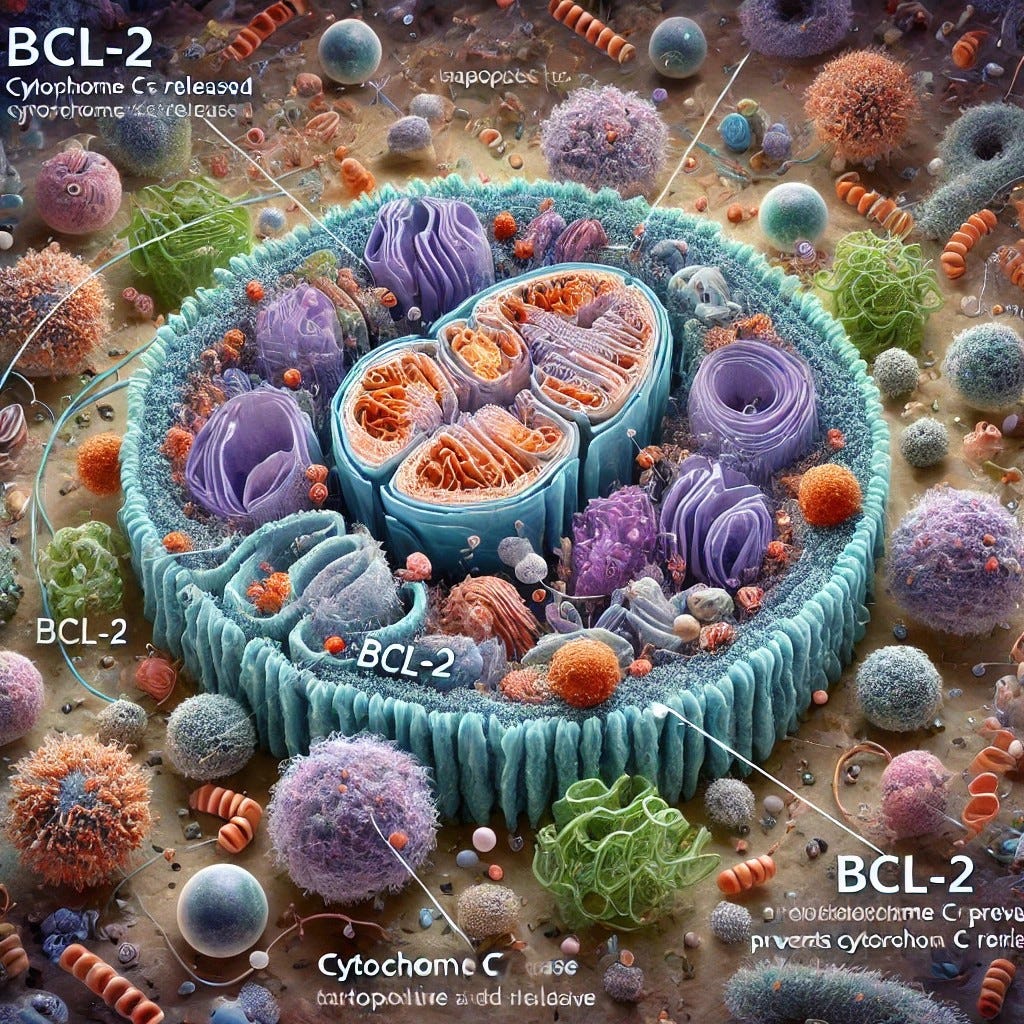
Killing a cell may sound dramatic, but apoptosis is an essential process for maintaining a healthy body. It acts as a biological cleanup system, removing damaged, infected, or unnecessary cells before they can cause harm. Without apoptosis, faulty cells could continue to divide unchecked, increasing the risk of cancer. Think of it as the body’s way of taking out the trash- eliminating dangerous cells before they turn into something much worse.
Without p53, our bodies would struggle to stop damaged cells from multiplying uncontrollably, significantly increasing the risk of cancer. This is why p53 is one of the most heavily studied proteins in cancer research, and entire conferences are dedicated to understanding its function and therapeutic potential.

The Role of p53 in DNA Damage Response. (Figure created with BioRender)
If p53 is so effective at preventing cancer, how does cancer still develop?
The answer lies in mutations. The gene that codes for p53 can itself become damaged due to various factors, such as exposure to radiation, harmful chemicals (like those found in cigarettes or air pollution), or even viruses. When this happens, p53 loses its ability to regulate cell division and eliminate defective cells.
Some cancers find ways to disable p53 by either mutating the gene that codes for it or by blocking its function through other proteins. For example:
- Mutations in the TP53 gene prevent p53 from binding to DNA and activating repair or apoptosis mechanisms.
- Certain cancer cells silence the expression of the TP53 gene, meaning the body stops producing p53 altogether.
- Other proteins may target p53 for destruction, reducing its effectiveness in identifying and eliminating damaged cells.
Peto’s Paradox: Why Large Animals Don’t Get More Cancer?
One of the most fascinating questions in cancer research is Peto’s Paradox why do large animals, like elephants and whales, have lower cancer rates than humans? Statistically, larger animals have more cells, and more cells should mean more opportunities for mutations to occur. However, studies have shown that some large animals have evolved additional protective mechanisms.
For instance, elephants have 20 copies of the TP53 gene, whereas humans have only one. This means elephants have significantly greater ability to detect and eliminate damaged cells, dramatically reducing their cancer risk. Scientists are now studying these adaptations to see if they can be applied to human cancer treatments.
Can We Use This Knowledge to Fight Cancer?
Given the importance of p53 in cancer prevention, researchers are actively working on therapies that restore its function in cancer patients. Some experimental treatments include:
- Gene therapy that introduces a functional copy of the TP53 gene into cancerous cells.
- Small molecules that stabilize mutated p53 and help it regain its function.
- Drugs that prevent the degradation of p53, allowing it to accumulate and fight cancer cells.
While these approaches have shown promise in laboratory settings and animal models, translating them into effective human treatments remains a challenge. Cancer is incredibly complex, and tumors often develop additional mechanisms to evade even these targeted therapies.
This Is Not Our Only Line of Defense
While p53 plays a vital role in cancer prevention, it is not our only protective mechanism. The body has additional ways to detect and eliminate cancerous cells, from DNA repair pathways to immune system surveillance. In the next article, we will explore how these mechanisms work and how modern medicine is harnessing them to develop better cancer treatments.
If you found this article helpful and informative, don’t forget to subscribe for more insights into the fascinating world of cancer and cellular biology.
메타데이터
- post_id
- 89e093a74e7e
- slug
- how-our-body-fights-cancer-89e093a74e7e
- url
- https://medium.com/@amitcohana/how-our-body-fights-cancer-89e093a74e7e
- canonical_url
- https://medium.com/@amitcohana/how-our-body-fights-cancer-89e093a74e7e
- author_url
- https://medium.com/@amitcohana
- status
- ok
- fetched_at
- 2026-06-12 22:02:08