Symbiopsychotaxiplasm
Take One
Symbiopsychotaxiplasm
Take One
Have I ever told you about the cult film I was in? Not a film about a bunch of religious nutters — I could have been in one of those too, in fact more than one, now that I think about it — I mean the other kind, the one “with a cult following, obscure or unpopular with mainstream audiences, and often revolutionary or ironically enjoyed.”
That’s according to the definition I found on Wikipedia. When it says “ironically enjoyed,” I suppose that means unintended by the makers, something like Reefer Madness — as the original 1936 movie poster has it, WOMEN CRY FOR IT, MEN DIE FOR IT! DRUG-CRAZED ABANDON!
Mine is of the more revolutionary variety, which implies something “transgressive” about its subject matter, usually featuring displays of gory violence, kinky sexuality, blasphemy or profanity, in sufficient quantities or unusual combinations thereof so as to cause extreme discomfort in the minds of average moviegoers — but which for that very reason provide thrills of delight for a subset of other viewers whose main pleasure in life is stepping over the boundaries, at least in their imaginations.
But nope, that’s not it either. Maybe I should just tell you about it and you’ll see for yourself.
It was the summer of 1967, in the heady days of cinema verité, just before I and my two friends made ***Zelenka**, one of the very first mockumentaries, years before This is Spinal Tap.*
This one has a far more formidable title — Symbiopsychotaxiplasm: Take One.
Well, right there, maybe you can see why it never quite took off at the box office. I can’t tell you — nor have I ever found anyone else who could — what the first part means, but I can explain the rest. It was part of a series. Yes, there were going to be 5 Symbiopsychotaxiplasms! Take One was just the first.
All of them to be directed by black Canadian filmmaker William Greaves, alas no longer among us — in fact, I am writing this on the first anniversary of his passing, August 25, so in a sense, this is my tribute to Bill.
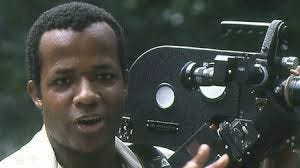
Bill was maybe the best con man I ever met. Some people would just say schnorrer, Yiddish for beggar. But the word, like many Yiddish words, has subtle connotations. And rather than try to reinvent the schnorrer wheel, here’s what the current resident expert at Wikipedia has to say on this subject:
“The word Schnorrer also occurs in German to describe a person, who frequently asks for little things like cigarettes or little sums of money, without offering a return, and has thus come to mean freeloader. The English usage of the word denotes a sly chiseler who will get money out of another any way he can, often through an air of entitlement. A schnorrer is distinguished from an ordinary beggar by dint of his… boundless chutzpah. The term does not apply to begging or being homeless, but rather a habit of getting things (food, tools) rather than money by politely wanting to borrow them. “The term, which is used in a pejorative or ironic sense, can also be used as a backhanded compliment to someone’s perseverance, cleverness, or thrift.”
Now that’s Bill in a nutshell. Well, almost. You see, Bill was no ordinary schnorrer. He was a schnorrer’s schnorrer. The prince of schnorrers. With Bill, it was pure Art. And the art of it was that he let you in on it.
He was so transparent about it. You knew from the very moment he smiled at you, before he said a word, that he was going to ask you to give him… something for nothing.
And in the case of Symbio… that was chutzpah beyond chutzpah, because he wasn’t just asking to borrow some food or tools, he was asking to borrow us!
All of us, for an entire week of our lives, in Central Park, in exchange for? For lunch. And a minuscule percentage of the film’s net profit — a “point” and I was surprised when many years later, Bill called me up and offered $500 for it, which I readily accepted, partly because I knew how badly he needed it to schnorr money for his next project, off some backer he had his eye on, and who, just like us, couldn’t say no to Bill, even though they could see the con coming from a mile away.
It was almost impossible to say no to the man. In fact, you’d not only say yes, you’d smile back at him, and want to hug him right there on the spot. He was that charming. I loved Bill. I still do.
But make no mistake about it, Symbio…what’s-its-name was a con from the git-go. Not just for the film crew or the Actors Studio people who agreed to appear in it (for SAG scale, perhaps even deferred?), or DuArt (the film lab that processed the dailies on credit), but everyone.
Here’s the set-up — in grifter lingo, a “long con” — a scam that plays out over several days, involving a team of swindlers, as well as props, sets, extras, costumes, and scripted lines. Like in that movie The Sting. We were all part of the team, but we were also the unwitting marks. And that’s the genius of the scheme. We were in on it, but the joke was on us. (But then the joke was on Bill…)
Here’s the way it worked: each day, we would all go out into the park, where two Method Actors, a man and a woman, would rehearse lines from a generic script, and then Bill would take the script away and have the actors improvise their own version on camera. It was a typical marital scene — perhaps based on Bill’s own marital experiences? — but fraught with all manner of clichéd psychodrama — betrayal, anger, frustrated lust, competition, shame over an illegal abortion, latent homosexuality, you name it — a whole Freudian cornucopia of corny subtexts for the actors to wallow in. Bill’s daily bath of bathos.

Karen Black (pregnant?) and ??
And all the while the camera was recording this turgid Sturm und Drang, there was another camera rolling, this one filming not only the actors, but Bill directing the actors. And then another camera crew up on the hill, filming the crew filming Bill filming…
Bill was at the center of the universe. Or at least the center of his film universe. The Sun-King. Every new day, the sun came up, and we attended to his levée, and shlepped the whole rough Beast of film production toward his Bethlehem, aka Central Park, where each set of actors was replaced by another, interchangeable cogs in Bill’s godly Machina. Only Bill stayed the same, regnant on high, calling all the shots, take after take after take.
The outrageousness of it all. The Shakespearean conceit of it. Will Bill get away with it? Will no one stop him, challenge his authority? Day one, Day two, Day three. Day four. The Creator of the Universe twiddles His thumbs. But no one raises so much as a finger in protest.
Ok, so now Bill resorts to tricks. He plays the Fool. He bumbles around the set, seeming confused, perplexed, he can’t make up his mind what to do next, like King Lear, calculating a Method to his madness, like the good Studio Actor he was. Surely that will provoke some response from the crew. “Hey Bill, you’re losing it.” Or like the critic who torments Fellini’s alter-ego Guido in 8 1/2, crying out triumphantly at the end of the film, “He has NOTHING to say!!”
But this is no 8 1/2. This is REAL life, and Bill is waiting for the moment when someone will say it for REAL, and he will catch it on camera, and then use it in his film as his final trump card, and people will see just how brilliant Bill really is. He’s created worlds within worlds, and made it all His World, even down to including his own real-life putdown. It’ll boggle the mind. The critics will cry BRAVO! It may be a Con Game, but what a con game!
But the moment never comes. No one on the crew steps forward and says anything at all. A surly silence. Everyone respects the unspoken taboo: Never question the director’s Authority, no matter how much of a total bumbling idiot you may think he is. Never cross the invisible line between the set and the setting. Until Day 7, Jonathan Gordon, the soundman, steps forward.
That’s me on the left, him on the right.

He steps not toward Bill, not on camera, but to me, the production manager, during lunch break. Jonathan has had enough of the game. He’s no fool, and sees Bill is trying to manipulate us, trick us, goad us into mutiny while we are all on board, adrift in his leaky boat.
Instead, Jonathan makes a simple suggestion. Screw Bill. Let’s take over the Author-Ship without a mutiny. Turn the tables on Bill and play the con on him. Send him on some wild goose chase (“um, the lab called and says there’s a problem with the dailies — you need to come over right away…”). Even if Bill suspects it’s a trick, he’ll go anyway, because that’s what he’s been waiting for, a move on our part, and it’s pretty late in the game, and Bill’s getting worried. Maybe he won’t be able to pull it off after all.
So off he goes, and up we went, to the penthouse floor, to our company office, where Bill has, of course, schnorred some space. And there we let Captain Bligh have it. We vent our frustration, knock him off his pedestal.

I even consult the I Ching on camera, on the spot, and the I Ching joins in on the joke and instead of the usual gnomic utterance, declares bluntly that people who are not born leaders should beware of trying to lead others. But then I turn to the camera and suggest to the audience that perhaps all of this is just part of the script.
For all they know, Bill is standing right there behind me, on the other side of the door, directing the whole scene…
When it’s over, Jerry Pantzer, the cameraman, unloads the four 10-minute rolls and puts them in black envelopes, sealed in film cans, and I walk to the elevator, and Bill appears, as if by magic, and I hand him the cans and smile, “Bill, a present from the crew. You’re going to need it.”
And to Bill’s credit, he made the most of his big opportunity in the editing room, and didn’t pull any punches. He let it all hang out, at least most of it, for everyone to see.
Of course, after the film was finished, Bill tried retrospectively to claim it was all just a game he’d devised, that he’d made a daring bet and won, playing not only the starring role, but playing all of us too. Whenever he did interviews, or gave a presentation of the movie for a special audience, at Joe Papp’s Public Theater or the Independent Film Center, he made it sound as if he’d known all along that it was only a matter of time before one of us got the “bright idea” to take the film out of his control, and film behind his back.
Is it possible? Sure. Do I know for certain that Bill didn’t have this plan in his mind before we did anything? No, but I’m almost certain he did NOT, at least not in any calculated way. How do I know? Because that’s how creation happens. ALL of creation, even God does it that way.
It’s called Evolution. There’s no one directing it. No god-like auteur on the set egging everyone on to complete His idea. I’m not saying Bill was a fool, only that he wasn’t a god. That was just Bill’s attempt to construct some fake narrative after the fact to restore the illusion that he knew what he was doing from the very beginning.
That’s simply not so. He didn’t know what he was doing at all. That’s why Bill is truly great. A real artist, a man of supreme courage. Because he didn’t really know what he was doing, but went ahead anyway. And then Jonathan, another brave guy, dared to take Bill’s initial thought a step further. And the rest of us all went into a room and added our two cents to the pot, and we gave it to Bill, and Bill stirred it, and all these thoughts in Our Mind stirred the film to life.
And now the film has taken on a life of its own, and is walking away from us all on its own hind legs, like some existential Godzilla, on the way (perhaps) to becoming a cult classic, more than fifty years later, hatched long before its time. (It’s now part of the Criterion collection — a “wildly innovative 60's counterculture landmark”.)
There’s a line in the film that pretty much sums it all up. One day, this park bum comes up to us, bottle in hand, and attempts to interrupt the proceedings.
“Whaddaya all doin’ here?” he says. We all stop what we are doing as the camera turns its attention on him, and I run up to him with a release form to sign, as Bill had me do whenever anyone got filmed who wasn’t part of our crew. We explain to him that we are making a movie.
And he says, “A movie? Oh yeah? Who’s movin’ who?
메타데이터
- post_id
- 89e1589969d4
- slug
- symbiopsychotaxiplasm-89e1589969d4
- url
- https://medium.com/counterarts/symbiopsychotaxiplasm-89e1589969d4
- canonical_url
- https://medium.com/counterarts/symbiopsychotaxiplasm-89e1589969d4
- author_url
- https://medium.com/@bobmetarts
- status
- ok
- fetched_at
- 2026-08-05 08:50:41