Top 10 Security Controls Every Organization Misses (ISO 27002 View)
Security teams usually assume that most ISO 27002 controls are already in place. Firewalls are active, policies are documented, and audits…
Top 10 Security Controls Every Organization Misses (ISO 27002 View)
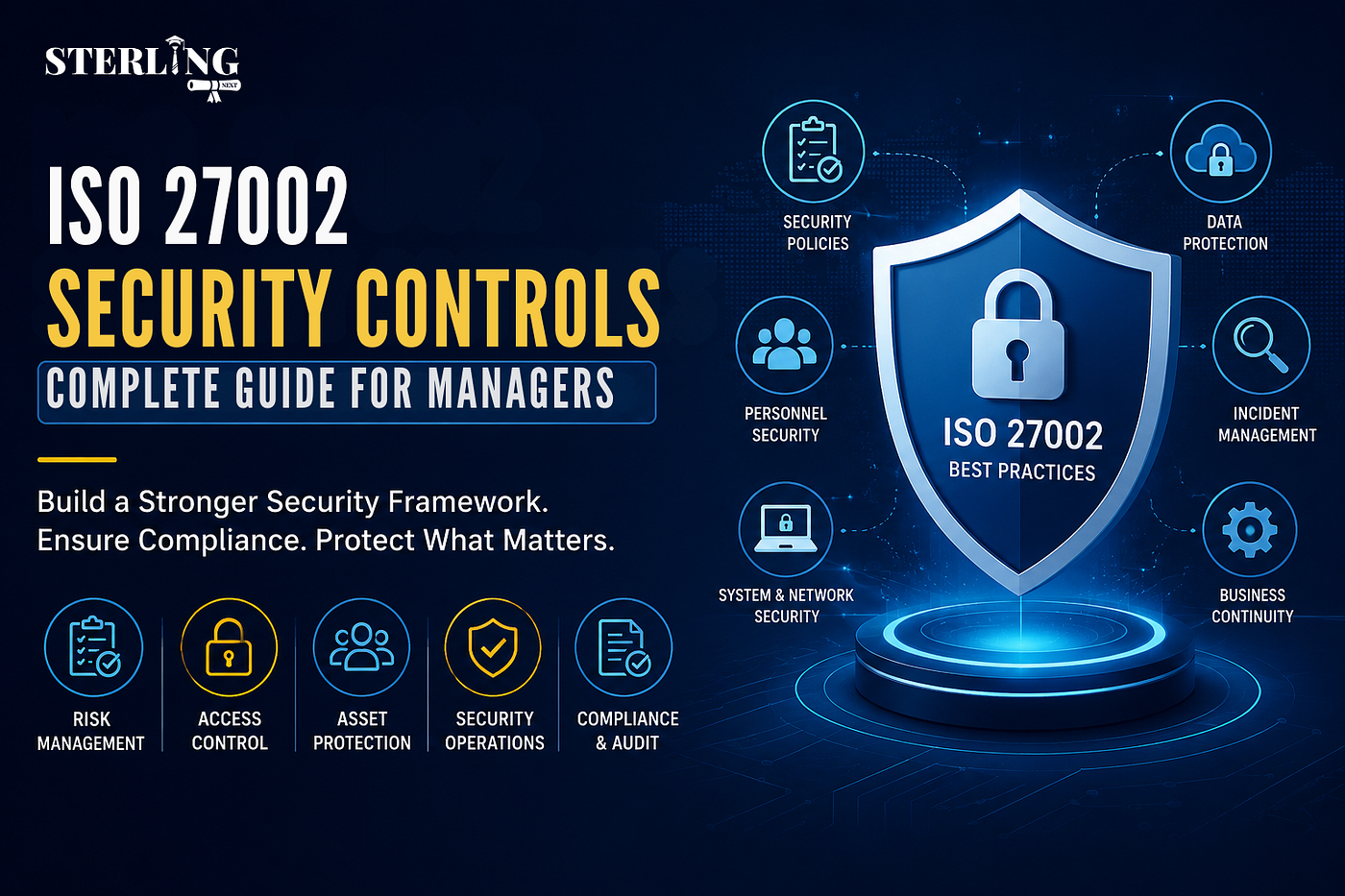
ISO 27002 security controls overview
Security teams usually assume that most ISO 27002 controls are already in place. Firewalls are active, policies are documented, and audits are passed. Yet breaches still happen. The real issue is simple: many important controls exist on paper but are missing in practice. ISO/IEC 27002 is designed to fix exactly that gap, but organizations often overlook key areas that quietly weaken their entire security posture especially when it comes to **ISO 27002 Manager Security Controls** in real-world implementation.
This article breaks down the Top 10 Security Controls Every Organization Misses, based on real-world implementation gaps and ISO 27002 Security Controls Best Practices.
How ISO 27002 Structures Security Controls
ISO/IEC 27002 is not a tool-based standard. It is a structured guide that explains how security should actually be managed across an organization.
The framework supports Information Security Management Controls ISO 27002 by focusing on:
- People (training, responsibilities, awareness)
- Processes (risk, audits, change control)
- Technology (access, monitoring, encryption)
When combined properly, these create a full Security Control Framework ISO 27002 explained in practical terms, not theory.
Why Security Controls Get Missed in Real Organizations
Most gaps don’t happen due to negligence. They happen due to:
- Partial implementation of ISO requirements
- Over-focus on technical tools instead of governance
- Weak ownership of controls
- Outdated risk assessments
- Lack of continuous monitoring
These issues lead to Cybersecurity control failures in organizations, even in companies that believe they are compliant.
Top 10 Security Controls Organizations Commonly Miss
Below are the most critical but often ignored controls under ISO 27002.
1. Asset Ownership Is Not Clearly Defined
Many companies maintain asset lists, but ownership is unclear.
Without ownership:
- No one is accountable for protection
- Updates are inconsistent
- Risk increases silently
This is one of the most overlooked ISO 27002 control objectives and implementation areas.
2. Access Rights Are Rarely Reviewed
Employees change roles, but their access often remains unchanged.
Common issues:
- Excess permissions
- Shared accounts
- No periodic access review
This is one of the biggest ISO 27002 implementation mistakes in organizations.
3. Risk Assessments Are Treated as Formality
Risk assessment is often done once a year just for audit purposes.
Strong ISO 27002 risk management controls require:
- Continuous updates
- Real threat modeling
- Business-driven risk evaluation
Without this, controls lose relevance quickly.
4. Logs Are Collected but Not Analyzed
Many organizations store logs but don’t actively monitor them.
As a result:
- Attacks go unnoticed
- Incident detection is delayed
- Response becomes reactive instead of proactive
This is a classic Common security control gaps in ISO 27002.
5. Third-Party Risk Is Ignored After Onboarding
Vendors are assessed only during onboarding, then forgotten.
This creates blind spots in:
- Data handling
- System access
- Compliance alignment
A strong Enterprise security controls best practices model includes continuous vendor monitoring.
6. Data Classification Is Missing or Weak
Not all data is treated differently, even though it should be.
Without classification:
- Sensitive data is exposed unnecessarily
- Encryption is inconsistent
- Access rules become generic
This is a major gap in Information security controls checklist ISO 27002.
7. Incident Response Plans Are Not Practiced
Most organizations have an incident response document.
But:
- It is rarely tested
- Teams are unclear about roles
- Response time increases during real incidents
This leads directly to ISO 27002 compliance gaps and solutions issues.
8. Physical Security Is Treated Separately from Cybersecurity
Physical access is often ignored in security discussions.
Examples of weak control:
- Open server rooms
- No visitor logging
- Shared physical access cards
This creates easy entry points for attackers.
9. Change Management Is Informal
Systems are updated without proper approval or tracking.
This leads to:
- Unexpected vulnerabilities
- System instability
- Broken security configurations
A strong ISO 27002 audit checklist for organizations always includes change control validation.
10. Security Awareness Training Is Not Continuous
Training is often a one-time onboarding activity.
But human behavior changes constantly, and attackers rely on that.
Weak areas include:
- Phishing awareness
- Password hygiene
- Social engineering defense
This is a critical part of Organizational security weaknesses ISO standards.
Where Most ISO 27002 Programs Go Wrong
Many organizations assume certification equals maturity.
In reality, common ISO 27002 implementation mistakes include:
- Treating controls as checkbox items
- Ignoring operational enforcement
- Not updating controls with evolving risks
- Weak internal auditing culture
Compliance without real execution creates a false sense of security.
Practical ISO 27002 Audit Checklist Focus Areas
A strong audit approach should validate an **Information security controls checklist ISO 27002** to ensure nothing critical is missed during assessments.
Key Areas to Validate:
- Asset tracking accuracy
- Access control review cycles
- Incident response readiness
- Vendor risk monitoring
- Data classification enforcement
This structured approach helps identify weak points early and close real-world gaps before external audits highlight them.
To make ISO 27002 concepts more practical, it often helps to move beyond theory and look at structured reference material that maps controls to real implementation steps. A well-organized guide can make it easier to understand how audits are actually performed, how gaps are identified, and how controls should be applied in day-to-day operations. For a deeper breakdown of audit focus areas and control mapping, you can refer to this **ISO 27002 Security Controls checklist PDF**, which explains key checkpoints, implementation patterns, and common mistakes organizations make during compliance reviews.
Strengthening Security Using ISO 27002 Practices
Organizations that mature faster usually focus on:
- Continuous monitoring instead of periodic checks
- Automated access reviews
- Real-time risk tracking
- Regular employee training
- Strong governance ownership
These represent true ISO 27002 Security Controls Best Practices, not just documentation.
Importance of Structured Learning
Understanding ISO 27002 in theory is not enough. Implementation requires real-world interpretation of controls.
A structured ISO 27002 training and certification guide helps professionals:
- Translate controls into operational steps
- Understand audit expectations
- Improve risk-based thinking
- Reduce implementation errors
For learners and organizations looking to strengthen practical skills and compliance readiness, resources like the **SterlingNext official site** can provide structured learning pathways and professional guidance in applying ISO 27002 effectively in real environments.
This approach ensures that security controls are not only understood but also implemented correctly in day-to-day operations.
Final Thoughts
Most security failures don’t come from missing frameworks, they come from missing execution.
ISO 27002 provides a complete structure, but real security depends on how deeply those controls are embedded into daily operations.
Closing even a few of the gaps above can significantly improve security maturity and reduce exposure to common threats.
Conclusion
Most security issues are not caused by missing frameworks, but by controls that exist on paper and fail in real execution. ISO 27002 provides a strong structure, but organizations often overlook critical areas like access reviews, risk assessments, vendor security, and continuous monitoring. These gaps slowly weaken the entire security system without being noticed. Strengthening even a few weak controls can significantly reduce exposure to threats and improve overall resilience. The key is consistent implementation, regular reviews, and treating security controls as an ongoing process rather than a one-time compliance task.
메타데이터
- post_id
- 8a0aaaaf80e6
- slug
- top-10-security-controls-every-organization-misses-iso-27002-view-8a0aaaaf80e6
- url
- https://medium.com/@asmeen5doddamani/top-10-security-controls-every-organization-misses-iso-27002-view-8a0aaaaf80e6
- canonical_url
- https://medium.com/@asmeen5doddamani/top-10-security-controls-every-organization-misses-iso-27002-view-8a0aaaaf80e6
- author_url
- https://medium.com/@asmeen5doddamani
- status
- ok
- fetched_at
- 2026-07-27 15:20:32