Why Pest Problems in Tampa Rarely Have a Single Cause
When something goes wrong in a home, our natural human instinct is to look for the “smoking gun.” If a pipe bursts, we find the crack. If…
Why Pest Problems in Tampa Rarely Have a Single Cause
When something goes wrong in a home, our natural human instinct is to look for the “smoking gun.” If a pipe bursts, we find the crack. If the dishwasher stops working, we identify the blown fuse. We are wired to seek a linear, one-to-one relationship between a cause and an effect.
However, in the subtropical pressure cooker of Tampa, Florida, pest issues rarely follow this simple logic. Homeowners often find themselves frustrated because they’ve “fixed” a problem, only to have it return weeks later. This is because a pest infestation is rarely a single event; it is an ecological convergence. In Tampa, a pest problem is almost never the result of one oversight. Instead, it is the result of several small, seemingly unrelated factors aligning perfectly to create an irresistible invitation for nature to move indoors.
The Convergence Factor: The “Combination Effect”
In the world of pest control, we often talk about the “Triangle of Life”: Food, Water, and Shelter. If a pest has all three, it will thrive. In Tampa, these three elements are often provided by a combination of minor home maintenance issues that, on their own, wouldn’t cause a crisis.
Consider the following scenario:
- The Entry Point: A weather seal on a back door has become slightly brittle and compressed, leaving a gap no thicker than a credit card.
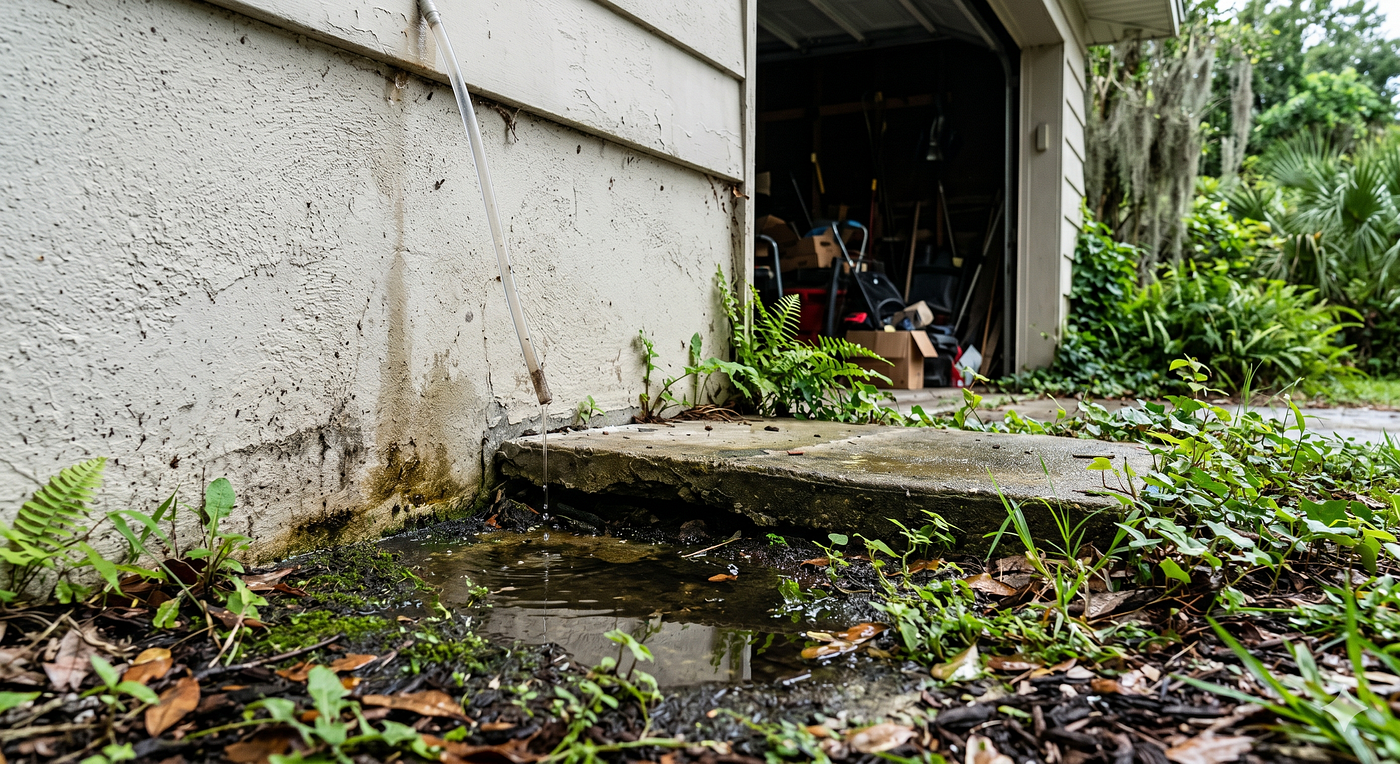
- The Attractant: An AC condensate line is dripping slightly too close to the foundation, keeping the soil damp.
- The Shelter: A few cardboard boxes are stored in the back of a dark pantry or garage.
Individually, these are non-events. A brittle seal isn’t a “broken” door. A damp patch of dirt isn’t a flood. A few boxes aren’t a hoard. But when they exist simultaneously, they create a pathway, a resource, and a home. The moisture draws the pests toward the foundation; the gap allows them entry; the boxes provide the security they need to begin reproducing. This combination effect is why “just spraying” rarely works long-term. You may kill the pests present, but if the moisture and the gap remain, the invitation is still open.
Why the “Single Cause” Mindset Leads to Failure
The biggest hurdle for Tampa homeowners is the belief that there is a “silver bullet” solution. Because there isn’t one clear cause, there isn’t one simple fix.
If you seal a gap under a window but leave a leaky pipe under the sink, you haven’t solved the problem; you’ve just changed the pests’ commute. Conversely, you can maintain a laboratory-clean kitchen, but if your home has structural “entry points” and high exterior humidity, pests like American cockroaches (often called Palmetto bugs) will enter simply to escape the heat or find water.
This leads to a frustrating cycle of reactive maintenance:
- The homeowner cleans: The pests remain because they are living in the walls where the moisture is.
- The homeowner seals gaps: The pests remain because they are already inside and have a food source.
- The homeowner uses DIY sprays: The pests retreat temporarily, only to return when the chemical breaks down because the underlying environmental conditions haven’t changed.
To truly resolve a pest issue in Florida, one must move away from “killing bugs” and toward “managing conditions.”
The Tampa Variable: A Climate That Accelerates Everything
The environment in Tampa acts as a catalyst, magnifying small issues into major problems at a speed that catches many off guard. In northern climates, pest activity follows a distinct seasonal curve. In Tampa, that curve is more of a high, flat plateau.
1. Humidity as a Life Support System
Tampa’s average humidity levels are high enough that many pests can survive longer without a direct water source just by absorbing moisture from the air. High humidity also slows down the drying process of wood and drywall. A tiny leak that would dry out in a week in Arizona will stay damp for months in Tampa, leading to wood rot — the primary attractant for subterranean termites and carpenter ants.
2. Thermal Energy
Heat is essentially fuel for a pest’s metabolism. In the Tampa heat, insects grow faster, eat more, and reproduce more frequently. A German cockroach infestation that might take months to become “unmanageable” in a cooler climate can reach critical mass in Tampa in a matter of weeks. The environment doesn’t just support pest activity; it accelerates it.
The Illusion of Randomness
To many homeowners, pest activity feels like a series of random, bad-luck events. You go months without seeing a single ant, and then suddenly, there is a trail of thousands in your bathroom. It feels like an invasion that happened overnight.
In reality, there is rarely anything “random” about it. Beneath the surface, there has been a buildup of conditions reaching a tipping point.
Think of it like a glass of water. You can add drops of water for a long time with no visible change in the room. But the moment the glass overflows, the floor gets wet. The “overflow” is the moment you see the pests, but the “cause” was every drop that came before it: the mulch piled too high against the siding, the overgrown hibiscus touching the roofline, and the crumbs under the toaster. When these factors reach a certain threshold, the pest population “spills over” into your living space.
Shifting the Strategy: From Incidents to Conditions
Effective pest management in Tampa requires a shift in perspective. Instead of asking, “How do I kill these ants?” the more productive question is, “What is making my home livable for these ants?”
When we look at a home through the lens of conditions, we look for three things:
ConditionTypical Tampa ExampleThe FixMoistureClogged gutters, leaky AC lines, high crawlspace humidity.Clear gutters, extend downspouts, use dehumidifiers.AccessGaps in soffits, worn door sweeps, utility line penetrations.Install mesh screens, replace sweeps, use expandable foam/caulk.HarboragePine straw mulch, cluttered garages, dense landscaping.Use rock mulch, declutter, trim branches 2 feet from the house.
By addressing the conditions, you aren’t just killing the pests that are there today; you are removing the reason for future pests to arrive.
The Cumulative Weight of Small Details
In a multi-factor environment, the “small stuff” carries immense weight. This is where most DIY efforts fail. A homeowner might fix a major hole in a screen but ignore the fact that their kitchen trash can doesn’t have a lid.
In Tampa, these small details are cumulative:
- The Kitchen Sink: A slow drip from a faucet provides a permanent watering hole for a colony.
- The Landscaping: Mulch that stays too wet creates a “highway” for ants to reach your foundation.
- The Lighting: Porch lights that emit UV rays attract flying insects, which in turn attract spiders that build webs around your entryways.
Individually, a porch light or a bag of mulch seems harmless. But when you add them to the humidity, the heat, and a small gap in a window frame, you have the “perfect storm.”
Conclusion: Managing the Ecosystem
The takeaway for anyone living in the Tampa Bay area is that your home is part of a larger, incredibly active subtropical ecosystem. Pests are not “invading” your home because of one mistake you made; they are simply reacting to a set of environmental cues that tell them your home is a safe, hydrated, and temperature-controlled environment.
Managing pests in this environment is less about “winning a war” and more about “managing an ecosystem.” It requires a holistic approach that considers:
- Exclusion: Keeping them out.
- Sanitation: Removing their food.
- Maintenance: Removing their water.
Once you stop looking for a single cause and start looking at the collection of small factors, the frustration of pest control begins to fade. You realize that by tightening a screw here, clearing a gutter there, and keeping the humidity down, you are dismantling the infrastructure that pests need to survive. In Tampa, clarity doesn’t come from finding one answer — it comes from understanding how all the small pieces fit together.
Understanding the combination of moisture, climate, and structural gaps helps you stay vigilant, making it much easier to spot **The Subtle Signs Your Home Is Becoming More Attractive to Pests.**
메타데이터
- post_id
- 8a1846dbc83d
- slug
- why-pest-problems-in-tampa-rarely-have-a-single-cause-8a1846dbc83d
- url
- https://medium.com/@tampapestscontrol/why-pest-problems-in-tampa-rarely-have-a-single-cause-8a1846dbc83d
- canonical_url
- https://medium.com/@tampapestscontrol/why-pest-problems-in-tampa-rarely-have-a-single-cause-8a1846dbc83d
- author_url
- https://medium.com/@tampapestscontrol
- status
- ok
- fetched_at
- 2026-07-24 15:40:05
